


 7 Photos
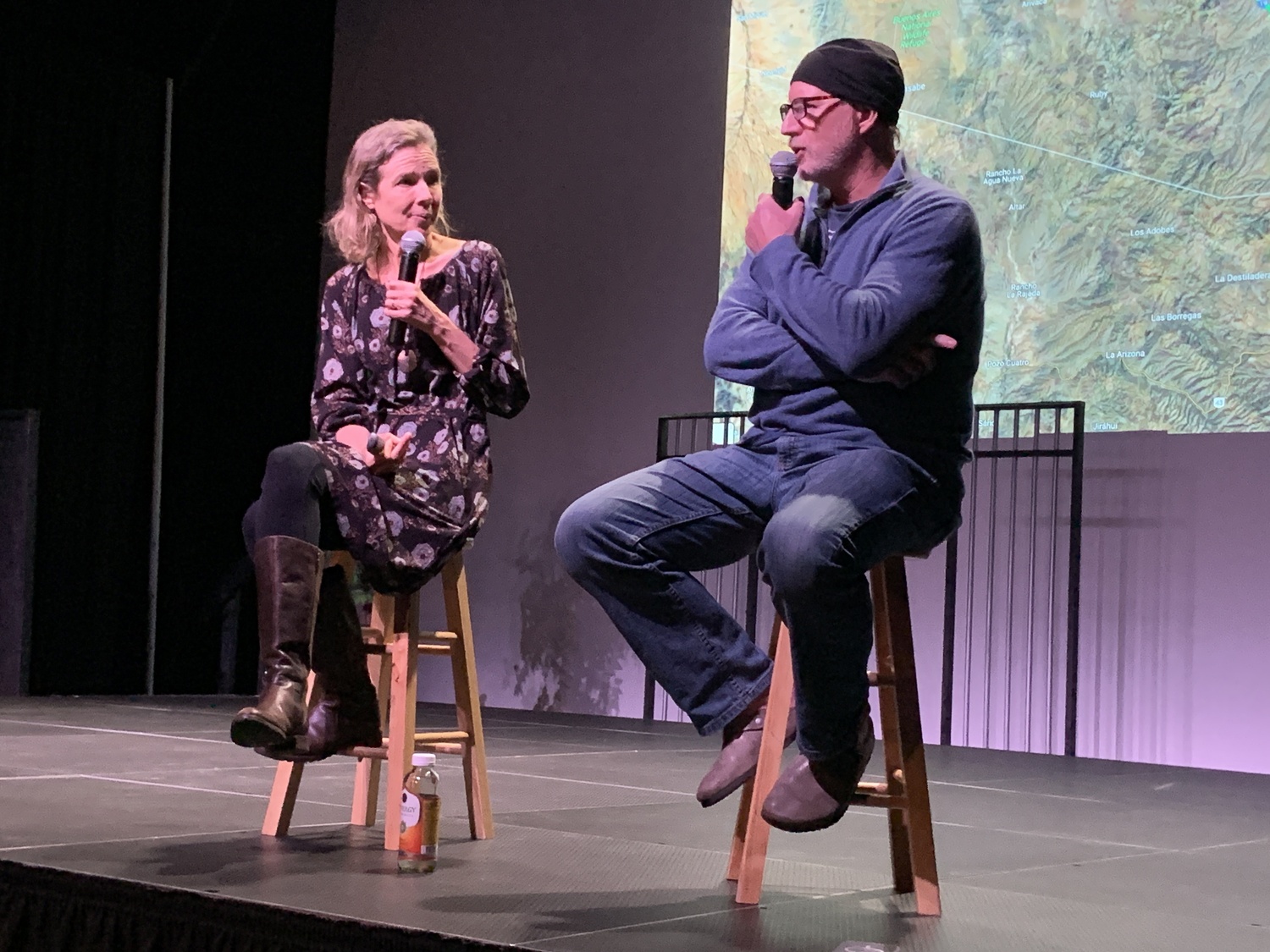
Elissa McLean and Andy Winter recount their recent visit to Sasabe, Arizona, where they provided aid to asylum seekers, at LTV Studios on January 24. STEPHEN J. KOTZ
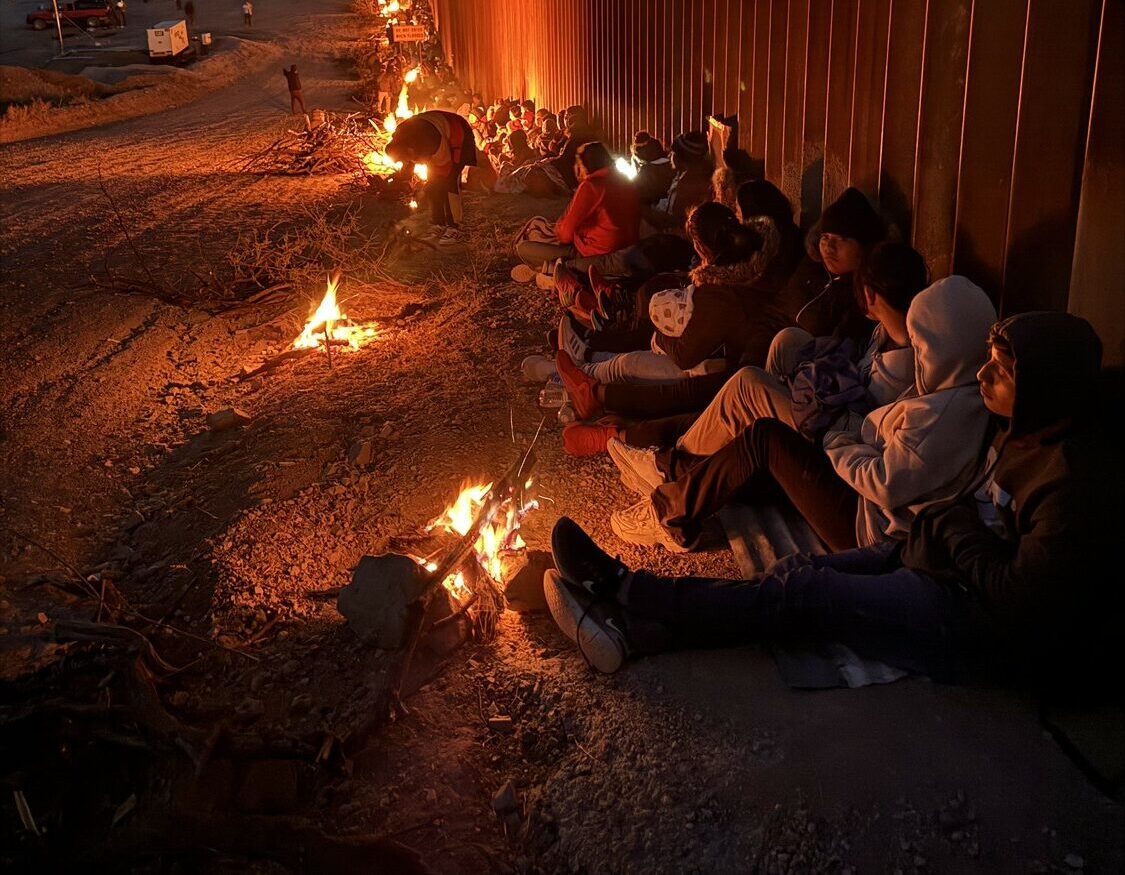
Asylum seekers camp out along the border wall outside Sasabe, Arizona. COURTESY ELISSA MCLEAN AND ANDY WINTER
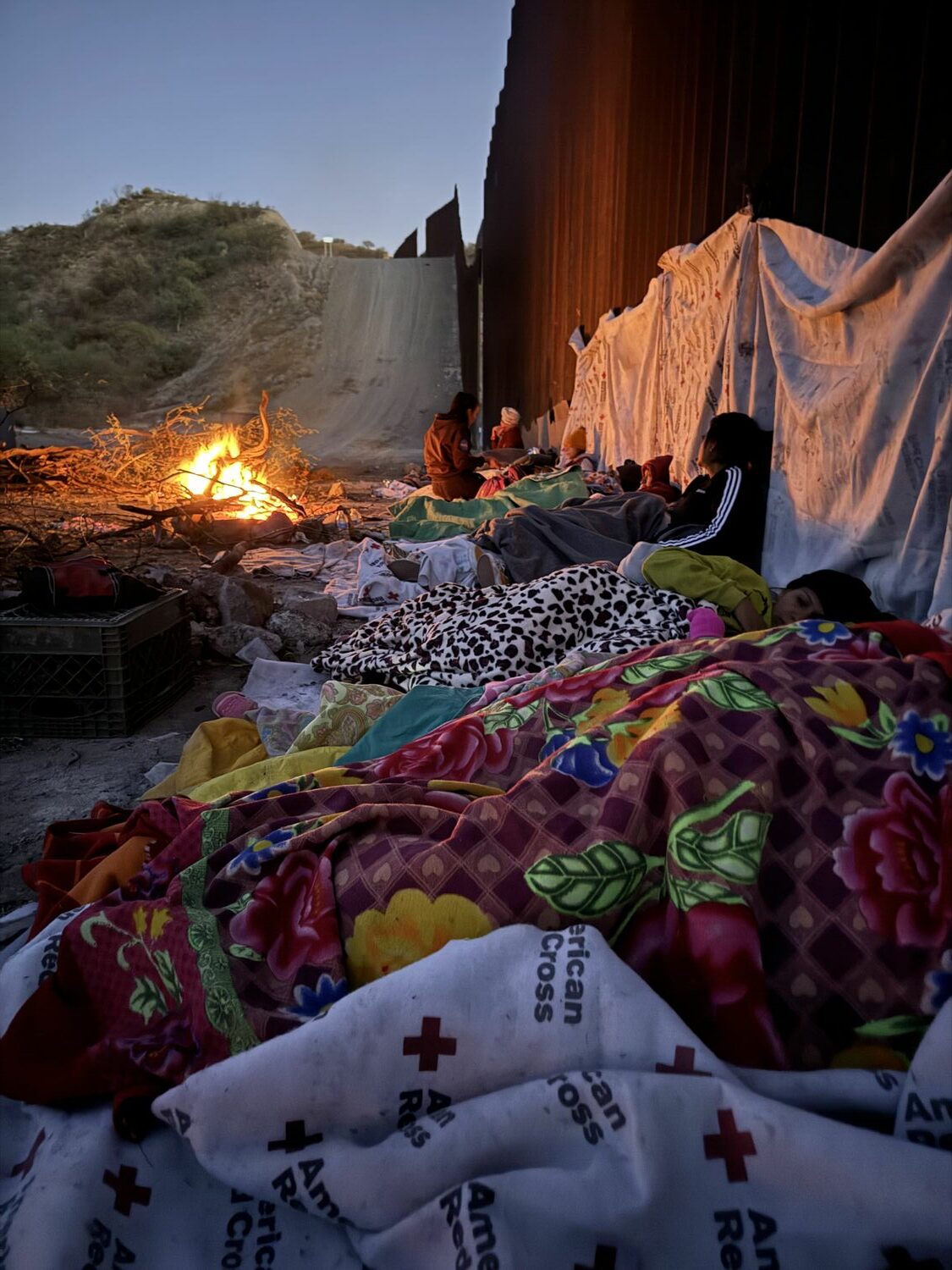
Asylum seekers camp out near the border wall outside Sasabe, Arizona. COURTESY ELISSA MCLEAN AND ANDY WINTER
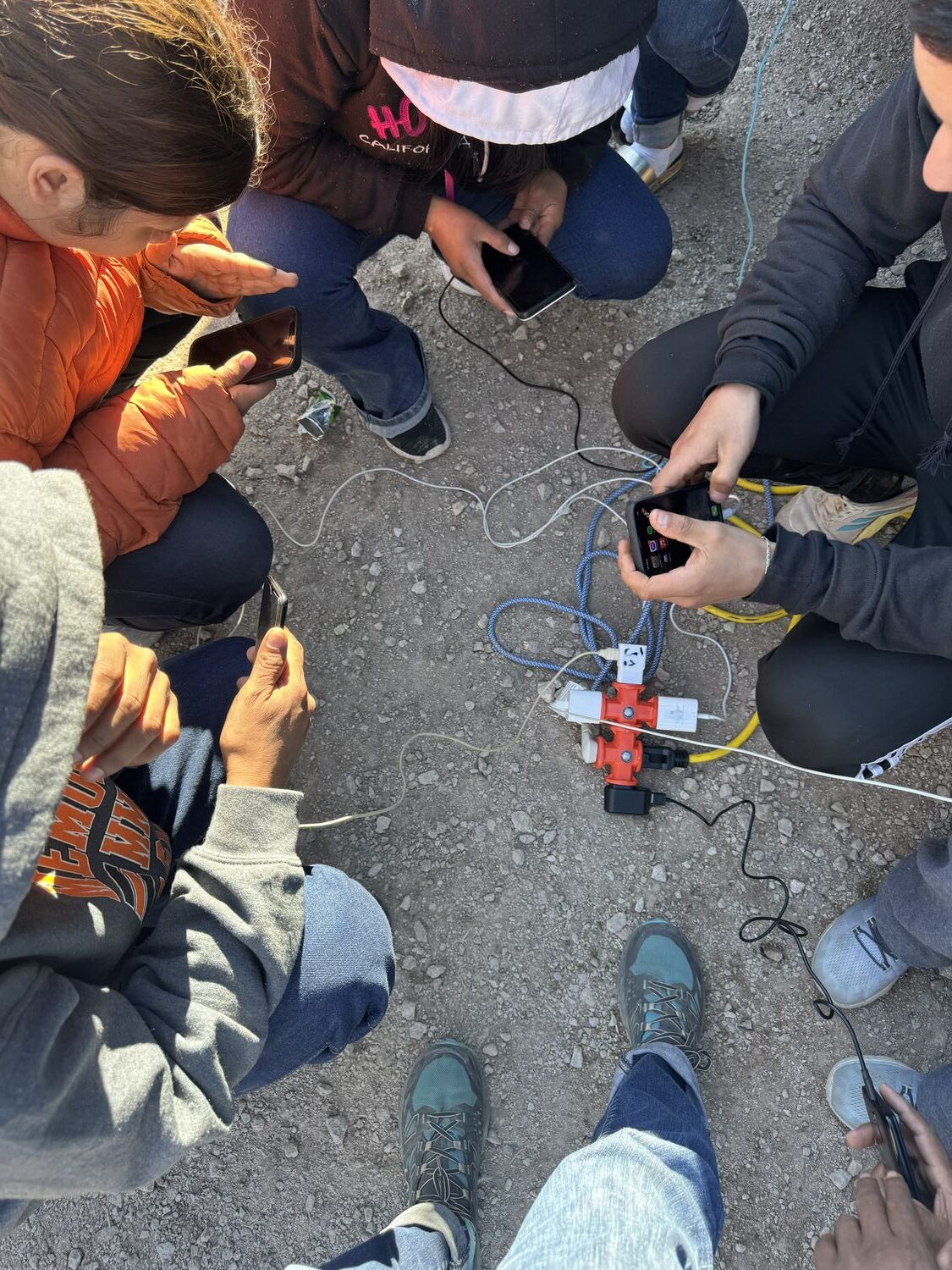
People used electricity generated by solar panels on Elissa McLean's and Andy Winters' van to charge their phones. COURTESY ELISSA MCLEAN AND ANDY WINTER
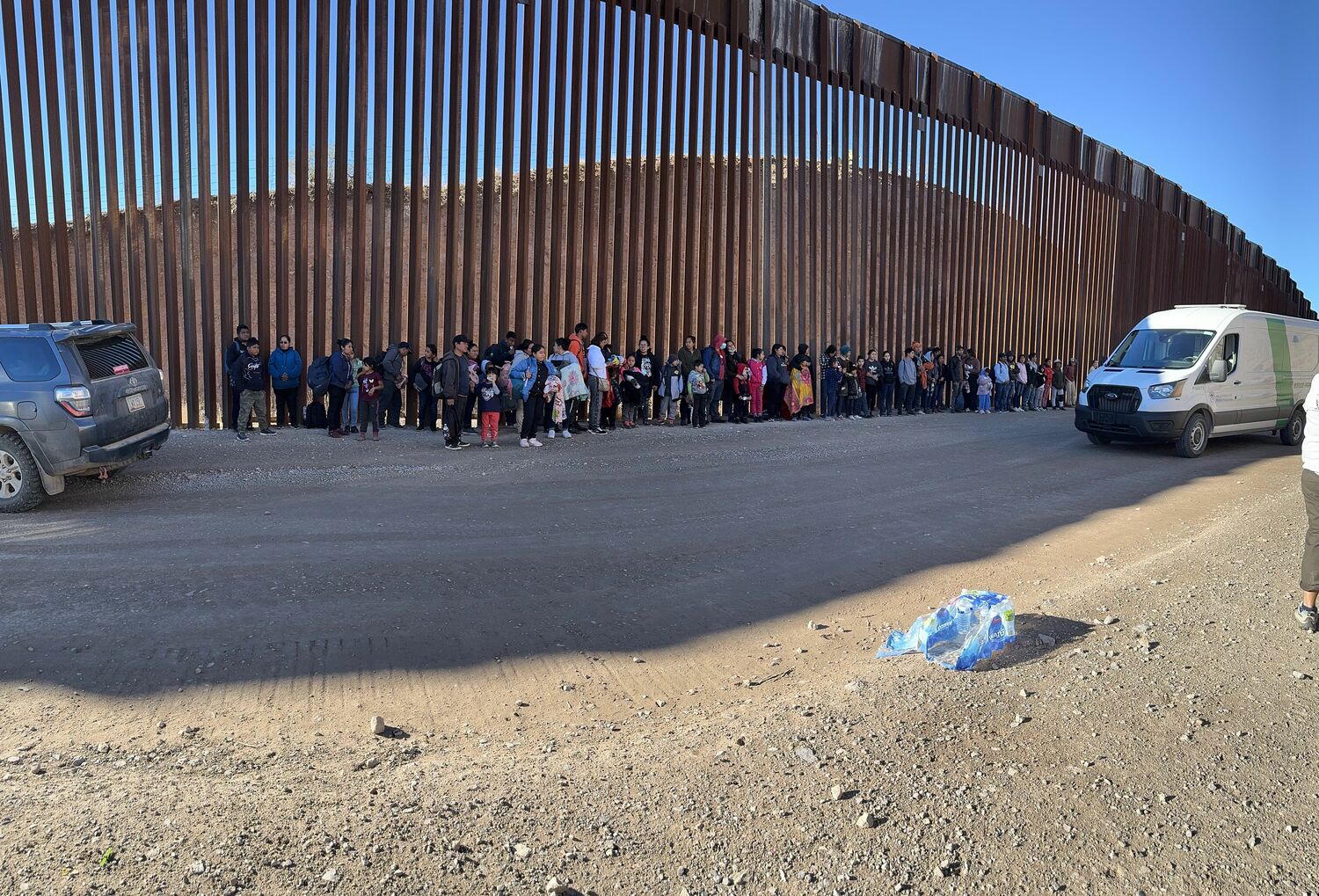
Aslym seekers wait to be picked up by border patrol agents near Sasabe, Arizona. COURTESY ELISSA MCLEAN AND ANDY WINTER
Subscribe to 27Speaks on Apple Podcasts, Amazon Music and Spotify, rate us and leave a review. COURTESY ELISSA MCLEAN AND ANDY WINTER
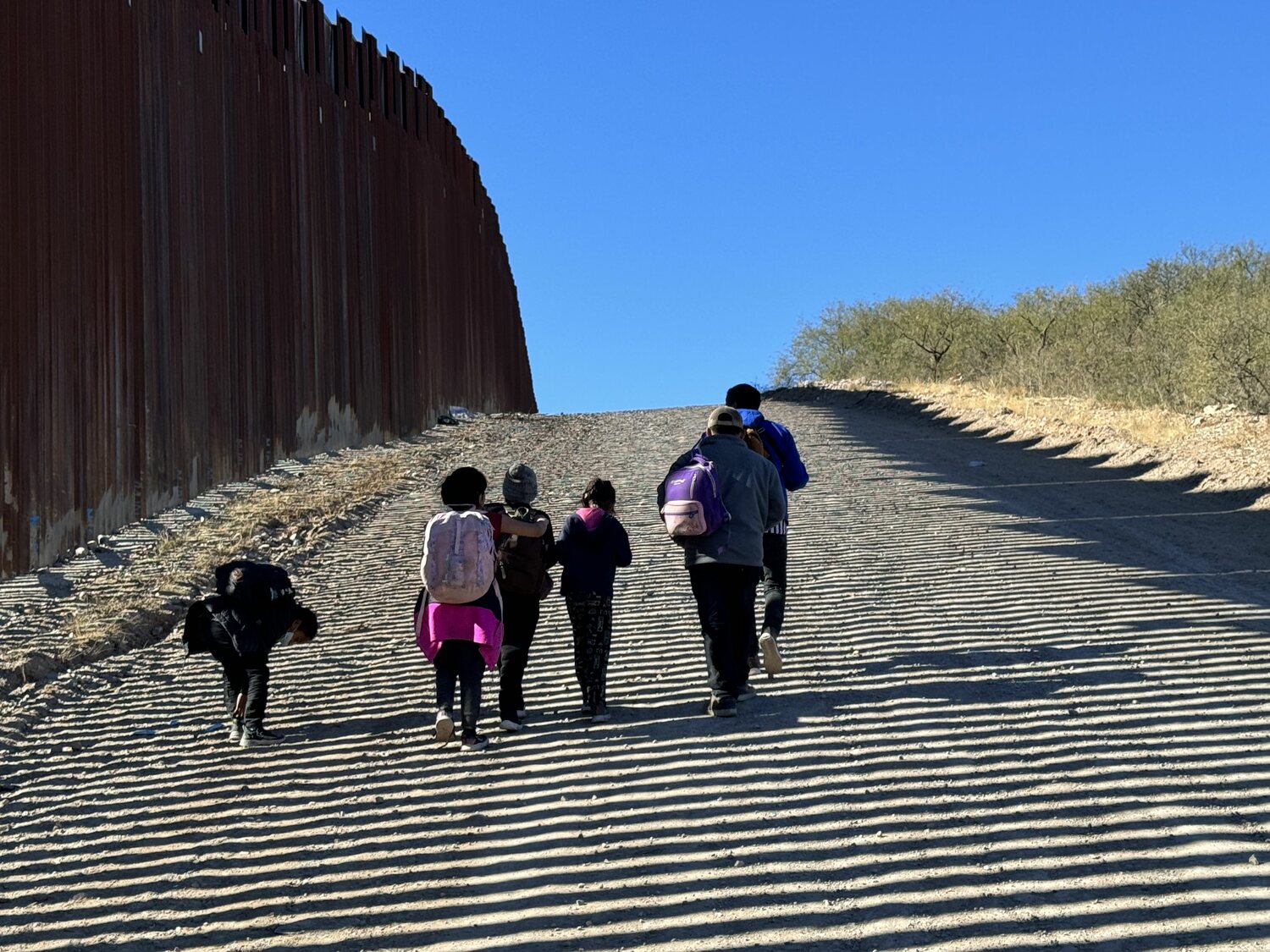
A family walks along the border wall outside Sasabe, Arizona. COURTESY ELISSA MCLEAN AND ANDY WINTER
More than a quarter million people crossed the southern border into the United States in December 2023, a new record. Among the volunteers who were on the American side to provide aid to new arrivals were Elissa McLean and Andy Winter of Noyac, who described their experiences in a talk at LTV Studios in East Hampton on January 24.
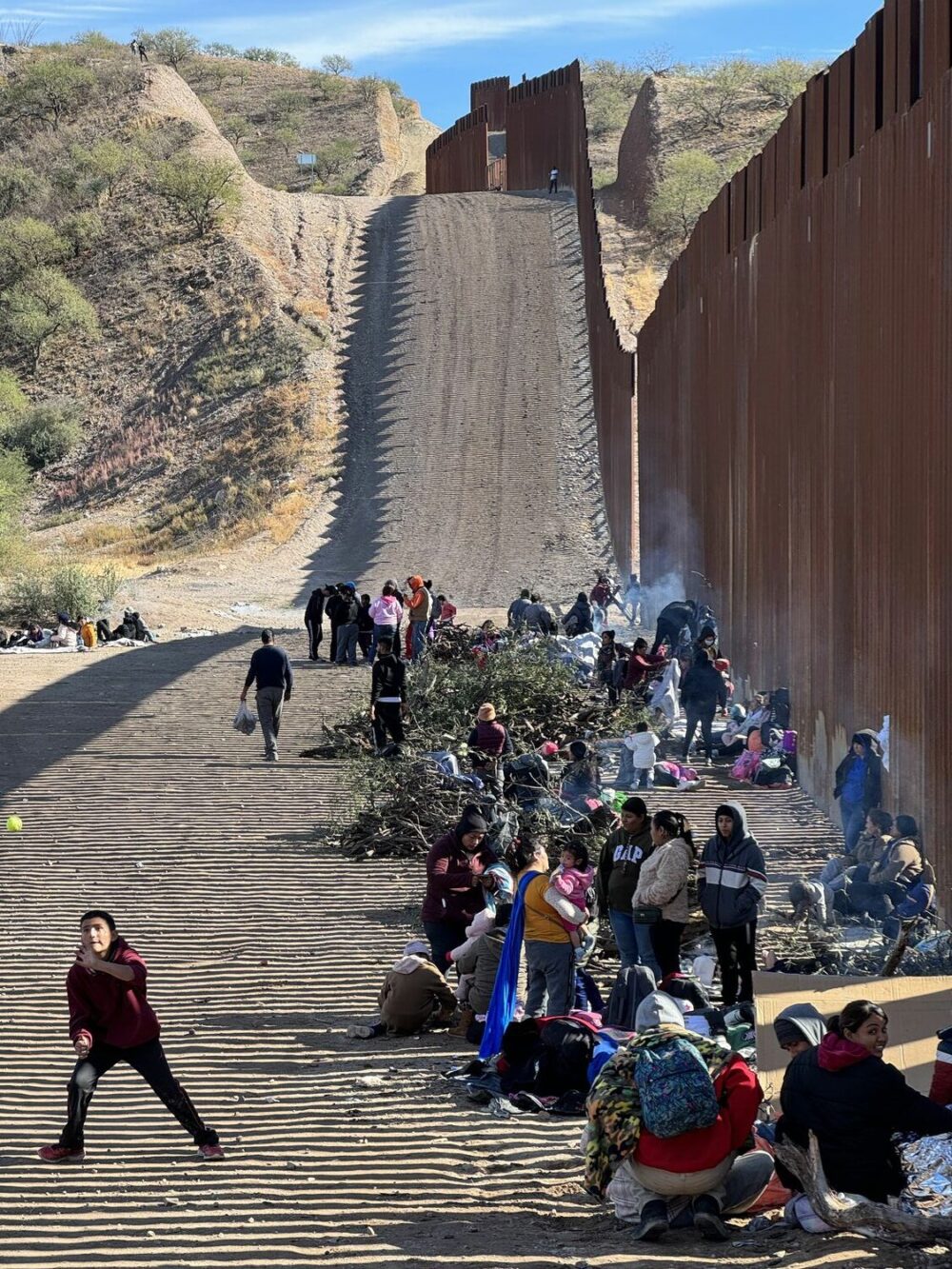
The couple spent two weeks in December near Sasabe, Arizona, where there is a gap in the border wall where a portion of the barrier was taken down for repair work.
Each day, an estimated 50 to 400 people cross the border from Mexico at that opening, most fleeing danger posed by drug cartels or corruption in their home countries. They hope to be quickly picked up by Border Patrol, so they can begin the long, and uncertain, process of applying for asylum, “because they are fleeing situations that are just so terrible,” Winter said.
The quest for asylum, which only about 20 percent of immigrants are granted, marks a major difference in the situation at the border from what was the case when the couple last visited more than a decade ago. “Fifteen years ago, the goal was to pass through the border and avoid Border Patrol,” Winter said, “because people were coming to look for work.”
McLean said the couple had been meaning to return to the border for years. The opportunity presented itself when their daughter, Emelia Winter, went to college in Colorado. The couple, along with their dog, Rafa, climbed into their customized Mercedes Sprinter camper van and headed west, visiting her before finding their way down to Arizona.
“We knew we wanted to go back to the border and be of service in some way,” said McLean, “but we didn’t know what form that would take.”
Once there, they simply fell in beside workers from several different aid groups, including the Samaritans, Salvavision, and No More Death. They helped distribute water to the thirsty, cooked beans and tacos on their camper stove, distributed blankets to people, many with small children, who camped next to the wall, and, most importantly, allowed people to use their satellite Wi-Fi so they could call home.
Once they shared the password, “Instantly, there were 100 people connected to our Wi-Fi, calling home, sending messages, ” McLean said. “They hadn’t been able to communicate this whole time on their journey.”
While those leaving Mexico may have left home only a few days before, others who were coming from more distant countries, may have been gone for much longer, said Winter.
“Most of their families hadn’t heard from them since they left. In some cases it has been seven weeks. They don’t know if they are alive or not,” he said. “So you are bearing witness to people making calls to Grandma, who was too old to make the trip, and everyone’s just crying. Everyone is so relieved to be able to make that simple contact with family. They left everything and everyone else they know behind.”
“It was nothing for us to be there,” added McLean. “All we had to do was park our rig and turn on the Wi-Fi and give out the password.”
Sasabe, about 15 miles away from the border crossing, is pretty much a ghost town, as is Sasabe, Mexico, right across the border. Winter said the cartels, which have carved up so much of Mexico, arrived in Sasabe, Mexico, a few months earlier, and practically overnight, the town of about 2,200 inhabitants was abandoned. Sporadic gunfire could still be heard in the distance during their stay.
The cartels see the access points to the border as highly valuable for obvious reasons, just as pirates and bandits have always looked for opportunity along popular trade routes. Besides smuggling drugs to the U.S., they can use them for human trafficking or to lie in wait to kidnap travelers and hold them for ransom their families can ill-afford to pay.
Winter said approximately 1 million guns are smuggled from the United States to Mexico every year. About 800,000 of those are AR-15 assault rifles, the kind of weapon favored by armies and mass killers alike.
“That’s what’s arming the cartels. That’s what’s making these communities so dangerous,” he said. “It’s just creating such dangerous environments for people to live in that they can’t. So that is why they are leaving.”
Winters said they encountered some people who are opposed to allowing any immigrants to cross into the U.S. One man, who believed it was a plot by the U.S. government, accosted Winter, demanding to know how many people would be allowed in. Winter said he asked him, “You think these folks with the babies and that pregnant woman, you think this is staged?”
“Absolutely,” the man replied. “If you don’t, you’re crazy.”
“It hit me like a two-by-four,” Winter said. “There is nothing in the world that will convince him otherwise. If you can see these people as hungry and thirsty as they are and not realize they don’t really want to be there. If there was another choice other than walking through the desert or walking for seven weeks and leaving everything behind, they would take it.”
The couple encountered Border Patrol on a regular basis. Although they were told they could be arrested, in many cases, they said the border agents relied on them to help organize refuges for pickup.
One agent, though, was particularly forceful. “I could arrest you right now, but you don’t care, do you?” the agent asked Winter.
“Actually, I do care officer, but there are 400 people behind you that are hungry and thirsty,” he responded, “and I just care more about that.”
The officer then reminded Winter, “Nobody made them come here.”
“But they are here. There’s people here,” said McLean. “And they need our help.”


 Stephen J. Kotz on Jan 30, 2024