


 3 Photos
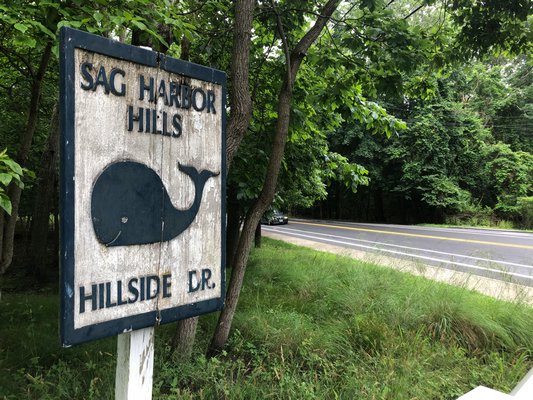
The National Park Service officially added the SANS neighborhood of Sag Harbor to the National Register of Historic Places. PRESS FILE
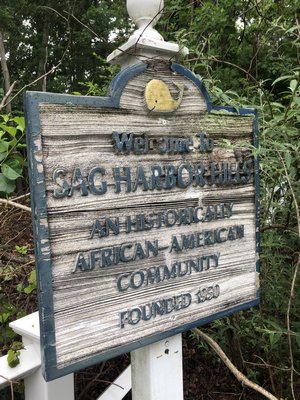
The National Park Service officially added the SANS neighborhood of Sag Harbor to the National Register of Historic Places. PRESS FILE
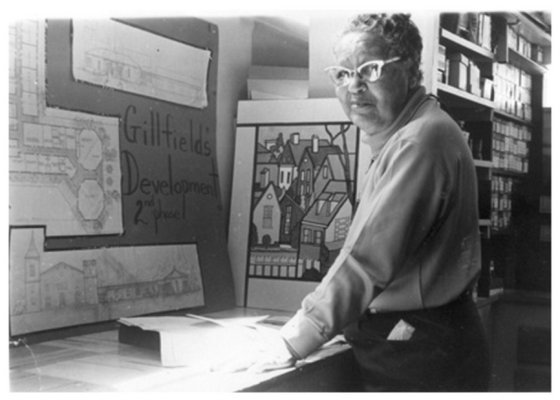
Amaza Lee Meredith, one of the founders of Azurest. COURTESY NEW YORK STATE HISTORIC PRESERVATION OFFICE
The National Park Service on July 10 officially added the SANS neighborhood of Sag Harbor—the three historically African-American adjacent communities on the east side of the village called Sag Harbor Hills, Azurest and Ninevah—to the National Register of Historic Places, completing a process that community volunteers, led by Renee Simons, launched in 2016.
The national designation follows the state’s decision in March to add SANS to its Register of Historic Places, which automatically triggered its nomination for the national listing.
While the waterfront SANS communities feature mostly modest homes that are not significant historically or architecturally, its very existence as one of the last primarily African-American private resort developments in the United States makes it historic and culturally significant.
The three SANS subdivisions, which date from the late 1940s and early 1950s, were developed and thrived as part of a network of more than 100 resort neighborhoods nationwide that “grew out of America’s Jim Crow restrictions and practices,” according to Ms. Simons, the president of SANS.
Facing the redlining and a lack of access to financing of the Jim Crow era, the community’s founders were well educated, professionally successful African-Americans whose personal and professional connections continue to form the social backbone of the SANS neighborhood.
“SANS stands on the shoulders of the legacy families who came to Sag Harbor with a purpose and a vision,” Ms. Simons wrote in a press release this week announcing the national listing. “While not builders or developers by profession, these shrewd forerunners forged ahead and formed a coalition of thought leaders to make a difference in their families’ lives and the quality of lives of many around them and in America.”
The community’s effort to achieve listing in the state and national registers was motivated by a growing fear that redevelopment was dramatically altering the three adjacent neighborhoods. Listing in the state and national registers does not impose restrictions on building or development. Preservation of properties listed in the state and national registers may yield tax benefits for the owners.
“We savor the moment and plan next steps to celebrate accomplishments, preserve, and enhance what SANS stands for in the community,” Ms. Simons wrote in an email on Monday. “Environmental issues are important to many residents. Our private beach is part of our designation area/mapping and we plan to address the massive erosion that is taking place in the bay beaches
“Hopefully, there is a heightened and renewed commitment to the historic context in American history,” she wrote when asked how the designation could help preserve the neighborhood. “Perhaps, the importance will increase attention to the bay and our stories.”
SANS is not part of Sag Harbor’s designated historic district, last updated in 1994, where landscaping, architectural and structural changes are regulated by the village’s Historic Preservation and Architectural Review Board. Ms. Simons noted that the “nomination form” prepared in 1994 for including the district in the national register specifically referred to the communities east of Havens Beach, which forms the district’s boundary.
“The houses are not 50 years old and they do not fit in with Sag Harbor’s period of significance,” the form reads, “but they deserve future study as early resort communities built for African Americans.”
When the SANS subdivisions were created, African-Americans were excluded by covenants and practice from most public recreation locations in the New York area, Ms. Simons explained. But in the late 1940s, two Ivy League-educated women, Amaza Lee Meredith — the first noted African-American female architect in the country — and her sister Maude Terry negotiated the purchase, founding and development of Azurest.
“With this and their extensive social networks within the greater New York area,” Ms. Simons explained, “families, friends, co-workers, college associates and professional groups spread the word of a great opportunity to foster friendships, family traditions and political exchange. Sag Harbor Hills and Ninevah subdivisions soon followed” in 1950 and 1952, respectively.
Ms. Simons thanks a number of organizations and individuals for their support in the effort to designated the SANS neighborhood as an historic place. They included the Sag Harbor Partnership; the Eastville Community Historic Society and its director Dr. Georgette Grier-Key; Preserve New York; the Robert David Lion Gardiner Foundation and the National Organization of Minority Architects; Sara Kautz of Preservation Long Island; as well as SANS residents, donors and its steering committee.


 Staff Writer on Jul 16, 2019