


 2 Photos
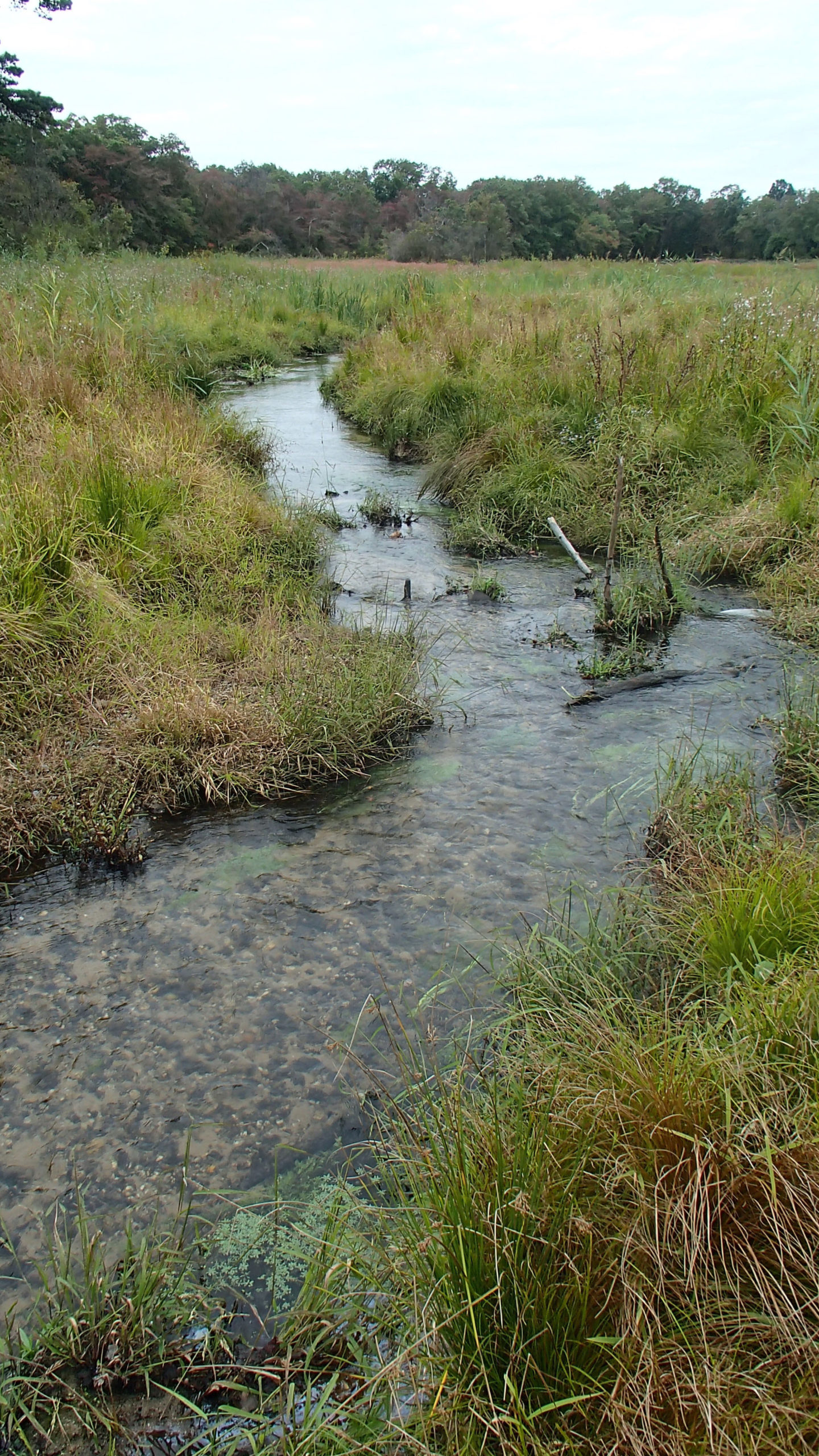
With the dam damaged by a coastal storm, West Brook Pond has reverted to its origins - West Brook - with most of the pond bottom reverting to an ecologically diverse assemblage of marsh plants. MIKE BOTTONI
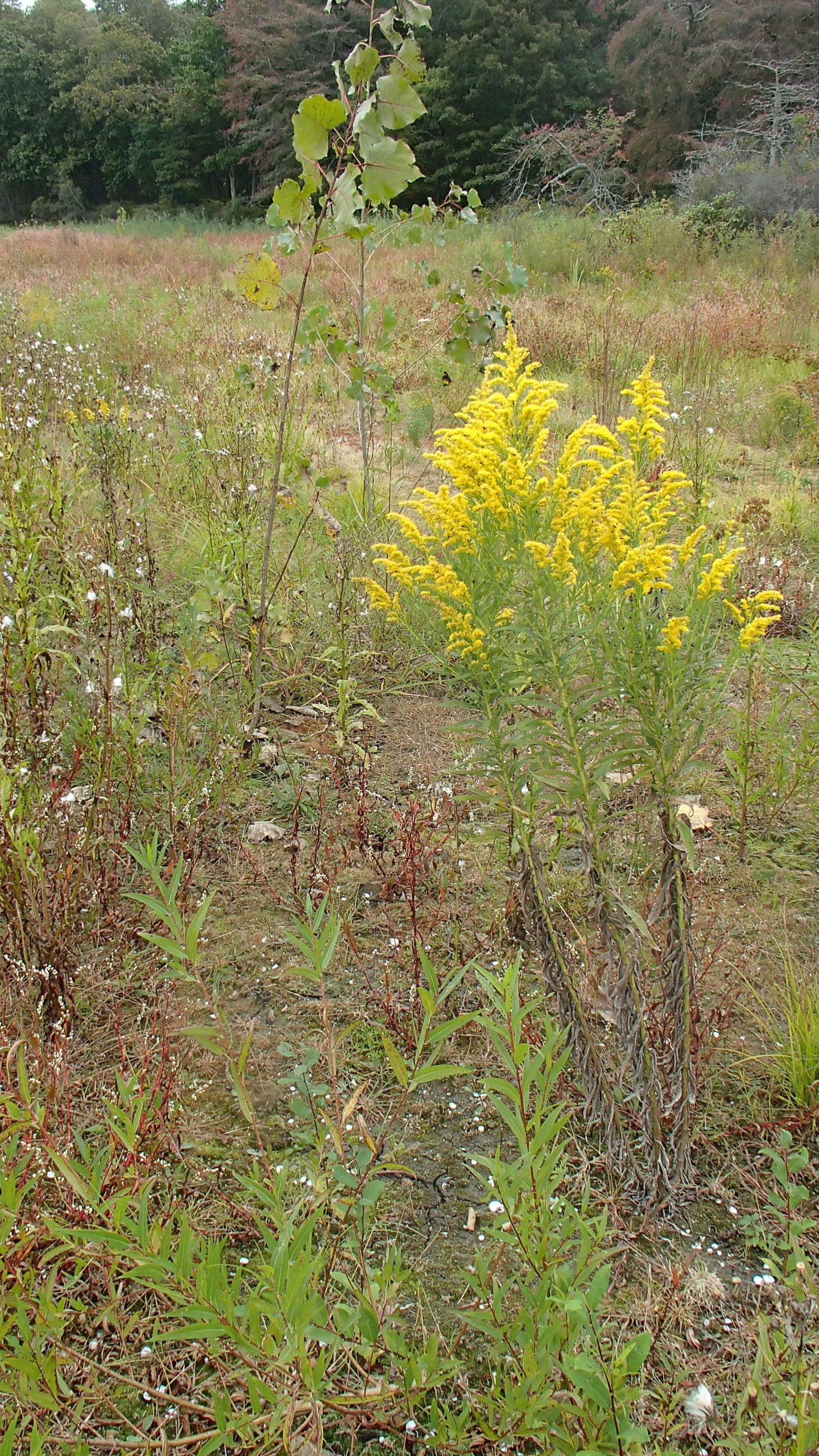
Sprouting from the pond sediments are several species of trees: willow (foreground) with thin, linear leaves, and cottonwood (background) with large heart-shaped leaves. MIKE BOTTINI
At this time of year, our native flowering plants are dominated by the numerous species in the white and lavender-colored flowers of the aster group and the brilliant yellow flowers of the goldenrods. The latter is an important nectaring source for monarch butterflies, fueling their long migratory flight to overwintering haunts in the mountains of Mexico.
Walter Mugdan sent me photos of a distinctive, tall, white-flowered plant, with a question: “We have lots of this lovely white flower blooming all over our park. Do you know what it is called?”
That would be white snakeroot (Ageratina altissima).
I only recently learned the name of this native wildflower from colleague Enrico Nardone. It is quite abundant in many areas but easily overlooked when it is not in bloom.
Native Americans knew of its toxicity, but their knowledge was not always taken seriously by early European settlers, who allowed cattle to feed on it. The toxin, called tremetol, became concentrated in the cow’s milk and was passed on to both calves and people who drank it, causing sickness and death.
Here is a link to some interesting information about this plant: bbg.org/news/weed_of_the_month_white_snakeroot
Vultures have become a common sight in the Riverhead area. Robert Adamo recently reported that Riverhead’s vulture roost complex has grown to approximately 40 birds, most being turkey vultures, but a small number of black vultures are also in the mix. Jennifer Murray reports that ravens have become a regular fixture on the North Fork.
Last weekend, I joined Seatuck staff and volunteers for a phragmites pull at West Brook, a tributary of the Connetquot River whose dam failed during a coastal storm several years ago. No longer West Brook Pond, it quickly sprouted all sorts of marsh plants, including several rare species, from its old seedbank stored in the pond’s rich sediments. It resembled an ecological feature that hasn’t been seen in hundreds of years here on Long Island: an abandoned beaver pond reverting to meadow.
Beaver, along with several other furbearers that were found on Long Island in the 1600s, were quickly extirpated for their fur, in the case of beaver and otter, or for the cash bounties paid for some designated portion of their carcass, in the case of wolf and bobcat.
Today, ecologists recognize the important role beaver play as an “ecosystem engineer,” temporarily modifying woodland streams into ponds, which, when abandoned, become marsh meadows that gradually succeed back to woodlands. This interesting and complex process creates habitat for many different species of birds, mammals, reptiles, amphibians, fish, insects and other invertebrates, and is a fascinating aspect of wildlife ecology.
Beaver, with their habit of damming streams and creating ponds, are one of many wildlife species whose intrusions into developed neighborhoods is very unwelcome. However, it is worth noting that most of those flooded areas lay in riparian zones, also known as floodplains. Had we not trapped all the beaver out of this area, perhaps our planners and developers could have learned something and avoided the folly of building roads and structures in floodplains.
As illustrated in the case of white snakeroot’s toxins and the Native Americans, there is much we failed to learn from those who resided here long before us — including our indigenous wildlife.


 Mike Bottini on Oct 5, 2020