


 5 Photos

The Bridgehampton School Class of 2015 graduation ceremony. ALYSSA MELILLO
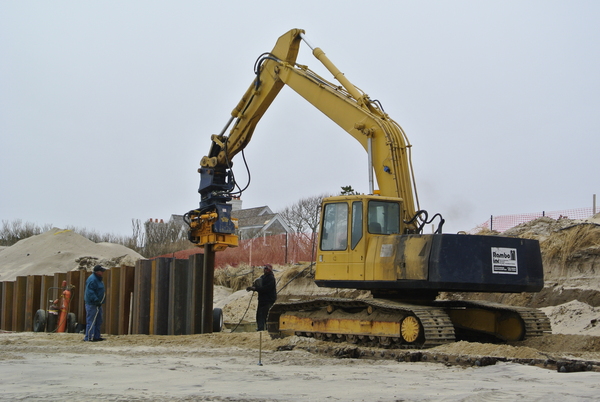


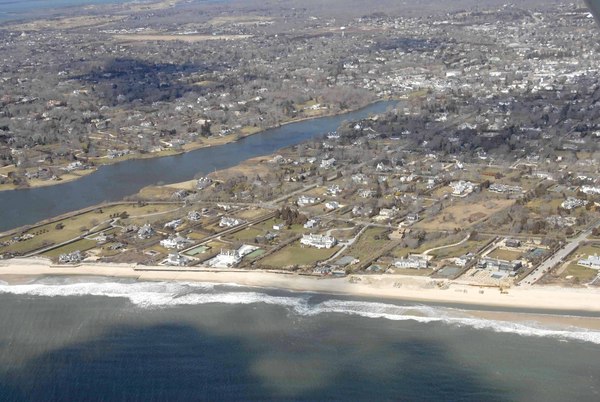
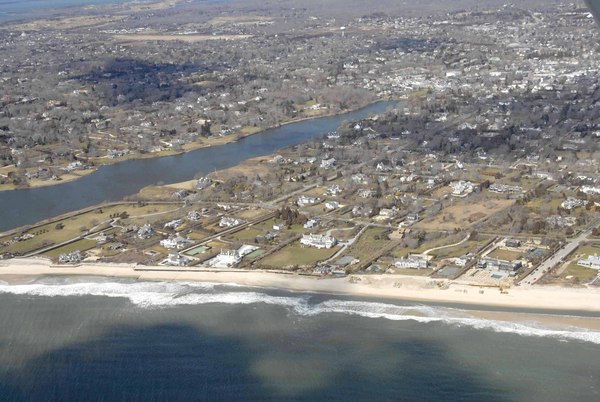
State Department of Environmental Conservation officials told a local lawmaker this week that at least three seawalls constructed in recent months along the Southampton Village oceanfront are in violation of the state and local permits allowing the work.
Even as one of the walls was still being constructed by heavy machinery hoisting giant granite boulders into a pile, DEC Regional Director Peter Scully told State Assemblyman Fred W. Thiele Jr. that state investigators, who made two visits to Southampton Village last month, found that two steel bulkheads and a stone revetment appear to violate the permits that were issued by village Building Department officials, according to Mr. Thiele.
“There are violations of state law as well as the local laws of the village, with regard to the Coastal Erosion Hazard Area,” Mr. Thiele said he was told by Mr. Scully of the seawalls, which front four estates on Gin Lane, just east of Lake Agawam and the Southampton Bathing Corporation. “I would expect that there will be some action from the DEC with regard to enforcement.”
The DEC itself, through a spokesman, has declined to comment on the investigation or the details of the permits issued to the property owners while it is examining the details of their issuance and the erection of the walls. No action was taken to stop the work on any of the three properties—and all three projects in question now appear to be completed.
Village officials said that they have likewise gotten no indication as to how the DEC is approaching their investigation of the stone and steel structures. Village Mayor Mark Epley said that Chief Building Inspector Jon Foster had visited the site of the construction of the seawalls on at least one of their two visits to the village and that they had discussed the issuance of the permits with him.
“Over the last several weeks, we have looked at each one of these permits to see what we thought was appropriate,” Mr. Epley said this week. “I had questioned the installation of those bulkheads down there with Jon, but none of us are really experts in this kind of thing, so we rely somewhat on the DEC to give us guidance here.”
New York State regulates development within ocean dunelands through Coastal Erosion Hazard Area laws, which place restraints on any construction within what traditionally constituted the landward portion of natural dunelands.
In most municipalities, however, the state delegates the authority to review individual projects and issue construction permits to local officials. In Southampton Town, the CEHA is regulated by the town’s Environmental Department. In most of the town’s oceanfront villages, the permits are handled by village building or planning officials.
In 2011, the DEC threatened to revoke the authority of Quogue Village officials to review and issue CEHA permits after it found that several of the permits the village had issued appeared to violate numerous facets of the CEHA laws.
Seaward of the dunes, the Southampton Town Trustees claim jurisdiction to regulate construction of any structures—an authority that has been challenged in court for years by homeowners and municipalities. Since the early 1980s, the Trustees have banned the installation of new hardened protective structures along the oceanfront, because, they say, the walls accelerate erosion of public beaches.
The Trustees did issue a permit for the reconstruction of a rock revetment in front of the house owned by Chris Shumway at 104 Gin Lane. But last week, Trustees said the work that was being done clearly far exceeded what was granted in the permits issued because hundreds of tons of new stone was trucked in to augment the rocks that had been on site already.
The two steel walls, which front the estates of Mark Rachesky and Joshua Harris, were built with state permits issued by the Village Building Department. Neither structure received Trustees permits because consultants for the homeowners said the structures were built landward of where the natural dunes once fronted the properties.
“Everything we’re doing there is consistent with the village and state laws,” Mr. Harris’s attorney, Southampton Village lawyer John Bennett said. “The village was down there throughout the construction of the bulkhead and was fine with it.”
The Town Trustees said this week that they were continuing to discuss their own options with regard to the construction of the seawalls and have not ruled out lawsuits to demand that the structures be removed or altered to fit permits issued to them.
The Trustees recently lost a lawsuit demanding that sandbags buried in the beachhead in front of three Quogue Village properties be removed when the judge ruled that the sandbags were buried landward of the Trustees jurisdiction. The applications for the Gin Lane protections also claim that the structures are outside the Trustees’ limit of jurisdiction.
Trustee Eric Shultz said that a coastal engineering consultant working with the Trustees to draft an updated coastline protection policy, Dr. Robert Young, has been in touch with Mr. Scully regarding the structures built at the Gin Lane estates.
“It is clearly a questionable situation as far as the permits that were issued—certainly with regard to our permit for that rock structure,” Mr. Shultz said. “We will be discussing with our attorneys what our options might be, but this is clearly on the DEC’s shoulders here.”


 on Mar 29, 2013