


 2 Photos
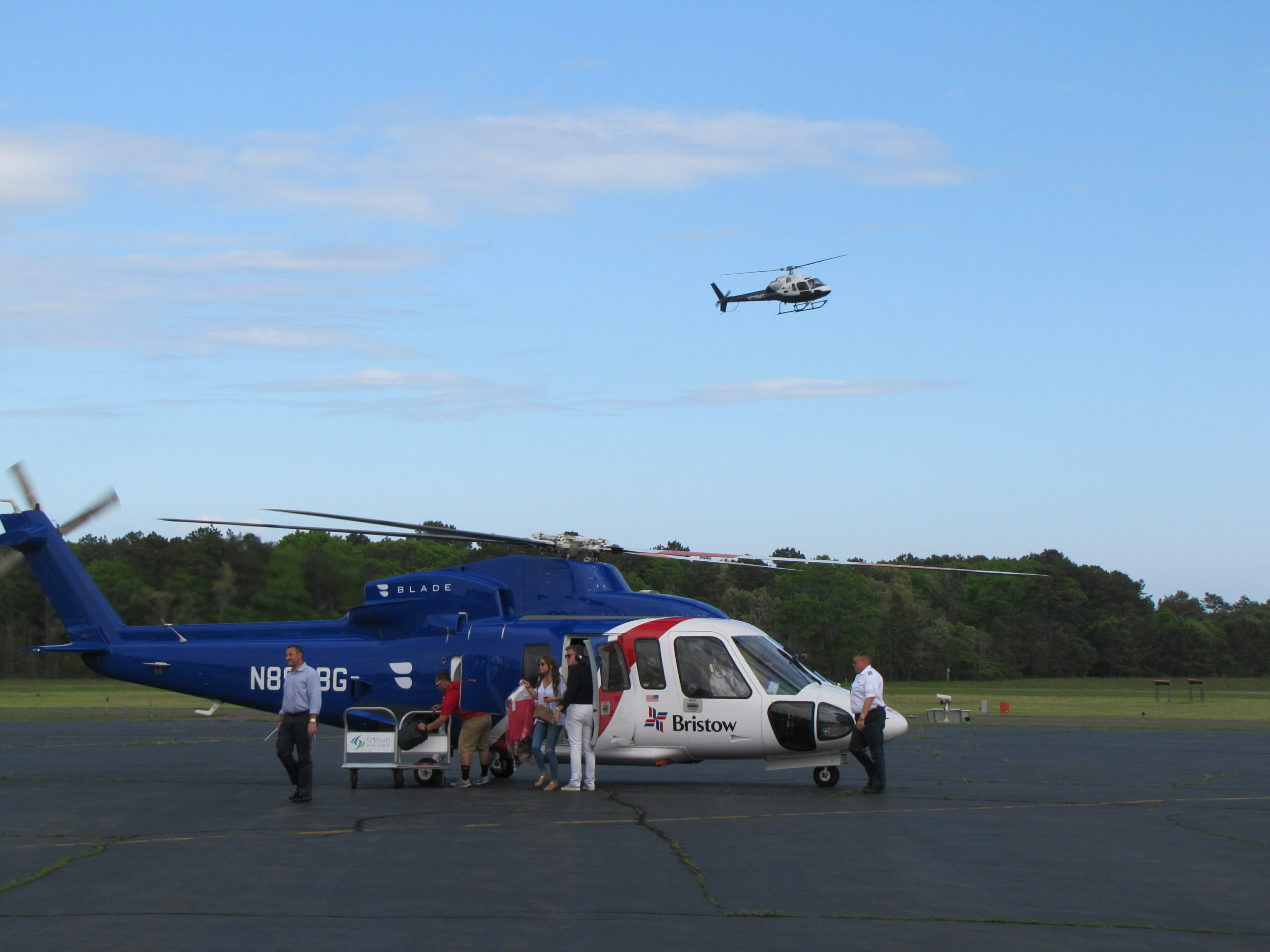
The number of passengers that disembarks from each airplane or helicopter that lands at East Hampton Airport this summer will be recorded to help the town gauge the economic and environmental impact of the airport. MICHAEL WRIGHT
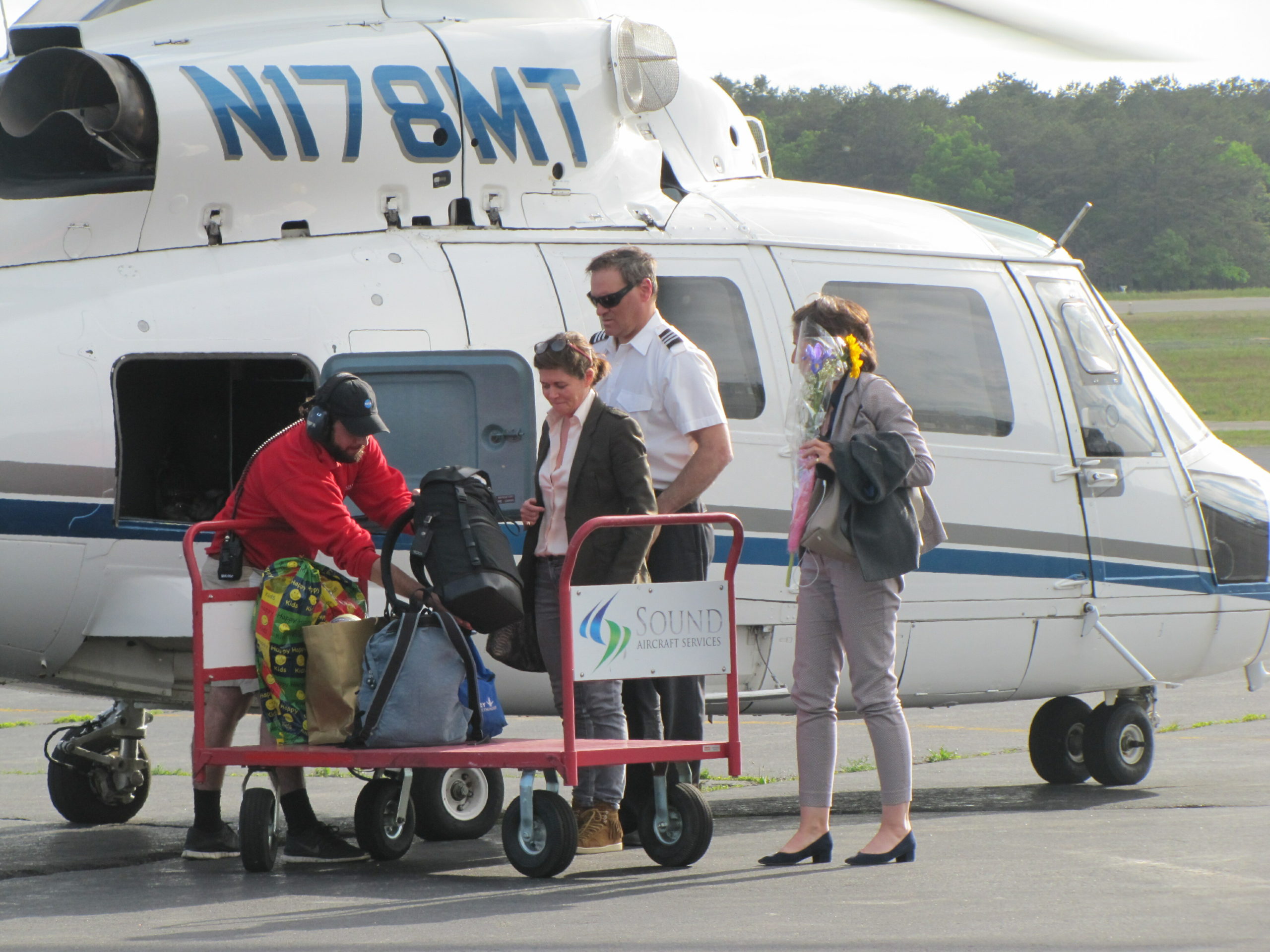
The number of passengers that disembarks from each airplane or helicopter that lands at East Hampton Airport this summer will be recorded to help the town gauge the economic and environmental impact of the airport. MICHAEL WRIGHT
For the first time, East Hampton Airport staff have begun taking head counts of passengers from all the flights that come into the airport, in an effort to get better focus on a statistic that drives the economic and environmental assessments of the airport’s impact on the local community that the town will use to judge whether to close the airport or not.
Sound Aviation, the company that has run the on-the-ground operations at the airport since 1990, has never taken head counts of passengers disembarking from planes and helicopters in the past, but has begun to do so this month and will continue through August at the urging of those trying put finer points on the airport’s operations as the town wades into the debate over its future.
East Hampton Town and a pilot’s advocacy group have both hired consultants to conduct economic analyses of the airport. Both reports relied largely on estimates of the number of passengers who came to the town aboard aircraft that landed at the airport and how much each of them could be expected to have spent during their stay.
The study done for the pilots group, the East Hampton Community Alliance, used an assumption of an average of four passengers per aircraft. The town’s study assumed four per aircraft on weekends but only two each on weekdays. The discrepancy came up at a recent meeting of the Airport Management Advisory Committee.
“Very few people, with a couple of super-wealthy exceptions, have the aircraft that brought them in wait around to take them out whenever they decide to leave, so saying that the number of operations relates to the number of visitors is really very misleading,” Arthur Malman, chairman of the committee said on Friday. “The other thing that is misleading in the town and East Hampton Community Alliance reports is the number of passengers that come in on a flight. There’s been a misconception that there are records and statistics for this. That’s just not true. It started from guesses.”
The “guess” about the average number of passengers was made by longtime Airport Manager James Brundige, members of the committee said, but was clearly referencing only the average aboard each plane carrying passengers.
Both of the economic studies that have been presented to the town used the passenger estimates to extrapolate a total number of visitors, based on the number of “transient” flights into the airport, and assigned a dollar value to the spending of each that was drawn from an earlier economic study of visitors to the region.
The EHRC study estimated the economic benefit of the airport at close to $80 million annually. It included the benefits of visitors whose destinations were in several hamlets, including portions of eastern Southampton Town, and estimated their spending at some $1,700 per person, per visit.
The town’s study estimated it was something lower than $20 million and possibly as low as $7 million annually, looking only at the direct benefit to East Hampton Town itself. The town’s consultants also ballparked each individual’s spending at only between $500 and $1,300 per visit.
The town has been wrestling for seven years with ways to tamp down the noise impacts of the airport. Federal courts struck down a town attempt to impose curfews and limits on the number of flights. In September, the town, which owns the airport and the approximately 600 acres that surround the terminal and tarmac, will be freed from the legal strings that were attached to grants awarded to the town by the Federal Aviation Administration in 2001 for maintenance projects. Once freed from the so-called grant assurances, the town will still not gain any new control over the operations at the airport, but it will have the power to close the airport outright.
The town has given no time frame for when it might make a decision, but Town Supervisor Peter Van Scoyoc last week said the call would certainly be made before the summer of 2022, but that the decision will not come in the early fall following the expiration of the grant assurances.
Last week, the town held its latest discussion of the airport’s impacts, focusing on the environmental impacts, namely greenhouse gasses that aircraft emit. Consultants told the Town Board at a work session last week that the airport’s emissions made up about 6 percent of the total emissions in the town — with automobile traffic making up the real lion’s share.
The number of passengers on each flight could inform how the Town Board weighs that data as well, with the relative impact of each flight weighed against its environmental footprint.
“The airport may only be a fraction of the greenhouse gasses in the town compared with traffic, sure, but if you look at it per person — then it’s much different,” Mr. Scoyoc said recently. “Is there a reasonable level of impact so that a few people can save a couple hours of time for non-essential travel? I think that’s probably how that data could be looked at.”


 Michael Wright on Jul 14, 2021