


 13 Photos
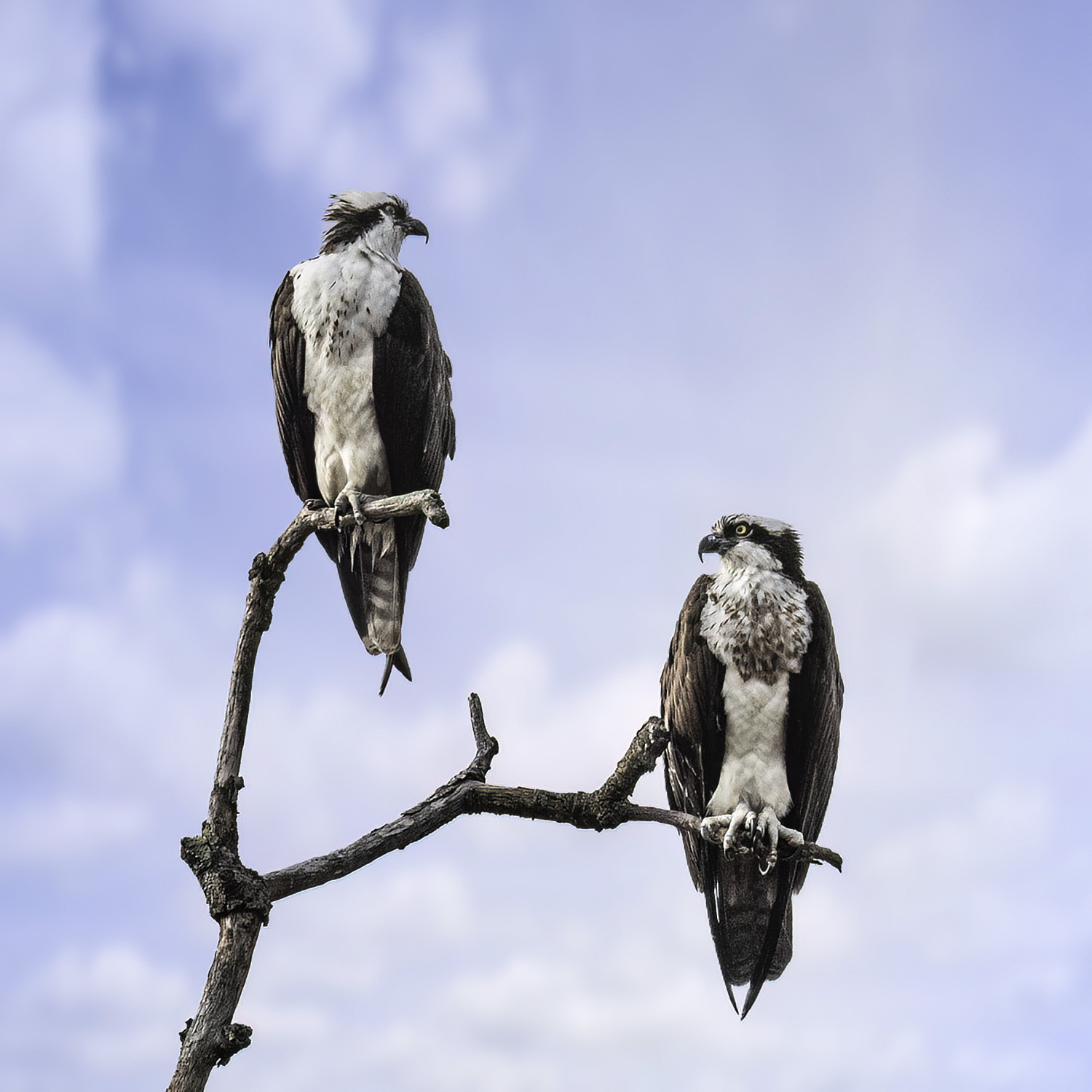
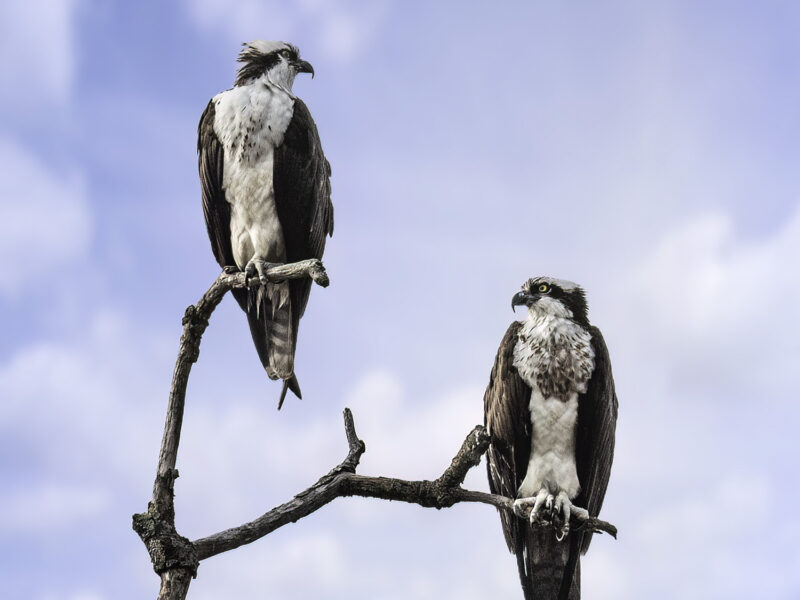
A male osprey, left, and female with darker chest brown markings or "necklace." MARIANNE BARNETT
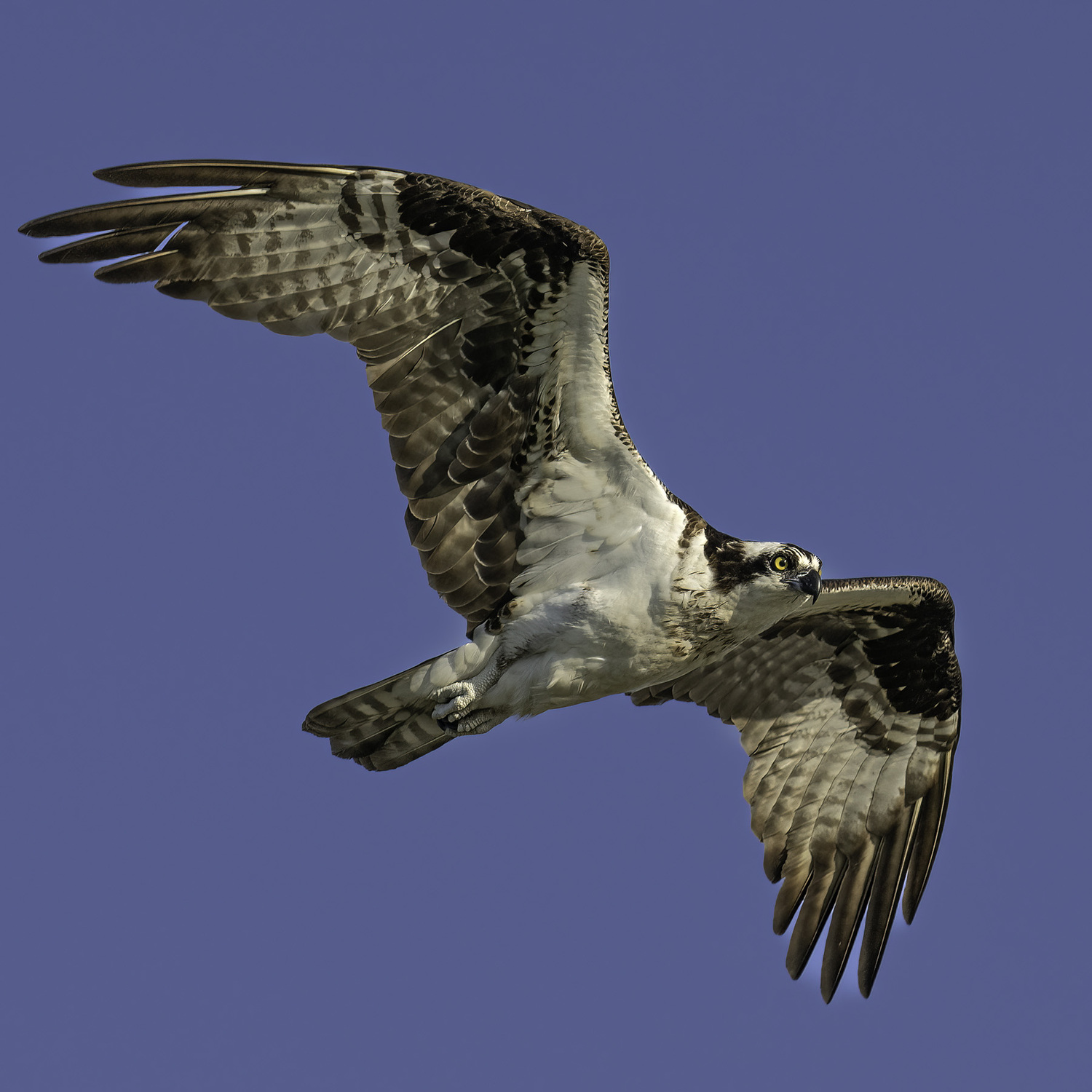
An osprey. MARIANNE BARNETT
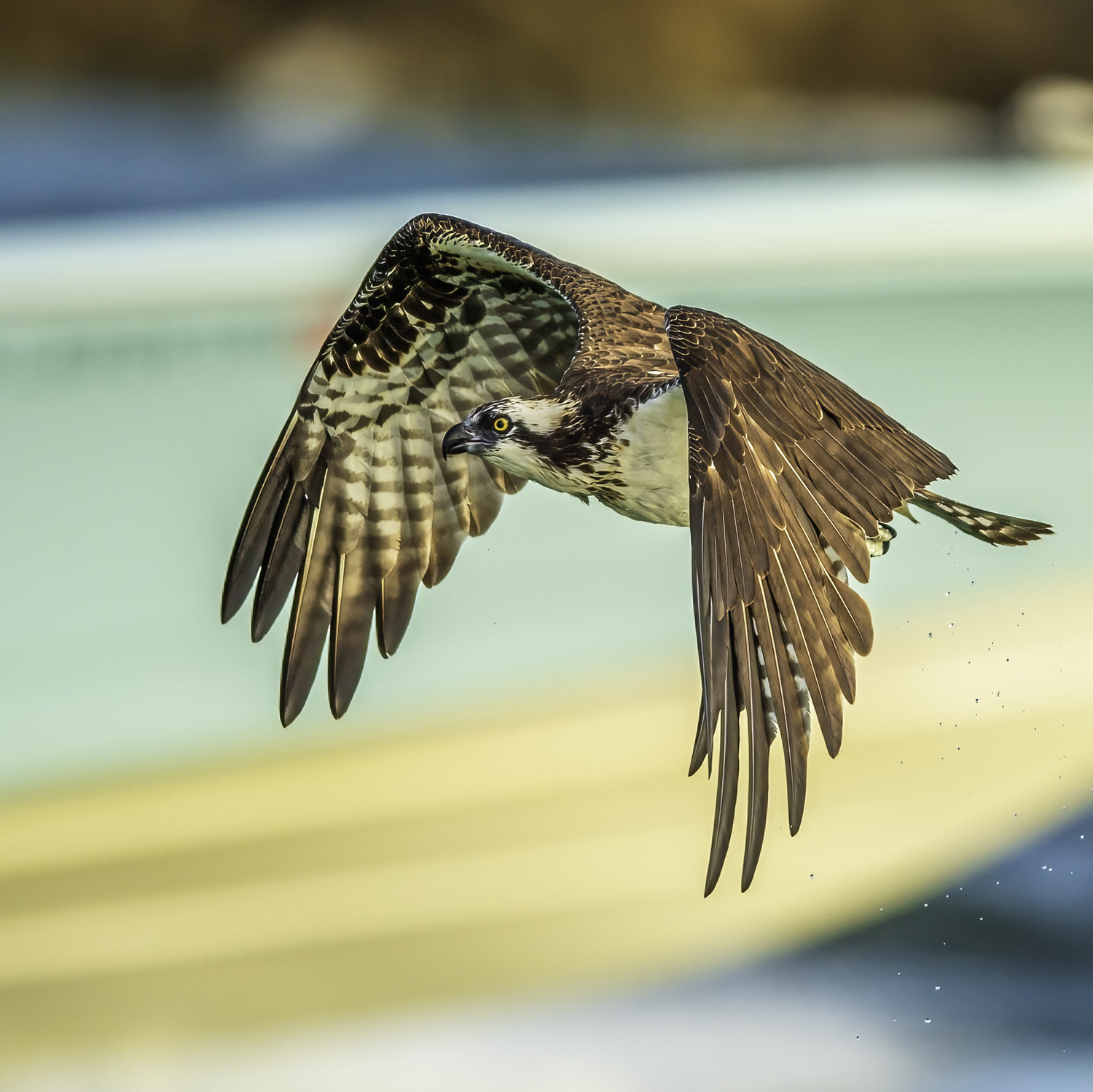
An osprey coming up from a dive in the marina. MARIANNE BARNETT
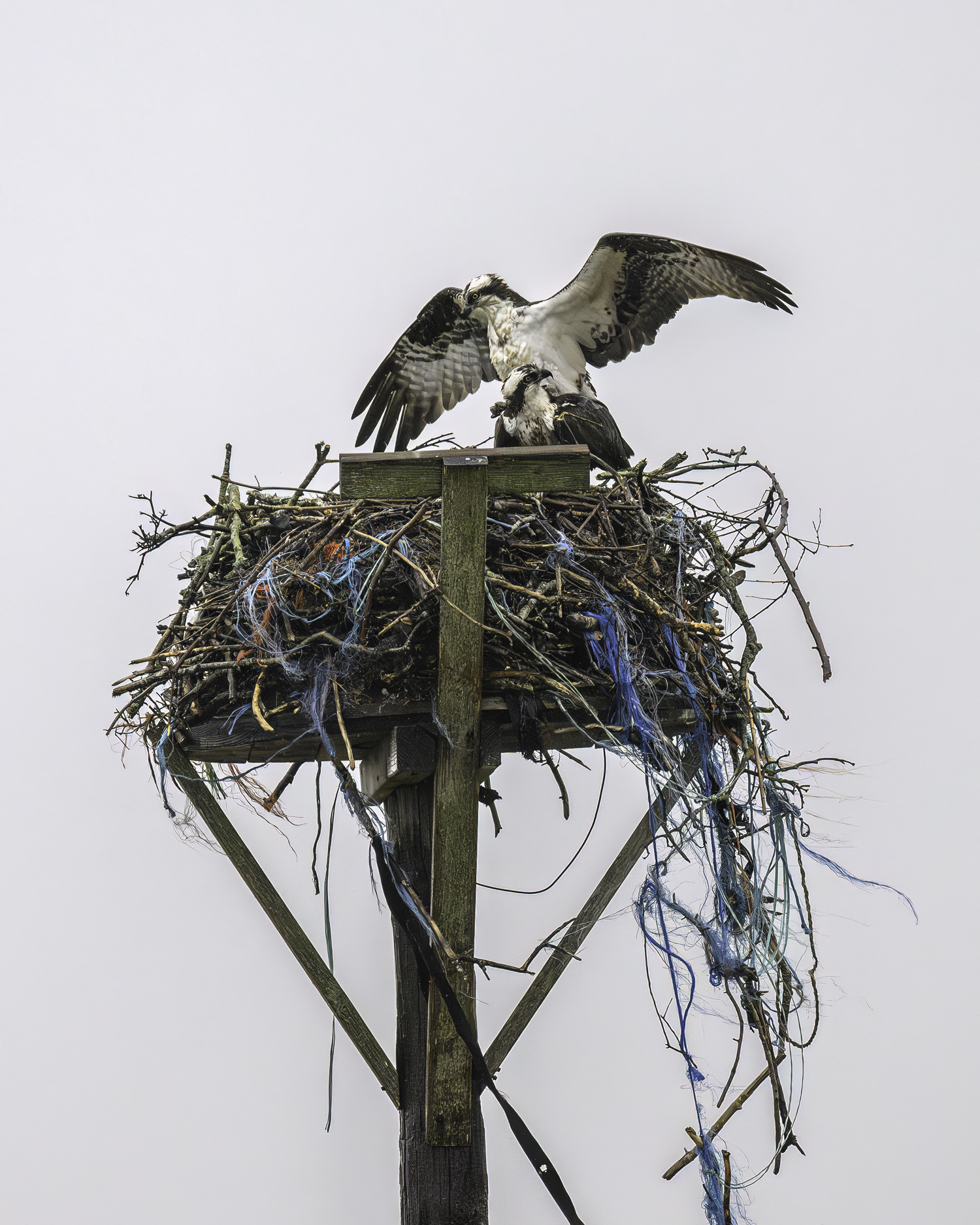
A pair of ospreys caught in the act. MARIANNE BARNETT
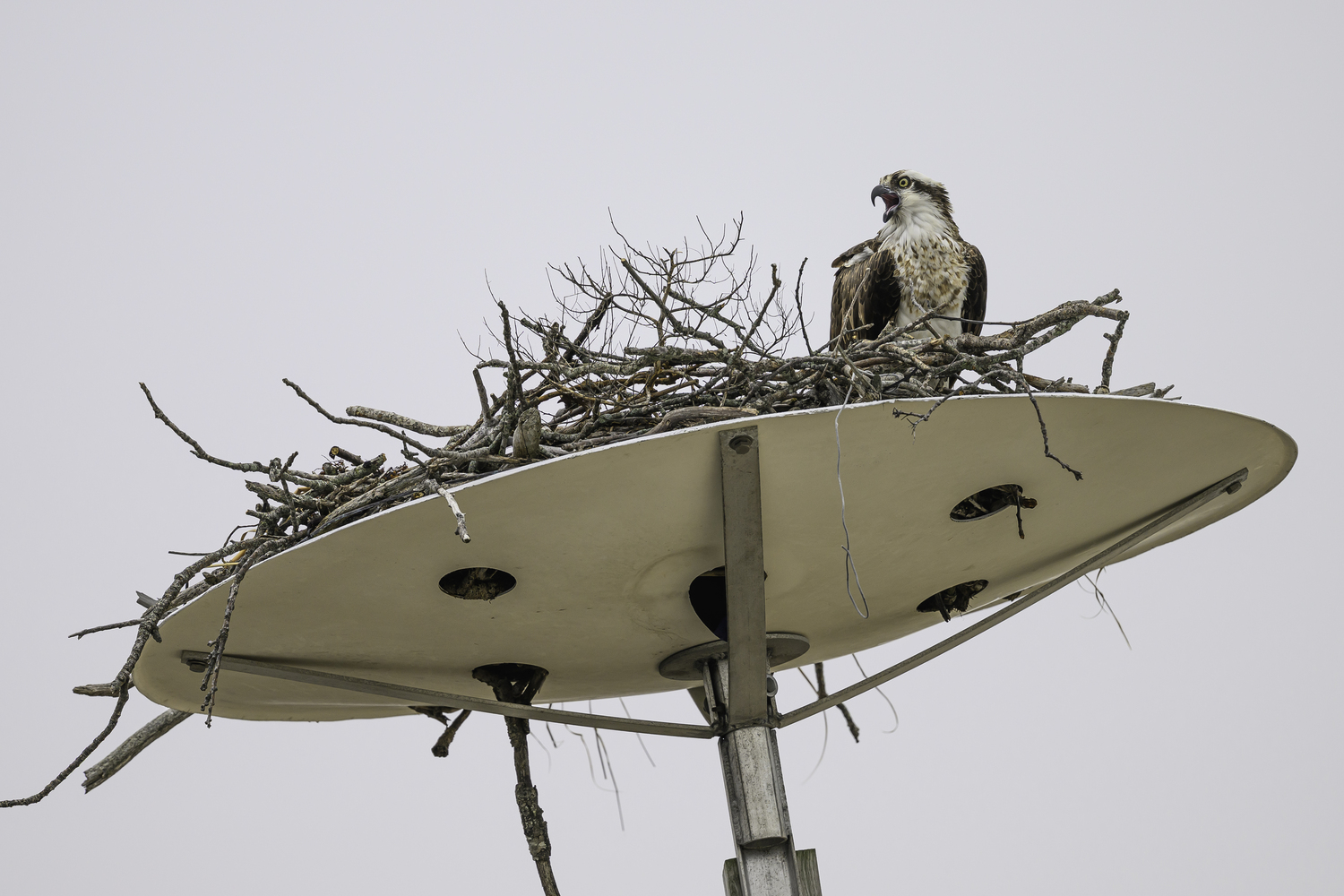
A female osprey in her economy-style nest calling for her mate. MARIANNE BARNETT
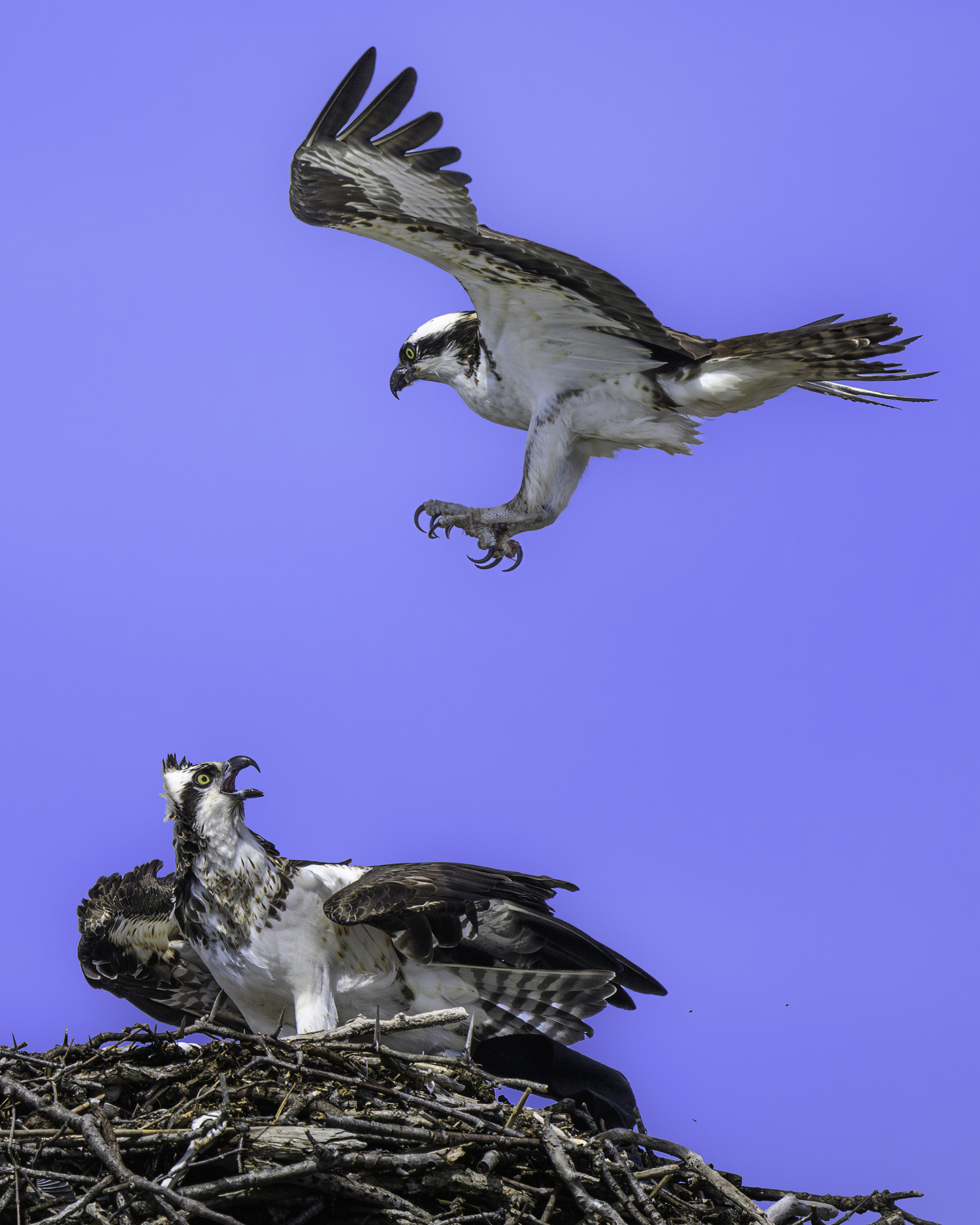
An osprey defending its nest from an intruder. MARIANNE BARNETT
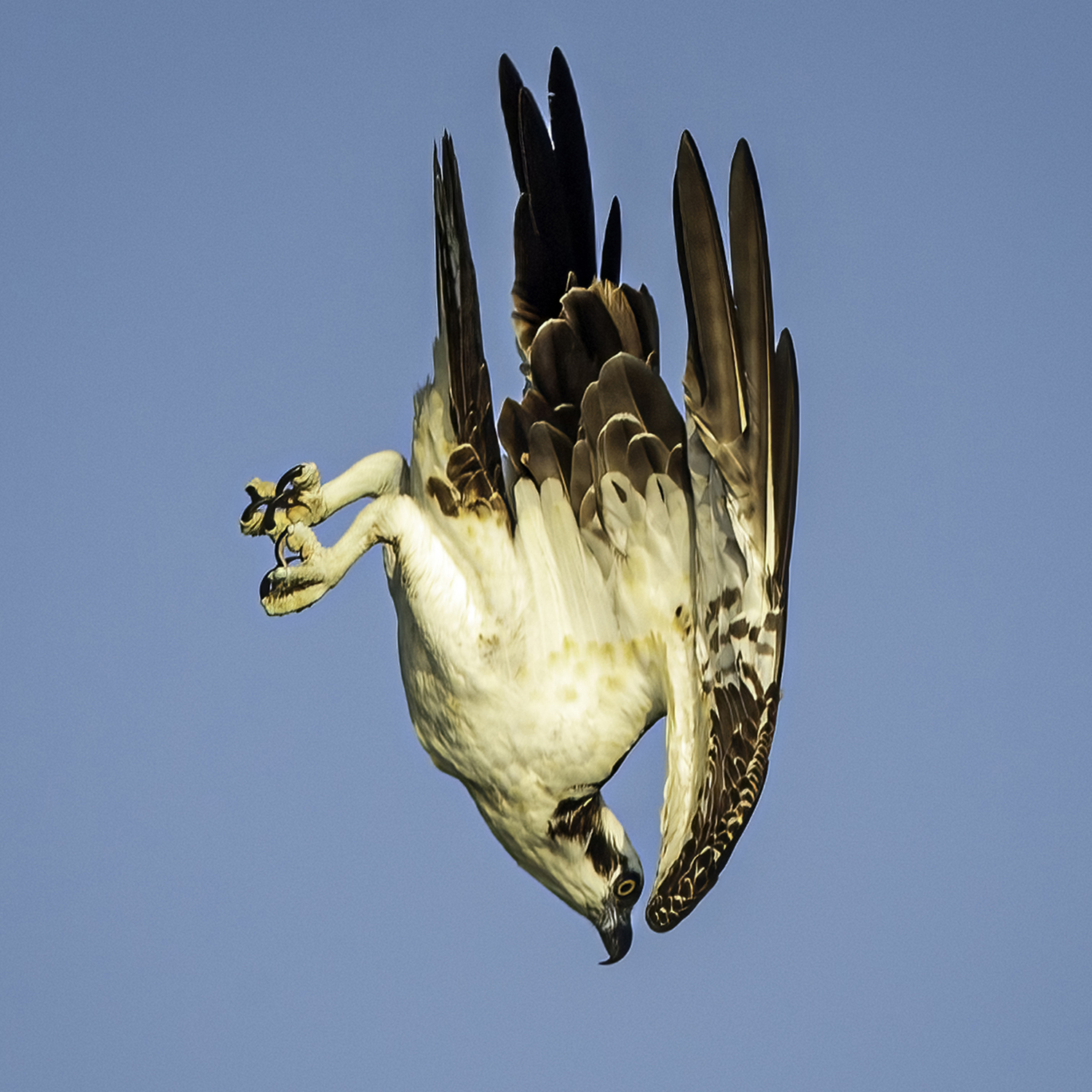
A side view of an osprey diving down for a fish. MARIANNE BARNETT
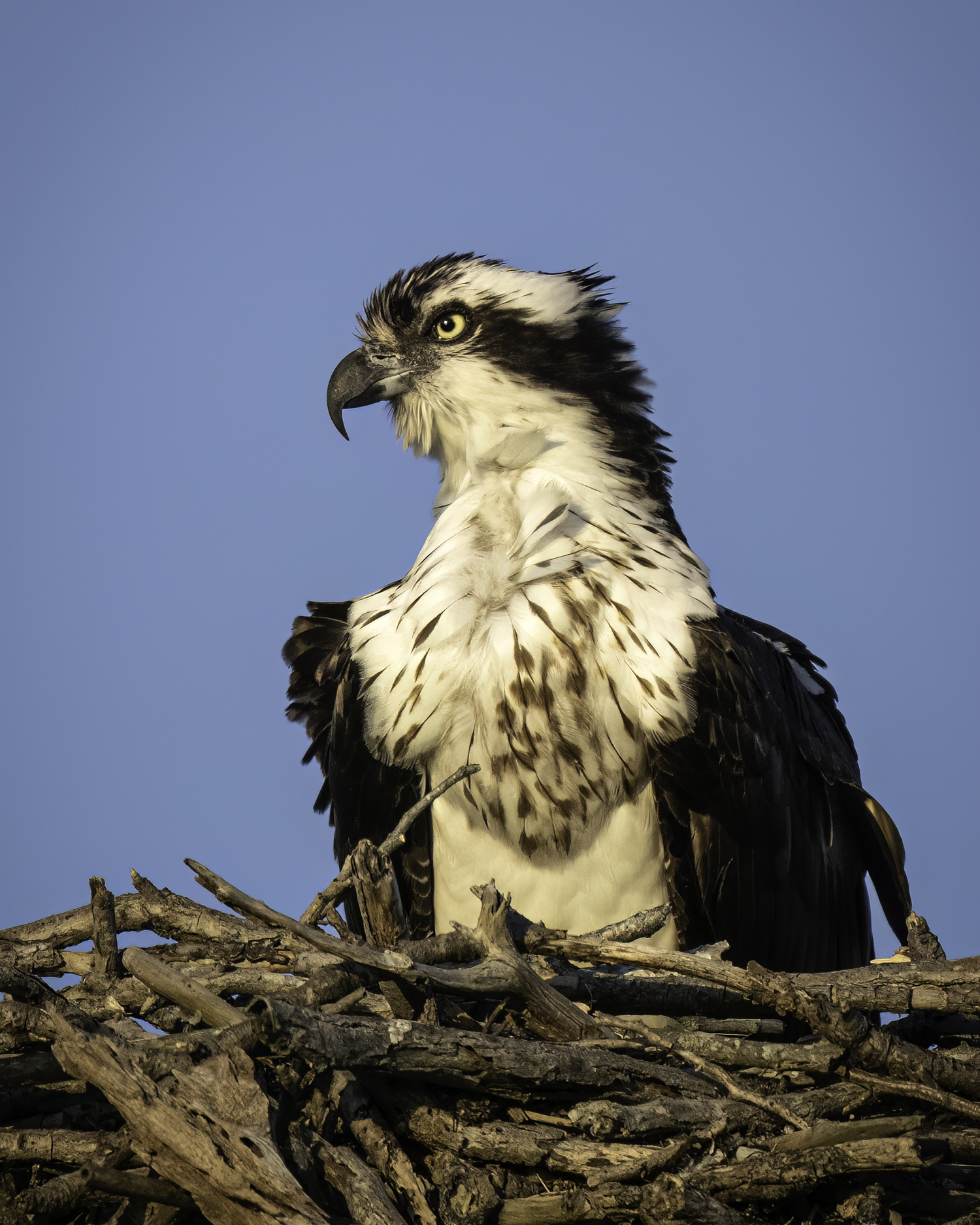
An osprey in its nest. MARIANNE BARNETT
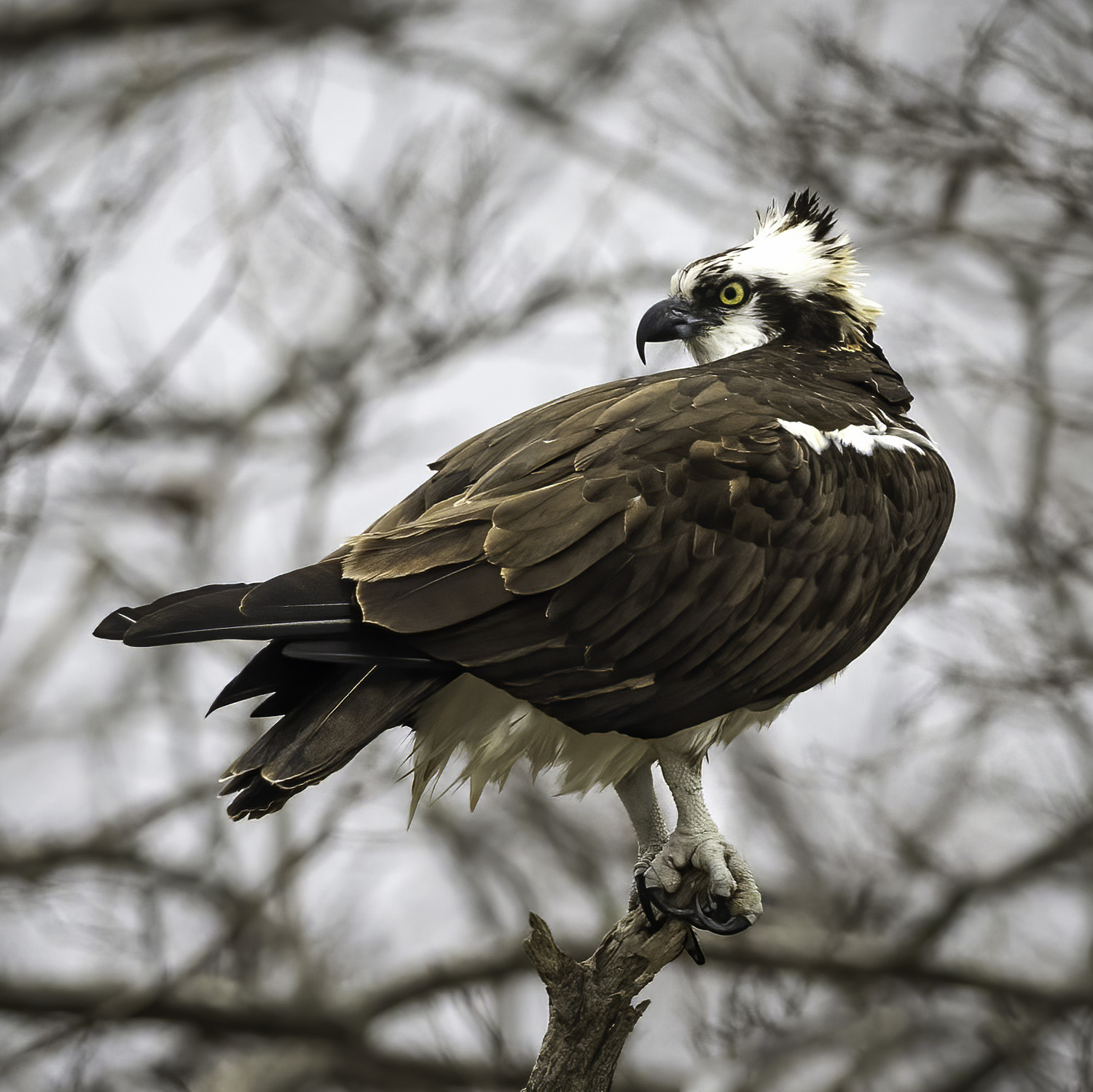
One of the first ospreys sighted this season. MARIANNE BARNETT
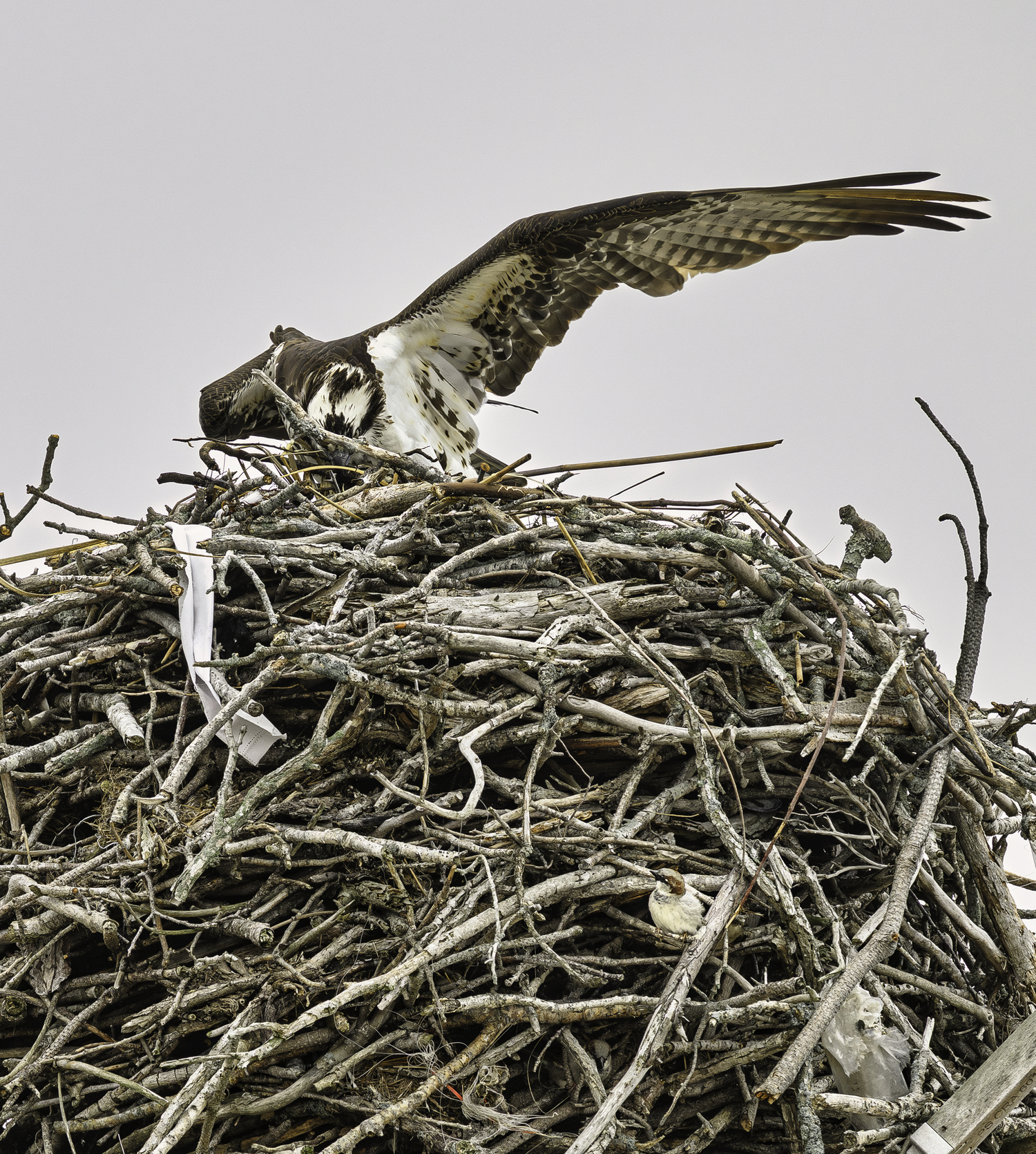
A house sparrow, below right, looks up at osprey in its nest. MARIANNE BARNETT
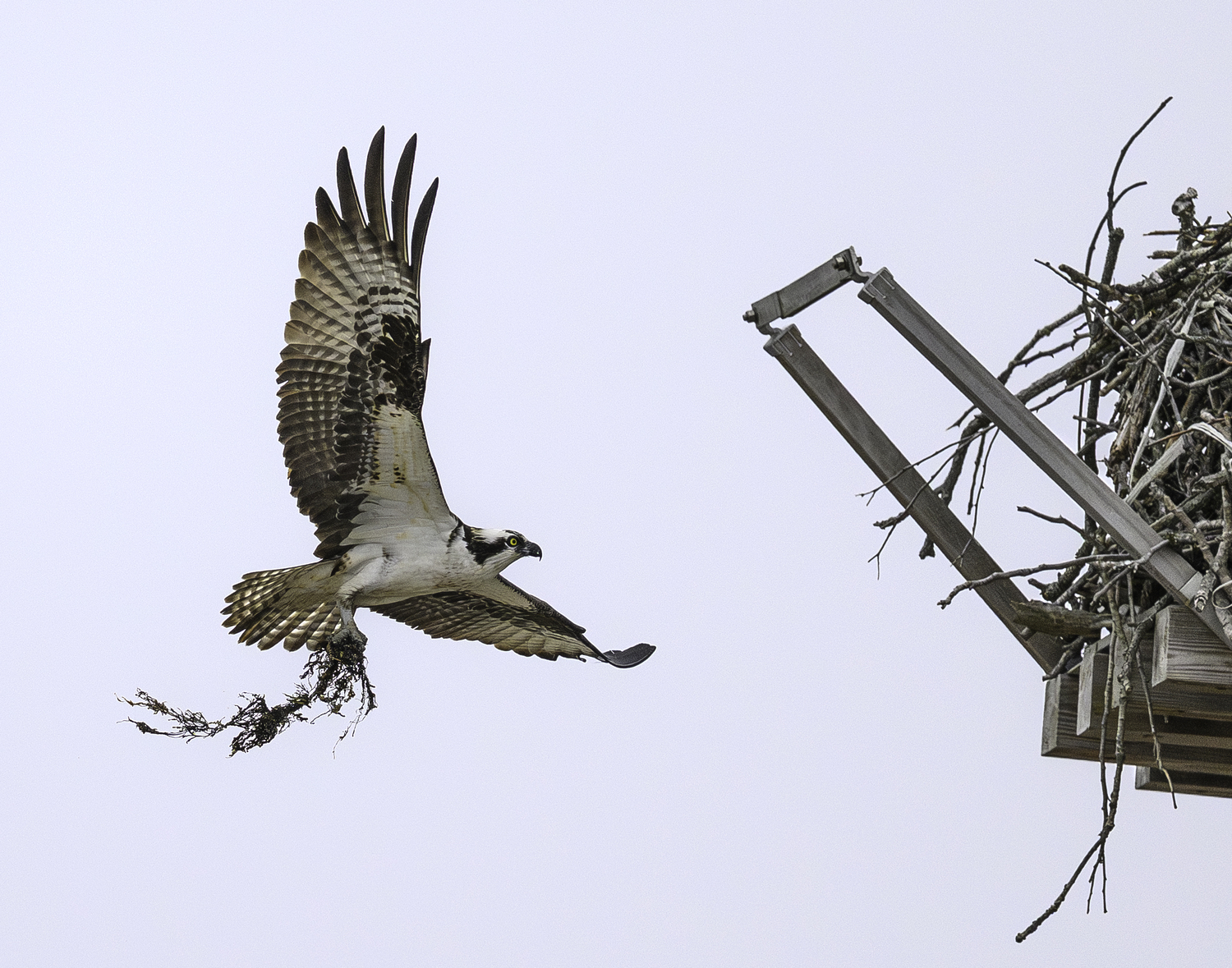
A male osprey brings nesting materials. MARIANNE BARNETT
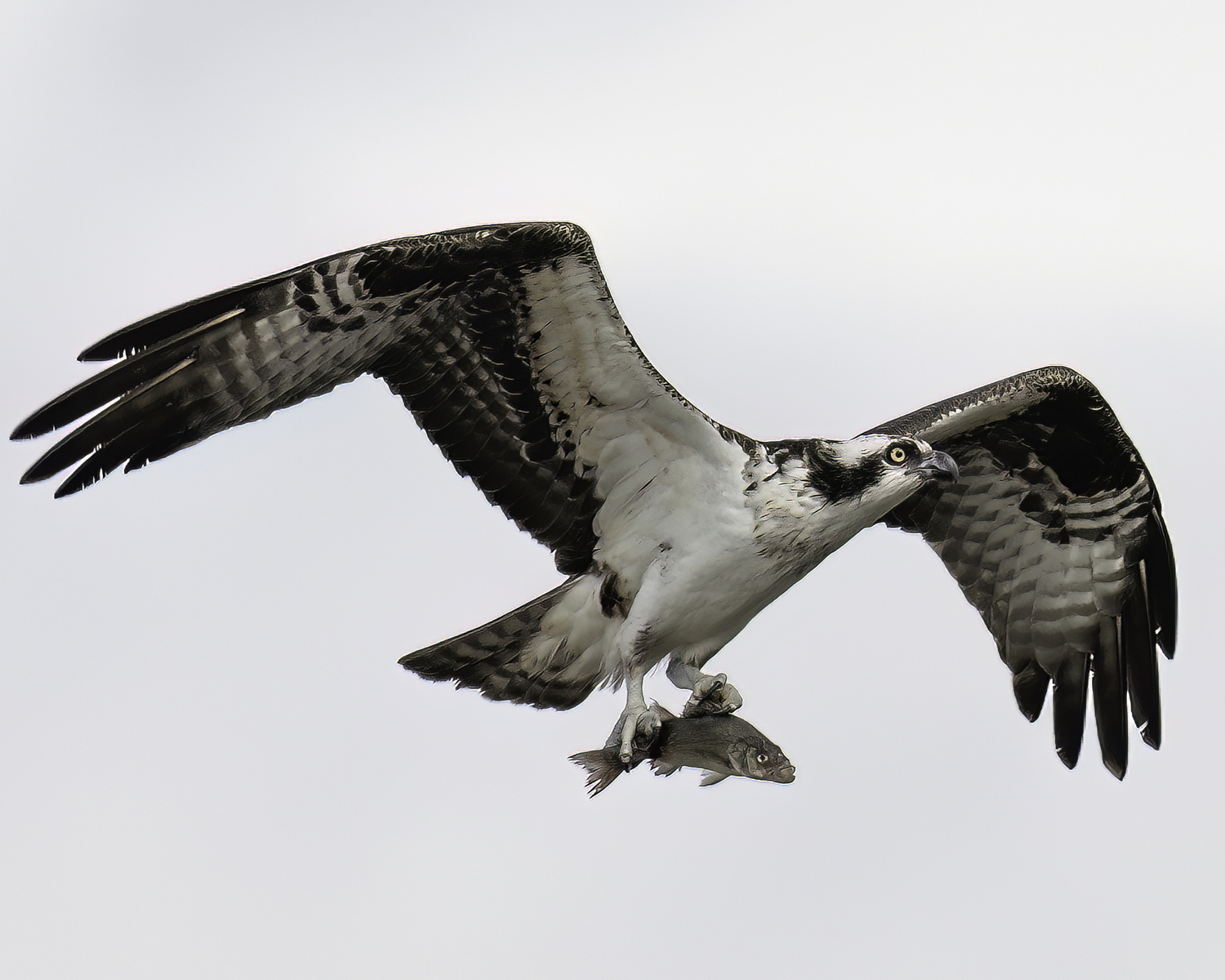
An osprey carrying a fish back to its nest. MARIANNE BARNETT
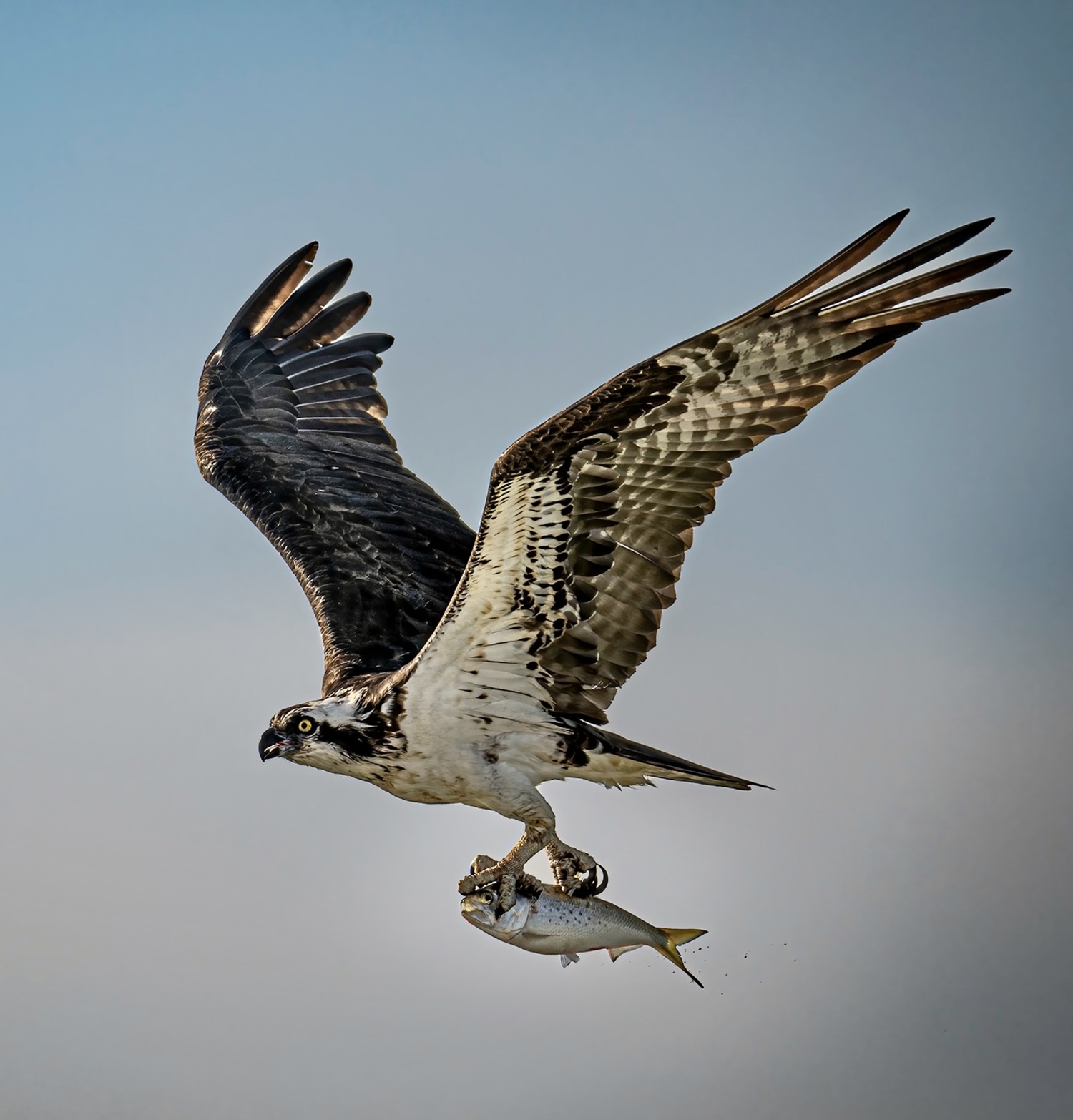
An osprey carrying a fish back to its nest. MARIANNE BARNETT

They are back!
The iconic ospreys are arriving here in growing numbers daily from their winter home in South America. This year, I saw my first osprey of the season on March 12. They usually show up on St. Patrick’s Day, but I’m guessing they wanted to miss the parade traffic this year!
The males usually fly north first and return to their nests to do some housekeeping and defend their nesting property from the bachelors looking for a lady and nest. The ladies fly their 2,500 miles home a few days later and are ready to start a family.
I witnessed a pair mating off Scuttle Hole Road on March 15, so it’s apparent they aren’t wasting any time!
Female ospreys normally lay between two and four eggs in a clutch, or nesting attempt. The incubation period is about five or six weeks before the chicks hatch. Both mom and dad feed the chicks freshly caught fish, while the hungry chicks stay in the nest with mouths wide open.
By mid-July, the juveniles begin to fledge the nest and start to learn how to catch fish on their own.
If you drive along Long Beach in Sag Harbor, there are four nests atop utility poles along the water’s edge. Most of the ospreys that occupy those nests have returned. The nests have varying degrees of comfort and sophistication. The nest closest to Noyac Road is the economy-style nest. The mated pair usually collects just a few sticks and raises chicks in a modest environment each year. Their efforts in nest building are less than stellar.
Another nest farther north, toward the roundabout, is a luxury dwelling with sticks piled about 2 feet high. This nest appears to be a high-rise condo for the osprey. These ospreys have worked diligently to build such a fine nest!
Some songbirds opportunistically use the lower section of that nest for their springtime nesting activities. I’ve occasionally seen the ospreys in that nest peeking down as if to collect rent for the free dwelling.
It can be challenging to tell the male from the female osprey. As with most raptors, the female is usually larger-bodied. But I have found this criterion unhelpful when trying to identify a perched osprey or one in flight.
Many birders allude to another way to determine the gender by referencing that the female wears a “necklace.” This means the female has more brownish feathers found on her white chest than the male. However, this can be a just a darker-chested plumage male.
Now, if you see an osprey with a full white breast and you’re the betting kind, I would go with it being a male. You have a good shot at being correct.
I’ll close by reminding us all to pick up our trash on the beach and elsewhere — even other people’s trash.
Last year, there was a near tragedy for an osprey near Three Mile Harbor in East Hampton. An adult osprey got tangled in some fishing line that it had likely gathered while constructing its nest. The osprey managed to get tangled in the fishing line and was found dangling upside down and unable to free itself.
Fortunately, some local heroes that included the Evelyn Alexander Wildlife Refuge and the East Hampton Town Police Marine Control teamed up to rescue this osprey and ultimately return it to its nest.
Just this past week, I saw a pair of ospreys in their nest, and there were various pieces of packaging twine material already collected by the osprey for its nest. While the nest was colorful, it is a recipe for disaster.
One last item: You may not hear from me for about a month, as I am also migrating due north for about the same distance as the ospreys traveled to get here on Long Island.
About 2,500 miles north of here is a cold and remote place called Ellesmere Island, Canada. I’ll be going on an expedition to find and photograph the Arctic wolves, musk ox and Arctic hares that live in this harsh environment.
I’m just thankful I don’t have to use my wings to get there since I don’t have any!
More Posts from Marianne Barnett


