


 2 Photos
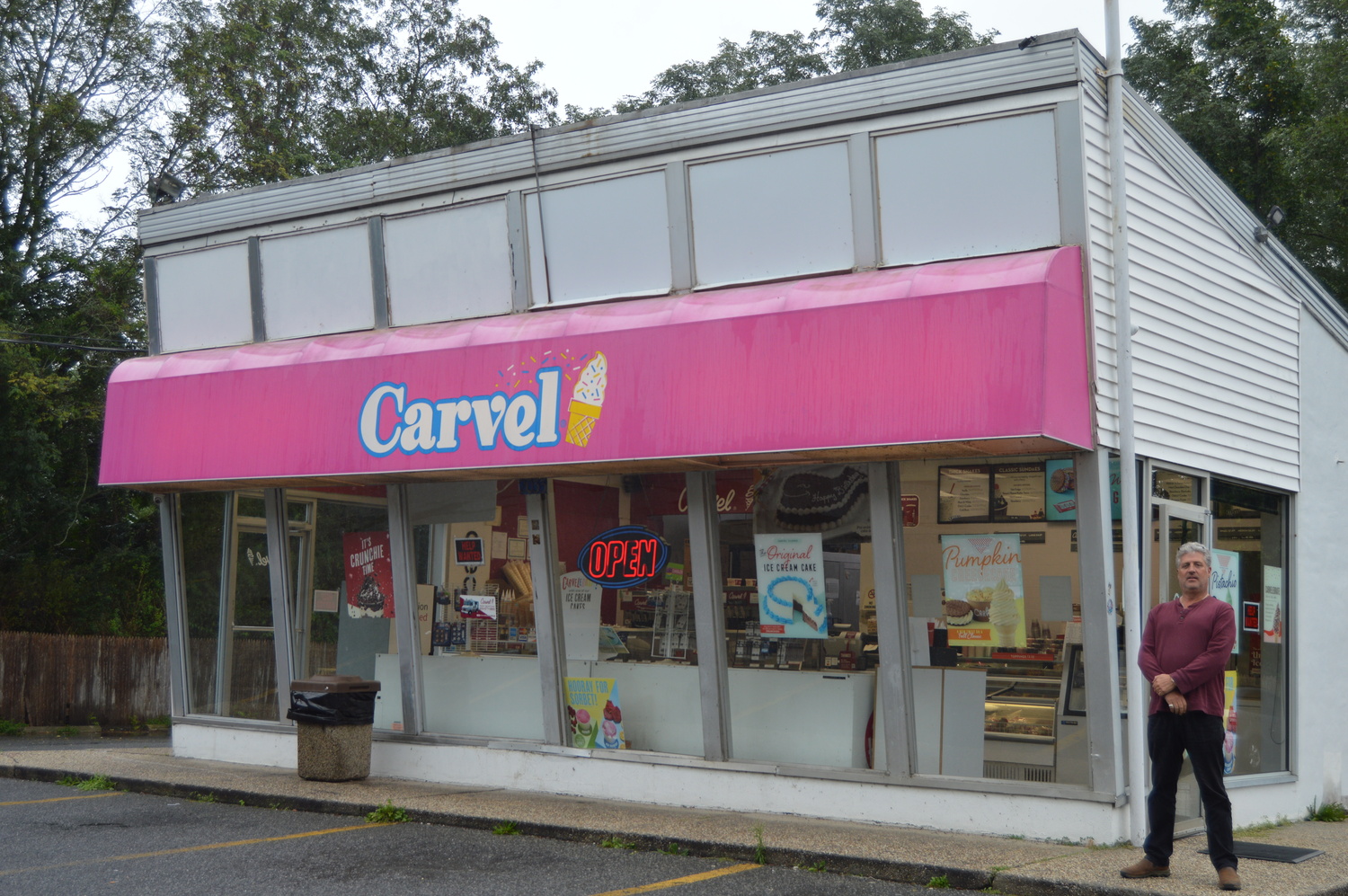
Greg Konner hopes to open Southampton's first non-Shinnecock cannabis dispensary at the Bridgehampton Carvel. TOM GOGOLA
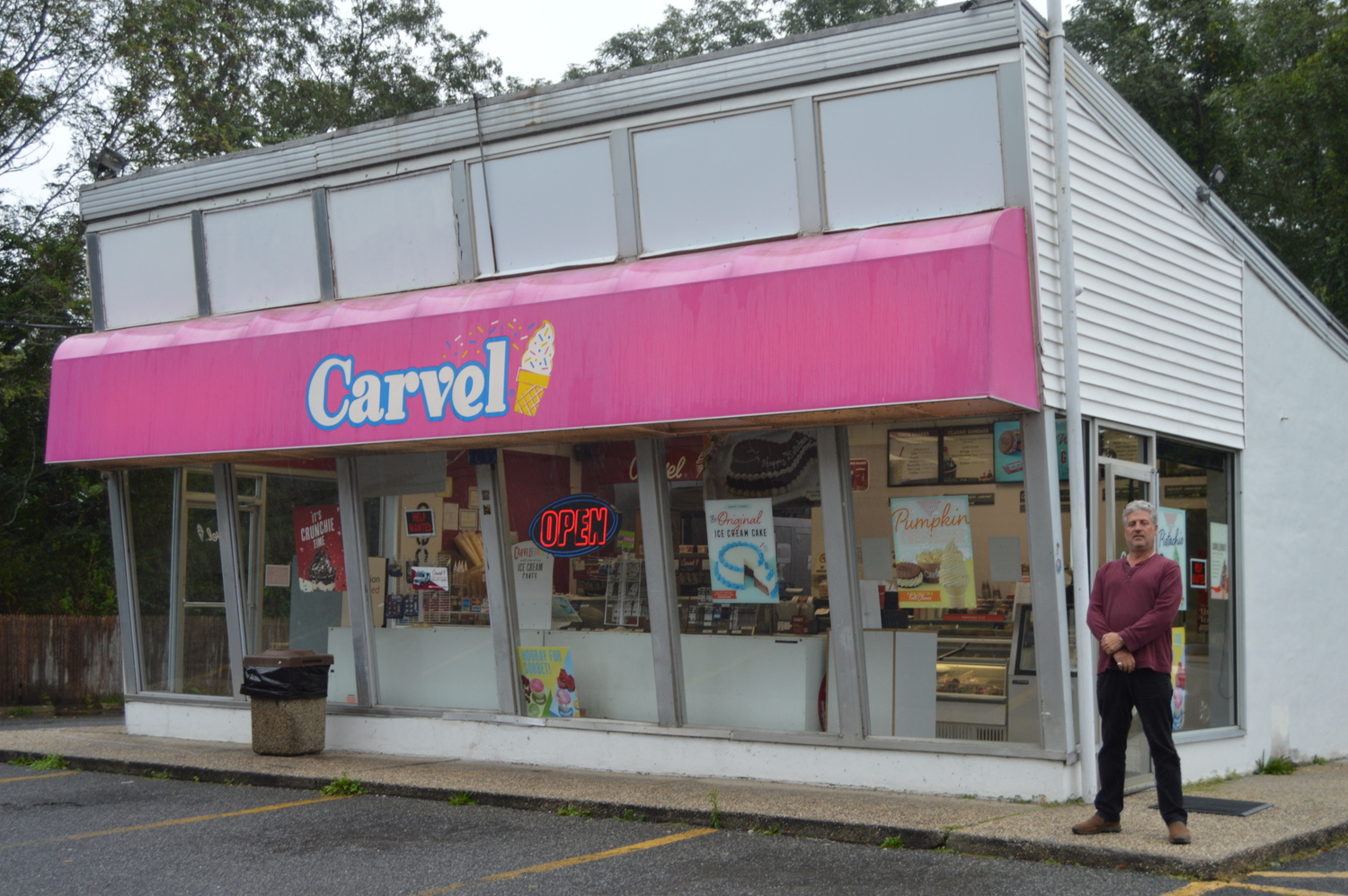
Greg Konner hopes to open Southampton's first non-Shinnecock cannabis dispensary at the Bridgehampton Carvel. TOM GOGOLA
Greg Konner takes a quick measurement inside the Carvel on Montauk Highway on a rainy Monday afternoon — the last detail, says the developer, for a site plan he’ll be handing in to the Southampton Town Planning Board on Tuesday that would transform the ice cream store into a retail pot shop called Budhampton.
Is Fudgie the Edible coming to Bridgehampton?
Not exactly, but Konner says the Carvel site meets all the criteria for a retail dispensary as established by the town and New York State’s Office of Cannabis Management.
There will very likely be pushback to his plan, Konner acknowledged, from both the community at large and town officials, “but they can’t say no if I meet the criteria.”
Konner is the general manager at the family-owned and Bridgehampton-based Konner Development, which owns the Carvel and surrounding undeveloped tract that now comprises nine lots. The plan, said Konner, is to reduce those nine lots down to seven. Six of the lots, he said, “would have the capacity to have a 15,000-square-foot building per lot,” split over two 7,500-square-foot floors. The seventh is zoned residential and could see the build-out of a modestly scaled residential home, Konner said.
As a “special exemption” applicant, Konner would have to produce a traffic and parking analysis for the Carvel pot plan, but said he’d already completed a traffic study for the broader project now afoot.
Once a new commercial building is constructed on one of those six lots, Konner said, a new Carvel would be a part of the retail offerings there, and Konner would move the dispensary from its home at the existing Carvel to the new building.
He anticipates this will all take several years to come together and that the old Carvel building would eventually be razed. The new Carvel and the relocated dispensary would not be located next to each other in the new building, he said.
The Carvel franchisee, said Konner, is on a month-to-month lease and supportive of the plan. “He is amicable — he’s not leaving but will be on a sabbatical,” as the development plans play out.
To help ease his way through the state licensing process, Konner said he hired an architect who is already on contract with the OCM to help social equity license applicants build out their dispensaries and has gotten up to speed on the various state requirements for a licensed dispensary — including a designated lactation room and a janitorial closet, he said, along with various security measures including cameras, a security team, and a safe where, similar to a jewelry store, all the product would be stored overnight.
The building will remain the same color, but Konner will have to frost up the windows so the products on display inside can’t be seen from outside.
The dispensary space will be around 300 square feet for retail sales — which leaves not a huge amount of space to store product, he said, but Konner hopes to work with nearby growers in Bridgehampton who can keep the pot shop fully stocked with flower and other products, he said.
“I’ll be able to call them and say, ‘I need four pounds of kush and send me some pre-rolls,’” he said, creating a sort of “farm-to-bong” dynamic similar to the farm-to-table movement in the restaurant world, and giving rise to a possible store slogan — “Bridgehampton Grown and Sold.”
If Konner’s plans materialize, his would be the first non-Shinnecock Nation dispensary in the Town of Southampton, which “opted in” to the legal weed regime when New York State passed the Marijuana Regulation and Taxation Act in 2021. In the wake of MRTA, the town passed new zoning rules to allow for dispensaries in areas zoned for highway business and at shopping centers.
“I will be the first,” Konner said, “but what if I don’t get a license? I should.”
Konner’s wife, Gennell Konner, is the listed applicant for his retail license.
His license would also allow for delivery and ecommerce so a person could place an order through an app and pick it up at the store.
“I feel confident that once we go through all the Planning Board hoops, we’ll get it,” Konner said. “The timing is now for this,” he added, noting that, assuming he gets a license from the state, he would have a year to use it. He was keen on getting the dispensary off the ground since nobody would be able to build another near the site, under state and local guidelines.
The Bridgehampton Commons is just up the block and could see a dispensary there — but the owners of the shopping center, Kimco Realty, have indicated they don’t want a pot shop sited there. “That could change,” Konner said. “There could be new owners.”
Konner said that if his plans materialize, all the cannabis product would be kept behind a counter, and a customer would place an order with one clerk, who would hand the order to another person to fulfill it, which is the standard practice in states like Massachusetts that have robust legal-weed economies already up and running.
That’s not the practice at pot shops already in business run by the Shinnecock Nation, which isn’t beholden to town or state licensing and operating protocols — or any of the state and local taxes that Konner will be obliged to charge his eventual customers.
He expects that his product will be a little more expensive as a result, but he’s not worried about it and notes that cigarettes have been available on the Shinnecock Territory for decades, but people still buy their smokes at 7-Eleven, too.


