


 9 Photos
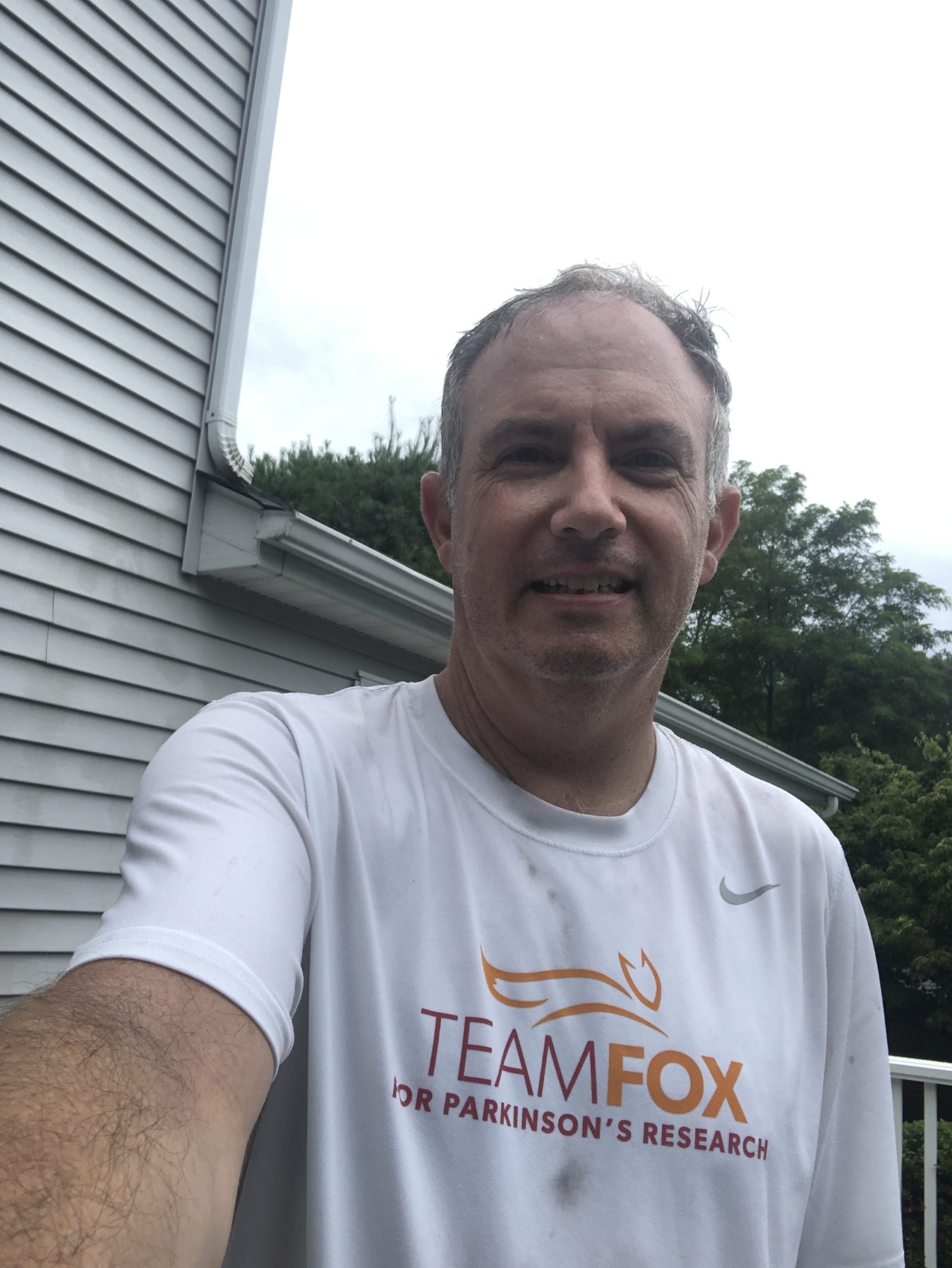
Bret Parker on July 31, 2020, after completing the last 31-mile bike ride of the Calendar Club challenge, totaling 496 miles that month.
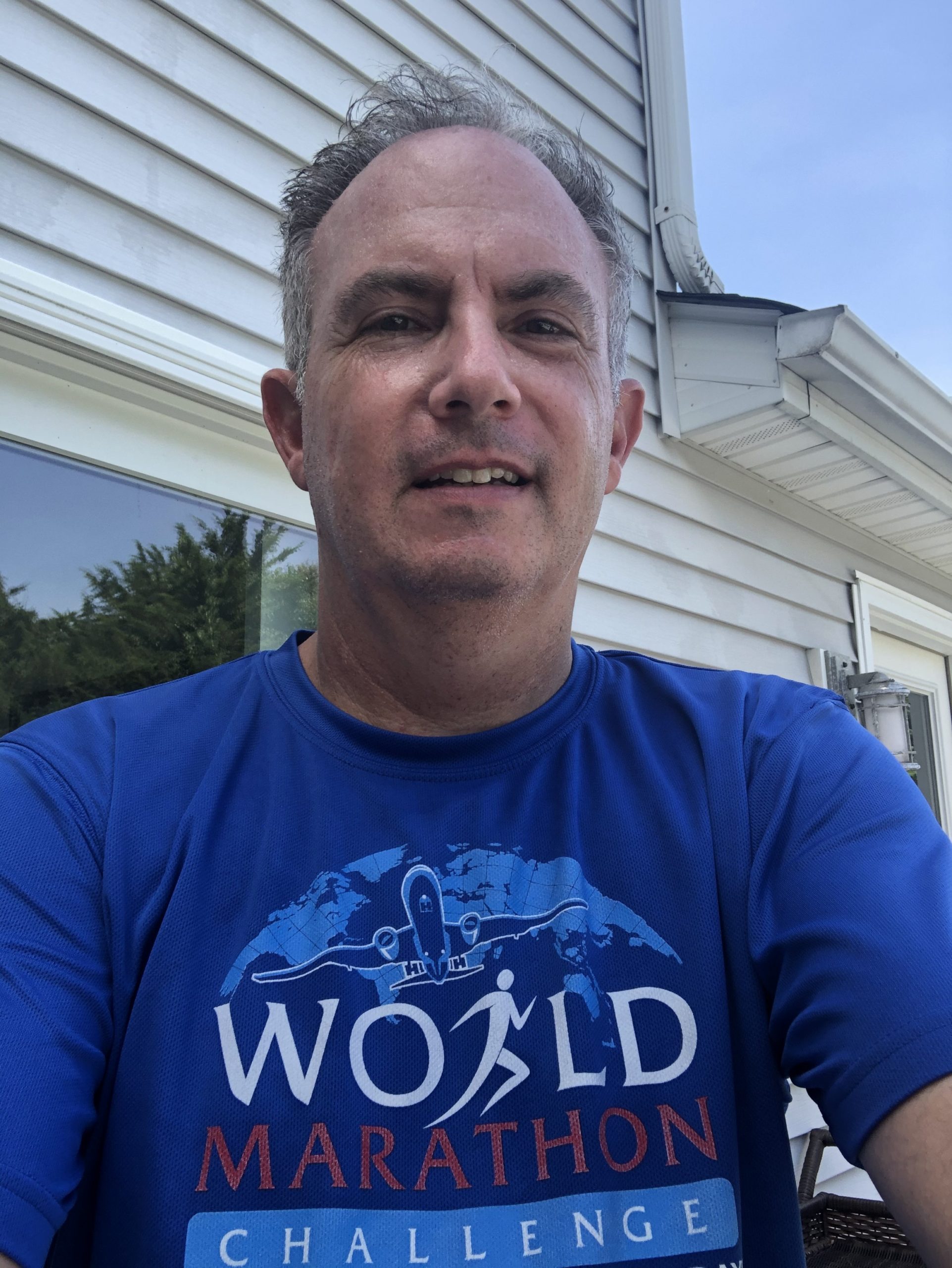
Bret Parker, who completes a physical feat every year to raise money for Parkinson's disease research, challenged himself with the Calendar Club in July 2020.
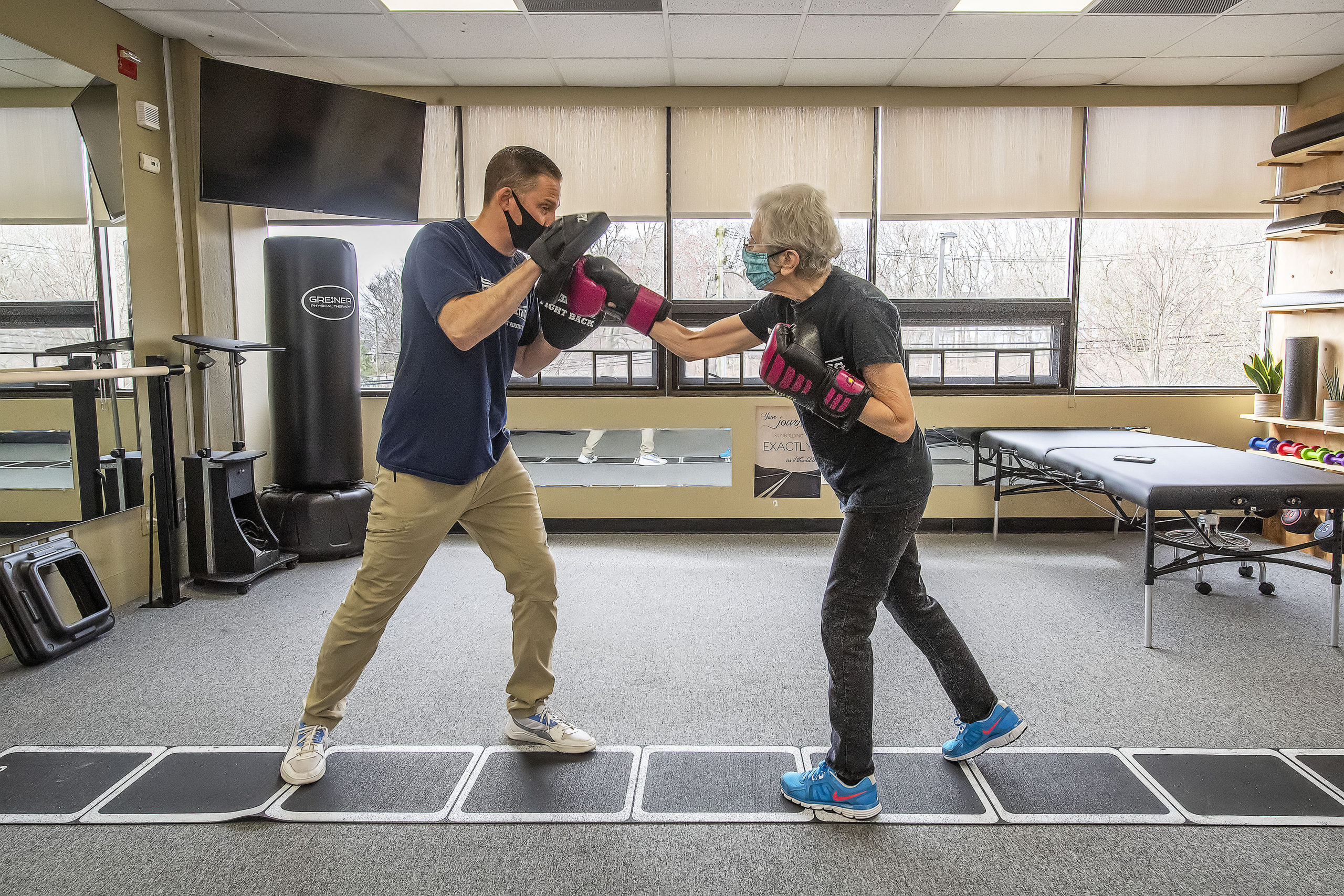
Seth Greiner of Greiner Physical Therapy does a Rock Steady Boxing workout with Parkinson's patient Janet Barr at the Greiner Physical Therapy studio in Speonk. MICHAEL HELLER
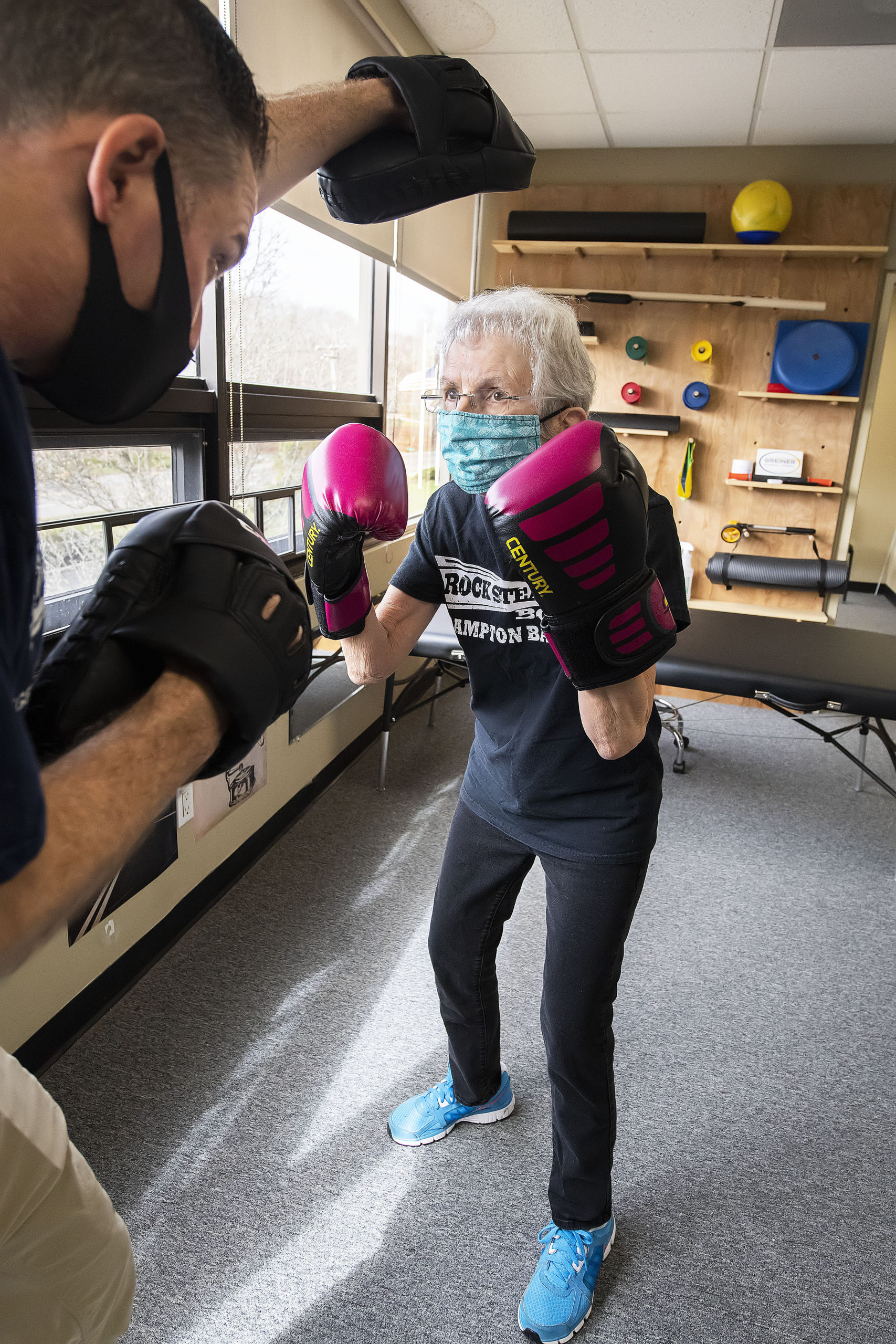
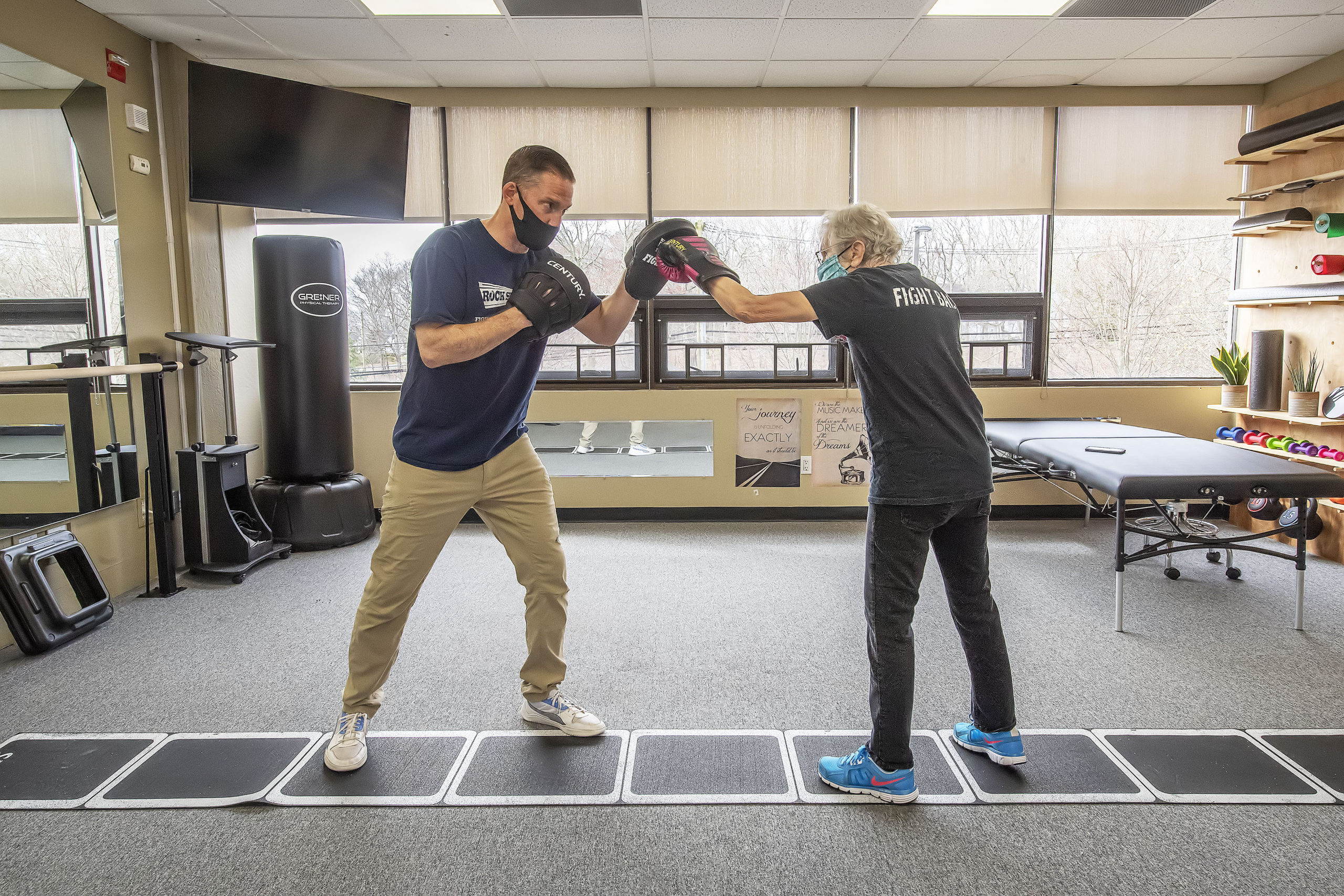
Seth Greiner of Greiner Physical Therapy does a Rock Steady Boxing workout with Parkinson's patient Janet Barr at the Greiner Physical Therapy studio in Speonk. MICHAEL HELLER
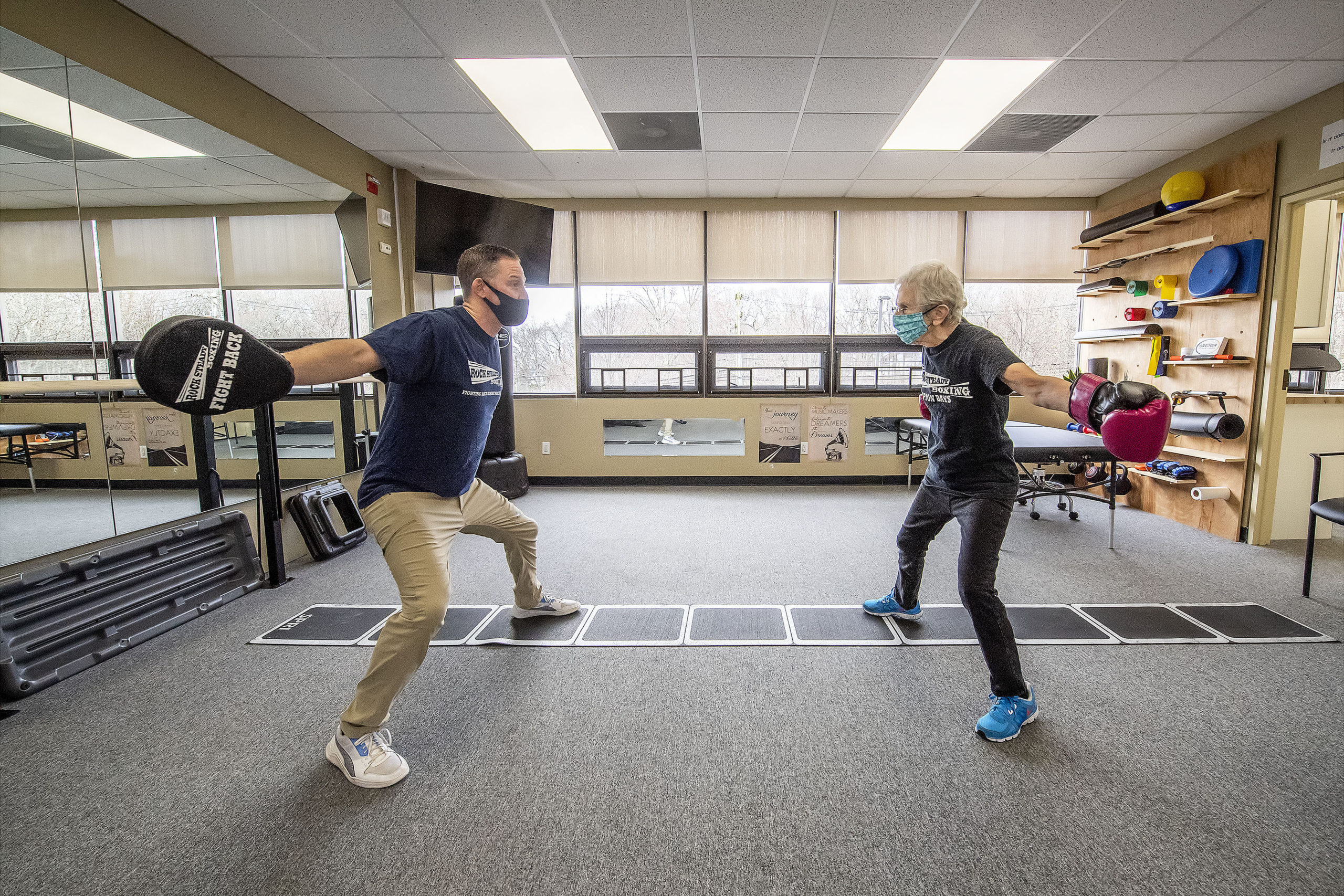
Seth Greiner of Greiner Physical Therapy does a Rock Steady Boxing workout with Parkinson's patient Janet Barr at the Greiner Physical Therapy studio in Speonk. MICHAEL HELLER
Seth Greiner of Greiner Physical Therapy does a Rock Steady Boxing workout with Parkinson's patient Janet Barr at the Greiner Physical Therapy studio in Speonk. MICHAEL HELLER
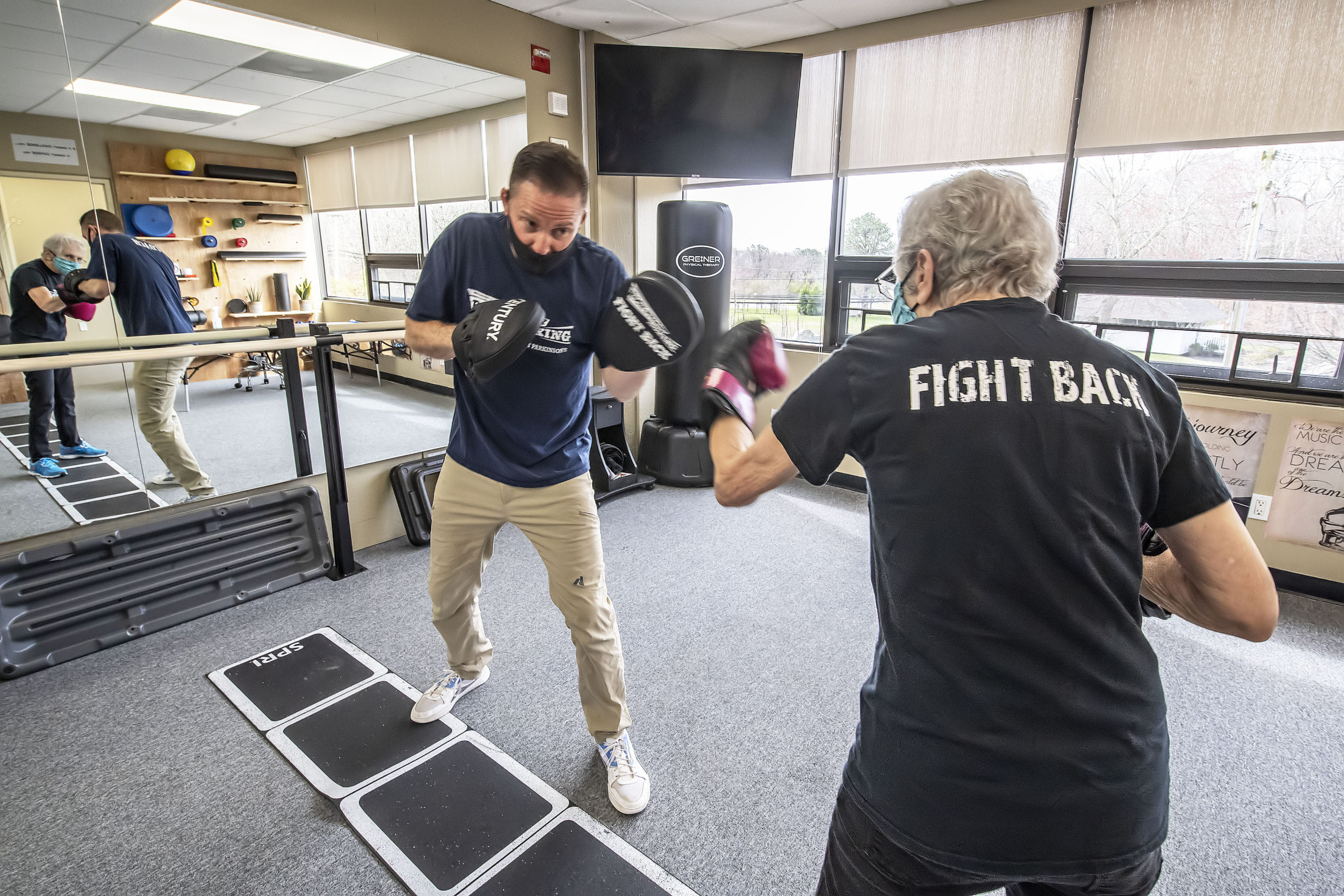
Seth Greiner of Greiner Physical Therapy does a Rock Steady Boxing workout with Parkinson's patient Janet Barr at the Greiner Physical Therapy studio in Speonk. MICHAEL HELLER
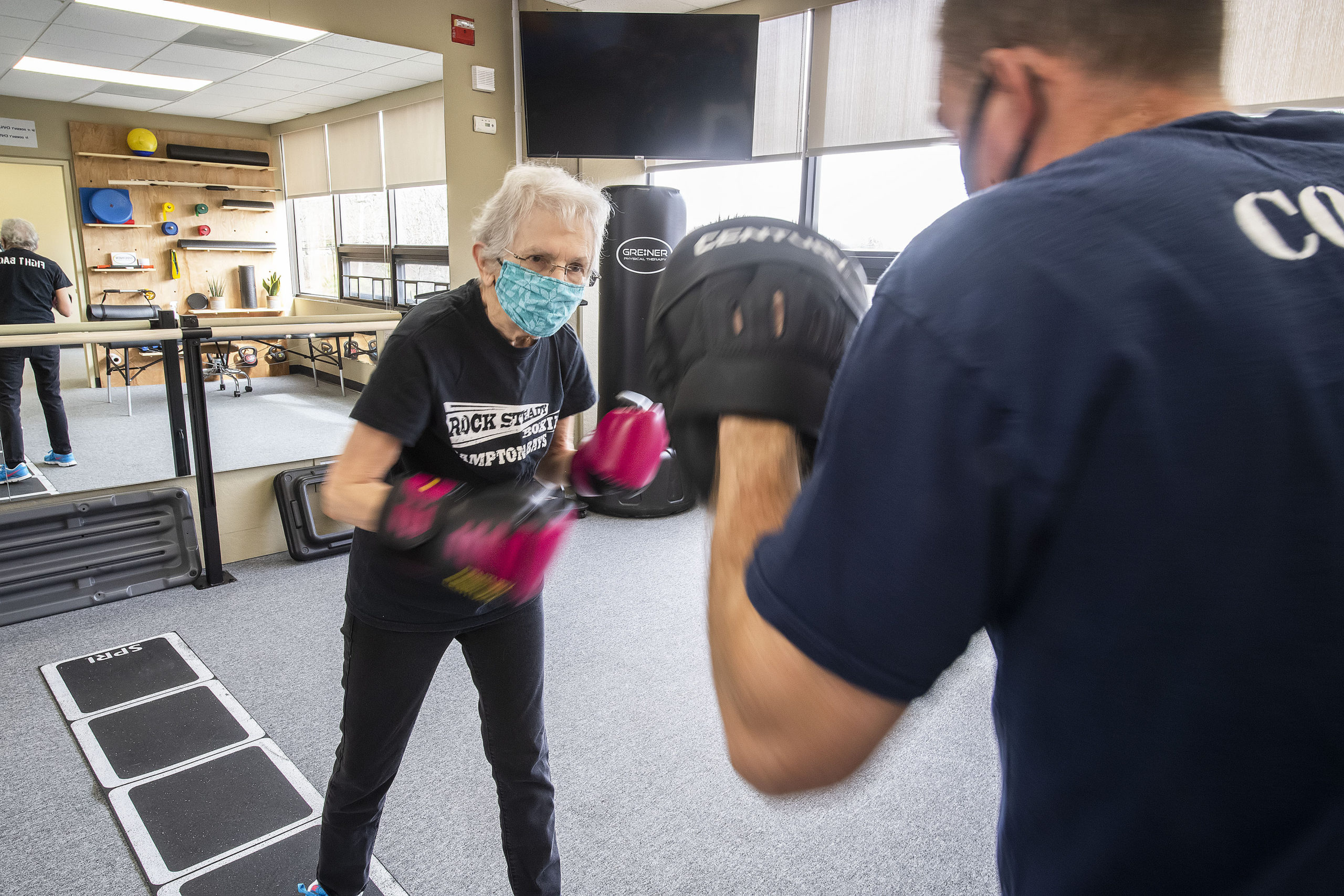
Seth Greiner of Greiner Physical Therapy does a Rock Steady Boxing workout with Parkinson's patient Janet Barr at the Greiner Physical Therapy studio in Speonk. MICHAEL HELLER
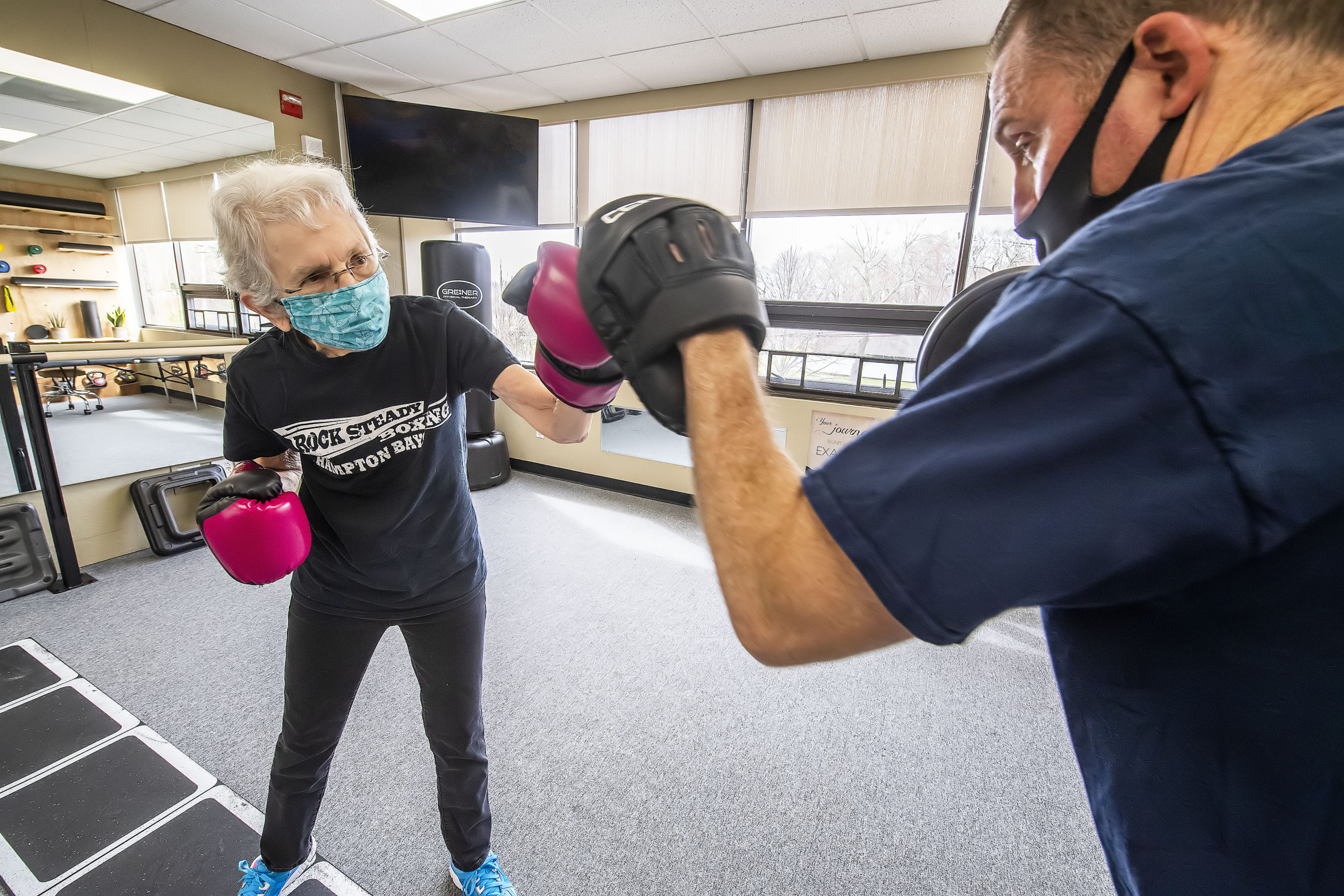
Seth Greiner of Greiner Physical Therapy does a Rock Steady Boxing workout with Parkinson's patient Janet Barr at the Greiner Physical Therapy studio in Speonk. MICHAEL HELLER
In an average week, Janet Barr jabs, hooks and crosses her way through three Rock Steady Boxing classes. She sings in two virtual choruses. She practices chair yoga and Tai Chi. She moves her body in modern dance, swaying to the music and losing herself in the story.
Seven years ago, she never imagined she would join any of these groups — but, then again, she never expected to be diagnosed with Parkinson’s disease, either, the uniting theme among them.
“I’ve made a lot of new friends because of Parkinson’s disease,” Ms. Barr said last week from her home in Westhampton Beach, just shy of her 80th birthday. “Somehow, you’re put into a category that you weren’t in before. Most groups you join because you’re interested in what they’re doing, but with Parkinson’s, you don’t choose to join it. You just get assigned to it.”
Every year, approximately 60,000 Americans are diagnosed with Parkinson’s disease, a fraction of the 10 million people living with the “common yet treatable” neurodegenerative disorder worldwide, explained neurologist Dr. Guy Schwartz, director of the Movement Disorders Section at Stony Brook University Medical Center, which has a location in Hampton Bays.
In its early stages, the disease typically causes stiffness, imbalance, tremors and slowing of movement. But as it progresses, it can eventually impact walking and talking.
“It is a difficult disease to live with and until one experiences it or one has second-hand experience seeing a loved one go through it, there’s no question that it profoundly changes the lives of patients and those who are close to them,” Dr. Schwartz said. “So that’s not to be minimized. Patients with this disease go through a lot.”
For those living with the disorder, every month is Parkinson’s Disease Awareness Month, but April specifically shines a light on it — a disease already made famous by figures such as Muhammad Ali and Michael J. Fox, who has raised over $900 million for Parkinson’s research through his eponymous foundation.
“Parkinson’s disease is really at the forefront of advancement in science,” Dr. Schwartz said. “If you look back to the 1920s, when the first treatment for Parkinson’s disease was a surgical treatment, it wasn’t until the 1960s when the first drug was developed. We’ve come a long way. That should be an inspiration to individuals living with any disease, that there’s hope — because science is very powerful.”
But when Ms. Barr received her diagnosis in 2014 — with symptoms presenting as a slight tremor in her left hand and a drag in her left foot — what she immediately felt was fear and uncertainty. She had no family history, she said, and didn’t know what it would mean for her future.
“I wasn’t really expecting ever to have Parkinson’s,” she said. “Well, I guess nobody ever is. So it was just a matter of having to get adjusted to the fact that I did have it — and it’s a progressive disease, so it can be slow or it can be fast.
“Fortunately, for my situation, it’s very slow,” she continued. “Some people, I think, don’t even know I have Parkinson’s. It’s not that obvious to people. If people know what to look for, maybe they can see it.”
While Ms. Barr’s medication and exercise regimen are effectively managing her symptoms, treatment plans vary from patient to patient, Dr. Schwartz explained. “As the disease reaches different stages, the algorithm implemented to keep up with the changes of the disease varies and continues to be tailored and dynamic, because the disease is dynamic,” he said.
The “holy grail” of treatment will ultimately arrest the disease, Dr. Schwartz said, preventing it in at-risk people who are not yet showing symptoms. Short of that, the emphasis in research has shifted to neuroprotective treatment, or a disease modifying drug that will change the trajectory of progression.
And though no major breakthroughs have been made, Dr. Schwartz said he is optimistic as researchers gain a deeper comprehension of the onset and progression of the disease on a cellular level, which is key to designing an intervention.
“Targeting a particular protein may be the lynchpin of developing a neuroprotective or disease modifying treatment,” he said. “There’s a lot of funding and interest and excitement about getting to that level of detail and understanding the disease.”
Last month, Sag Harbor resident Bret Parker — who serves as co-chair of the Patient Council for the Michael J. Fox Foundation — joined more than 350 Parkinson’s disease advocates for a series of virtual meetings with U.S. Congress members and their staffs to discuss critical federal funding for Parkinson’s research, which has decreased by millions of dollars in recent years.
“Believe it or not, one of the main sources for funding for research for Parkinson’s in the congressional budget is through the Department of Defense,” he explained. “There’s a disproportionate impact we see in veterans and people who served in the military with Parkinson’s. It could be from exposure to chemicals, or it could be from brain trauma, and we see an increased incidence among them, compared to the normal population.”
While waiting to see if the federal government will honor the request, Mr. Parker continues to take on the cause himself by pushing his limits in physical feats, recently bringing his fundraising total to $700,000 for Team Fox — the grassroots arm of the Michael J. Fox Foundation — since his diagnosis at age 38 in 1997, which he kept a secret for five years.
“I was scared, at first, about sharing this with people, for fear that they would have pity for me or feel bad for me. And, in fact, people have just been completely supportive — and they want to learn,” said Mr. Parker, who also works as the executive director of the New York City Bar Association. “Eventually, we all get something, and so there’s no reason for any of us to keep that secret. Sharing it has made it easier for me to manage it.”
Now, at age 53, Mr. Parker’s symptoms have progressed, he said. A tremor in his right hand and rigidity kick in more often, his medication isn’t as effective, and he has to try harder to keep the disease at bay, he said.
“But I’m very fortunate that my progression has been very slow and, for the most part, I’m doing everything that I did beforehand,” he said. “I’m just a little slower and maybe not as pretty when I’m running or walking.”
In 2018, Mr. Parker snared national media attention as he completed the World Marathon Challenge, which tackled seven marathons in seven continents in seven days. This past July, he took on the Calendar Club, cycling the same number of miles as the day of the month — totaling 496 miles altogether — and has unofficially committed to the 2021 New York City Marathon, if it isn’t canceled due to the COVID-19 pandemic.
“I’ve done it before, but it’s been awhile and I know this one’s gonna be tougher than ever before because I’m just not as in shape and the disease has gotten a little worse,” he said. “But I feel like having walked some of the marathons from my seven marathons, I’m confident that, no matter what, I could slog my way through the New York City Marathon, even if it takes me six or seven hours.”
Dr. Schwartz said he often prescribes exercise as a tool to help delay the “insidious disease progression,” pointing patients toward Stony Brook Southampton Hospital’s Center for Parkinson’s Disease, which runs a robust, evidence-based program built by Administrator Sarah Cohen.
“It was really astonishing to find a body of literature and a body of research that so conclusively showed that people with Parkinson’s disease who exercise regularly do better than those who don’t,” she said. “That was really exciting and motivating for me, as a physical therapist, because that was my field of work.”
Up until the center launched in 2017, exercise and arts classes specifically designed for Parkinson’s patients did not exist on the East End, Ms. Cohen said. She kickstarted the programming with “Paint at the Parrish,” in partnership with the Parrish Art Museum in Water Mill, and Rock Steady Boxing, a national affiliate taught locally, and now virtually, by Michelle Del Giorno and Seth Greiner, who instructs Ms. Barr.
“Our boxers aren’t patients. They are not defined by Parkinson’s disease,” Mr. Greiner said. “They are athletes and fighters. We are one community with a common goal: fighting the progression of this disease and supporting each other along the way.”
The programming has only expanded — now to include chair yoga, Tai Chi and Qi Gong, singing and nutrition classes, and Urban Zen Integrative Therapy, all underwritten by the hospital and offered free of charge for participants.
And, with the classes, a sense of community has grown, too, Ms. Cohen said.
“This is a group of people who support each other, we enjoy each other, we celebrate each other,” she said. “That sense of camaraderie, that sense of belonging, that sense of, ‘They get it, I don’t have to explain myself when I have a bad day, I can be there with someone when I’m having a good day,’ that is just as important as any of the other physical benefits that come from participating in these programs.”
In honor of Parkinson’s Disease Awareness Month, the center is hosting free virtual classes every Friday through April, in partnership with Stony Brook Parkinson’s and Movement Disorders Center, the New York Institute of Technology College of Osteopathic Medicine, and the Friedberg JCC in Oceanside.
The series continues with “EAT WELL,” a cooking demonstration and nutritional lecture by Paula Montagna, on Friday, April 16, at 11 a.m., followed by “Parkinson’s Disease: Tips, Tricks and Resources for Coping with your Diagnosis” on April 23 and “Sing Loud with PD” on April 30 — providing a well-rounded overview of what the center offers, Ms. Cohen said, especially for those who are reeling from a recent diagnosis.
“I think you have to give people the space to come to it when they’re ready, and people are ready at different times, and I really respect that,” she said. “I’ve been through my own health journey — I was diagnosed with breast cancer three years ago — and the way you come to terms with a diagnosis and the way you choose to fight it is unique for everybody.”
Over the years, Ms. Barr has learned to adapt to her new life with Parkinson’s disease — the community she found through her journey playing a critical role in that. Without her singing and dancing, chair yoga and Tai Chi, and, of course, boxing, she said she would be lost.
“Don’t give up,” she said, addressing those living with the disease. “There’s a lot of groups out there and there’s a lot of support for people with Parkinson’s. I consider the exercise to be my medicine. So that’s why I do it. Because if I don’t do it, then maybe it’ll get worse much faster.”


 Michelle Trauring on Apr 14, 2021