


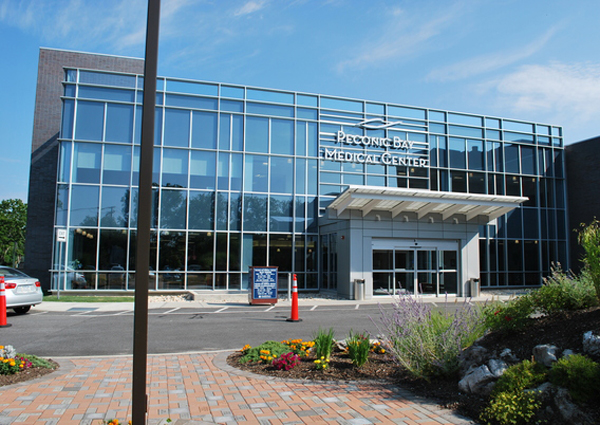
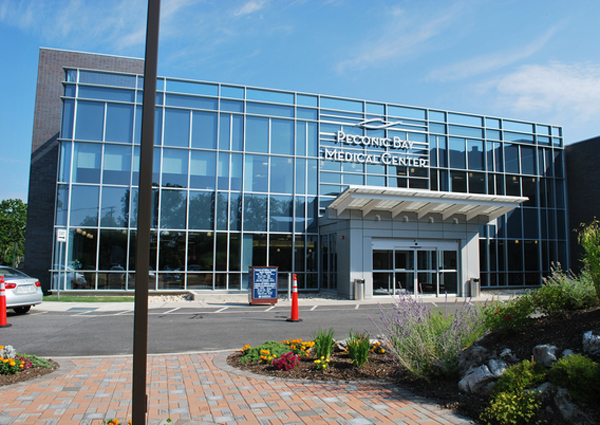
 1 Photo
Peconic Bay Medical Center finished last year $7 million in the black, marking another step in the Riverhead hospital’s recovery from an almost $3 million deficit in 2007—a shift driven by the recent expansion of facilities and services, according to hospital officials and audited reports of the center’s finances.
A large portion of the surplus is due to more than $6 million in donations that the hospital received in 2009, up $4 million from the year before. But, in a break from prior years, the hospital is now able to cover its operating costs with revenues from services, without having to rely on donations to “keep the lights on,” Andrew J. Mitchell, the president and chief executive officer of the hospital, said in an interview on Tuesday.
“In the past, philanthropic contributions were used to keep the place going—to maintain essential services for our communities,” Mr. Mitchell wrote in a follow-up e-mail. “Now that we at least break even on direct patient care services, Peconic Bay Medical Center Foundation dollars go toward new medical advancements and technologies.”
Donations raised by the Peconic Bay Medical Center Foundation, the hospital’s main fund-raising arm, were not included in the audit completed by the Manhattan firm Loeb & Troper LLP this spring. The foundation operates as a separate corporation. Meanwhile, donations made directly to Peconic Bay Medical Center have grown by more than 10 times since 2006; that year, the hospital brought in $487,000—a fraction of the $6 million it collected in 2009.
Mr. Mitchell provided two examples regarding recent upgrades at the hospital: the da Vinci Surgical Robotics Program that the Kanas Center for Advanced Surgery unveiled this spring, and a new 64-slice CT scanner in the MDJ Goodale Emergency Center. Mr. Mitchell and Peconic Bay Chief Financial Officer Michael F. O’Donnell attributed recent gains at the hospital to added patient-generated revenue from those two new facilities. The surgery pavilion, which cost about $30 million and opened last May, and the emergency center, which cost about $8 million and opened about one year earlier, allow the hospital to accept more patients, the officials said.
The hospital currently serves about 7,500 admitted patients—double the figure from 2001, Mr. O’Donnell said. As a result, patient service revenue—the main revenue stream for the hospital—increased 13.4 percent, to more than $120 million, between 2008 and 2009. In 2007, before the new centers opened, that figure was $94.3 million.
“It’s a function of price and volume,” Mr. Mitchell wrote. “Patient volume increased by 12 percent from 2007 to 2009—in large part due to our significant growing community and the construction of the Kanas Center for Advanced Surgery and the MDJ Goodale Emergency Center.”
The increase in patient service revenues was the driving force behind overall gains at the hospital, according to Mr. Mitchell and Mr. O’Donnell. Total revenues in 2009, which amounted to $132 million, outpaced the total expenditures, which amounted to $125 million, according to the financial report. Improved hospital facilities and a swelling local population have also upped patient numbers, Mr. Mitchell said.
The hospital has also been able to negotiate better reimbursement rates with insurance companies in recent years, since it joined the East End Health Alliance with Southampton Hospital and Eastern Long Island Hospital in Greenport in 2007, Mr. O’Donnell said. “We—as an Alliance—were better able to approach insurance companies in a more cohesive, logical manner,” he wrote in an e-mail.
Southampton Hospital finished 2009 on the most sound financial footing it has enjoyed in years, ending the year with a budget surplus of more than $2.8 million, according to that hospital’s recently released financial report. It marked the second consecutive year that Southampton Hospital, which finished the previous six years in the red, ended the year with a surplus.
Southampton Hospital took in $109.4 million in 2009, up from $94.2 million in 2008, including some $99 million in revenues from patient services and nearly $3 million in contributions—the medical center’s two primary sources of income. Expenses totaled $106.6 million in 2009, up about 13.5 percent from the prior year.
Mr. Mitchell and Mr. O’Donnell said that the increase in revenues have helped Peconic Bay Medical Center stay in the black, despite new expenses associated with the two new centers, which require added staff and new equipment. Expenses shot up 20.2 percent between 2007 and 2009, from $104 million to $125 million.
Peconic Bay Medical Center now employs more than 1,200 people, making it one of the largest employers on the East End, according to Catherine Kelly, director of public relations for the hospital.
The current financial picture stands in stark contrast to that of 2007, when heavy construction on the two new centers stemmed the flow of patients into Peconic Bay Medical Center and hurt revenues, Mr. Mitchell said. That year, expenditures outpaced revenues by almost $3 million after the hospital ran at a slight surplus—about $360,000—the prior year.
“The construction of both the Kanas Center for Advanced Surgery and the MDJ Goodale Emergency Center triggered—albeit indirectly—difficulty with patient access such as parking and other related transitional challenges,” Mr. Mitchell wrote.
On top of the hike in revenues, 2009 also marked the year that Peconic Bay Medical Center began paying off its debt, which grew in recent years due to the construction of the new centers, Mr. O’Donnell said. Between 2006 and 2008, the hospital’s total debt increased by 51.5 percent, from $66 million to $100 million. At the end of 2009, the hospital’s total debt was $96 million.
The worth of the hospital’s total assets also steadily increased in recent years, driven by the construction of the two centers and the acquisition of new equipment, Mr. O’Donnell said. Total assets increased by 28.2 percent between 2006 and 2009, from $78 million to $100 million.


 Will James on Jul 21, 2010