


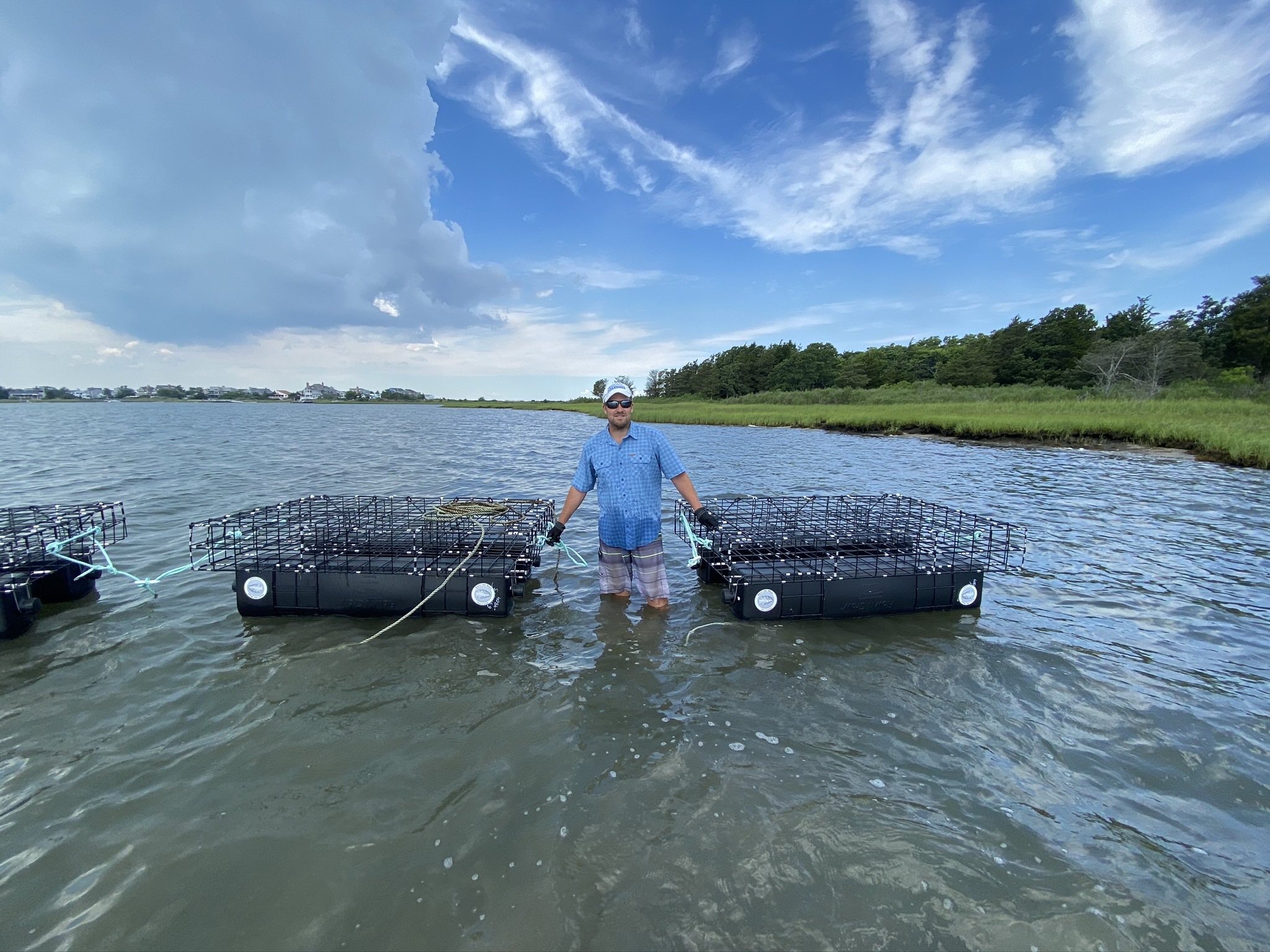
 4 Photos
Peter Topping, the Peconic Baykeeper, and the oyster nursery
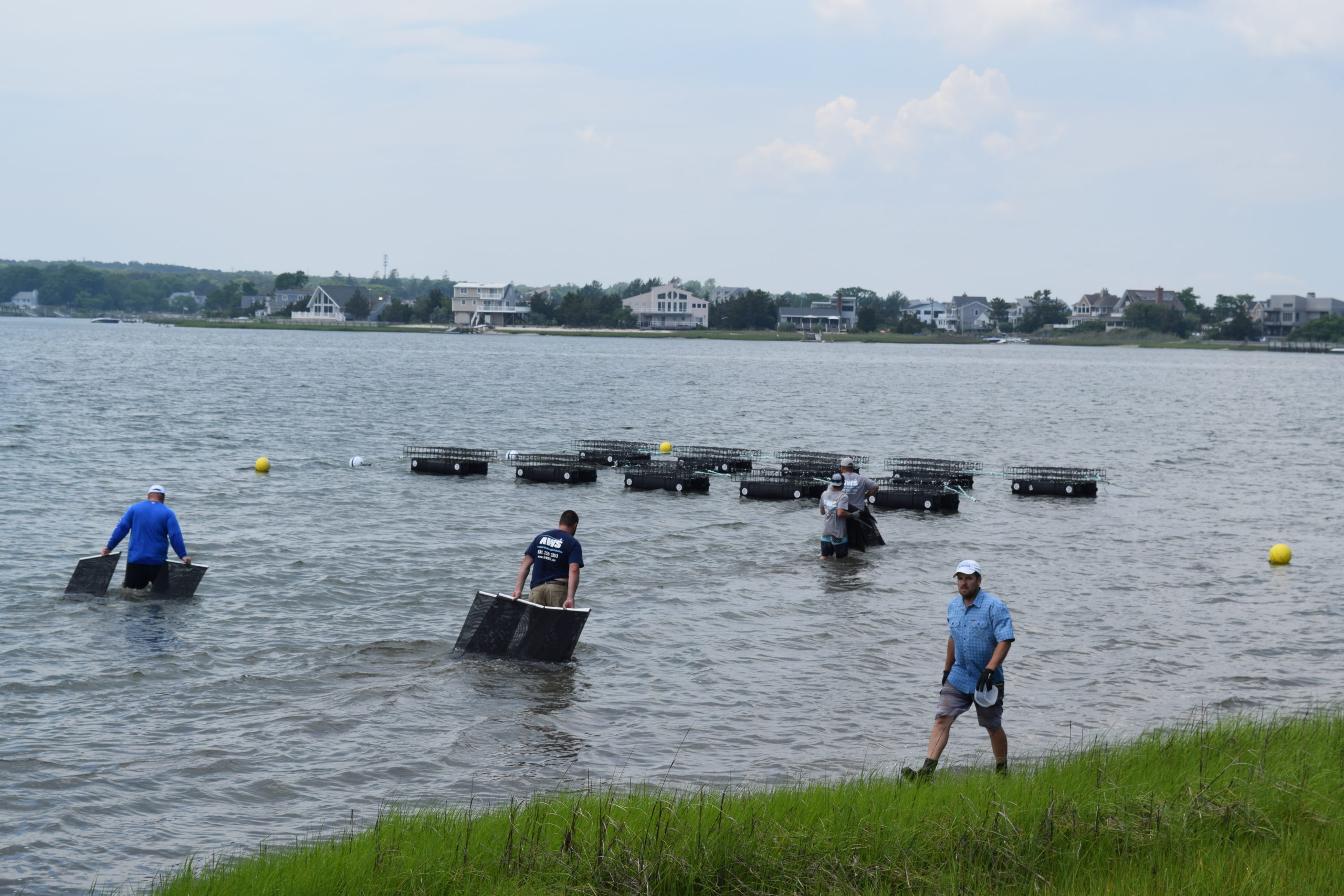
The AWS and Peconic Baykeeper teams readying the nursery in Cold Spring Pond. Courtesy of Advanced Wastewater Solutions
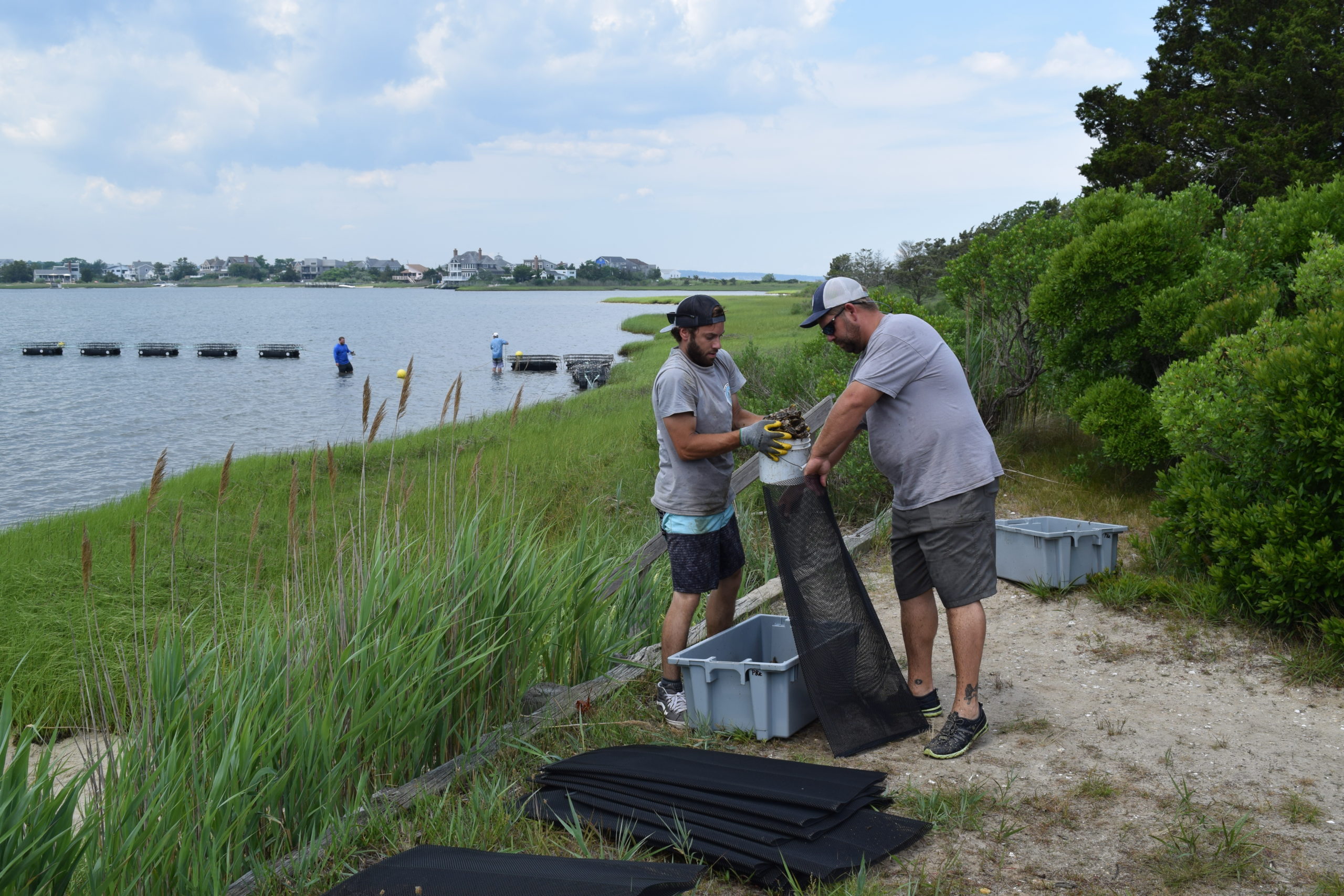
Members of the AWS staff adding oysters to the nursery Courtesy of Advanced Wastewater Solutions
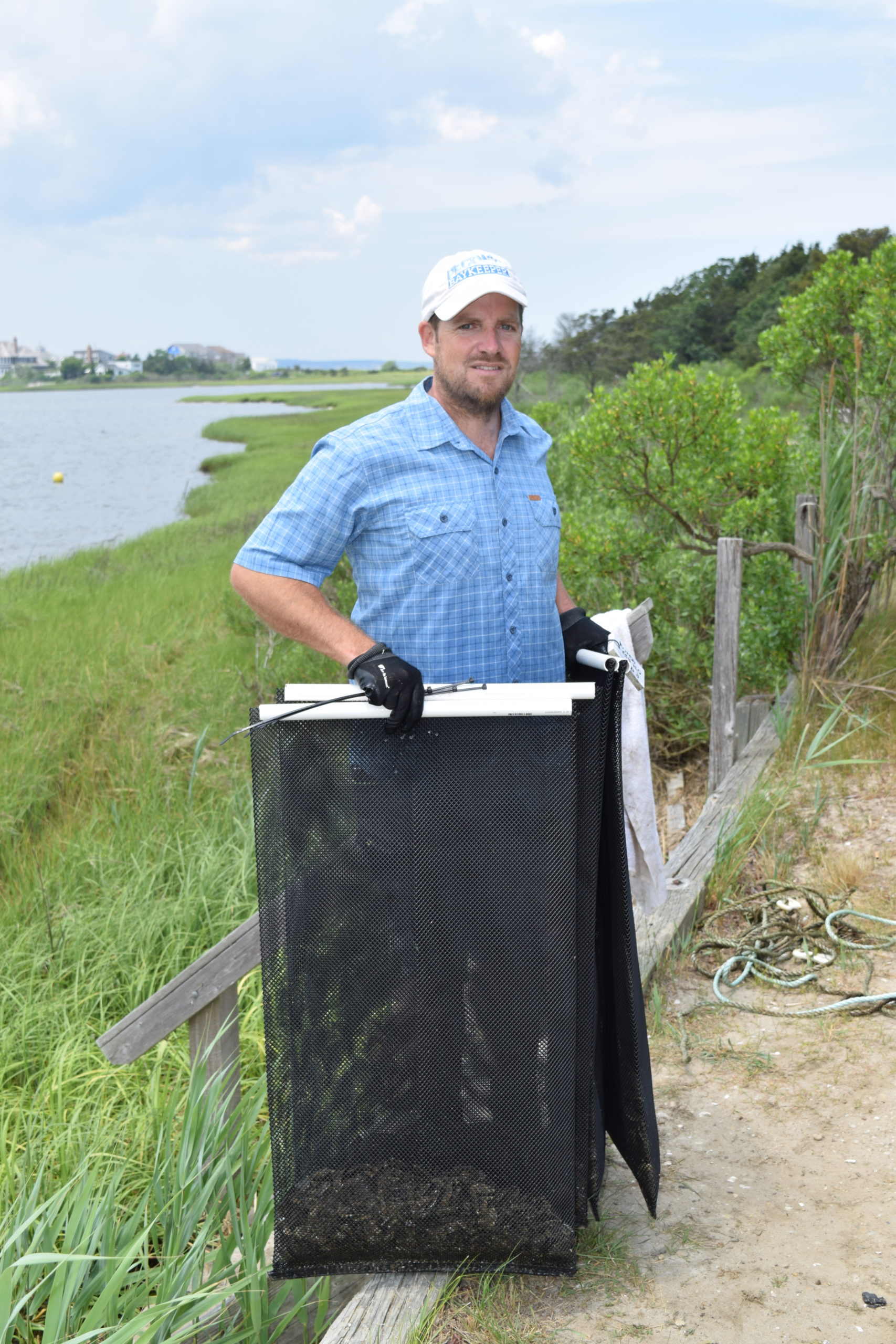
Pete Topping, the Peconic Baykeeper Courtesy of Advanced Wastewater Solutions
Peter Topping, the Peconic Baykeeper, has watched the Peconic Estuary’s condition deteriorate throughout his life. Now, with funding from a Southampton business and a few-thousand oysters, he hopes to right the ecological course.
And while a plethora of organizations work throughout the East End on oyster replenishment, Mr. Topping, a Southampton native, desired something more sustainable: a floating nursery for 80,000 oysters.
His project actually had been greenlighted by the Southampton Town Trustees last year to float in Cold Spring Pond, a Peconic Baykeeper press release stated, but the project ran into financial issues — donations the organization normally received were now being diverted to COVID-19 related funds and the Community Preservation Fund declined the organization funding.
“They felt that the project wasn’t large enough in scope. Which is a good point, but it’s kind of a catch-22,” Mr. Topping said in a phone call. “The town is not going to let you put 10 million oysters in the harbor and all the gear.”
Oysters and other shellfish are fundamental to maintaining the health of waterways: on average, an adult oyster can filter up to 50 gallons of water per day, removing algae from the water. Excessive nitrogen and nutrient levels in the water can cause toxic algal blooms that stymie shellfishing seasons.
Mr. Topping turned to longtime friend Bryan McGowin, president of Southampton’s Advanced Wastewater Solutions, a wastewater treatment company, and his partner, Kevin McGowin, for funding.
AWS, in lieu of spending their advertising budget on Facebook and Instagram ads, actually planned on putting the funds toward oyster replenishment through their company’s Save The Bays initiative, before they knew of Mr. Topping’s project.
“Our initial idea was to go and purchase some SPAT oysters from Cornell, or from East Hampton, and just go out and we’ll do a seeding effort on our own,” Bryan McGowin said.
Cornell University runs the Suffolk Project in Aquaculture Training, which allows volunteers to grow small oysters in containment before releasing them into waterways. East Hampton Town’s Shellfish Hatchery provides a similar program.
But when the McGowins asked Mr. Topping for his advice on their proposed endeavor, he pitched his project.
“We decided that that would be the perfect place to put our funds,” Bryan McGowin said. “This aligns exactly with our company mission … of trying to clean the water for future generations, and, you know, by doing it on land, now we’re trying to tackle it in the water.”
Mr. Topping said that the source of excessive nitrogen and other pollution is often effluent from faulty and old septic systems and drainage systems, noting that the East End’s water quality deteriorates in areas where more people reside. The McGowins’ systems aim to counter this as well.
“We’re treating the wastewater at its point source to try and take nitrogen out, but these types of projects like what the Baykeeper is doing now, are the way that, if we’re truly going to bring the bay’s health fully back to where it once was, you have to address it both on its way into the ground, and once it’s already been infiltrated,” Kevin McGowin said.
Mr. Topping was hopeful that a renewed interest in environmental protection, as well as the various East End oyster replenishment programs, will help bring a change to the state of the bays. “Hopefully the tide will turn. Literally,” he said.


 Alec Giufurta on Jul 21, 2020