


 2 Photos
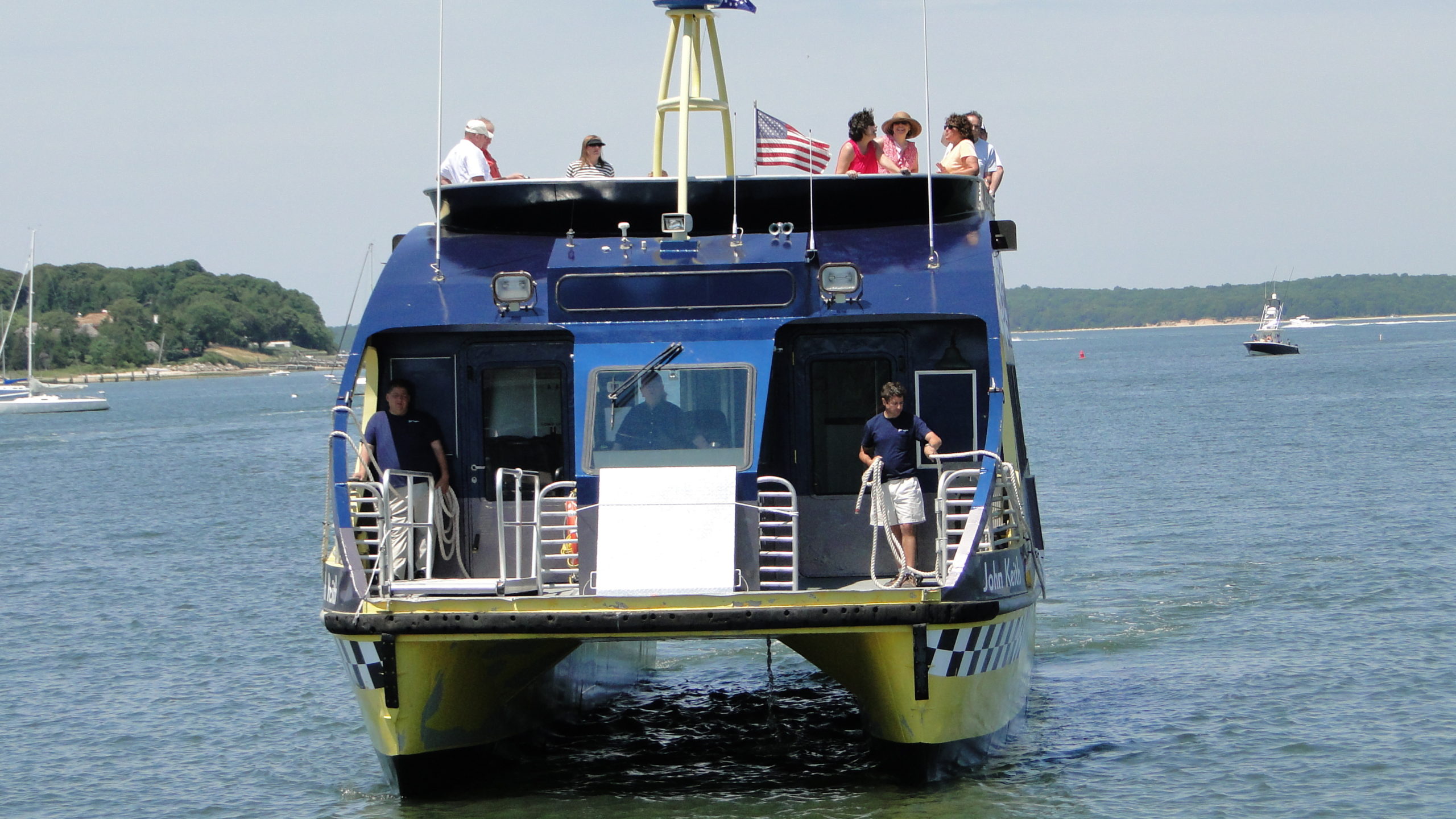
The Peconic Jitney is hoping to launch regular, seasonal passenger ferry service between Sag Harbor and Greenport this summer. The service was first offered as a successful pilot program in 2012. EXPRESS FILE
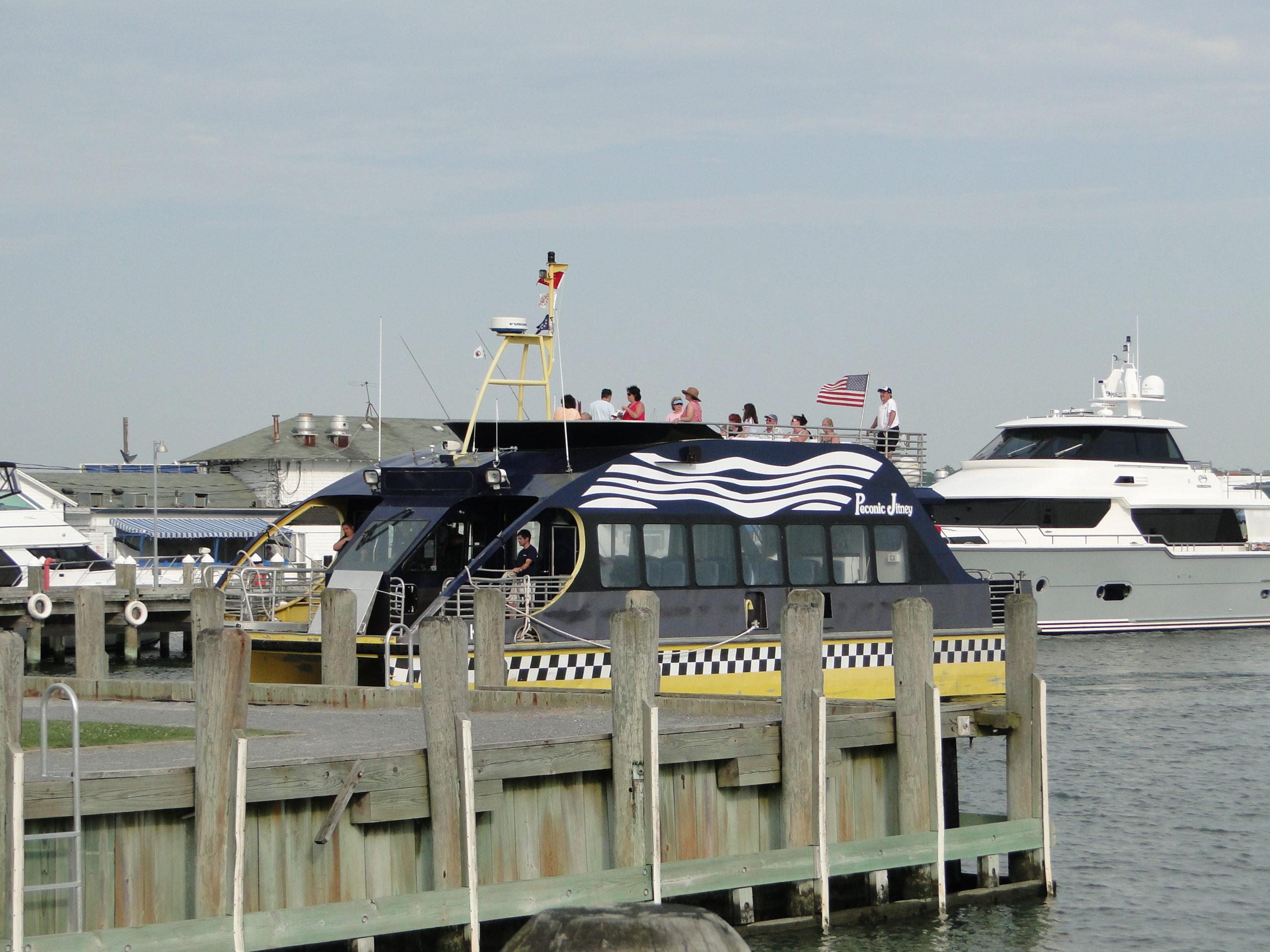
The Peconic Jitney is hoping to launch regular, seasonal passenger ferry service between Sag Harbor and Greenport this summer. The service was first offered as a successful pilot program in 2012. EXPRESS FILE
Representatives of the Peconic Jitney, which hopes to provide seasonal passenger ferry service between Sag Harbor and Greenport, will pitch their plan to the Sag Harbor Village Board when it meets at 6 p.m. on Tuesday, March 8.
The ferry service was introduced as a pilot plan in 2012 as a spin-off of the Hampton Jitney, best known for its bus service between the East End and New York City. Two years ago, Jitney president Geoff Lynch, and Jim Ryan, Peconic Jitney general manager, announced an effort to resume the service on a regular basis, but the COVID-19 pandemic scuttled those plans.
“Just before we were about to pull the trigger, we found ourselves in meetings wearing masks, and all bets were off,” Ryan said on Monday.
“The whole purpose of the service,” he continued, “is to take cars off the road, promote public transportation in a north-south direction, allow people to see the Peconic Bay, which is a beautiful place many people don’t get to see, and join East End communities.”
Ryan said the Peconic Jitney has applied to Suffolk County for a five-year franchise license allowing it to operate the ferry service, and now it must receive permission from both villages to dock its boat in their ports.
Mayor Jim Larocca said the Sag Harbor Village Board would be open to allowing the service to return, but would have to work out details, including where passengers using the service would park their cars.
“Our initial disposition is the earlier trial was successful, and we learned a lot,” Larocca said of the 2012 pilot program. “We are open to considering a new proposal.”
Ryan said the Peconic Jitney would use a refitted ferry, the Mickey Murphy, which is the same size — 53 feet — as the vessel it used in 2012. The boat has been equipped with modern low-emission diesel engines and the layout has been reconfigured to allow as many as 101 passengers, he said.
Ryan said the ferry could easily dock at the north of Long Wharf, where it would require about 15 minutes for passengers to disembark and embark for the return trip to Greenport, which he estimated would take about 45 minutes.
The Greenport Village Board already discussed the matter at a recent work session, and Ryan said some members of that board objected to the ferry docking at Mitchell Park and preferred that it use what’s called the visitor’s dock next to the North Ferry terminal. That would require a major infrastructure upgrade because most of the existing dock is a floating dock that would have to be replaced with a fixed dock, he said.
If approved, the ferry service would be offered on Fridays, Saturdays, and Sundays, from June 17-30, with seven trips per day spaced between 9 a.m. and 9 p.m. The service would operate seven days a week in July and August, and be trimmed back to weekend-service only from September 1 to 18. Service could be continued through Columbus Day weekend if demand warrants it, the Jitney’s proposal says.
Adult tickets would cost $20 one way or $37 for a round trip, and children 12 and under would ride one way for $15 or $30 for a round trip. There would be a $5 fee for bicycles or scooters, a $1 fee for pets, and a $25 fee to ship packages or freight.
When the service ran as a pilot a decade ago, the Jitney projected 10 to 12 passengers per voyage, but an average of 19 people used it. All told, the service carried 18,590 passengers during its initial season. Those passengers spent an average of $50 to $100 per person, the Jitney says.
Ryan said in 2012 the Jitney arranged to use the parking lot at Pierson High School for passengers and provide them with a free shuttle to and from the dock. But only one or two cars used that service each day, he said. Ryan said the school parking lot is not an option this year, but he said the company would work with the village to solve its parking concerns.
One thing that is certain is that the village is crowded with far more cars on an average summer day now than it was a decade ago.
The passenger ferry proposal was an idea that arose out of the Sustainable East End Development Strategies, or SEEDS initiative, which encouraged passenger ferries as one method to expand the area’s transportation infrastructure without relying on the automobile.


 Stephen J. Kotz on Mar 2, 2022