


 2 Photos
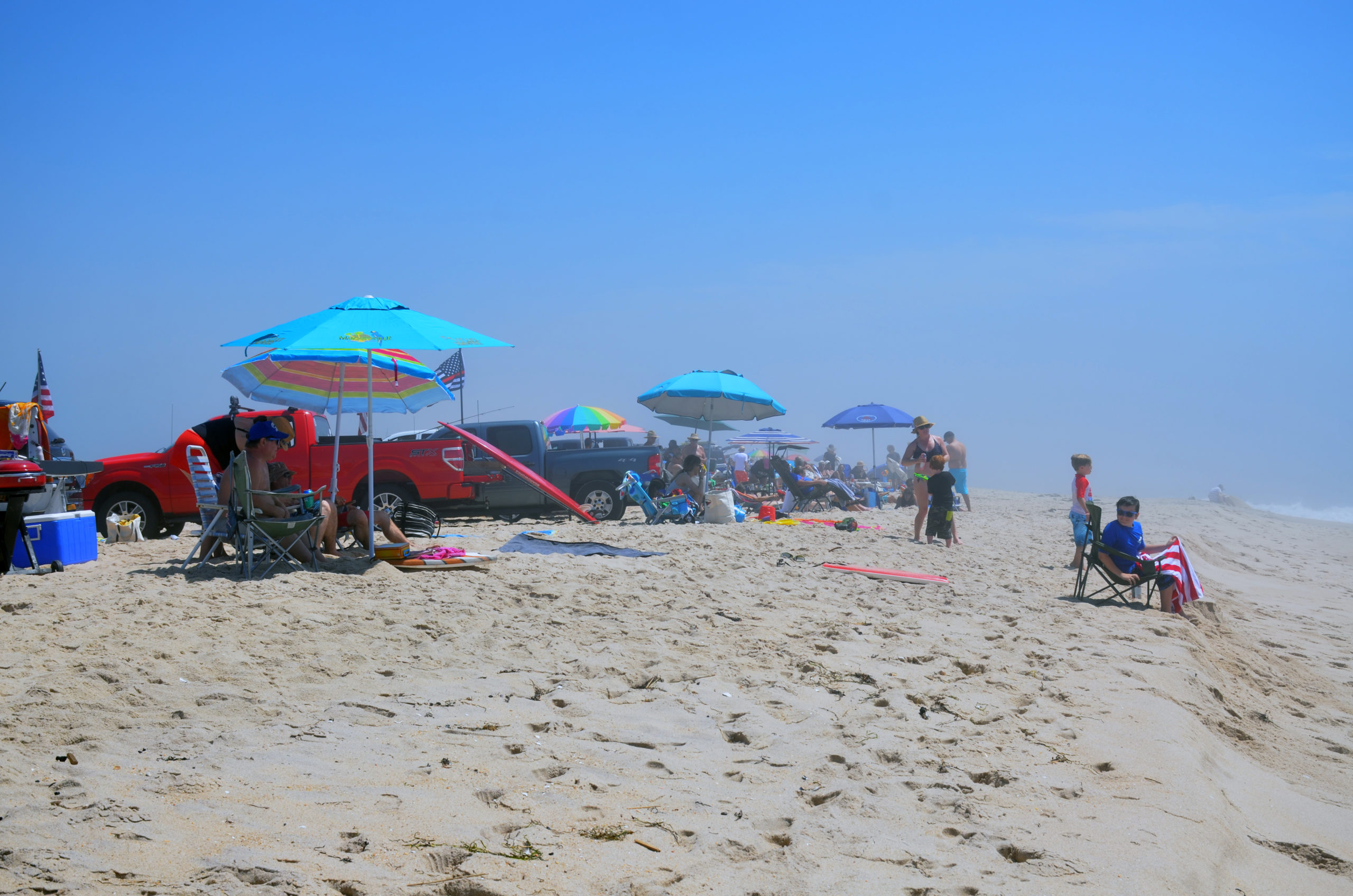
During the summer, people flock to Picnic Beach.
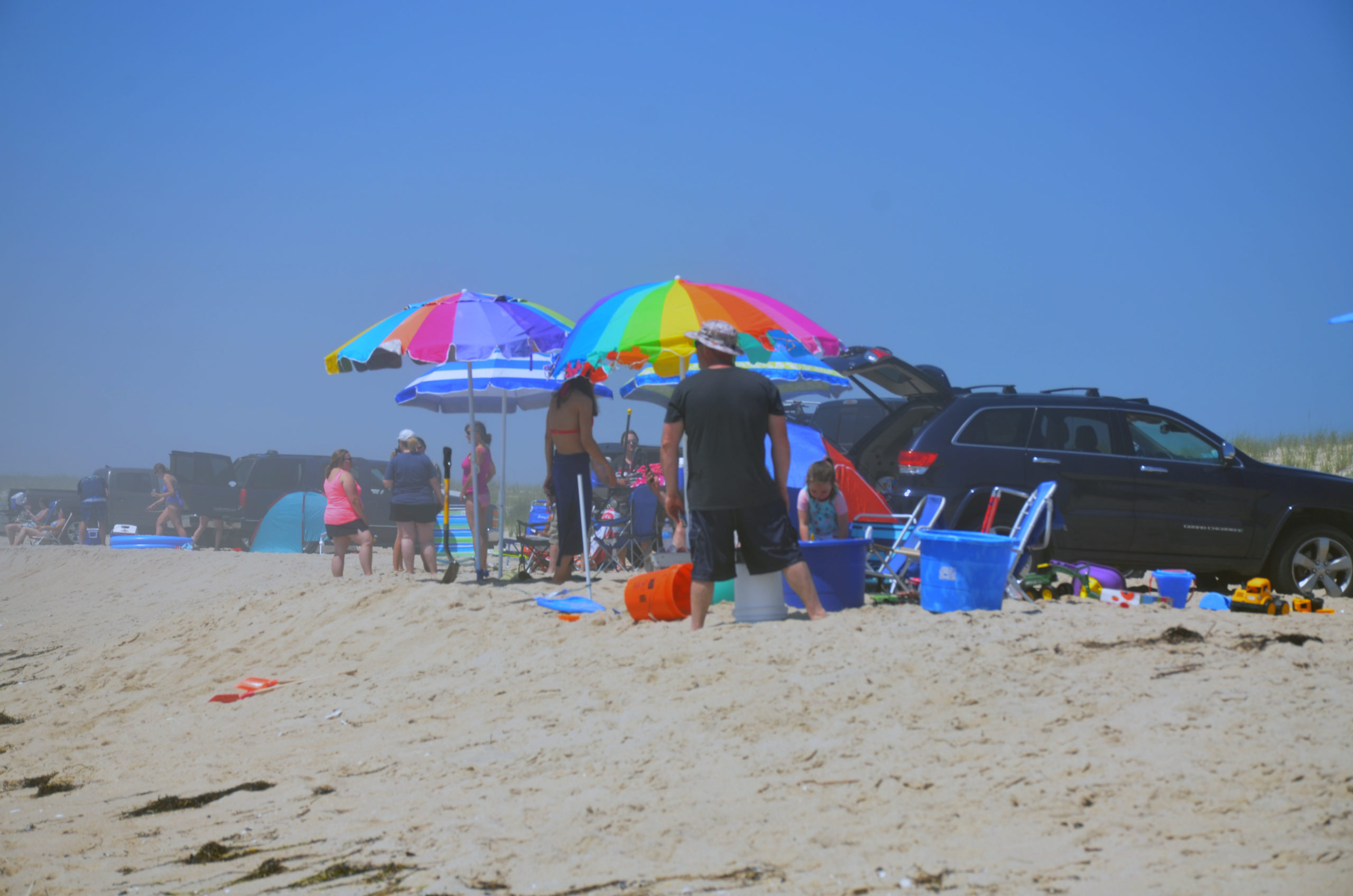
Neighbors sued to keep people from driving on Picnic Beach.
Do SUVs and 4x4 vehicles parking on a 2,000-foot-long stretch of beach in Southampton Village, known as the Picnic Area, create an unlawful interference with the use and enjoyment of neighboring property owners’ land under the law? Is it a nuisance?
Litigants in the case of Meadow Lane homeowners against the Southampton Town Trustees and Southampton Village will have to go to trial to find out.
A state appeals court last week overturned a previous ruling that had wholly dismissed a challenge to village and Trustees’ policy of allowing 4x4 vehicles on a stretch of beach at the western end of Meadow Lane during the day in the summer.
The appellate division judges found that Supreme Court Justice Joseph Santorelli had been incorrect when he dismissed the claims by the neighboring homeowners, Kathleen Araskog Thomas, that the use of the beach by hundreds of trucks at times poses a public and private “nuisance.”
“Contrary to the court’s conclusion, photographs of the subject beach area as well as the affidavits of Thomas and her family describing the conditions on the beach raised triable issues of fact as to whether driving and parking in the subject beach area, in the manner and at the intensity allegedly occurring at the time of this action, was of an unreasonable character,” the decision, which was signed by four of the appellate judges, says. “Triable issues of fact existed as to whether summer daytime beach driving and parking in the subject beach area … endangered the health and safety of members of the public who use that portion of the beach as well as the beach itself.”
The suit was brought by Kathleen Araskog Thomas, Andrew S. Thomas, Rand V. Araskog and Jessie M. Araskog, who live in a home at the western end of Meadow Lane and own a portion of the sand the Picnic Area uses. The lawsuit targeted provisions in village and Trustee regulations that allow for summertime beach driving between Road H and Shinnecock County Park East.
Generally, beach driving is prohibited during the daytime hours; over time, the Picnic Area became the sole spot in Southampton Town to visit and park on the beach for a day of oceanfront enjoyment.
The Araskog-Thomas family have said that having just this one spot singled them and their neighbors out to unfairly bear the burden of beach driving beachgoers.
Represented by Southampton attorney Nica B. Strunk, the plaintiffs argued that allowing beach driving and parking near their property violated their rights to equal protection under the law.
Homeowners along the oceanfront in Southampton Village own the beach from their house to the mean high water mark, while the Town Trustees hold a public access easement along all ocean beaches within the town. Their access extends from the crest of the natural dunes to the high tide line. The 1686 Dongan Patent established that easement and gives Town Trustees the power to regulate activities in that zone, such as fishing and collecting seaweed.
Plaintiffs had argued that the regulations that allow beach driving and parking violate state erosion management rules and were beyond the authority of the Town Trustees and village officials to enact. The private property owners said the State Department of Environmental Conservation should be compelled to revoke regulatory programs that allow for driving and parking on the beach landward of the debris line.
In the 2018 decision, Judge Santorelli dismissed the assertion against the DEC, finding the plaintiffs were improperly trying to direct how the agency handles regulating coastal areas.
As the case wore on, attorneys for the village and trustees argued that, because certain matters had been decided during earlier suits, they were precluded from being raised again.
In 1988, several property owners commenced a lawsuit over the same beach driving regulations. Referred to in the recent determination as “the Katz action” — the plaintiff was property owner Frances Katz — it was resolved in favor of the village and the Trustees during the mid-1990s.
In the next decade, some of the same neighbors sued over the same issue again. And, again, in a decision rendered in 2005, supported by a second decision handed down following an appeal, the courts found in favor of the village and the Trustees. The courts ruled that they could not raise anew an issue already adjudicated.
In all, the homeowners raised eight arguments against permitted beach driving on the Picnic Area — in the 2015 suit that was dismissed in 2018, and in the subsequent appeal decided last week. The Appellate Division upheld the dismissal of all the arguments save the debate pertaining to nuisance.
To be entitled to damages for private nuisance, last week’s decision notes, “A plaintiff must establish interference with his or her right to use and enjoy land, substantial in nature, intentional or neglect in origin, unreasonable in character and caused by the defendant’s conduct.”
Reviewing photographs provided by the plaintiffs, the court did find that they raise “triable issues” as to whether driving and parking in the beach area, at the intensity described by the homeowners, meets the threshold for “unreasonable.”
The “poster child” photos offered, said Steven Stern, an attorney from the Carle Place-based Sokoloff Stern LLP representing the Town Trustees, were taken on days of maximum usage — Fourth of July and Labor Day. That volume of visitors occurs just a few times of the year, he emphasized.
A second, similar suit brought by neighbors elicited testimony from users of the Picnic Area who spoke of it as a way of life for locals and said there are rarely a lot of vehicles parked along the strip of shoreline. They said they had been using it for generations, Stern recounted, and using it before many of the nine homeowners with frontage on the beach bought their properties, much less filed their suits. Four of the nine property owners are suing, Stern informed. A second suit, an appeal of a 2008 dismissal, will also go to court on the nuisance issue.
“We are pleased the appellate court recognized the long history of legislative and judicial recognition of the public’s easement over the subject beaches,” Trustee President Scott Horowitz said. “We believe the Trustees will be successful in demonstrating at trial that our regulations do not cause a nuisance.”
Speaking on behalf of the village, lifelong resident and Village Board member Joseph McLoughlin made note of the historic nature of the public’s push to retain beach access. “I support the public’s right to access the beach,” he said, adding that he hoped the two sides could reach a compromise.
McLoughlin recalled that several years ago, when Mark Epley was mayor, there was a move to cap the number of vehicles that could drive onto the beach. The measure didn’t progress to enactment, however.
“This is a very complex issue,” the Village Board member acknowledged. Summarizing, he said that people have the right to enjoy their own property, while the public has a right to access the beach. “I don’t support privatizing our beaches,” he asserted. “The beach is for everybody and we want to keep it for everybody.”
Strunk did not return a request for comment.


