


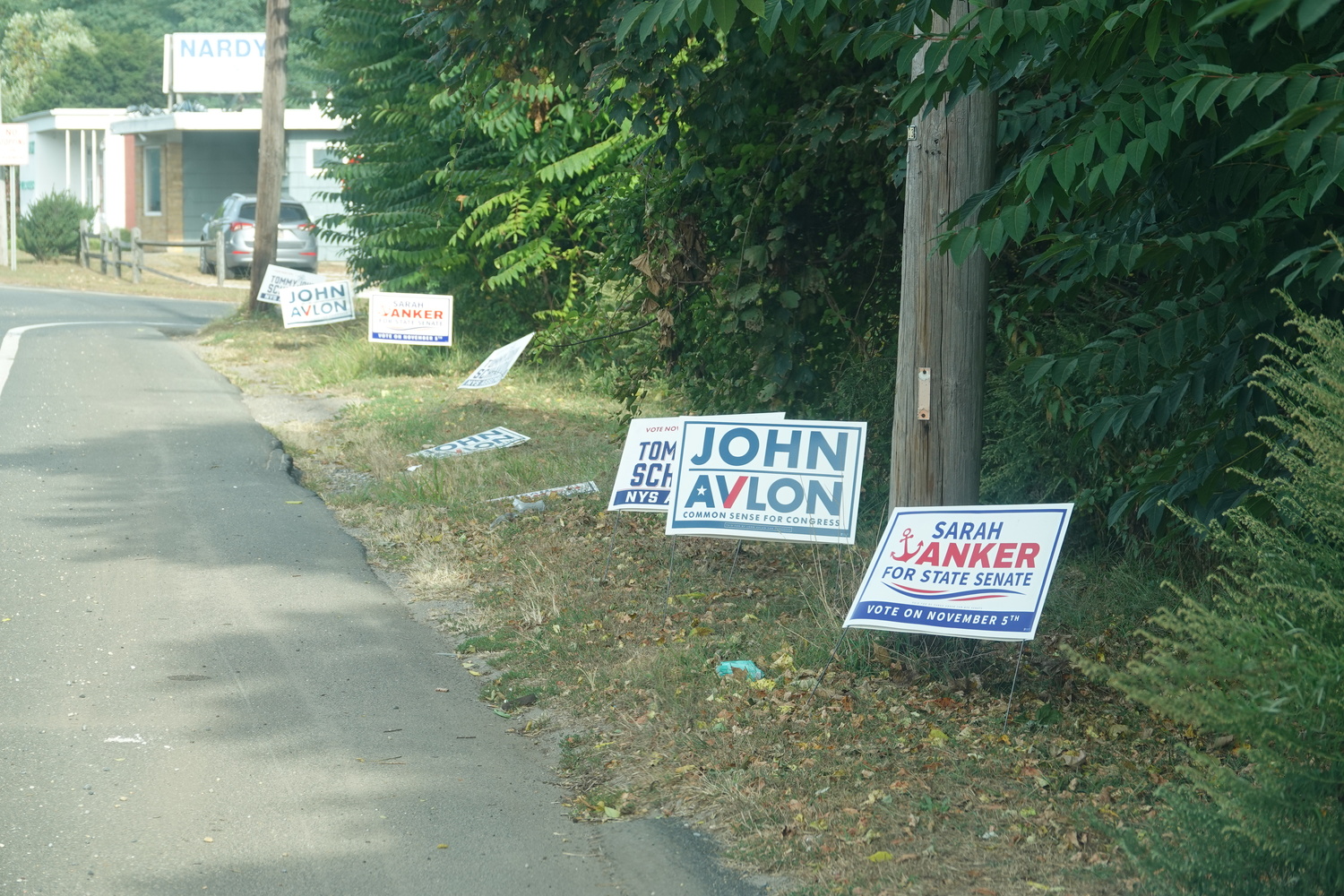
 2 Photos
Political campaign signs will be removed from Southampton Town roadsides and publicly owned property after the Town Board agreed that current town code does not exempt them, as has been widely assumed. MICHAEL WRIGHT
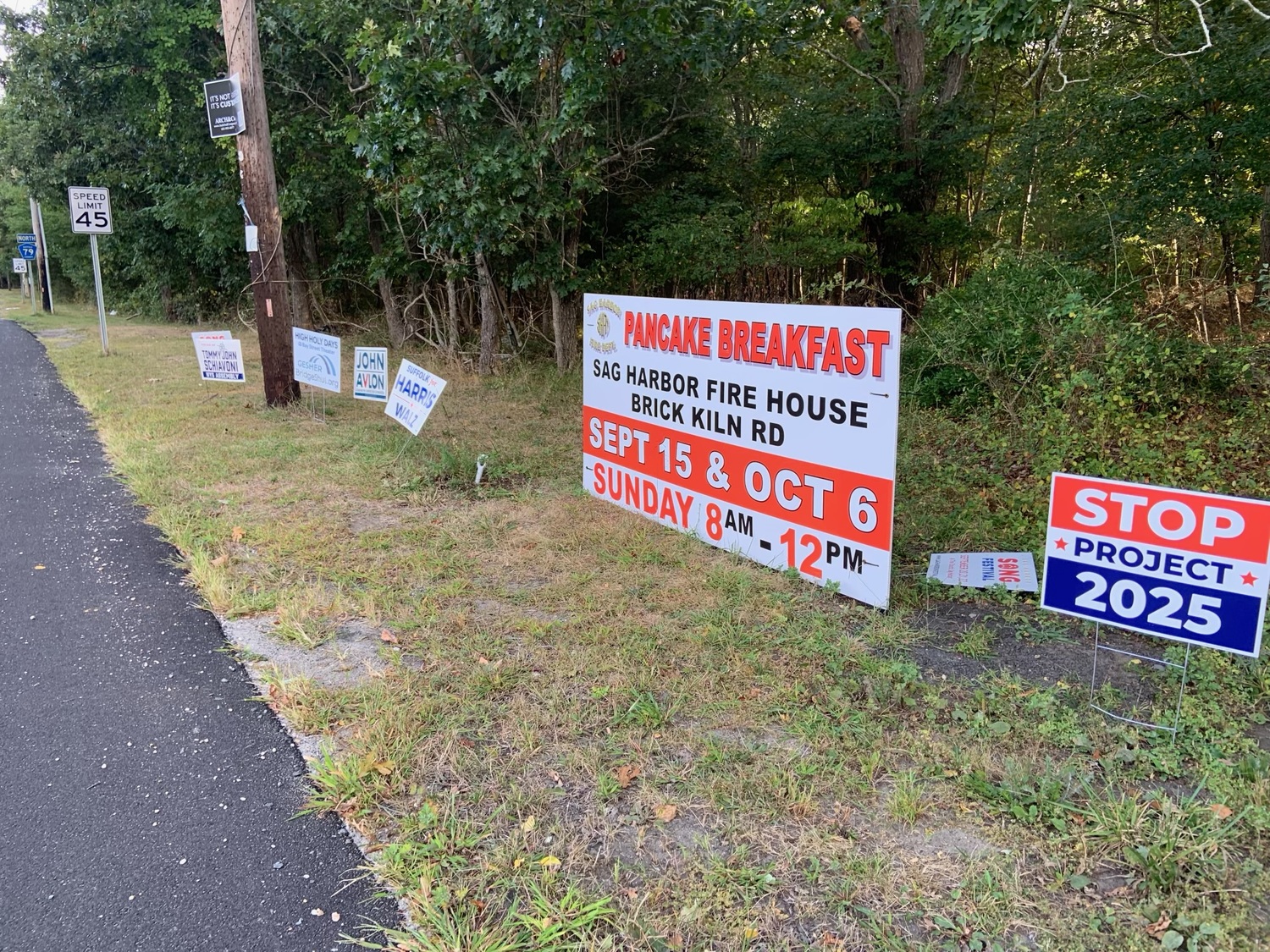
Political campaign signs will be removed from Southampton Town roadsides and publicly owned property after the Town Board agreed that current town code does not exempt them, as has been widely assumed. STEPHEN J. KOTZ
Political candidates can expect to have any signs advertising their campaigns cleared from Southampton Town-owned property and roadsides after Town Board members acknowledged that the town code has long banned the signs but was so rarely enforced that most people had just accepted it as permissible.
Councilwoman Cyndi McNamara, at a Town Board meeting on Tuesday, withdrew a proposed resolution to “memorialize” the illegality of posting political signs on town roadways after other board members who had pushed back against a bill putting more extensive limits on political signs throughout the town agreed that the political signs should at the very least not be on public property.
Following the meeting, McNamara instructed the town’s Highway Department to clear political signs whenever they encountered them in their daily maintenance routine.
“I’m simply seeking to clarify that while political signs are exempt from permits and fees, the posting of political signs, as with all other signs, on town properties and town rights-of-way, remains a violation,” McNamara said. “This is already the law, I’m just clarifying it because it is so abused.”
Residents of Bridgehampton, who have been among the most vocal complainers about the proliferation of the disposable temporary signs used by politicians, but also dozens of commercial enterprises, said they had accepted the political signs as allowed.
“It may be that the code already says that these signs are illegal, but, like me, everybody thinks they are legal because they are everywhere and the town never does anything to clear them out,” Pamela Harwood, the chairwoman of the Bridgehampton Civic Association said. “I myself thought they were legal. The code was a little unclear to me, because it started out sounding like political signs were exempt.”
Town code exempts temporary political signs from permitting requirements and fees for posting, but does not expressly exempt them from the section of code that bans the posting of signs on town property, roadsides or properties protected from development with Community Preservation Fund revenues.
Board members themselves were unaware of that point until McNamara introduced a law earlier this summer that had called for banning the signs from the town properties, as well as placing restrictions on the size of signs and the amount of time they can be displayed on private property as well.
She had pointed out that none of the local villages allows political signs on public property — some don’t even allow them on private property, or put strict time limits on them — and that town residents are saddled with the ugly clutter on their roads.
Councilman Michael Iasilli said that the problem with the sign clutter was apparently just a lack of enforcement.
McNamara said she would inform the town highway crews that they can pick up and dispose of signs that are on properties they are mowing or otherwise maintaining.
“They are going to be picked up,” she said of the signs touting candidates. “They are on notice.”


 Michael Wright on Sep 25, 2024