


 8 Photos


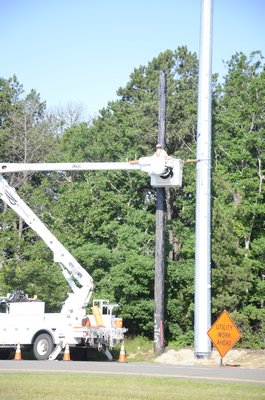
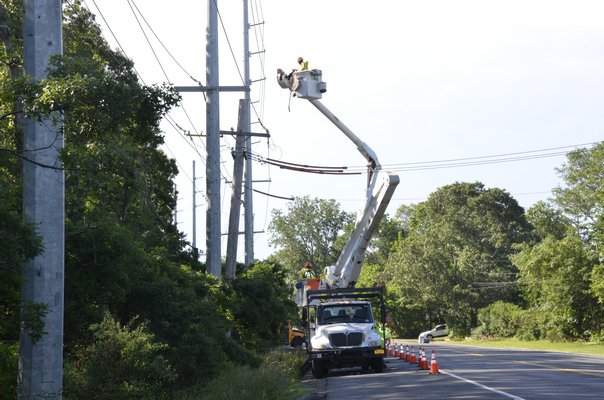
Efforts to bolster the South Fork’s power grid—work already under way in Eastport, with the installation of 70-foot-tall metal poles, and expected to continue through 2026 in East Hampton and Southampton towns—have caught the attention of local officials.
Even though PSEG representatives said this week that it is still too early to know if the planned work will require similar upgrades using the massive poles in East Hampton and Southampton towns, local officials said they intend to pressure the utility to bury all new lines as part of any future upgrades in their respective municipalities.
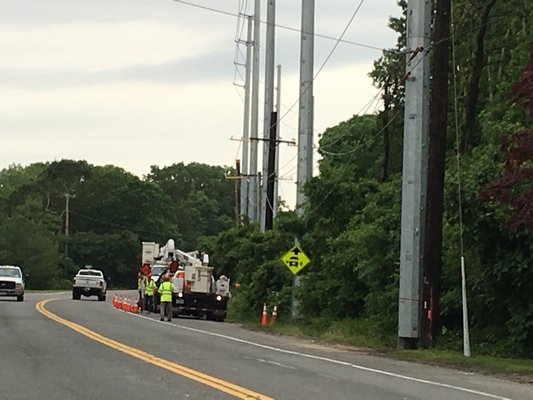
John O’Connell, the vice president of transmission and distribution at PSEG, which is undertaking the $513 million transmission line project, explained during a recent interview that the upgrades are broken down into 10 projects, with the first being the work that began in Eastport earlier this spring and is expected to wrap up shortly. That work, which included the installation of several dozen 70-foot metal poles along County Road 51 between Northampton and Eastport, as well as along Eastport Manor Road, has prompted demands from Brookhaven Town officials that PSEG remove all the newly installed poles that run between Sunrise and Montauk highways.
All of that work occurred in Brookhaven with no advance notice to town officials or hamlet residents—a scenario that East Hampton and Southampton town’s elected officials said they want to avoid.
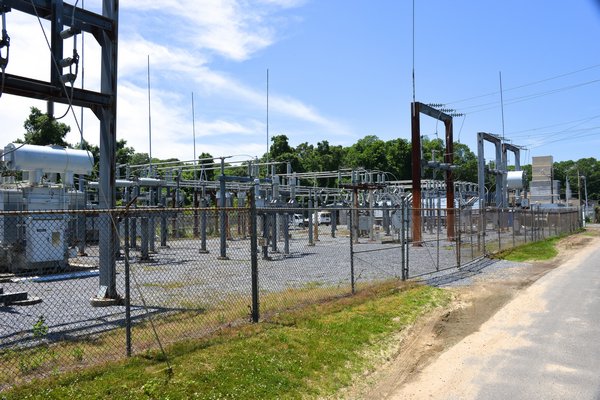
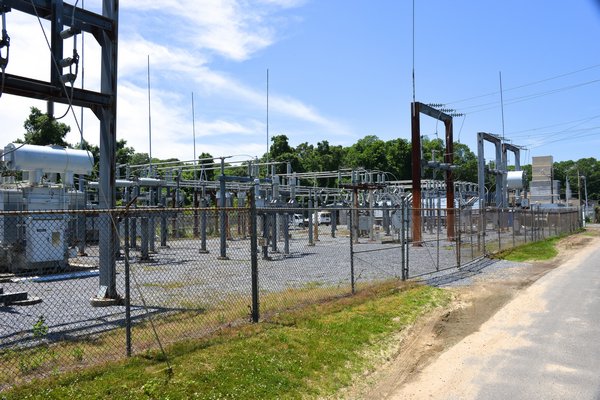
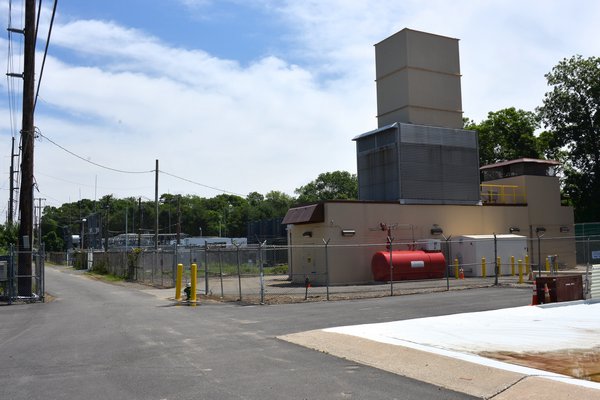
Mr. O’Connell explained that two of those projects call for upgrading the power lines running between substations near the Shinnecock Canal in Hampton Bays and Southampton Village, as well as those between facilities in Bridgehampton and Buell Lane in East Hampton. Other work includes doubling the amount of power, from 69 kilovolts to 138 kilovolts, in the transmission line running between Wildwood Lake in Northampton and Riverhead Town, and the installation of two new buried 138-kilovolt lines between Riverhead and the canal, PSEG officials said. Those new lines, PSEG officials added, would continue east from the Shinnecock Canal to Wainscott.
Additionally, five transmission lines in East Hampton Town would see their capacity increased from 23 kilovolts to 33 kilovolts, according to the utility.
Noting that plans are still preliminary, Mr. O’Connell said he did not know if PSEG plans to install the 70-foot-tall metal poles as part of those upgrades.
East Hampton Town Supervisor Larry Cantwell said on Monday that he was not aware of any of the planned upgrades within his municipality, while quickly adding that officials would do whatever is necessary—including taking possible legal action—to prevent PSEG from installing the larger metal poles.
“They have not come to us to discuss all of those projects with the town,” Mr. Cantwell said, adding that he is always willing to work with PSEG if it intends to bury power lines.
Presently, East Hampton Town is embroiled in a legal battle with PSEG regarding the expansion of its Amagansett substation. According to Mr. Cantwell, the town hit the utility with a stop-work order in April 2014 when it began installing a new transmission line from East Hampton to Amagansett, charging that PSEG needed both site plan approval and a building permit to proceed with the work. The State Supreme Court ruled in PSEG’s favor, though the town has since appealed that ruling—and is now awaiting a final decision.
“Absent that authority, we’re left with arguing and yelling in terms of trying to get PSEG to do what we want,” Mr. Cantwell said.
He added that while he has participated in some discussions regarding the line upgrades between Hampton Bays and Wainscott, he did not have any specifics about the proposed work.
Jeffrey Weir, a spokesman for PSEG, said this week that those upgrades are still in their engineering and design phases, meaning he could not offer any specific plans—such as whether or not the utility intends to install metal poles as part of any of its future upgrades.
Southampton Town Supervisor Jay Schneiderman said this week that he, likewise, has heard nothing from PSEG about planned upgrades in his municipality. “Obviously, I’d like to see these lines buried, because that’s the future,” he said.
He also stressed that he hopes PSEG officials have learned their lesson from Eastport, where Brookhaven Town officials are now threatening legal action to have the metal poles removed along Eastport Manor Road.
On Tuesday, Brookhaven Town Councilman Dan Panico confirmed that PSEG officials did not reach out to town officials prior to installing the metal poles, which are taller than the wooden ones they replaced. Mr. Panico, along with Brookhaven Town Supervisor Ed Romaine and other elected officials were scheduled to meet with PSEG representatives behind closed doors at Town Hall on Wednesday, June 21, to discuss potential options along Eastport Manor Road, but that meeting was abruptly canceled. Mr. Panico said they are now working on another date for the meeting.
If the outcome of the conversation does not meet their satisfaction, Brookhaven officials intend to pursue legal action, Mr. Panico said.
“PSEG cannot hide behind the mistruth that they alerted government offices or the people,” Mr. Panico said. “A project of this size should have had extensive outreach to the people.”
Mr. Schneiderman warned that towns often have a difficult time fighting utilities on such projects, explaining that they are free to make upgrades that they deem necessary. PSEG officials previously explained that the upgrades are needed to meeting growing demands for electricity across the South Fork, while also making the grid more resilient against future storms.
However, recently introduced legislation in Albany could assist municipalities in that effort.
On June 14, State Senator Kenneth P. LaValle and State Assemblyman Fred Thiele Jr. proposed legislation that, if adopted, would allow towns to establish underground utility improvement districts. In these districts, residents would be able to enter into agreements with public utility companies to construct underground facilities or convert above ground lines to underground ones.
According to a press release from Mr. Thiele’s office, lawmakers “introduced this legislation after recent dealings with the expansion of above-ground transmission lines in both Southampton and East Hampton Towns.” East Hampton Town established an underground utility improvement district last year.
Those changes, if eventually adopted, will do little to ease Carolyn Ceruti’s mind. The Eastport resident said PSEG crews recently installed bushes around the base of the metal pole that now adorns her front yard along Eastport Manor Road, but that they do nothing to hide the damage.
“I’d be happy to see the pole go, but it would be comical to see them have to dig up the trees [they planted] for us to bury the lines,” Ms. Ceruti said. “PSEG should have really addressed the community in a meeting before ever breaking ground.”


 Greg Wehner on Jun 20, 2017