


 6 Photos
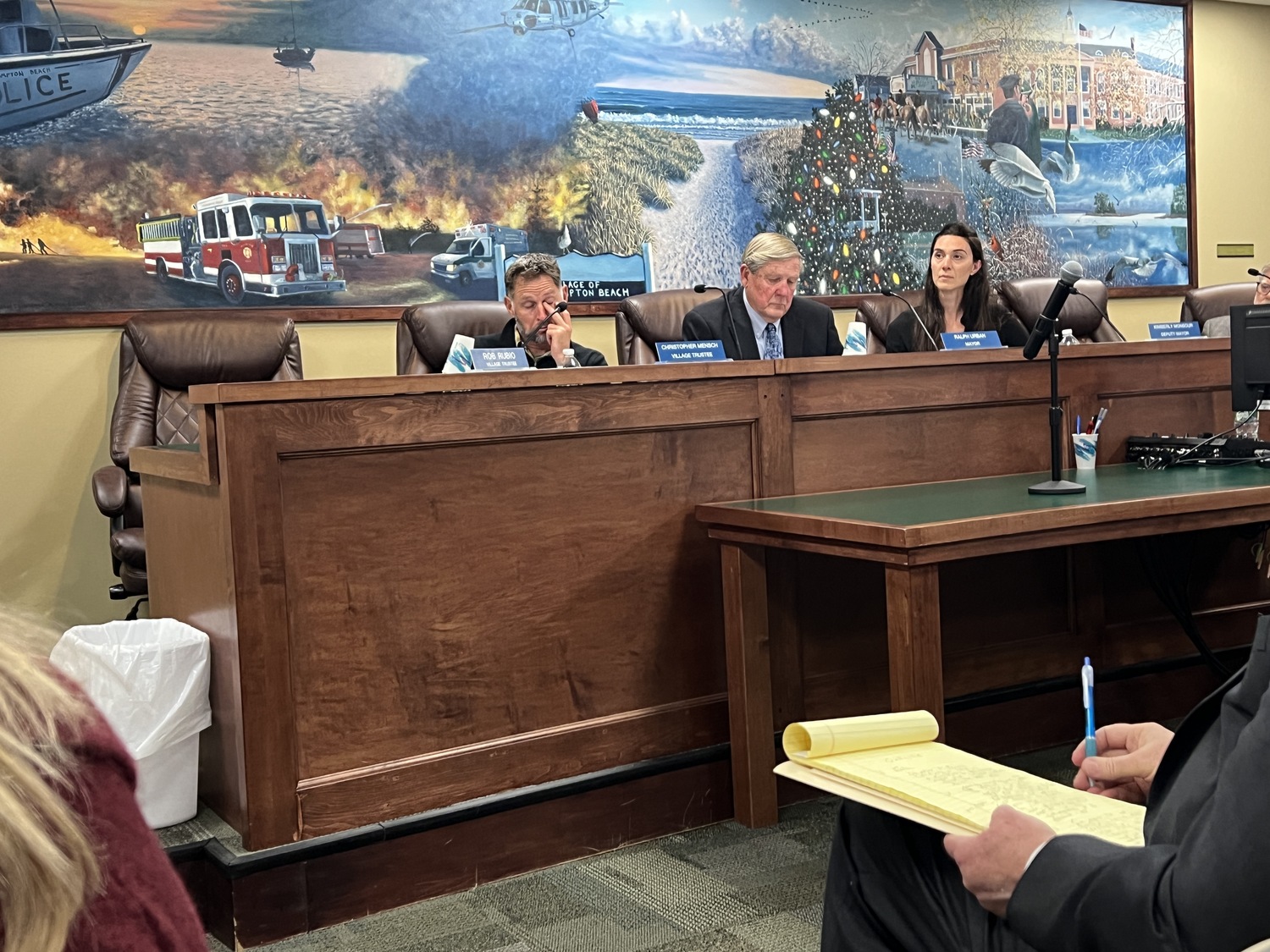
The three memebers of the Westhampton Beach Village Board lsten to comments during the public hearing to ratify the solar lease with CVE North America for a planned solar farm on village property on Quiogue. BILL SUTTON
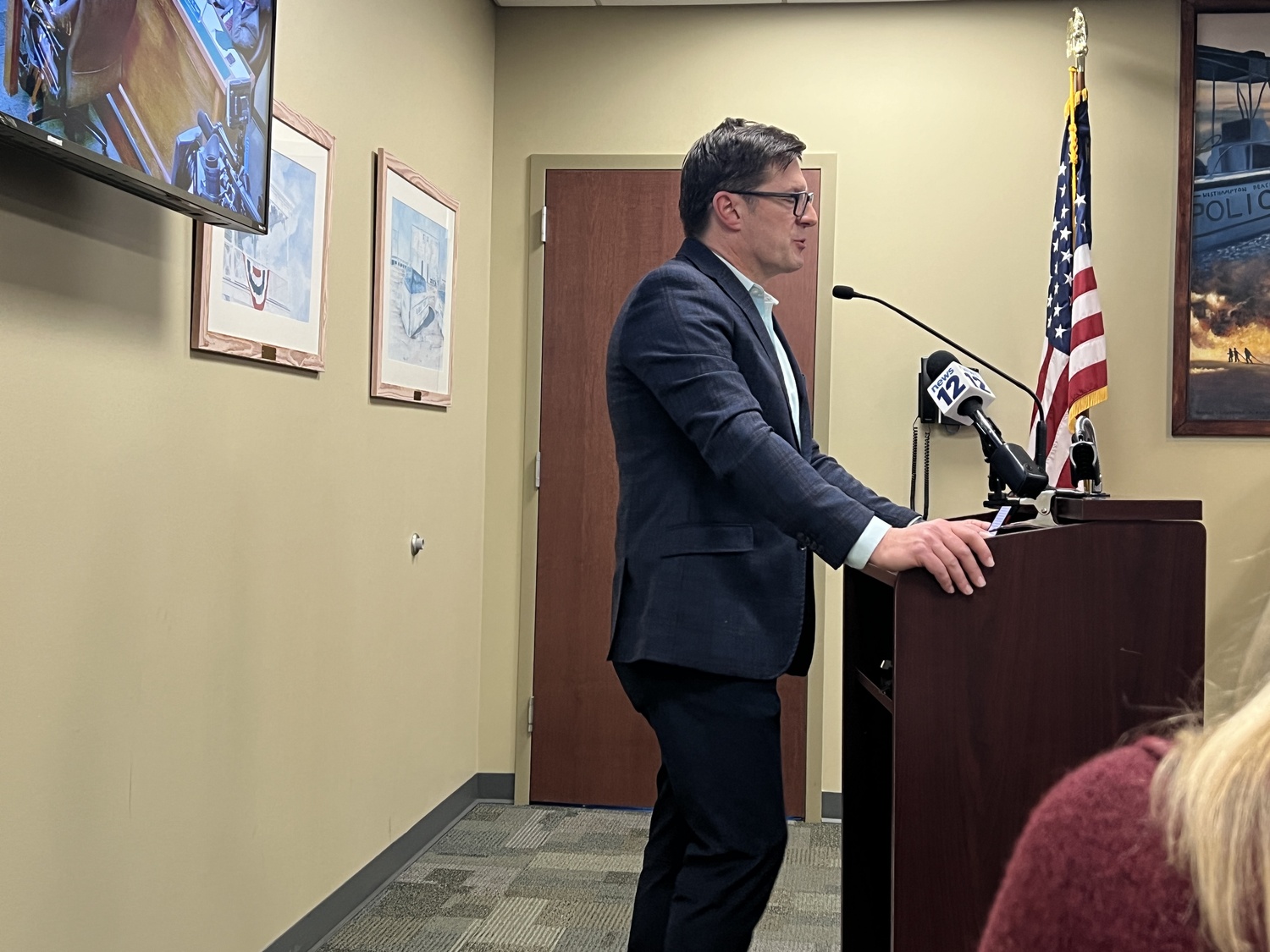
Steven Englemann form CVE North America addresses the Westhampton Beach Village Board during a public hearing on his company's plans to install a solar array on village owned property on Quiogue. BILL SUTTON
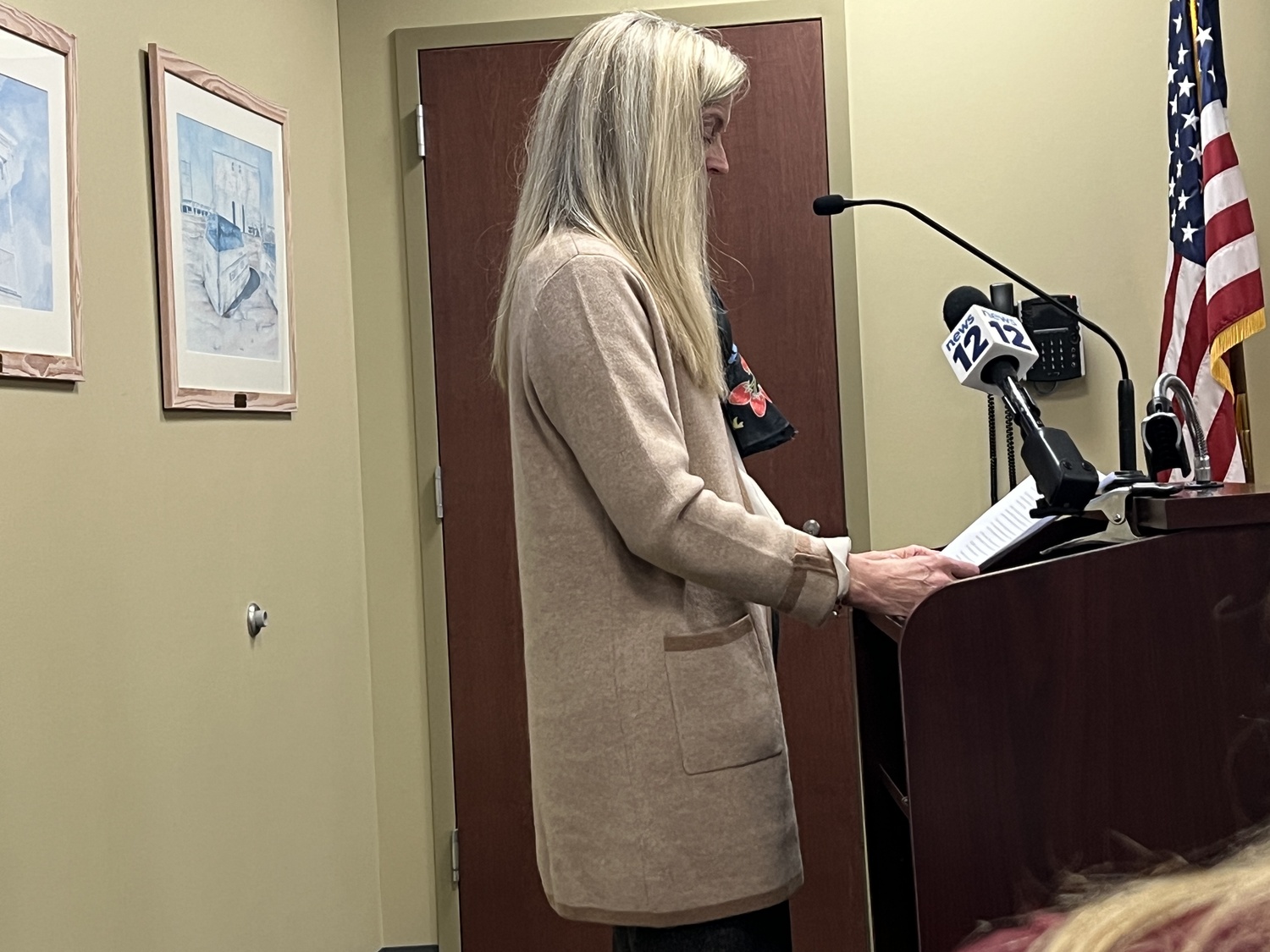
Kara Bak, who lives adjacent to to the proposed soalr farm, asks the Westhampton Beach Village Board to rescind the lease with CVE. BILL SUTTON
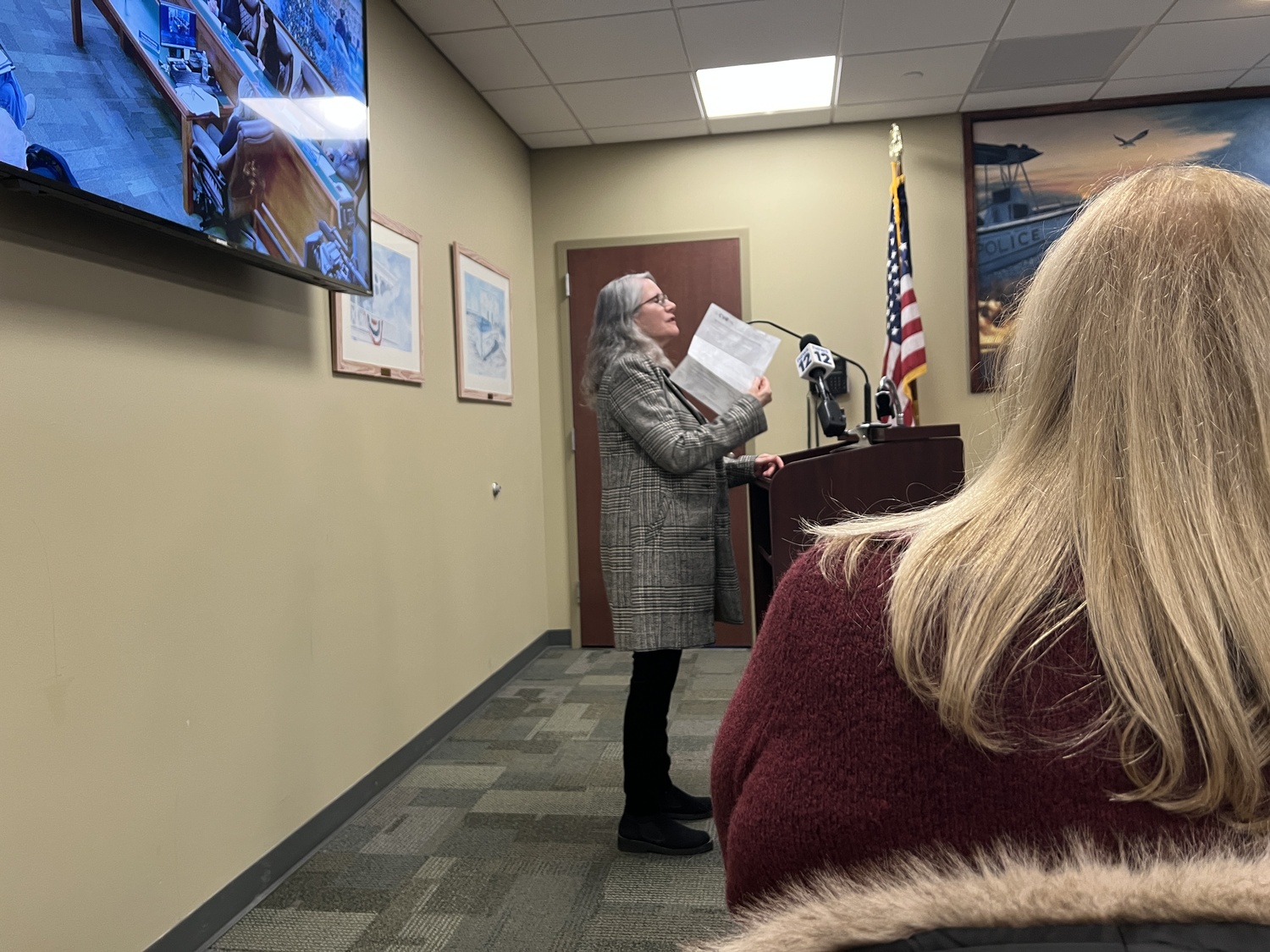
Jennifer's Path resident Ellen Worth addresses the Westhampton Beach Village Board during the public hearing on the village's lease with CVE North America. CVE hopes to build a solar array on the property, adjacent to her property on Quiogue.
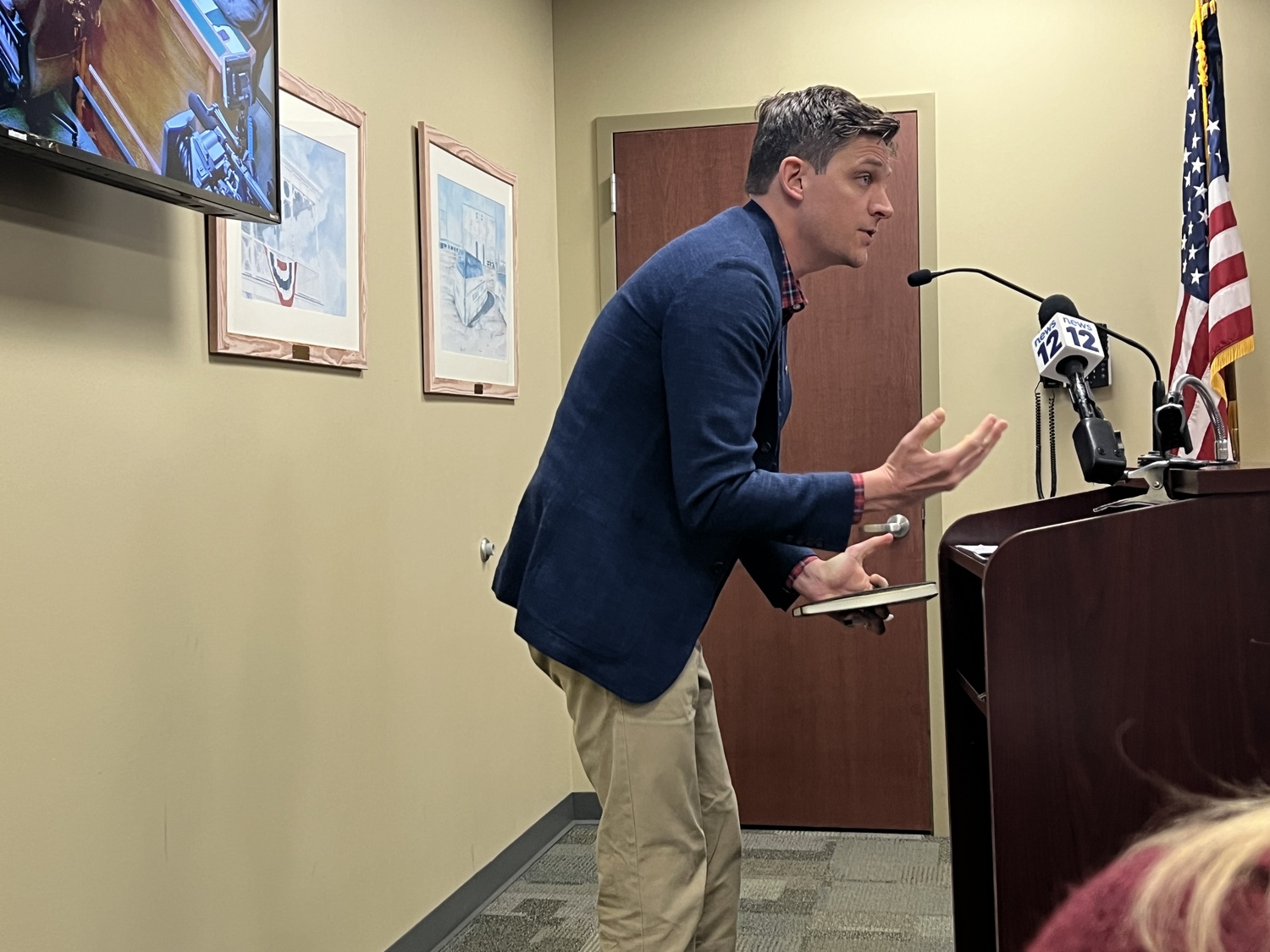
Remsenburg attorney Ian Connett, and member of the Quogue Wildlife Refuge Board of Directors, told the Westhampton beach Village Board last week that a propose solar array on Quiogue, near the refuge, would be harmful to wildlife and their habitat. BILL SUTTON

Attorney John Lynch, who also lives near the property, addresses the Village Board last week, urging members to reject a lease with CVE North America for a solar array on Quiogue. BILL SUTTON
Angry homeowners living on a quiet cul-de-sac on Quiogue blasted the Westhampton Beach Village Board last week at a public hearing on measure to ratify a lease agreement with a solar company approved by the village two years ago.
The 25-year lease, with solar developer CVE North America, allows the company to build a 4,000-panel, 2-megawat solar array and battery energy storage system on 10 acres of a 13-acre former village Department of Public Works yard on South Country Road owned by the village in the sleepy hamlet.
While the Village Board approved the lease, the project would still need approval from the Southampton Town Planning Board, as it is in the town’s jurisdiction. Under the terms of the lease, the village will receive a minimum of $22,000 and up to $44,000 annually, depending on the size of the array that is built, plus a $50,000 bonus once it is built and goes operational.
CVE has filed a pre-application site plan with the town but not a complete application. If the developer does not receive final approval from the town within three years of the signing of the lease, it can walk away from the deal.
Residents of Jennifers Path, the residential cul-de-sac adjacent to the property, have objected to the project. A dozen or so homeowners filed a lawsuit last year seeking to block the project, challenging the way the Village Board approved the lease, claiming that the board should have followed state environmental rules, did not provide proper notice to the residents, and violated the state’s Open Meetings Law. The village has argued that many of those responsibilities would fall to the town during its approval process.
While the lawsuit was initially dismissed by State Supreme Court Justice C. Stephen Hackeling, he reconsidered earlier this year and called for a trial on at least some of the charges in the suit, including the state environmental law review, the purported Open Meetings Law violation, and a charge that Village Board member Brian Tymann, who initially brought the developer to the village, should have recused himself from the original vote on the lease because he had an interest in the lease being approved — a charge that both he and other village officials deny.
A trial date on the neighbors’ Article 78 lawsuit has been set for June 13.
In an effort to placate the neighbors and push the responsibility of defending the suit to the developer, instead of the village, the board, on advice of its lawyers, agreed to hold last week’s public hearing to ensure that the neighbors’ voices were heard, officials have said. Officials have been adamant, however, that they did nothing wrong during the approval process of the lease two years ago.
The neighbors, however, disagree.
“I am here to formally object to the process by which this lease agreement was executed and is now being brought before the public for ratification,” said Kara Bak, who with her husband, attorney John Lynch — who filed the suit on behalf of the neighbors — lives adjacent to the proposed project.
“By proceeding in this manner, the board has effectively predetermined the outcome without fully considering the potential environmental impacts as required by law,” said Bak, who serves as the town’s director of housing but was not speaking in her official capacity at the public hearing last Thursday, March 6. “I want to strongly oppose the ratification of the lease that would allow a commercial solar company to clearcut 13 acres of land directly adjacent to my neighborhood and on land that is a wildlife corridor to the Quogue Wildlife Refuge.”
Ian Connett, a Remsenburg attorney and Quogue Wildlife Refuge Board member, urged the board to reject the solar project, which he said would have an adverse effect on the wildlife and ecosystem of the refuge, which sits adjacent to the proposed project site.
“The Quogue Wildlife Refuge is a concerned neighbor,” he said, “that will be directly impacted by the outcome of the village’s actions. It is essential that we protect these interconnected parcels.”
He urged the board to reject the lease agreement and work with the town to preserve the property under the Community Preservation Fund program.
“On behalf of the Quogue Wildlife Refuge, we urge you to consider conservation,” he said, to a standing ovation from the crowd gathered in the meeting room.
The Village Board members present for the hearing, Mayor Ralph Urban, Deputy Mayor Kimberly Monsour and Christopher Mensch — Rob Rubio was recovering from a medical procedure, and Tymann, on advice of Village Attorney Stephen Angel, recused himself and left the meeting room prior to the hearing — were advised not to interact with the speakers or answer any questions during the hearing due to the pending lawsuit.
Steven Engelmann, representing CVE, made a brief statement to the board in support of the project.
“CVE intends to work through the Town of Southampton Planning Department,” he said. “We believe that the solar farm as proposed meets the Town of Southampton zoning code, and it is our full intent to work with the community, to work with the village here, and, of course, the Planning Department at the Town of Southampton to build this project.
“I’m happy to have dialogue and work with the community to bring about what we think will be a benefit to the community,” he added. “And a benefit to the site in terms of the wildlife and items we will be implementing at the site.”
He noted that company has compiled a final site plan but is holding off on submitting it to the town Planning Board pending the outcome of the current litigation.
Jennifers Path resident Louis DiPasquale, who organized the neighbors who filed the lawsuit, noted that Monsour and Mensch weren’t on the board when the lease was first ratified, and asked for their help in overturning the lease.
He chastised the board for approving the lease without, he said, considering the impact it would have on the nearby residents. “Did you ever think abut the residents who would be living alongside the industrial facility?” he asked. “We are hopeful you will vote to not ratify this lease.”
Neighbors have expressed concerns in the past that the project, if ultimately approved, would have a negative impact on the nearby wildlife refuge and the wildlife and habitat of the village-owned property, that a perceived constant hum from the electronic equipment at the solar array would be a permanent annoyance and disrupt their quality of life, and that, ultimately, the project would negatively affect their property values. Neighbors are also concerned that the incorporated BESS facility could pose a fire risk.
“I ask you, is the village’s modest financial gain from this project worth the long-term environmental damage, the loss of quality of life and financial strain on the neighboring homeowners?” Bak asked. “Once the trees are gone, they are gone forever. Once the solar panels are installed, they will be here for decades.”
Layla Masci, another Jennifers Path resident, implored the board to reject the lease, saying it wold significantly impact her quality of life.
“The installation and transformers would be almost directly behind my house,” she said, “and all that noise and buzzing will affect me. I recently retired from my job at Seafield Center, which is a local business that I worked at for 31 years. I paid my dues and want to enjoy my retirement. I don’t want the value of my house to go down — I depend on that for everything.”
She noted that she and other neighbors were unaware of the proposed project until a few days before a Planning Board hearing on the developer’s pre-submission plan, when they received required notice from the developer.
“Nobody knew anything about it,” she said, suggesting that the village was remiss in not notifying neighbors in 2023 that it was considering the lease agreement. “Thank God our neighbors got together and formed a little coalition against this right away and did our best to fight it since then.
“It’s impacted my life,” she added. “I have to think about this day and night.”
The board closed the public hearing, but took no action. According to Angel, the board will vote on whether to ratify the lease at an upcoming board meeting, perhaps as early as the board’s next meeting on April 3.


 Bill Sutton on Mar 12, 2025