


 3 Photos
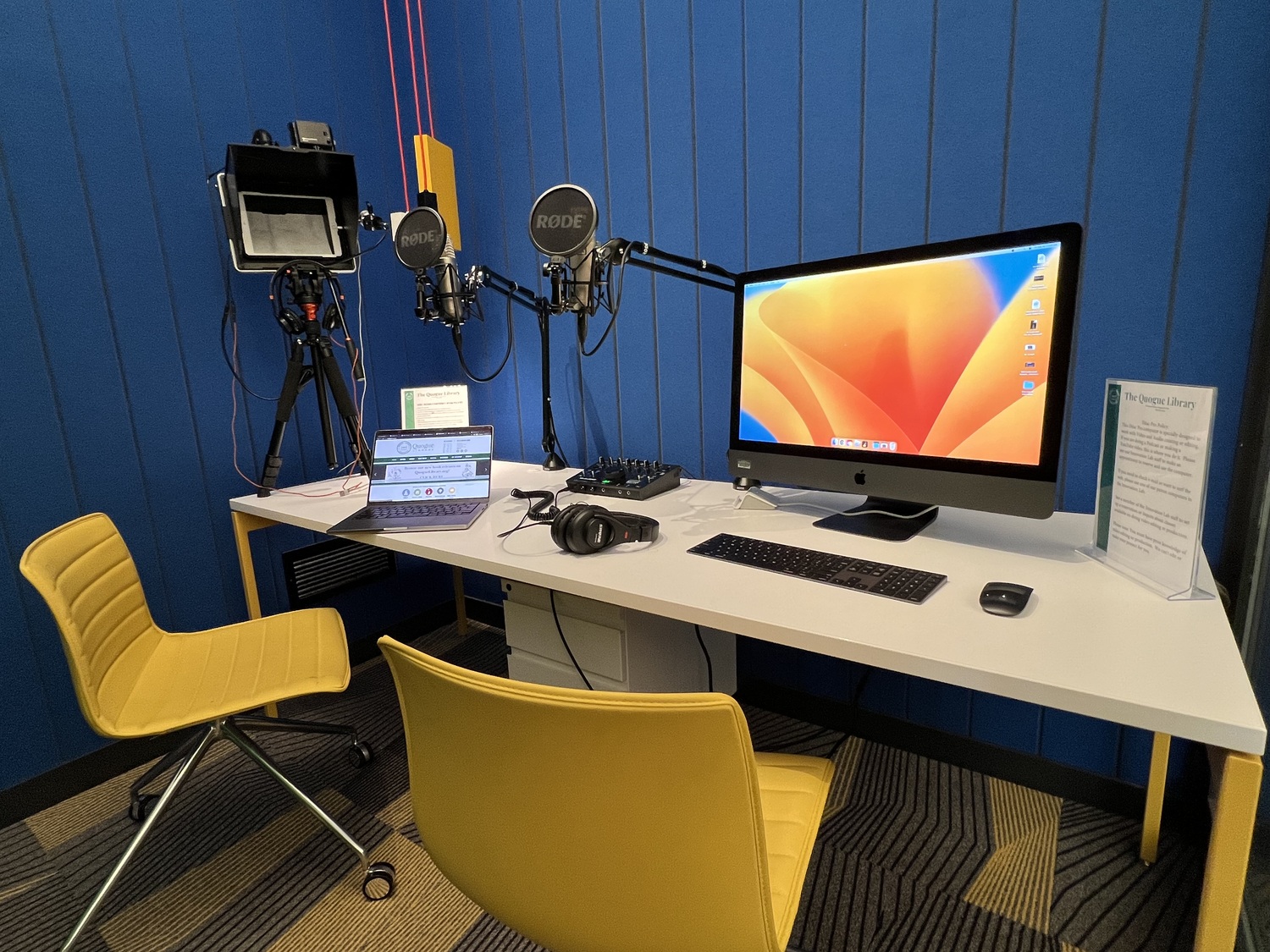
The podcast recording studio at the Quogue Library. COURTESY CHRIS SAUERWALD
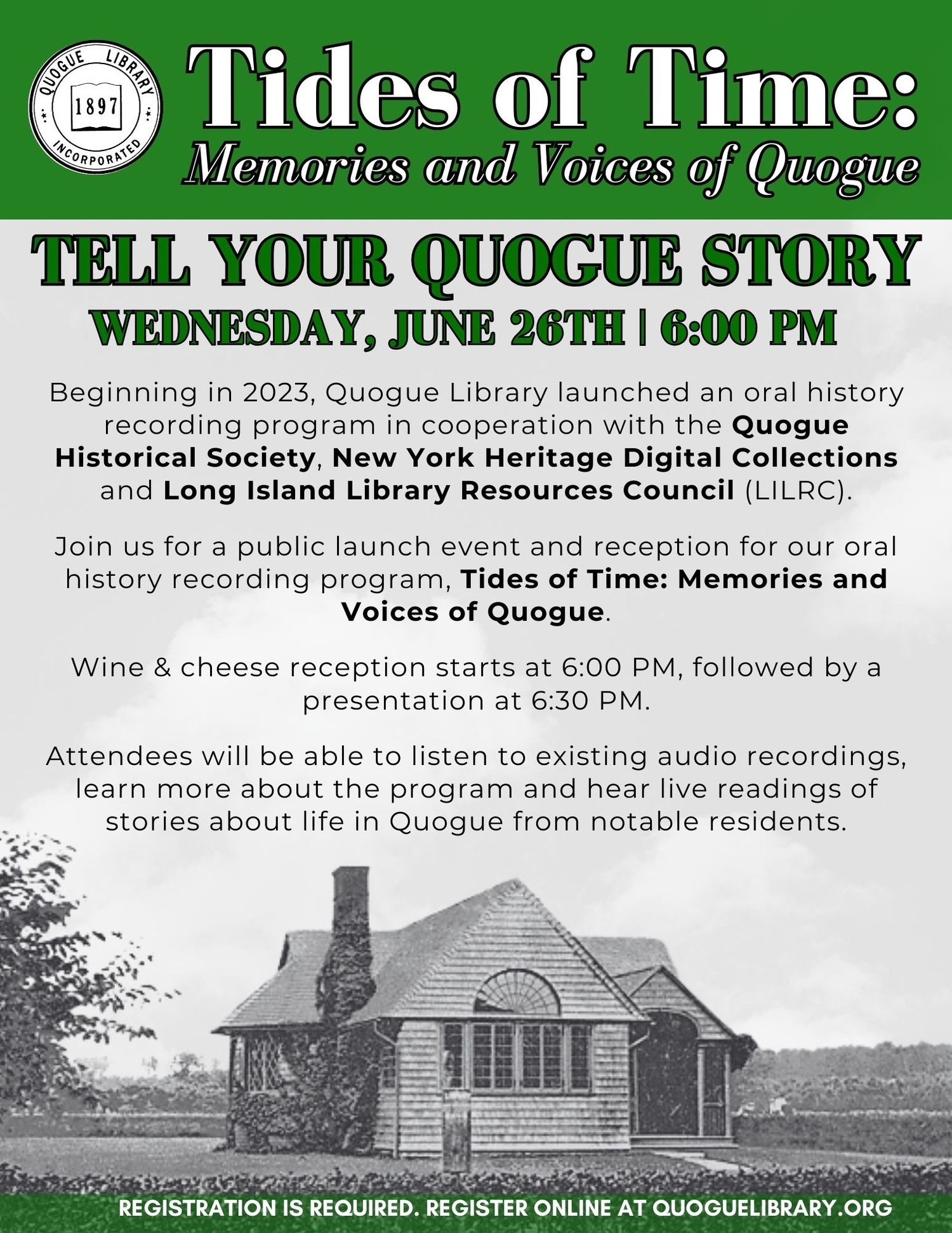
Poster for Tides of Time. COURTESY SUSAN MCKENNA
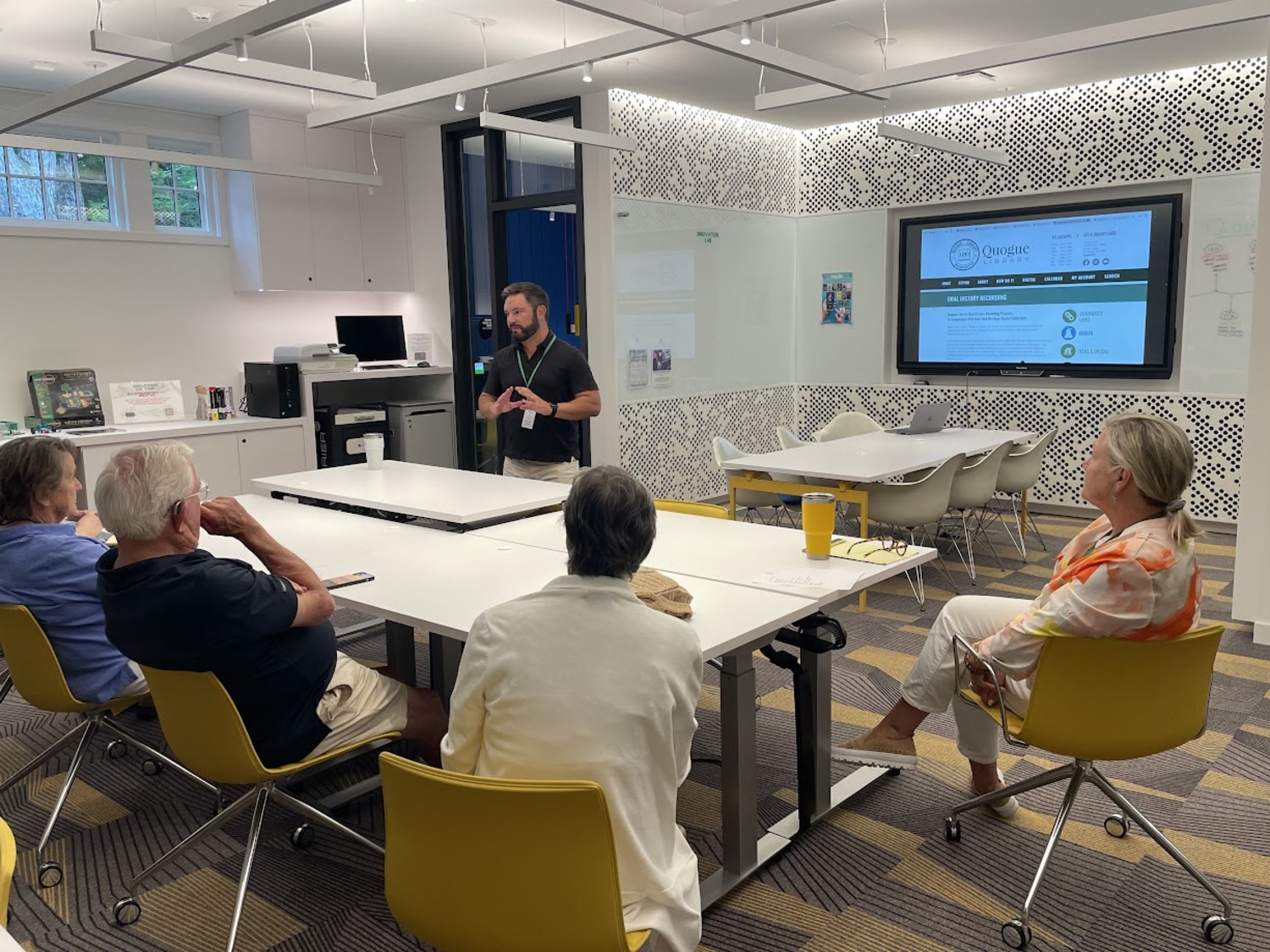
The introductory program to the oral history project last August. COURTESY ARIE WEBER
Quogue may be a small village, but it certainly has a lot of stories to tell. That’s why the Quogue Library and the Quogue Historical Society have announced a new oral history project called “Tides of Time: Memories and Voices of Quogue.”
The project features recordings and text transcripts of Quogue residents telling their stories and talking about their experiences from the perspective of people who have lived in the village or have significant connections to it. Unlike many forms of recorded history, oral history places emphasis on individual stories to give first-person perspectives to history.
To commemorate the official public launch of the project, the library will host a reception at the library on Wednesday, June 26, at 6 p.m. The event will feature stations where attendees can listen to the recordings as well as presentations by longtime resident and author Meredith Murray and Southampton Town Historian Julie Greene.
Interviewees for the project so far include Carl Cardo and Richmond “Dick” Gardner, two longtime residents of Quogue, and former Village Mayor Peter Sartorius.
The goal of the project is to preserve “first-person stories and narratives about what it’s like to live in Quogue and what it was like living in Quogue in the past when they were younger,” said Chris Sauerwald, the library’s technology consultant, who has overseen the recording process.
Prior to the current project, the Quogue Historical Society published five books of first-person histories, which are available at the library. But with this new fully digital project, people are able to hear the voices of the subjects telling their stories instead of having to read it.
The two groups were inspired by these past collections of oral histories to do a more modern version featuring stories from different people to show how Quogue has evolved over time.
“The people who live here very much appreciate and celebrate the rich history of Quogue,” he said. “It’s a town that dates back all the way pretty much to the beginning of the settlement of Southampton Town. There’s a lot of history here, a lot of very old homes. A lot of these homes have been in the same family for generations, and stories about the properties and houses themselves get passed down within families.”
For the interviews, Sauerwald sends sample questions to the interviewees to guide the conversations. The interviewees then come in to record for around an hour with Sauerwald, and sometimes someone from the Historical Society, at the podcast studio in the library’s innovation lounge.
Sauerwald will ask the interviewees questions, but there’s a lot of flexibility in the conversations. “They’re allowed to really talk about anything that they feel is important for them to share about themselves, their lives, about Quogue and their families,” he said.
Once the recordings are done, the interviews get transcribed to get a text version, which is useful to those with hearing impairments.
After that, the recordings and transcriptions get uploaded to the New York Heritage Digital Repository, an online portal where libraries in the state can upload historical documents and files. Once uploaded, they are permanently preserved and accessible to anyone who wishes to view them. The recordings will also be available on the library’s website.
One of the main themes that the interviewees of the project talk about is that even though many things have changed about Quogue, there is still a desire to preserve the quaint quality of the village, which has been one of its defining characteristics.
“The interviewees talk about Quogue a lot in terms of how, even as time goes by, there’s a sense of wanting to preserve the history of Quogue and wanting to preserve the atmosphere of the village as it has been for a very long time,” Sauerwald said.
So far, the interviewees for the project have been selected by the library and Historical Society as people that the two groups think have the most important or interesting stories to share.
At some point, Sauerwald said the library plans to open an online form on its website where people can volunteer to be part of the project.
There’s no plan at the moment to stop recording, transcribing and uploading interviews any time soon, and there’s no limit for how many interviews they can do.
“We don’t as of now have a plan to stop recording,” Sauerwald said. “Doing these recordings and transcriptions is a lot of work, so it kind of goes slow, but we plan to continue doing it. The library and the Historical Society have committed themselves to the program and to keeping this going.”
Additionally, Quogue Village Historian and Historical Society Co-Chair Pi Gardiner said that the interviews are “critical to making better sense” of Quogue, its history and how it has shaped the town.
For more information, visit quoguelibrary.org/oralhistory.


