


 14 Photos
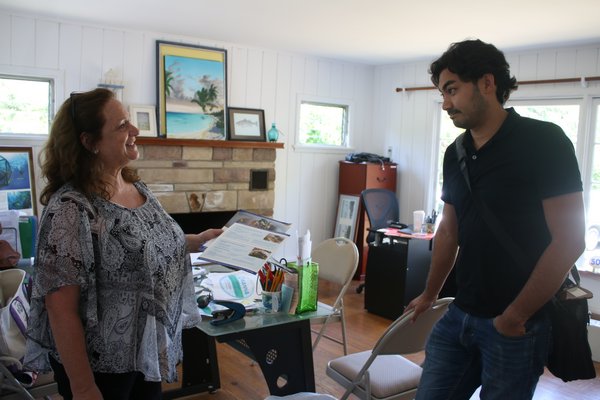
Manna Waterfront Restaurant and Bar Aquaculture Innovation Center - at Lobster Inn organizers Ryunoske Jesse Matsuoka and Donna Lanzetta plan for its opening. PEGGY SPELLMAN HOEY

The view of a property adjacent to the former Lobster Grill Inn where a fish hatchery is proposed. PEGGY SPELLMAN HOEY
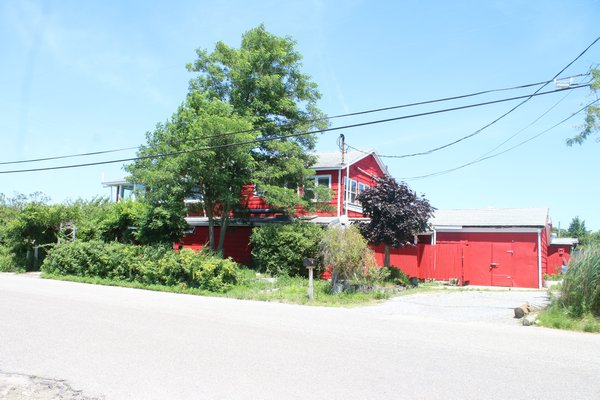
The iconic barn red former Lobster Grill Inn is transforming into Manna Waterfront Restaurant and Bar. PEGGY SPELLMAN HOEY
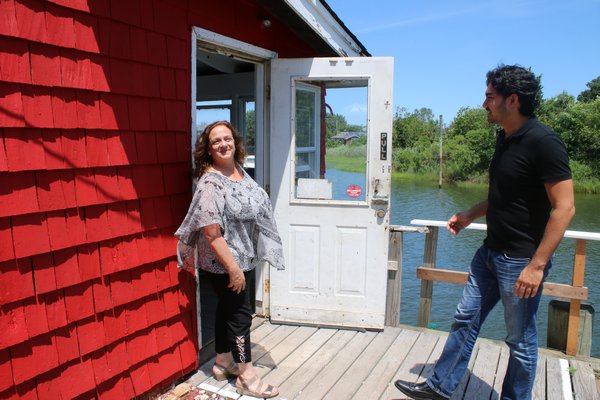
Donna Lanzetta and Ryunoske Jesse Matsuoka on the deck outside their new restaurant Manna. PEGGY SPELLMAN HOEY
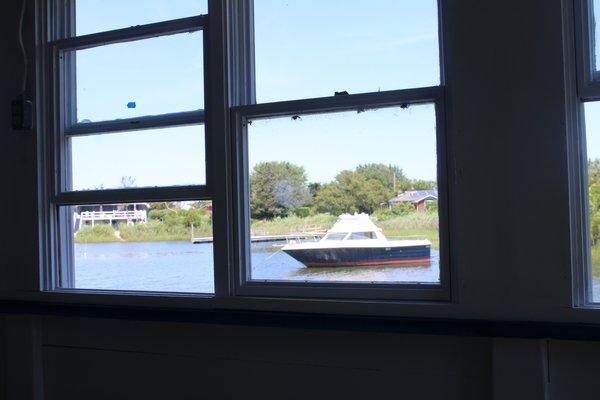
The waterfront view from Manna. PEGGY SPELLMAN HOEY
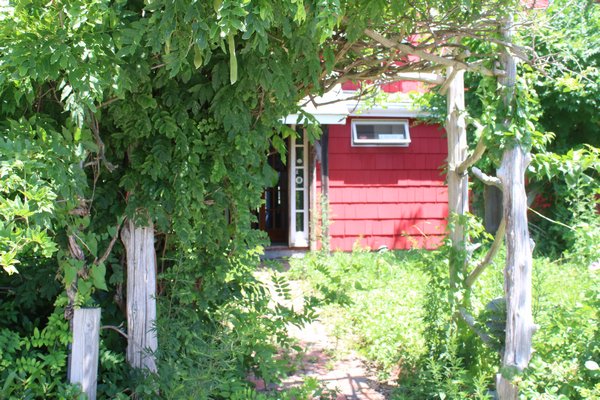
The view of the former Lobster Grille Inn’s front entrance. PEGGY SPELLMAN HOEY
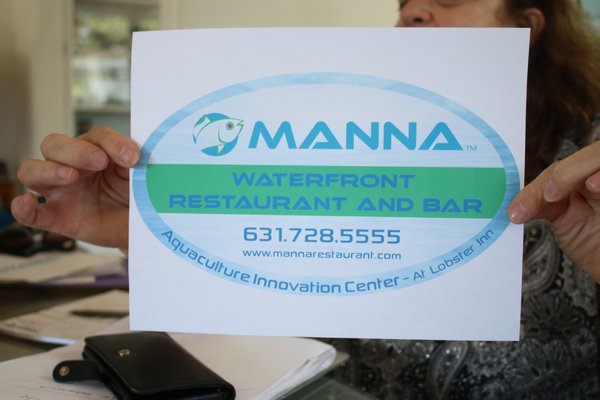
The restaurant’s proposed sign which still needs town approval. PEGGY SPELLMAN HOEY
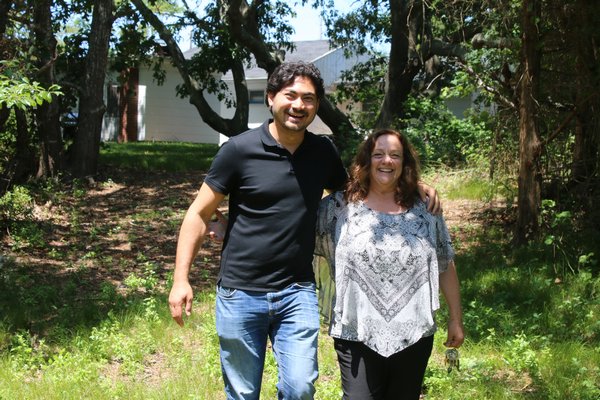
Ryunoske Jesse Matsuoka and Donna Lanzetta take a walk through Manna’s property where a fish hatchery is proposed. PEGGY SPELLMAN HOEY

Donna Lanzetta. PEGGY SPELLMAN HOEY

A small cottage on a parcel of land preserved by the Town of Southampton. PEGGY SPELLMAN HOEY
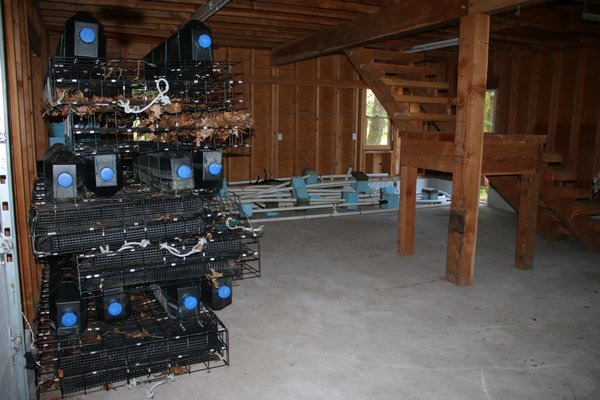
Inside a cottage that could house fish tanks as part of a proposed fish hatchery. PEGGY SPELLMAN HOEY

A cottage that could house fish tanks as part of a proposed fish hatchery. PEGGY SPELLMAN HOEY
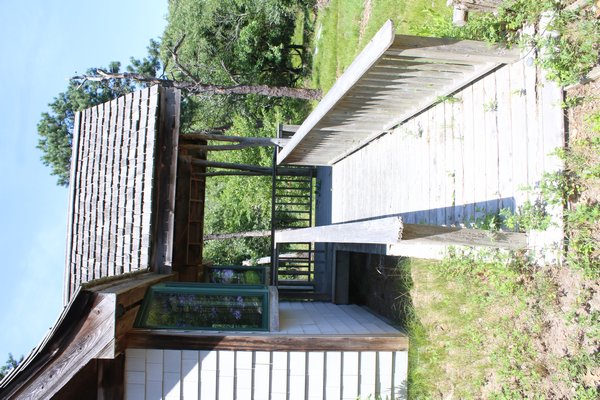
A cottage that could house fish tanks as part of a proposed fish hatchery. PEGGY SPELLMAN HOEY
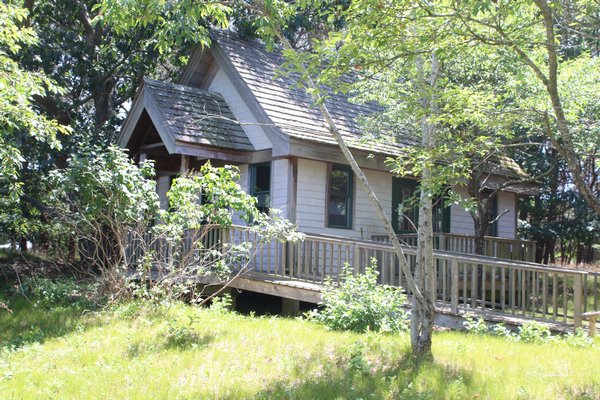
A cottage that could house fish tanks as part of a proposed fish hatchery. PEGGY SPELLMAN HOEY
When Donna Lanzetta was trying to come up with a name for her fish farm, she was inspired by the proposed name of an automated sea buoy at the University of New Hampshire. She decided to look up the meaning of “manna,” which has origins in the Bible as a term used to describe food that appeared in a miracle, providing starving people sustenance to survive — manna from heaven. In the parable, the food is not only sustenance so that the people can survive, it also serves as food for their souls.
“It means miracle food from heaven, and from the spiritual sense of what manna stands for, it’s appropriately named,” said Ms. Lanzetta, an East Quogue resident who is one of several investors in the Manna Fish Farm, which has plans for an open ocean farm off the South Fork.
Ms. Lanzetta is hoping to expand on that concept of miracle food with Manna Waterfront Restaurant and Bar Aquaculture and Innovation Center at Lobster Inn, which is set to open by October at the site of the former Lobster Grille Inn in Shinnecock Hills. The venue has been resurrected with a new coat of its signature barn red paint and will continue as an eatery, but with an educational twist.
An adjacent property, which runs along the west side of Inlet Road, also will feature a fish hatchery, to be operated by the Manna Fish Farm. There are plans to use the fish that are grown in the hatchery within the open ocean farm. The company is currently seeking federal approval for the plans.
In keeping with the principles of manna, food is not the only offering on the menu for the restaurant. The roughly 120-seat venue will serve as a place for the nonprofit Manna Ocean Foundation to educate the public about the fishery itself, sustainable fishing, and trends in the farm-to-table seafood industry, as well as other aspects of aquaculture.
“[The] mission is to promote sustainable seafood,” Ms. Lanzetta said.
Ryunosuke Jesse Matsuoka, the owner and general manager of the Sag Harbor mainstay Sen, and the newly opened K Pasa down the road, will helm Manna Waterfront Restaurant and Bar. “We are going to have great food, and it is going to be a place for people to be at — and once they are there, we can say, ‘Got ya — now we are gonna teach you!’” he said.
Before the property’s purchase last year, it was slated for 25 high-end condominiums, something the community is grateful never happened, Mr. Matsuoka explained. “The pressure is on to make sure everything turns out right,” he said.
The former restaurant, which also serves as a visual landmark for travelers as they reach the end of Sunrise Highway, has remained shuttered for about two years. In a joint deal between Southampton Town, which stepped in using $7.6 million in Community Preservation Fund revenues, and Inlet Road Operations Corp., which pitched in with about $850,000, the roughly 1-acre restaurant property was purchased, and another 9 adjacent acres were preserved.
“There are a lot of moving parts to this deal,” said Town Supervisor Jay Schneiderman.
Since the 1940s, the iconic restaurant has greeted millions of visitors to the Hamptons as they reached the end of their journey along Sunrise Highway. Back then, it was known as the Wolverhampton Yacht Club, and eventually evolved into The Lobster Inn, and, later, the Lobster Grille Inn.
Town officials wanted to see the restaurant remain, so Mr. Schneiderman reached out to Ms. Lanzetta due to her involvement with the Manna Ocean Foundation, which at the time had announced plans for an offshore fish farm.
As part of the finalized deal, Southampton will renovate the marina adjacent to where the restaurant is, repairing some areas and adding additional boat slips. It is expected there will be about 52 boat slips, including some transient slips for diners. It will be operated like Conscience Point Marina in North Sea, another town-owned facility.
Mr. Schneiderman said funds have been set aside, and he expects to put the marina renovation out to bid next year heading toward a completion date of next summer.
“Jesse [Matsuoka] obviously knows what he is doing. I am really excited this is going to be a place where people can eat on the water again,” he said, adding that school groups will be able to visit the farm and learn about aquaculture. “People will be able to pull up, have a bite to eat — some fish and chips, a lobster roll. I think it will be a great place for the community.”
In addition to the restaurant façade’s face-lift, the public can expect to see a new sign depicting a fish and blue and green lettering, though the town must still approve it.
Over the past few weeks, workers have been cleaning up the property, making minor repairs, and refitting the kitchen with new equipment. In the redesign, the restaurant’s four lobster tanks were kept in their original place, though Mr. Matsuoka lamented that visitors will not be able to see them. “In the future, I would consider an open kitchen concept and fish market concept,” he said.
As part of the overhaul, food will no longer be available by table service as it was before, because the town owns the patio area. There will be outdoor seating, and food will be available on a grab-and-go basis.
“We are trying to create a staple, like the staple that it was a long time ago, but to bring it up to the modern times of this education center,” Mr. Matsuoka said, adding, “And it’s not just a hangout. It’s going to be a hangout spot to get to know the local community efforts in aquaculture farming.”
The restaurant will be operated as a for-profit venue over the summer. Off-season, in the winter, there are plans to use the space for meetings, conferences and training for the foundation or other nonprofits looking to hold programs.
“We will stay open, but will overlap activities to supplement the winter season with activity there,” Ms. Lanzetta said.
One of the programs the public can look forward to is ‘Manna Mondays,’ which could feature guest speakers from the industry, as well as experts from Stony Brook University and Cornell Cooperative Extension. Chefs’ challenges and blind tastings are also a possibility.
“We can do a lot of stuff that will be tasty and fun, but also educational,” Ms. Lanzetta said.
In his first stab at Manna’s menu, Mr. Matsuoka incorporated underutilized species like sea robin, skate, porgy, and tilapia, abundant fish which are known as bi-catch and often thrown back by fishermen. If Manna can teach people how delicious these fish are, it might help balance out the fishing industry, he said.
“What is wrong in the industry, is the consumer is uneducated and that portion pushes out to say, ‘Oh, I love striped bass.’ But, at Manna restaurant, if we can make them fall in love with porgy, skate, all these other fish that are underutilized, they are going to start asking for that fish in other restaurants,” he said.
As far as the fare on his menu is concerned, Mr. Matsuoka politely declined to be restricted to one form of cuisine, based on his belief that seafood is unbiased in how it can be cooked. He did, however, say that diners can expect to see barbecue, Louisiana-style spices, Thai curries, as well as Japanese style sashimis and seasonings.
“There are worldly flavors on there, but the base is seafood. The seafood is the star, and that is really what we are trying to push,” he said. “We are a worldly fish place that puts on many different types of dresses. The fish puts on many different types of dresses.”
And Mr. Matsuoka is also looking to bring back splat — a dish featuring steamed shellfish like lobster, clams, shrimp and crab — to the restaurant.
Those who prefer their seafood raw need not fear its absence from the revamped restaurant. The space has been redesigned to include a raw bar located behind the bar area, where there will be a chef shucking clams and preparing sushi and seafood towers.
While the restaurant gets off the ground, the Manna team will be researching ways to best utilize the property’s space, not just how it can be used to grow fingerlings, but how best to educate the public about aquaculture. Some possible programs could include one about cultivating fish waste for compost, which will not be made on the property, as well as one on nutraceuticals and pharmaceuticals. There could also be a demonstration to teach how shrimp are grown in a bioflog system, which filters nitrates, and does not use antibiotics or chemicals.
Another program could be centered on the manufacturing of fish leather from fish skin, which has a range of uses from clothing to reconstructive surgery. It’s a new product, Ms. Lanzetta explained, “but it goes back to the beginning of time at the same time.”
The Manna team will also be incorporating educational components in the restaurant so that when diners are eating their meals, they will have access to touch screen or video presentations, and possibly virtual reality experiences featuring a swim through a fish farm cage.
In the fish hatchery, fingerlings, the species of which has not been finalized, will likely be grown in fish tanks within a barn or greenhouse-type structure. Manna is currently working with an architect to see what kind of structure can be placed on the site, as it must adhere to lot coverage restrictions within its designated use for farming.
Two of the three main buildings, which are already located on the property, will be used for office space, with the third to house a pilot project with three shrimp tanks, featuring an innovative system in which shrimp will be grown starting off in one tank first.
“You can think of a sourdough starter, how that starts,” Ms. Lanzetta said of the process by which sourdough bread is made using ingredients from the first batch of dough, adding, “and you expand from tank to tank with this living liquid, and the shrimp that grow there can be brought to harvest in the next six months, and they are delicious.”
Ms. Lanzetta described the project as a “very small demo project”, but if successful, she anticipates the company will move to the next phase and request a 15,000- to 20,000-square-foot barn to house the tanks.
There are also plans for some aquaponics on the site as well. Sea purslane, a type of seaweed, will be grown using fertilizer from fish waste. It is likely that the sea purslane will end up in the creations of Mr. Matsuoka, who is already experimenting with it.
Kelp spools could also be seeded on the property with the possibility of the space becoming a hub for kelp farmers.
Ms. Lanzetta said the concept for the restaurant and aquaculture center is driven by a $15 billion trade deficit in seafood and the fact that in the United States, 92 percent of seafood is imported. Sixty percent of imported seafood is coming from China, and only 2 percent of imported seafood is inspected, she said.
Much of the wild fish catches made in the U.S. are exported to and then processed in other countries only to be shipped back, according to Ms. Lanzetta. At the local level, tuna can be caught in Montauk, sold in Manhattan, and shipped to Japan, where it is processed and then shipped back to the U.S., ending up on a restaurant table on Long Island anyway, Mr. Matsuoka said.
“The carbon footprint on that one fish alone is ridiculous,” he said, adding that the price of the fish is just getting continually marked up. “Ultimately, it is the fisherman’s loss.”


