


 2 Photos
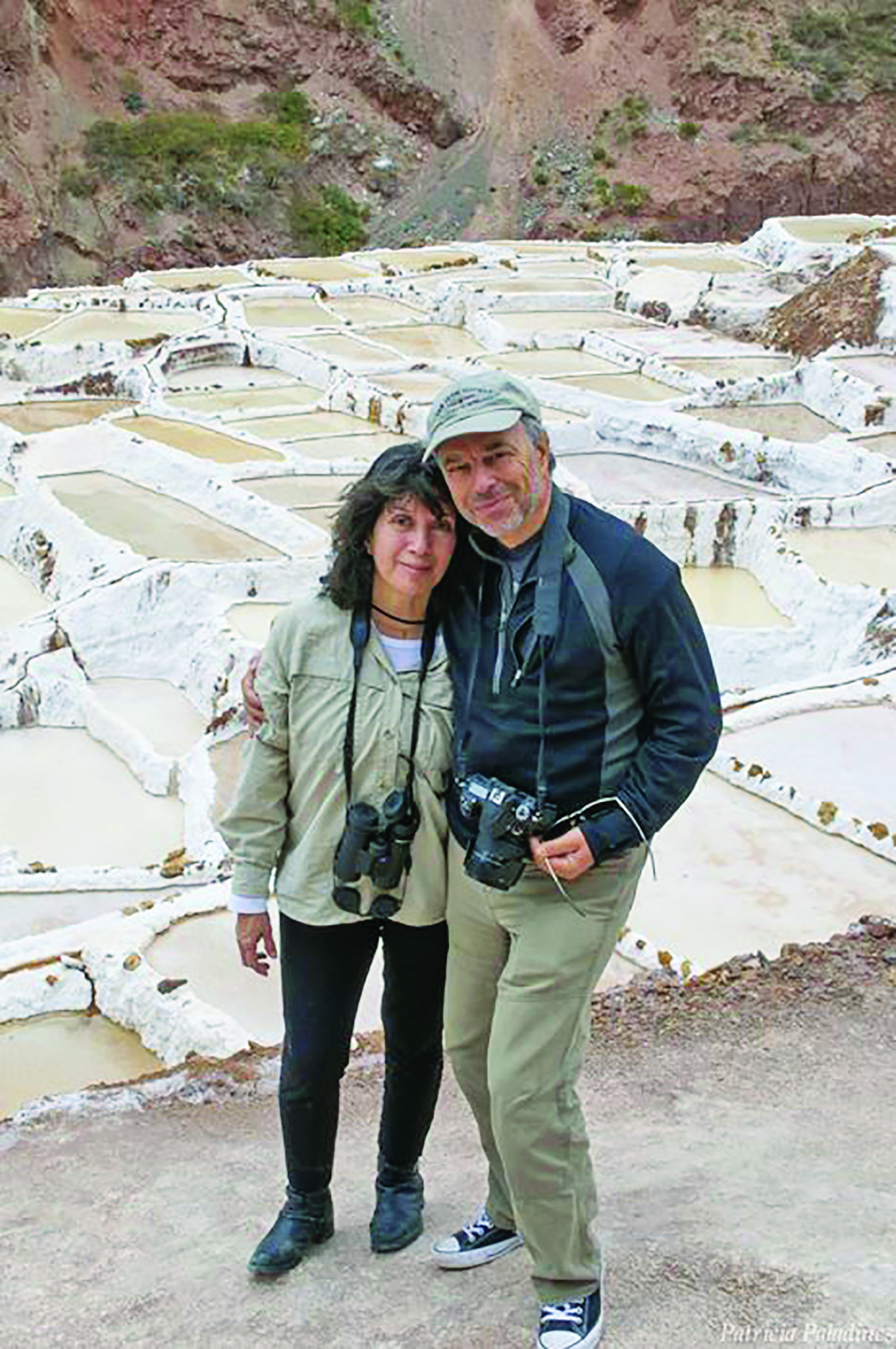
Patricia Paladines and Carl Safina at Salineras de Maras, Peru.
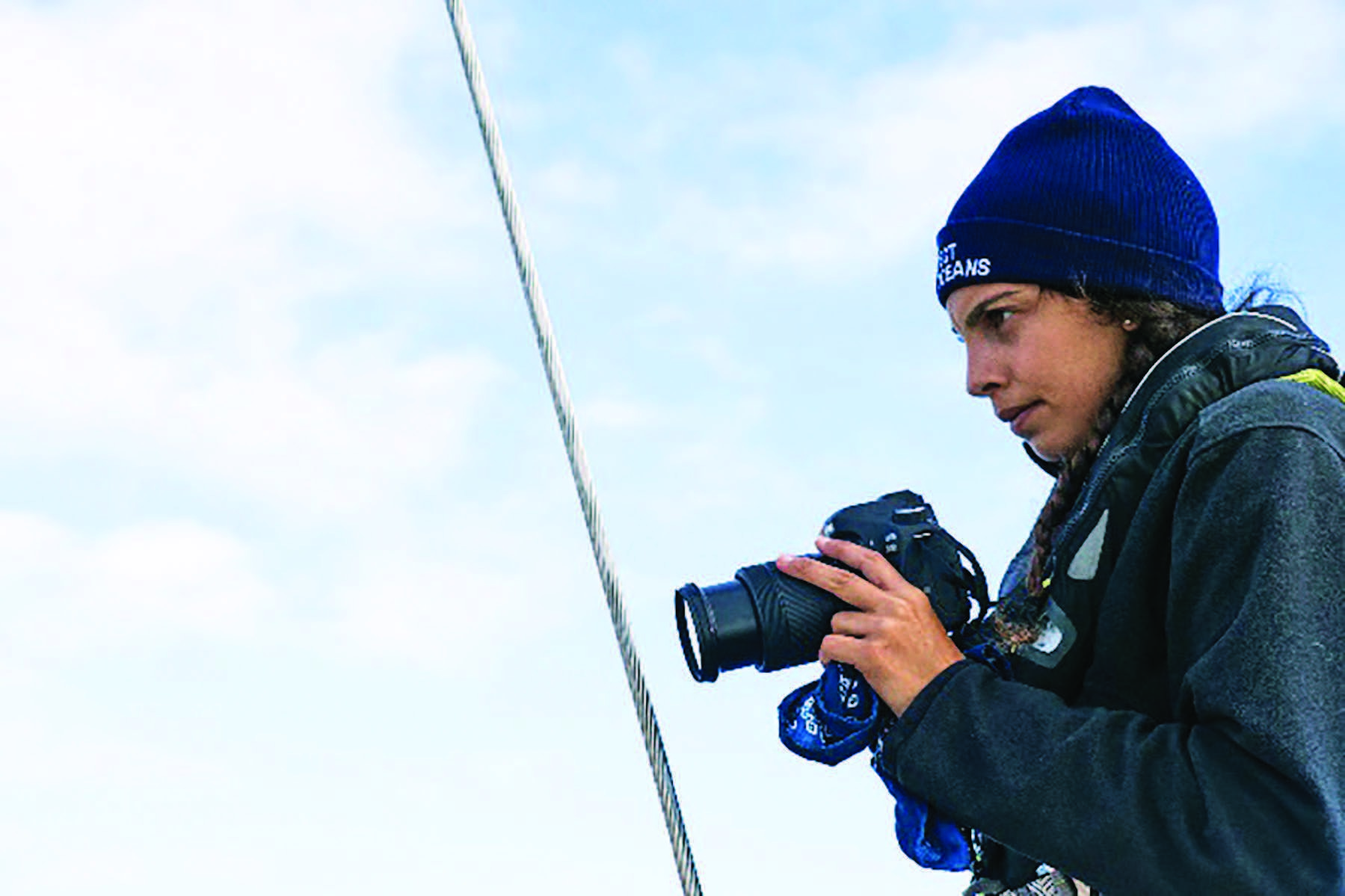
Erica Cirino documenting plastic pollution in the Atlantic Ocean while sailing with eXXpedition. SOPHIE DINWALL
For many conservationists, devoting themselves to the natural world has a simple origin story. And for a young Carl Safina, it all started with the singing canaries in his childhood apartment in Brooklyn.
His father bred them and the boy watched them from just a few inches away, the tiny nests bursting with even tinier life. By age 7, he was raising birds of his own — homing pigeons — out of a shed in the backyard. And at age 9, he had an epiphany, when he and his family traveled to the Catskills for a month.
There, for the very first time, he was truly in nature.
He saw chipmunks, blue jays and a hawk, and trees that were not planted by people. That was all it took for him to see his future laid out in front of him.
“I felt like my life kind of exploded like a supernova during that one month when I was 9 years old,” Mr. Safina said. “Going from there to education and a career and everything, in a way, that’s a whole other story. But my love was well set from the time I was in my single-digit years.”
His work as an ecologist and author would come decades later — he doesn’t consider his career having started until age 35 — as would the balancing act that every environmentalist knows too well: the mix of the wild and domestic, a yearning to stay current while protecting what once was, and the intersection of conservation and education.
The latter was the topic of conversation on Monday afternoon when Mr. Safina and his wife, naturalist-educator and photographer Patricia Paladines, joined up-and-coming environmental photojournalist Erica Cirino in a discussion hosted by the South Fork Natural History Museum and Study Center about how they use their mediums to not only make a case for life on Earth, but inspire future generations to do so, as well.
“There’s so much left that needs to be protected, needs to be saved, does not have a voice. You are their voice and their representative,” Mr. Safina said. “That’s what a conservationist really is: a voice for the voiceless.”
Speaking from their home in Lazy Point, Ms. Paladines recalled her initial, albeit second-hand, love for nature — the stories her father told her about growing up on a farm in Ecuador, tales that encouraged her to think of the Amazon jungles as mythological places from her childhood home in Chicago.
For a young Ms. Cirino, her earliest source of inspiration was Long Island itself, the side of it that isn’t suburbs and shopping malls, but the beaches and woods, home to deer and red tail hawks and owls.
“My first real job was working as a wildlife rehabilitator at Volunteers for Wildlife in Caumsett State Park,” she said. “Caumsett, to me, is this amazing gem of a place, in an otherwise very suburban island that we live on, but there are many places like that all over the island. It was that job in wildlife rehabilitation that really pushed me to pursue a career in conservation.”
Mr. Safina's innate fear of joining the rat race — that crowd of businessmen and women leaving the Bayville train station in the same clothes, carrying the same briefcases, wearing the same exhausted expression, as Mr. Safina and his father were on their way to surf cast — pushed him to study ecology. He wanted, desperately, to find another way to become an adult than to commute to New York and work in an office building, and this was his way out.
“I loved nature and I loved fishing in the shore and I wanted to be outdoors doing something to help animals. It’s very different than going to work for a corporation in a skyscraper. I just didn’t have any idea how to get there,” he said. “Seeing the way those people looked coming off the train made it sort of a desperate matter for me to figure out some other way to do it, and the environmental movement was really ramping up very, very quickly and becoming very popular.”
Now the author of 10 books and named among Audubon’s “100 Notable Conservationists of the 20th Century,” Mr. Safina is the founding president of the not-for-profit Safina Center, where Ms. Cirino is a Launchpad Fellow. Her current focus is the issue of plastic pollution worldwide.
“I think everybody needs someone who is older and more experienced and wants to help them, and wants to show them that they are worth another person’s time,” Mr. Safina said. “Even that makes a huge impression on a young person who is very, very unsure of themselves and very insecure about their abilities — which describes how I was.”
When Ms. Paladines eventually found her way to Long Island by way of Brooklyn, where she worked for the New York Historical Society, she had a 2-year-old daughter and very few options, as museum work was few and far in between, she said. The photographer landed a position at the National Audubon Society’s Living Oceans Program, and it changed her impression of the area.
“They inspired me to look at things a little differently here,” she said. “That’s how I got into the area of conservation.”
Currently, her work is centered on encouraging diversity in education — one of her more recent projects has introduced an ocean literacy project to English-language learners, she said — while Mr. Safina is making a concerted effort to bring aboard a more diverse group of fellows at his organization, especially in the midst of a dizzying political climate.
“It’s almost unbelievable, and the contrast is very stark, between the barrage of terribly bad news about things that are going so wrong, and then being outdoors,” he explained, then saying of wildlife, “I just find a lot of companionship and the constant reminder that we’re not alone here in the world, that there are these other beings and they all have lives that they value.”
As he spoke, he looked out the window to the backyard where their seven chickens live. Their house is also home to three dogs, who were lying around on the floor, a snake and a screech owl — rehabilitated and released by Ms. Cirino — that has since refused to leave and even raised three chicks in a nest box that Mr. Safina built for her.
“I find it just very necessary to be reinvigorated and re-inspired by seeing how much still remains and how beautiful the living world is,” Mr. Safina said. “We have to remind ourselves that sometimes.”


 Michelle Trauring on Oct 13, 2020