


 1 Photo
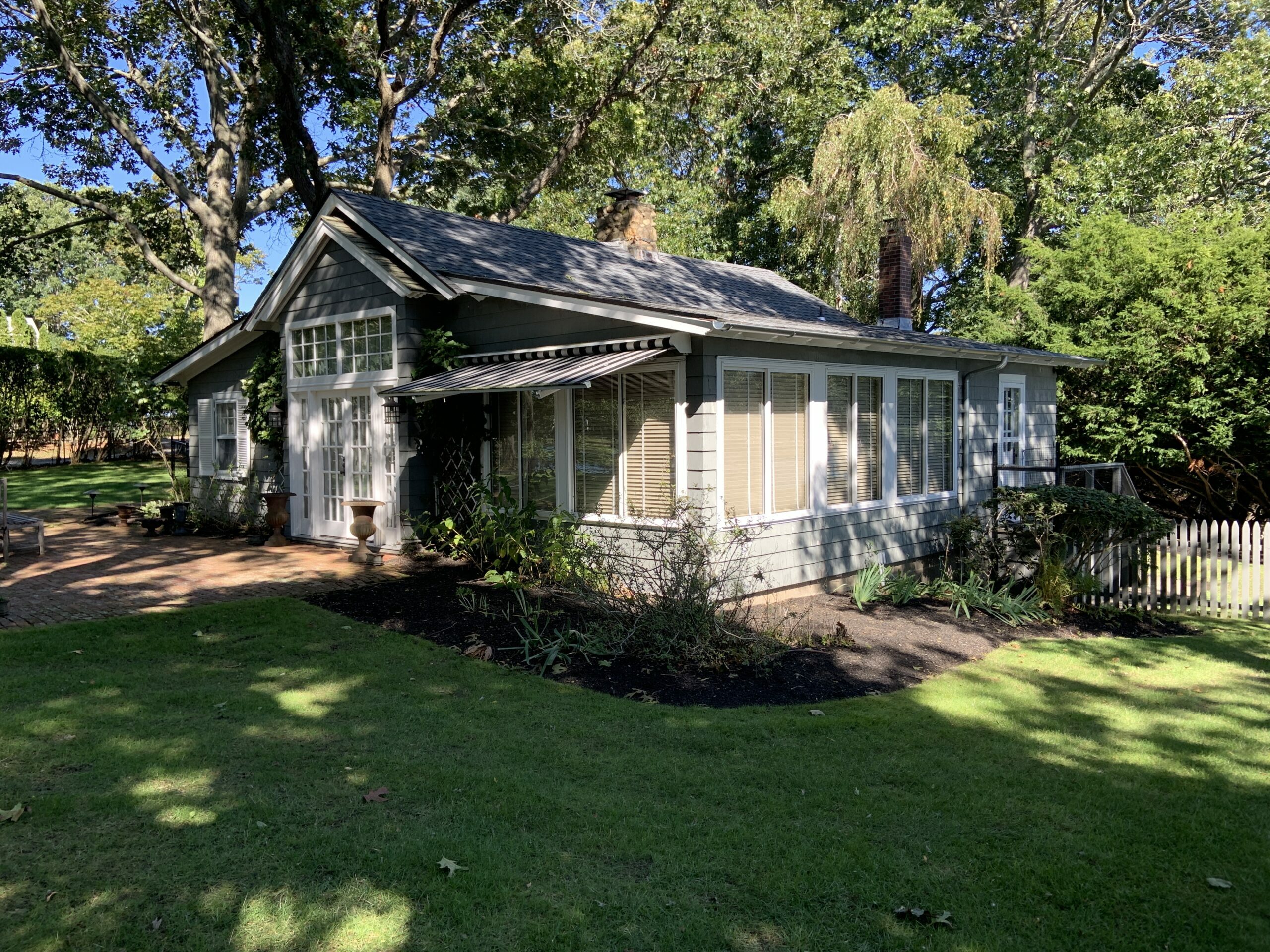
The former home of Nobel Prize-winning author John Steinbeck in Sag Harbor. STEPHEN J. KOTZ
A little more than a year after announcing it would team up with Southampton Town to try to preserve the former Sag Harbor home of the Nobel Prize-winning author John Steinbeck, the Sag Harbor Partnership announced this week that it had closed the deal.
The property will be operated by the University of Texas as a writer’s retreat and opened to the public on a limited basis, with public tours beginning as soon as Memorial Day.
The town contributed $11.2 million from the Community Preservation Fund toward the purchase of the property, with the partnership raising an additional $2.3 million in private donations and state grants.
The cottage, at the end of Bluff Point Lane, overlooking Morris Cove, is where Steinbeck wrote his last novel, “The Winter of Our Discontent,” and “Travels with Charley,” which recounts his cross-country journey in 1960 with his standard poodle, Charley, “in search of America.” He lived in the home with his wife, Elaine, for much of the last decade of his life.
“The Steinbecks loved their Sag Harbor place and were involved in Sag Harbor’s village life,” said Susan Mead, the co-president of the partnership, in a release. “Their preserved home and writer’s studio and the new Writer’s Residency Program will further solidify Sag Harbor’s reputation as a dynamic cultural center, and will enhance the village’s national profile and historic significance.”
The property will be managed by a new not-for-profit organization, comprised of local citizens and institutions that will be established in the coming weeks. The writer’s program and upkeep of the property will be the responsibility of the University of Texas’s Michener Center for writers and the University of Texas Foundation.
This week, Mead said the partnership has been speaking with representatives of the many public institutions that will serve as the project’s advisory board and working on a website that, among its functions, will include a reservation system for members of the public who want to visit the property. It will be open to the public on holiday weekends, on limited weekends during the summer, and weekly during the off-season.
The finishing touches on parking and access plans, mandated by the town as a condition of its approval of the project, are also in the works.
“We’ve got a good list of docents and are always looking for more volunteers,” Mead said.
Diana Howard, a partnership member who has taken part in the effort to preserve the property, said this week that the first writer-in-residence will most likely arrive in the fall. “We are cautiously optimistic” of that projection, she said.
As part of its agreement, the Michener Center will require writers who are invited to use the house to take part in some type of community outreach, whether it be scheduled readings, writing classes, or other activities.
“I think it will be very exciting for a writer to be in John Steinbeck’s home,” Howard said of the residency program.
Steinbeck’s home went on the market in early 2021 for a whopping $17.9 million, and many feared the cottage and outbuildings, including his writing studio, Joyous Garde, would be demolished to make room for another sprawling house.
Kathryn Szoka, an owner of Canio’s Books, immediately called for an all-out effort to preserve the property and soon joined forces with the partnership. The town agreed to support the effort, and after lengthy negotiations, the heirs of Elaine Steinbeck who owned the property, agreed to sell at a reduced price.


 Staff Writer on Mar 30, 2023