Sagaponack Village, Under Fire From State Comptroller, Explains Use of 'State Aid'

icon 2 Photos
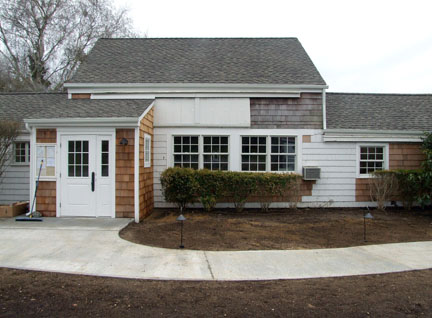
Sagaponack Village Hall. FILE PHOTO
Sagaponack Village Hall. FILE PHOTO

The Village of Sagaponack scored a 43 on the environmental stress test, earning almost half its score, 20 points over the budget period between 2020 and 2022 when 42 percent of its budget, on average, was derived from state aid.

The Village of Sagaponack scored a 43 on the environmental stress test, earning almost half its score, 20 points over the budget period between 2020 and 2022 when 42 percent of its budget, on average, was derived from state aid.

Tom Gogola on Aug 29, 2023

Eight years of fiscal management in the Town of Southampton under the leadership of Supervisor Jay Schneiderman has again yielded an Aaa bond rating from Moody’s in its investor report of August 18.

While the reaffirmed top bond rating may not come as much of a surprise to anyone who follows town government — Southampton has a large and stable tax base, ample reserves, a manageable debt burden and conservative budgeting practices — there’s a surprising tidbit on the New York State comptroller’s website that signals the Village of Sagaponack may be on a bit of shaky fiscal ground.

How does the wealthiest zip code in Southampton, one of the wealthiest in America, wind up on a comptroller dataset that says its finances are under “moderate environmental stress,” owing to Sagaponack’s reliance on state aid in recent budgets?

Welcome to the “Sagaponack Paradox,” where a runaway real estate market is met with numbers-crunchers in State Comptroller Thomas P. DiNapoli’s office, who gauged fiscal stress levels across the state using various “environmental” factors, such as the reliance on state aid, shifting demographics, the median household income in a municipality, and other factors.

Sagaponack scored a 43 on the environmental stress test, earning almost half its score, 20 points over the budget period between 2020 and 2022 when 42 percent of its budget, on average, was derived from state aid, the comptroller said.

Lower scores indicate an absence of environmental stressors even as a higher reliance on state aid would indicate that a community is of lesser means or needs to shore up its budget for lack of locally generated revenue. Those factors do not appear to be in play in Sagaponack.

But the village’s score of 43 put it into the “moderate environmental stress” category. Anything above 50 would be considered “significant environmental stress.” In 2022, just over half of the village’s final $2 million in revenues came from state and federal aid, the comptroller reported — most of it from the state. According to the dataset, Sagaponack had a higher score, by far, than any other village in Suffolk County.

So what’s the rub?

The “state aid” that spiked the Sagaponack revenue stream was derived from a state mortgage tax applied to new mortgages and which is funneled, by law, from the state back into the municipality where the sale took place. For that reason, the mortgage tax revenue is considered “state aid” to the municipality.

According to Sagaponack budget documents, the village took in $403,000 in mortgage tax payments in 2020, about $600,000 in 2021, and just shy of $900,000 in 2022 — on total revenue that ranged from around $1.5 million to $2 million per year over that time, inclusive of the state aid.

The village doesn’t have a police or highway department of its own, and contracts with the town for those services. Its elected officials are unpaid. Much of the revenue it does take in is from building-related permits and fees.

Each year, the village slots in an estimated $300,000 in anticipated state aid on that budget line. This year, it budgeted for $333,000 — but the village expects to collect $816,000 by year’s end.

Sagaponack’s clerk-treasurer, Rhodi Cary-Winchell, said she’s aware of the comptroller’s report and that “while the board does review and takes into consideration the state comptroller’s reports and comments, the reality paints a different picture.”

“You are correct in that we always receive more than we budget,” said Cary-Winchell, “but we are conservative in that we do not want to rely on this revenue stream to continue, as one never knows when the bottom will fall out when we create our budget. And, as you know, during the pandemic years, the real estate market out here was going crazy as hordes of people were trying to escape. So that attributed to the huge increase in the revenue in the mortgage tax that year.”

What’s Sagaponack doing with the budget windfall?

“At the end of the year, any excess revenues are transferred to the Capital Highway Fund and to the Tree Fund, which funds the repairs and repaving of our roads and maintains our street trees,” said Cary-Winchell.

You May Also Like:

A Surprise Every Morning: Sunrises Are Southampton Photographer's Specialty, and He Shares Them Daily on Instagram

Every day he’s in Southampton, Eric Nastri does the same exact thing. And yet, he ... 4 Dec 2025 by Cailin Riley

Southampton Turns Back to Outside Help To Stay Ahead of Building Application Deluge

Southampton Town has renewed a contract with a freelance building plans examiner to keep up ... by Michael Wright

Ground Broken for Westhampton Community Center; Long-Awaited Resource Could Open in 2026

Southampton Town officials held a ceremonial groundbreaking on the long-awaited Westhampton Community Center project next ... by Michael Wright

Southampton Police Reports for the Week of December 4

SOUTHAMPTON VILLAGE — Matthew Kopoulos, 34, of East Hampton was arrested by Village Police on December 2 and charged with petit larceny and unlawfully fleeing an officer, both misdemeanors, stemming from a September 25 incident in which police say Kopoulos stole items from the 7-Eleven on North Sea Road and then fled the scene on an e-bike. When a Village Police officer attempted to stop him he sped away and drove onto the Shinnecock Territory. A village officer recognized Kopoulos walking on the side of Tuckahoe Road this week and placed him under arrest. He was arraigned in Village Justice ... by Staff Writer

Love in Action

On behalf of the Hamptons United Methodist Church, I would like to extend our heartfelt thanks to the generous donors and dedicated volunteers who made this year’s free community Thanksgiving dinner a remarkable success. Because of your kindness, we were able to serve nearly 500 of our neighbors — families, seniors, workers and individuals from all walks of life — by providing a holiday meal for their table. For the sixth year in a row, we are also deeply indebted to our fearless leader, Denise Smith-Meacham. To our volunteers: You peeled and chopped and cooked, packaged and delivered meals, washed ... by Staff Writer

A Day of Quiet

November 27, Thursday, Thanksgiving Day. Morning: I hear the screech owl, the great-horned owl, the Cooper’s hawk, Carolina wren, white-throated sparrow, chirps of the cardinal, red-breasted nuthatch, the cooo of the mourning dove; songs of rooster, flicker, dark-eyed junco. Titmouse, blue jay. Wind, barely a breeze, whispers haaaaaaaa in wind language, lovingly. Tranquility. Peace. I’m alive — ping of chill in the air, my skin zings. This sacred silence is why I moved here 40 years ago. But it’s completely gone now. And why? Was our designation of “green community” just a photo-op? A lie? Words co-opted like the phrase ... by Staff Writer

White House Confidential

There has been some consternation expressed about changes that the Trump administration is making to the White House, including the East Wing demolition, paving over the Rose Garden, and plans for a grand ballroom. Let’s put some historical perspective on this: The first president to occupy the White House, John Adams, did so 225 years ago last month, and the building and grounds have been undergoing change ever since. Construction of the White House had begun during George Washington’s first term — specifically, at noon on October 13, 1792, with the laying of the cornerstone. The main residence and foundations ... by Tom Clavin

The Nitrogen Threat

“Restore Our Waters” was the title of the invitation. Its subtitle: “Learn How To Switch Out Your Septic To Remove The No. 1 Threat to Groundwater, Nitrogen, From Our Septic Systems With Tax-Free Grant Funds.” Some 100 people packed into the auditorium of the Southampton Cultural Center two weeks ago for a “public education event” to learn about an issue that has deeply impacted Suffolk County: the migration of nitrogen from cesspools into groundwater, the sole source of potable water in Suffolk. The nitrogen also goes into surface waters, including lakes, ponds and bays. Spotlighted at the event was the ... by Karl Grossman

Vigor and Decay

Brown is the color of the days. We, at such an angle to the sun, give up our growing season and must tilt toward the melancholy color of mud. While finger-painting, brown might be the first color you make by mistake. In your enthusiasm, you blended all the colors on the pallet and ended up with nothing remarkable. In fact, it looks like excrement. Brown may not be a vibrant color, but it is generally a warm one. All living things are, at some point, brown. The goldfinch, as if reduced to rags, just dingy fluff where brightness had been. ... by Marilee Foster

Community News, December 4

HOLIDAY HAPPENINGS Santa on the Farm Weekend The Long Island Game Farm invites families to ... by Staff Writer