


 2 Photos
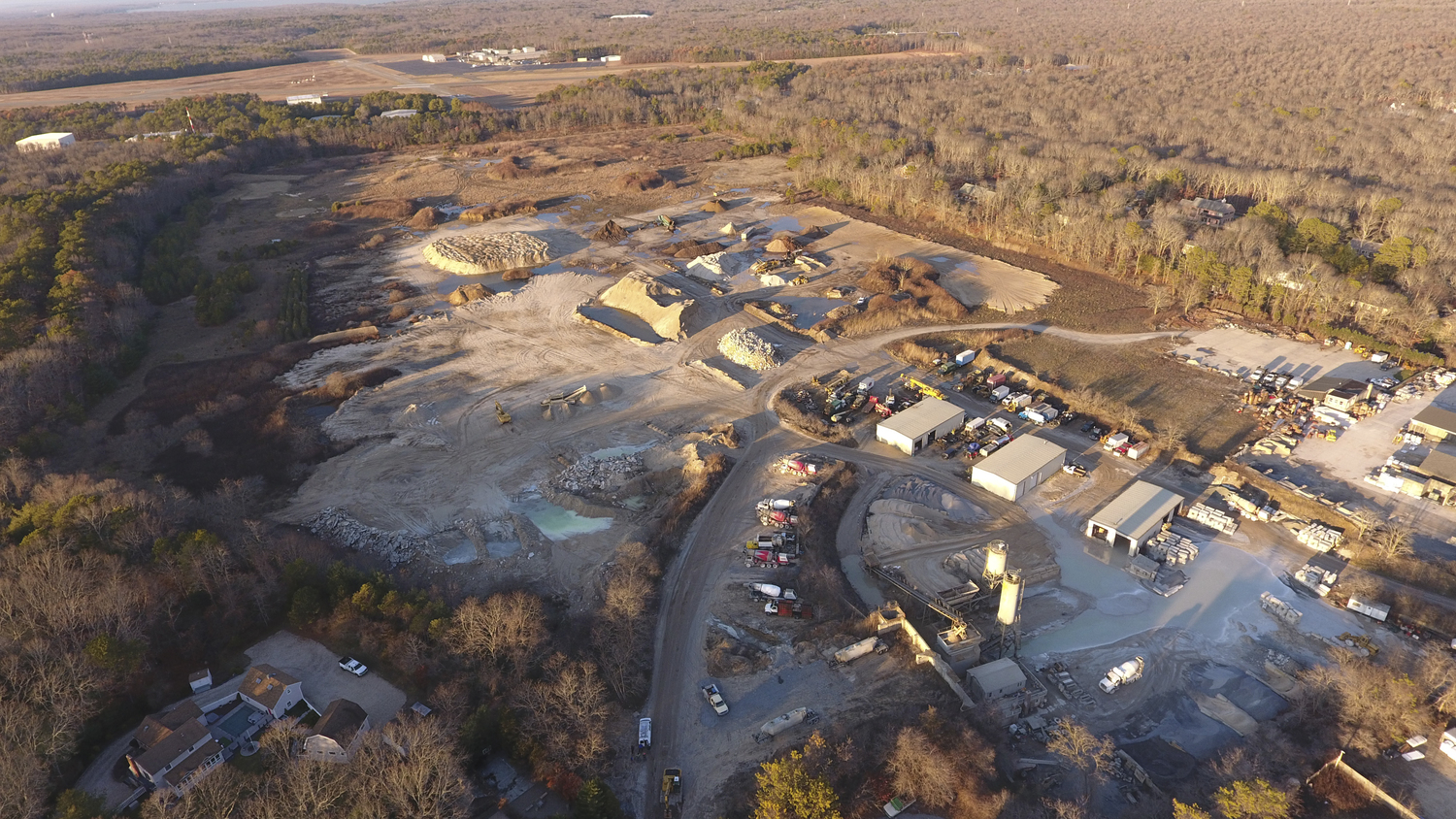
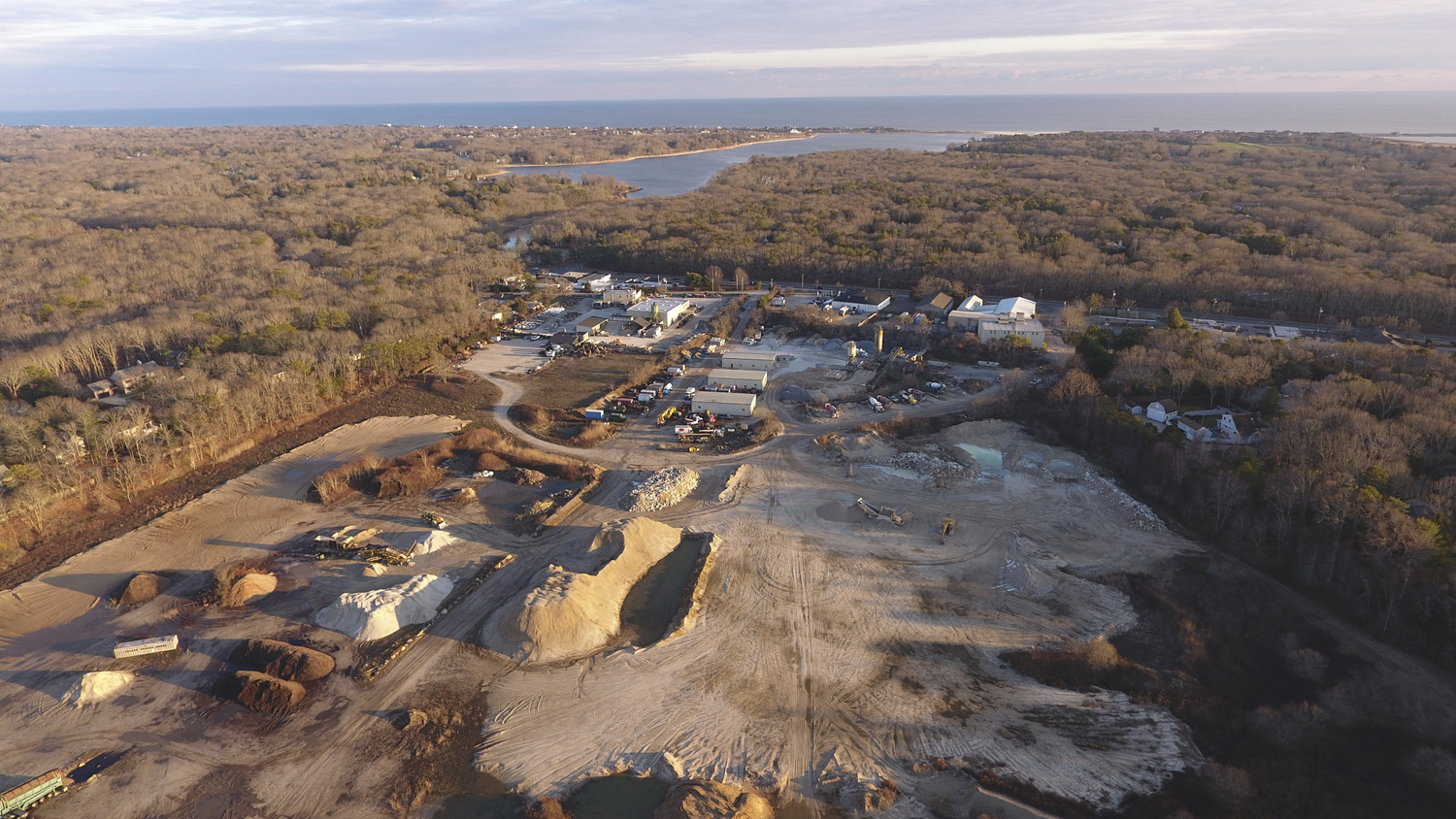
Sand Land in Noyac has shut down. The mine's owner, Wainscott Sand and Gravel, will move operations to a portion of its property in Wainscott that was formerly occupied by Southampton Masonry. MICHAEL WRIGHT
Sand Land in Noyac has shut down. The mine's owner, Wainscott Sand and Gravel, will move operations to a portion of its property in Wainscott that was formerly occupied by Southampton Masonry. MICHAEL WRIGHT
Sand Land, the controversial sand mining operation owned by Wainscott Sand and Gravel off Millstone Road in Noyac, has apparently ceased operations. No activity has been seen at the site since it closed on December 22, the Friday before Christmas.
In the meantime, the company announced in a letter to its customers that it would move its operations to the site formerly occupied by Southampton Masonry at 30 Old Montauk Highway in Wainscott.
The news apparently caught many of the sand mine’s opponents by surprise and left them speculating whether it was a permanent development.
“All I can say is what I see,” said State Assemblyman Fred W. Thiele Jr. “There hasn’t been any activity there in the past month, and customers have been told the retail operation is moving to Wainscott.”
“It is our sincere hope that the facility will remain closed,” said Bob DeLuca, the president for the Group for the East End, “and that the next construction activity we see at this facility is focused on reclamation and healing this important groundwater recharge area for the future needs of local residents.”
Thiele, the Group for the East End, Southampton Town, and neighbors have been fighting to close the mine for a decade. They thought they had finally succeeded in February 2023, when the New York State Court of Appeals, the state’s highest court, annulled the mine’s permits — but Sand Land continued to operate.
Thiele said this week that a preliminary injunction ordered by State Supreme Court Justice James Ferraria last September remains in place, prohibiting Sand Land from operating under any mining permits beyond one issued in 2013, which opponents say has long since been exhausted.
Plus, Thiele said, the DEC had sent a letter last month to John Tintle, Sand Land’s owner, informing him it would not process any applications to expand or renew the mining permit at Sand Land’s 50-acre site until the company gets approval from Southampton Town, whose authority under state law supersedes that of the DEC when it comes to allowing mining.
The town has gone on record that it would not allow continued mining of the site, and Thiele and others have accused the DEC of dragging its heels in enforcing court orders.
On Wednesday morning, a DEC spokesperson confirmed that account, saying the DEC had “advised Sand Land that their permit application could not be processed unless Sand Land provides proof that the town allows mining as a pre-existing, nonconforming use. No proof has been submitted.”
The DEC’s letter, dated December 18, from Sherri Aicher, the agency’s regional permit administrator, states that Sand Land’s most recent application to expand the mine by 11 acres will be considered withdrawn unless further action is taken by the company within 60 days.
It concludes by noting Tintle had told the DEC several times it was his intention to cease operations in “the stump dump,” which is a portion of the site, by the end of the year, and requesting that he confirm that understanding.
Reached on Tuesday, Tintle, responding to a text message that inquired about the mystery surrounding the mine, stated, “If Sand Land is the biggest mystery in 2024, you should broaden your horizons. Do what [your] skill set allows and just reprint whatever press release you received.”
Although a press release was not issued, the letter that was sent to Sand Land’s customers stated, “We will carry a full array of sand, soil and stone for your landscape and masonry projects.” It added that Wainscott Supply “will be a full-service landscape and masonry supply center” that will expand its product offerings to meet the demands of its customers.
The Wainscott site, on the north side of Route 27 and toward the eastern end of the hamlet’s business district, is next to a site that the Tintle family’s Wainscott Sand and Gravel business has occupied for years. Tintle has proposed redeveloping the former sand mine site as the Wainscott Commercial Center, which would create 50 light-industrial lots spread out over the 70-acre property.
Tintle’s environmental consultants completed an environmental impact statement in 2022, and a hearing was held early last year, but that proposal remains under review by the East Hampton Town Planning Board.
The quiet decision to close the Noyac site was news to many involved in the effort to shutter the facility.
James Burke, the Southampton Town attorney, who is out on a medical leave, said he had not heard anything about the operation closing down and said he would inquire of Ryan Murphy, the town’s public safety and emergency services administrator, and Dave Arnsten, the attorney who has represented the town in its court battle to close the mine.
Neither Brian Matthews, Sand Land’s East Hampton attorney, nor the person answering the phone in Sand Land’s office would comment.
DeLuca was also at a loss to explain what was happening, saying he did not know if the DEC had finally stepped up enforcement or if the shutdown was voluntary.
In any event, he said it was long overdue.
“It’s the exact outcome that should have immediately followed the unanimous decision of the New York State Court of Appeals last winter, but the state chose to ignore the decision and allow operations to continue,” he said.
“At the end of the day,” DeLuca added, “it’s important to remember that this decade-long conflict revolves solely around the long-term protection of our underground drinking water supply, a resource recognized as critical by every level of government and broadly supported through extensive public investment for decades.”


 Stephen J. Kotz on Jan 24, 2024