


 1 Photo
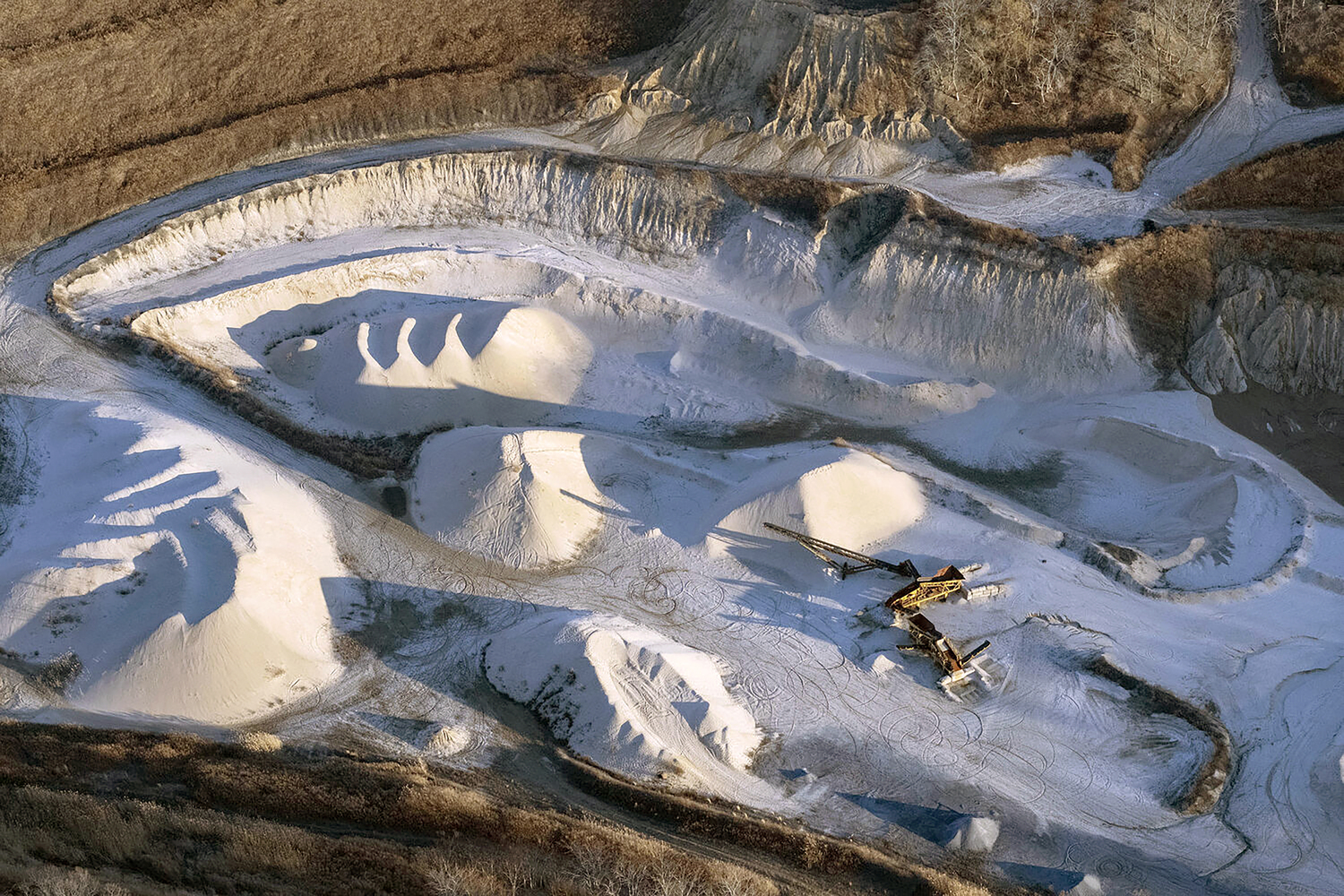
The Sand Land sand mine in Noyac. DOUG KUNTZ
Three companies controlled by John Tintle, who has been the strongest voice in support of sand mining in Southampton Town, have filed suit in New York State Supreme Court seeking to overturn a town law passed last month that would require the amortization of all sand mines in residentially zoned parts of the town over the next seven years.
Attorney James M. Catterson of the New York law firm Pillsbury Winthrop Shaw Pittman LLP, filed the suit on Tuesday, May 6, on behalf of East Coast Mines and Materials Corporation, Sand Land Corporation, and Wainscott Sand and Gravel Corporation.
East Coast Mines in East Quogue and Sand Land in Noyac are two of four active mines in the town, according to the suit.
The suit states that sand and gravel mining provide several important benefits to the local economy and the town in general because they are key ingredients in concrete and asphalt, which is necessary for both construction and road building. Furthermore, the suit notes that sand from the mines has been used on local roads in the winter and to help fill breeches in dunes during major storms.
The suit claims that in adopting the law, the town acted in an arbitrary and capricious manner, failed to follow the guidelines of the New York State Environmental Quality Review Act, and, by forcing mines to close over a seven-year period, was illegally taking away the companies’ property rights.
The Town Board adopted the amortization law in April after introducing it last October. The proposal was met with broad support from environmentalists and community groups, but mine owners and those in the construction industry voiced sharp opposition.
The law gives sand mines a limited length of time to continue operating, based on the amount of sand they have left to mine under their current DEC permits. Mine owners would be allowed to seek an extension of that time limit by petitioning the Town Zoning Board of Appeals.
The town cited protection of drinking water resources as a major reason for phasing out mines, but the suit argues that studies undertaken by the New York State Department of Environmental Conservation and the Suffolk County Department of Health Services “have consistently found that sand and gravel mining does not have any adverse impact on groundwater,” a conclusion that environmentalists have challenged.
This week by email, Southampton Town Supervisor Maria Moore said the town’s law “is straightforward and ensures that mining operations come to a responsible close and that companies live up to their promises of reclamation.”
She added that “Mr. Tintle’s corporations have sued the town and the DEC repeatedly, including a $50 million claim just last year that was denied by the court. I’m confident this lawsuit will meet the same fate.”
Rather than continuing to fight the community, Moore urged him to be “a good neighbor, honor the commitments in his mining permits, and complete the reclamation that was promised.”
The town, she concluded “remains committed to protecting the health, safety, and character of its residential communities, and to holding all mine operators accountable to the standards of good land stewardship and lawful conduct.”
Tintle said contrary to what the town has argued, the DEC has found that mining does not have any adverse impact on groundwater. “The town has presented these claims to the court, and they have been rejected,” he said in a text message. “To continue to repeat the claim is an intent to deceive. Facts are important.”


 Stephen J. Kotz on May 7, 2025