


 1 Photo
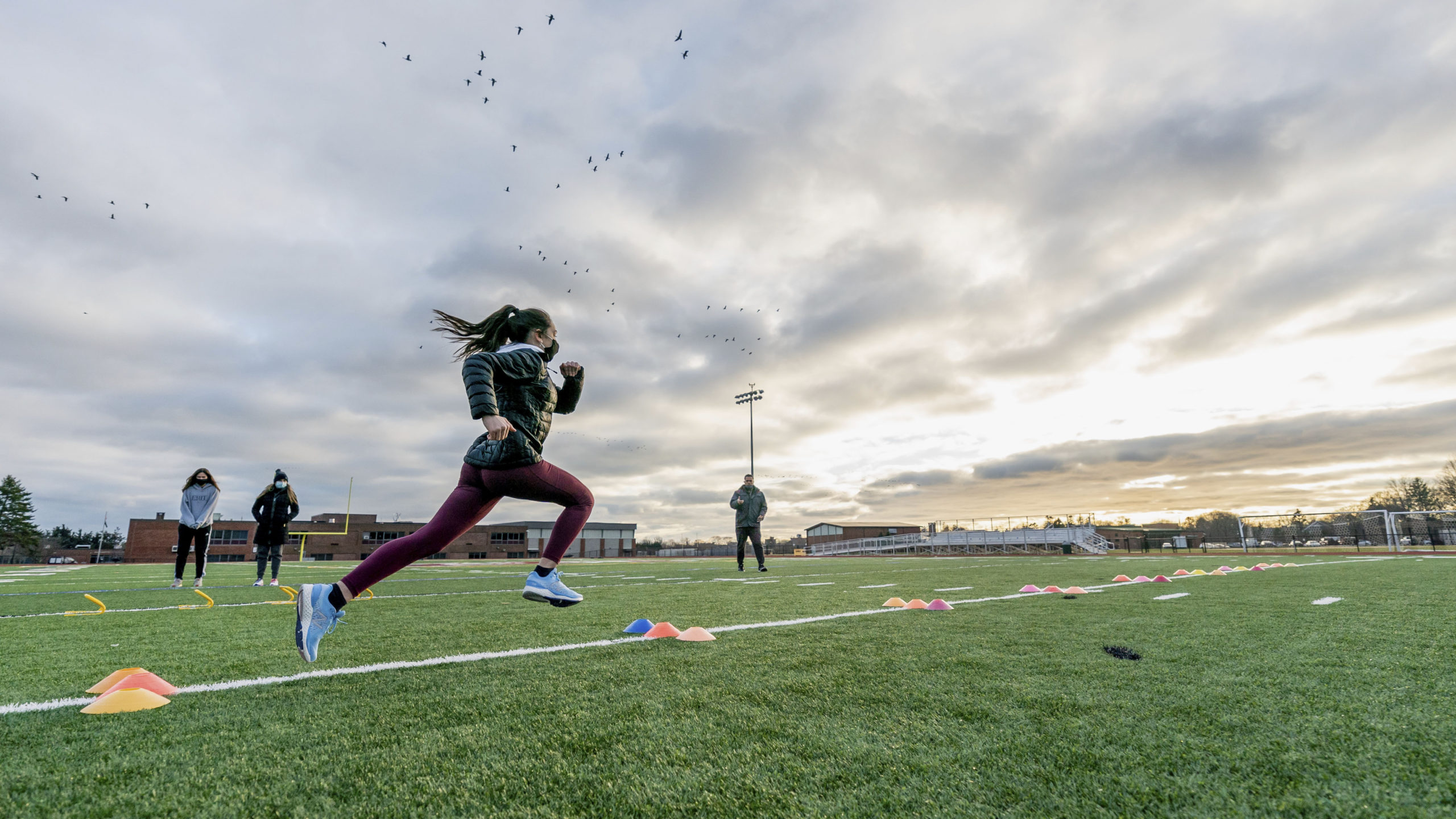
Kyla Cerullo at Southampton girls track practice last week. RON ESPOSITO
Moving the winter track season outdoors for the year to comply with COVID-19 regulations has made the role of one often behind-the-scenes school employee more important than ever.
School athletic trainers will have their hands full as they patrol the sidelines at practices and weekend meets in January and February, keeping an even sharper eye than usual on athletes as they work to both prevent and heal injuries, while also making sure the students are complying with masking and social distancing guidelines that are crucial to allowing them to conduct a season safely.
Scott Leogrande is the longtime athletic trainer at Westhampton Beach, and he spoke last week about the specific challenges athletes and coaches will face as they train and compete outdoors during the coldest months of the year.
Leogrande said his top priority as a trainer this year is crystal clear.
“The biggest thing with COVID going on is keeping socially distanced and having the masks on, and when they’re able to remove a mask, making sure they stay socially distant,” he said. While he acknowledged that masking is a key element when bringing together large groups of students, he also added that it certainly has an effect on athletes when they are practicing and competing.
“With running, it will be a heavy load on the cardiovascular system, and with the mask on it makes it very demanding,” he said. “Especially when it’s cold and constricts air flow.”
Aside from breathing issues that can be exacerbated by the combination of cold air and masks, Leogrande said he’ll be extra vigilant about reminding athletes of the importance of a proper warmup.
“I had one kid who strained a hamstring over the weekend, so that’s also a big concern,” he said. “I’m stressing to them to make sure they’re warmed up before they go into their routine as far as practice goes, and getting them warmed up before they’re going into a competition is key. That includes dynamic and static stretches afterwards, too.”
On afternoons when the sun is shining, the wind is calm, and temperatures settle in the 40s, practice and meets can be enjoyable. But when the almost ever-present wind at the school’s wide open athletic fields and track kicks up, and wind chills factors make temperatures plunge, Leogrande, coaches and athletes will need extra vigilance.
“That’s when you can suffer from frostbite, and you have to worry about the nose, ears, fingers and toes,” he said. “When you’re trying to run through that wind, it also puts more constriction on the cardiovascular system, and when you add a mask to that, you can really stress the athletes out. The kids don’t always think about these things, but they can get extra fatigued, and that’s when injuries occur. So they really need to get a proper warmup and acclimate their bodies. It’s the same thing if you’re at a high altitude; getting acclimated is a big part of it.”
Leogrande said he expects there will be days when Section XI, the governing body of high school sports in Suffolk County, issues alerts about the cold weather, and may recommend practice or meets be canceled, much like they do in August with modified heat alerts, where teams are required to take a break and provide water every 15 minutes.
While some days will be more uncomfortable than others, Leogrande pointed out that the majority of practices for winter track have always been conducted outdoors, even if the athletes had the warmth of indoor meets to look forward to on weekends. In that sense, it isn’t entirely new for them, he said, and added that over time, as they continue to acclimate to the weather, they should be able to adapt to yet another new normal.


 Cailin Riley on Jan 12, 2021