


 3 Photos
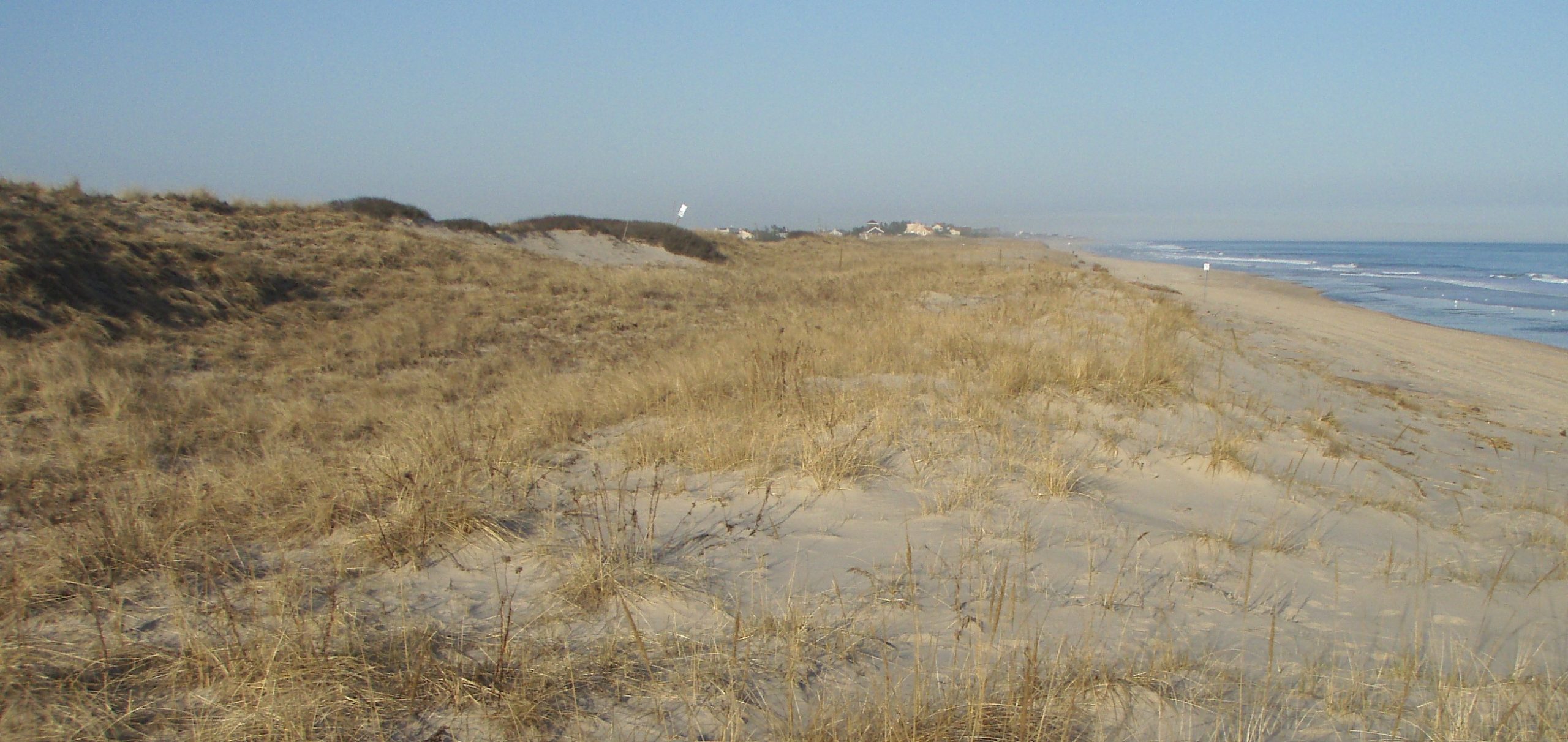
In some places, including this stretch of ocean beach in Amagansett, the shoreline and dune system has been accreting. MIKE BOTTINI
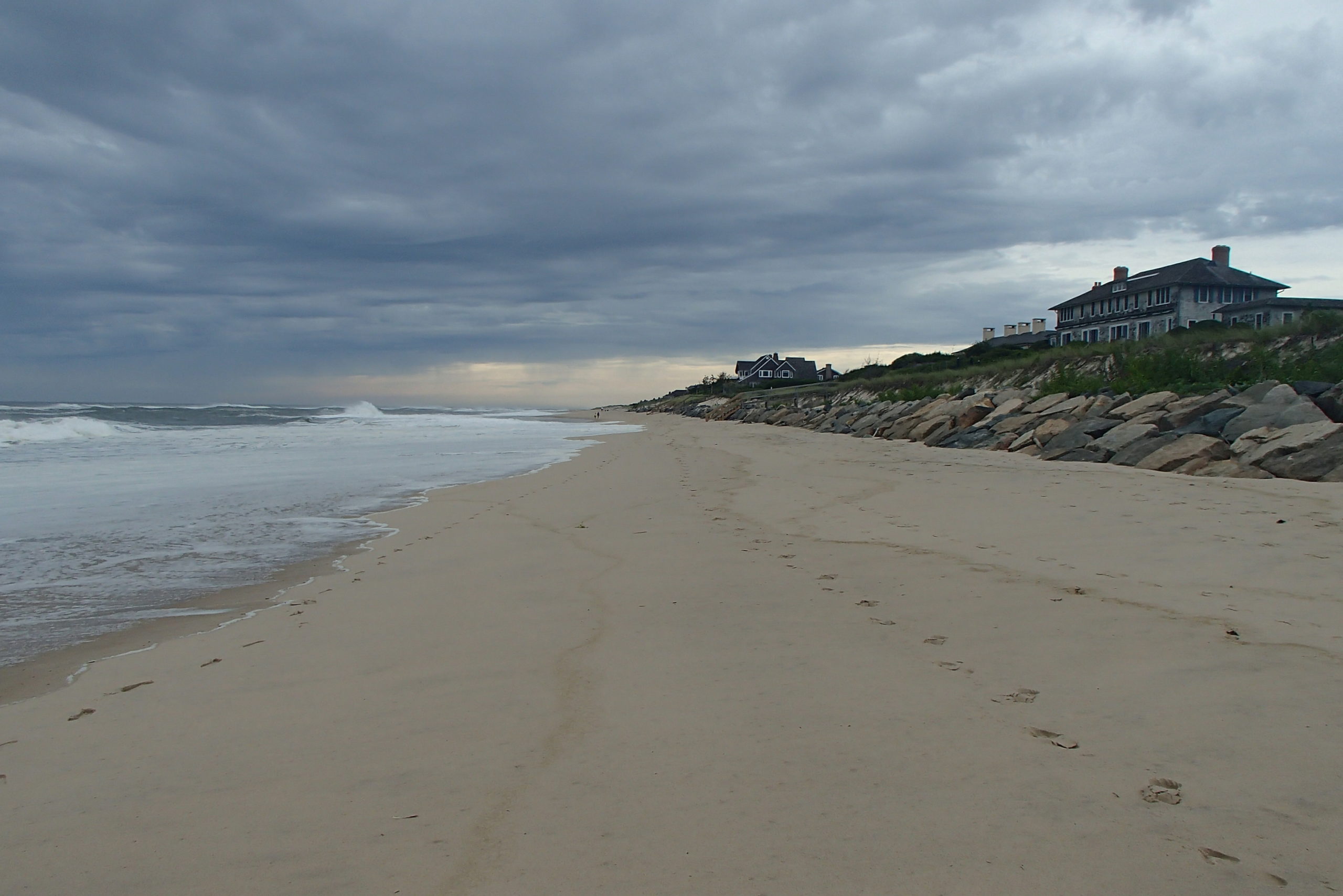
The stretch of dune in East Hampton Village between Georgica and Main Beach has been armored with rock and in places has been losing its beach. MIKE BOTTINI
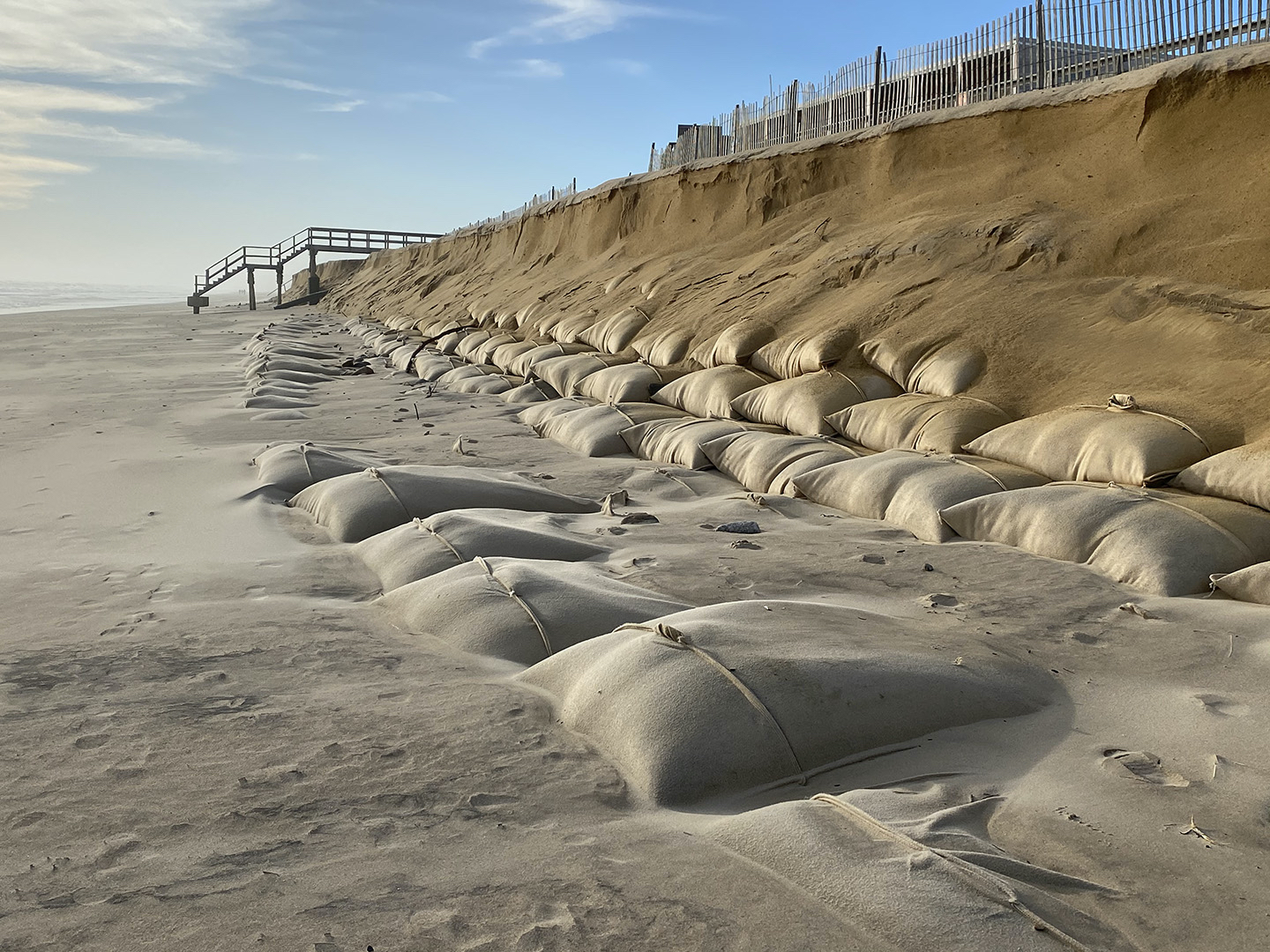
Projects such as this one in Montauk use public funding to destroy the public beach and protect private property knowingly built in a vulnerable location. DON RIEPE DON RIEPE
One of the field trips held during the Montauk Natural History weekend, from January 10 through 12, was to the downtown Montauk beachfront for a look at the artificial dune constructed a few years ago. It was not a pretty sight.
The artificial dune was constructed of layers of large, sand-filled bags placed in a trench dug on the beach in front of a series of motels and condominiums, the latter having been built on, or in front of, the existing primary dune, as extrapolated from the position of the adjacent unaltered primary dune at Kirk Park. The sand-bagged structure was covered with sand and topped off with American beachgrass plugs.
Being slightly seaward of the natural primary dune, partially on the ocean beach and partially in what is called the ocean intertidal zone, the $10 million structure was exposed to the highly dynamic physical stresses of ocean tides and waves. Other than losing its beachgrass and its cover of sand, at first glance damage appears to have been limited to the boardwalks leading over the sandbags from the motels and public accesses to the beach. But as the field trip participants soon realized, something else was gone: the public beach!
The bottom line here is that our local politicians — one notable exception being County Legislator Al Krupski — from the town to the federal level, as well as most of our many environmental organizations — with the notable exceptions being Surfrider Foundation and Defend H2O — supported using public funds to destroy a popular half-mile long stretch public beach in exchange for protecting a dozen private motel and condominium complexes that were knowingly built in a very vulnerable location that is subject to severe storm damage.
Among the arguments put forward by the private interests that lobbied for the publicly funded sandbag dune was one that tried to state that the project would protect not only the dune-top structures but a large portion of Montauk’s village district. Yet, the tall, wide primary dune fronting Kirk Park’s parking lot and the IGA has done an excellent job protecting the west end, and lowest elevations, of the village at no cost to taxpayers and with no loss of the valuable beach.
Immigrants from Europe settled on Long Island 400 years ago, and many of our communities have active historic organizations and local legislation that protects and maintains historic structures: old homes, barns, windmills, schools and churches to name a few. How many of these were built on oceanfront dunes? There may be a few, but I can only think of lighthouses. Most people knew about the dynamic nature of the beach and primary dune, as well as erosion rates, hundreds of years ago; they had the common sense, and perhaps a healthy dose of respect for the power of Nature, to steer clear of building permanent structures there.
Somehow we’ve lost that. My best guess is that we’ve developed an attitude that we can outsmart Nature, and engineer our way out of anything. Yet even a cursory look at our coastal engineering projects suggest otherwise: shore hardening structures that result in the gradual loss of the beach and stabilized inlets that interrupt natural processes like littoral drift and cause severe erosion in the adjacent area (e.g. Montauk and Shinnecock inlets).
Sea level rise is not a new phenomenon. It has been a constant, although with a fluctuating rate, here on Long Island for thousands of years. Unfortunately, as was the case with our inadequate sanitary septic regulations, and is still the case with managing our limited freshwater resources, we’ve avoided addressing the issues head on. Seawalls, whether made of rocks or bags filled with quarried sand, are not the solution. The pressure to install seawalls will only increase with the increasing rate of sea level rise, and the decision-makers need to frame the debate accurately: protect the public beach or protect the adjacent private property? You can’t have it both ways.


 Mike Bottini on Jan 21, 2020