


 11 Photos
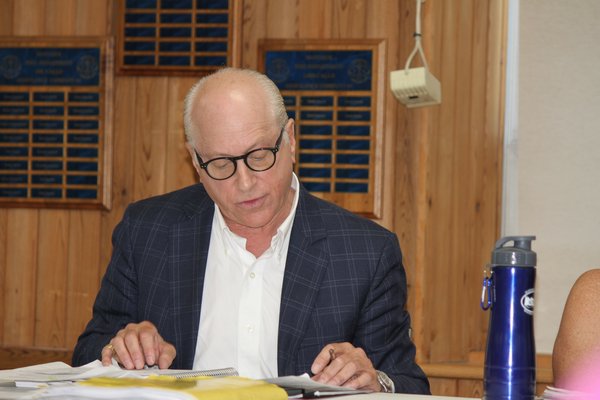
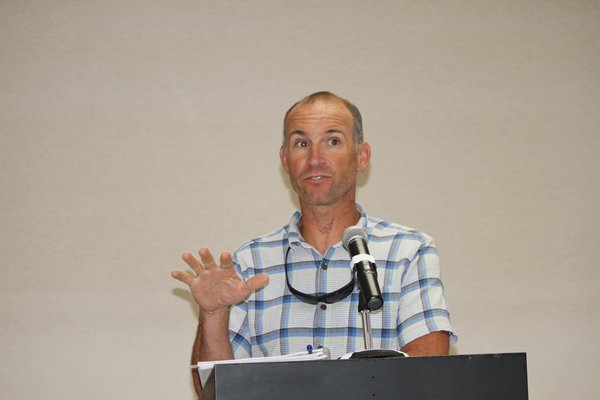
A few years ago, Mark Matthews went fishing with his grandchildren—Sean, who was 4 at the time, and 3-year-old Lauren—near the entrance of North Sea Harbor.The trio had no bait and were not catching any fish. Then, Mr. Matthews spotted some scallops and caught a few. He opened up the shellfish and attempted to use them as bait—but the meat inside was too soft to stay on their hooks.
While searching for a solution, Mr. Matthews noticed tiny minnows picking at bits of scallop meat that fell into the water. He caught a few minnows, used them as bait, and the family caught a sizable fish in short order.
In retrospect, Mr. Matthews said that “circle of life” experience sparked his interest in working with the Conscience Point Shellfish Hatchery in North Sea, a nonprofit that raises shellfish, with the ultimate goal of improving water quality on the East End.
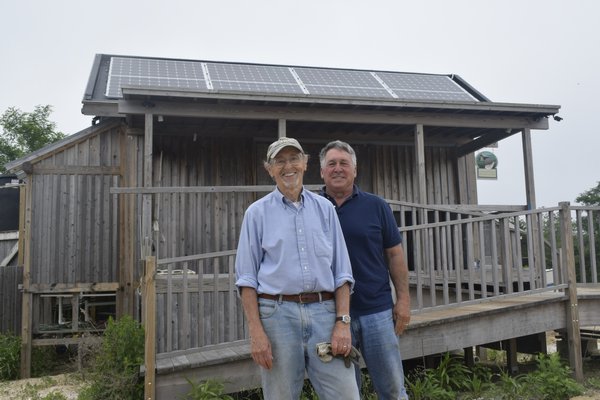
“[The bay] is here for all of us to enjoy, and we’re here to protect that,” the North Sea resident said earlier this week while standing on the porch of the hatchery, a small shed-like building near Conscience Point, where the first English colonists arrived in the region.
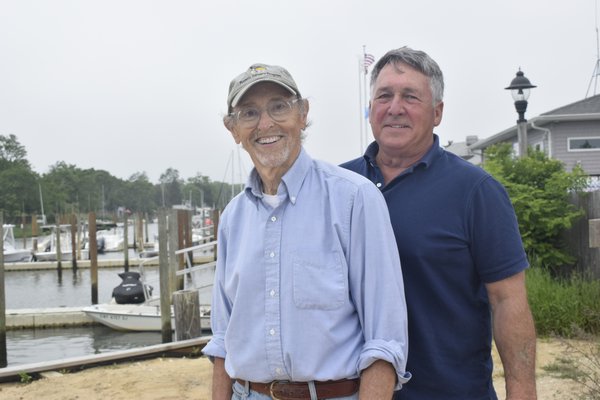
Established in 2014, the hatchery has already raised hundreds of thousands of shellfish, donating most to the Southampton Town Trustees and selling the rest to local fisheries, according to Howard Reisman, an ichthyologist—a scientist who focuses on sea life—and board member of the hatchery, who also lives in North Sea.
Oysters, he explained, are natural filters that can pump as much as 50 to 60 gallons of water a day, helping remove nitrogen as they feast on algae and help keep local watersheds healthy.
The Conscience Point Shellfish Hatchery, which recently received $10,000 in funding from Southampton Town, is one of many efforts within the municipality to improve water quality through aquaculture. A marine education and outreach center, coupled with a shellfish nursery, is expected to open at the end of the month at Tiana Beach in Hampton Bays.
Town Supervisor Jay Schneiderman recently revealed that he is in early discussions with State Department of Environmental Conservation officials to obtain state funding for a large, full-fledged aquaculture facility in the municipality, complete with shellfish breeding, nursing, education and research.
“When I took the boat ride with the governor, he was talking about assisting the town and having a new facility,” Mr. Schneiderman said, referring to a recent tour of Shinnecock Bay taken by Governor Andrew Cuomo and other officials. “He seemed very willing.”
Mr. Schneiderman noted that the state already has money allocated for clean water initiatives, and he plans to meet with DEC officials soon to discuss the funding of the proposed partnership. Although details, like its location and the amount of state funding available are sparse right now, the supervisor described the potential new facility as a larger version of what exists at Conscience Point.
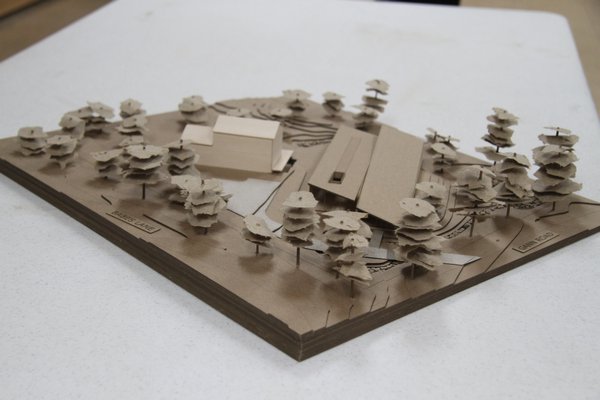
As for Mr. Matthews, an architect who owns the firm Mark C. Matthews Architecture, P.C. and serves as president of the hatchery’s board of directors, he said he fully supports any town effort to create another facility, adding that, while small, the Conscience Point center still plays an important role.
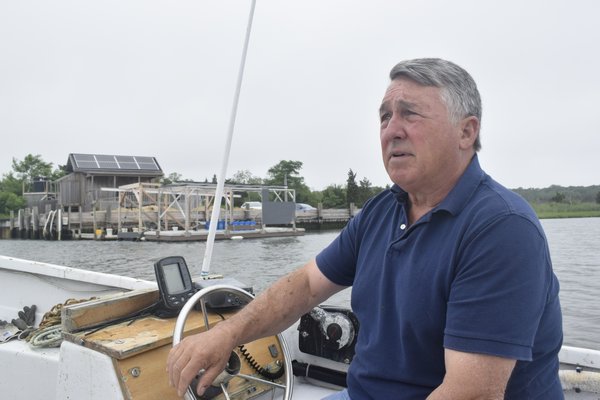
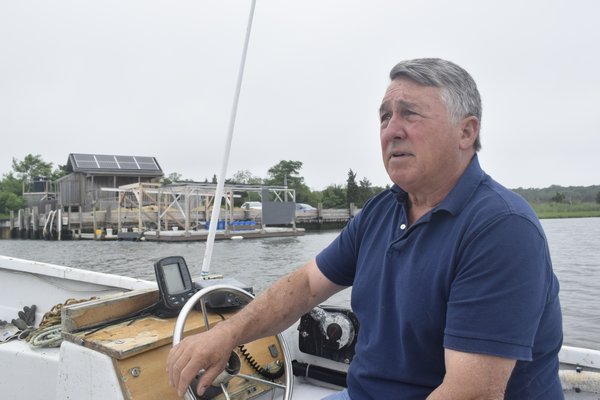
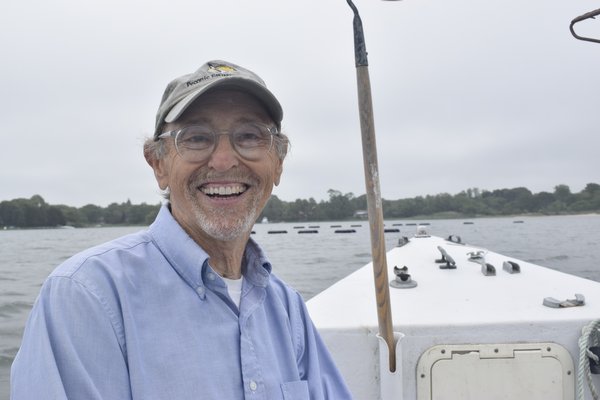
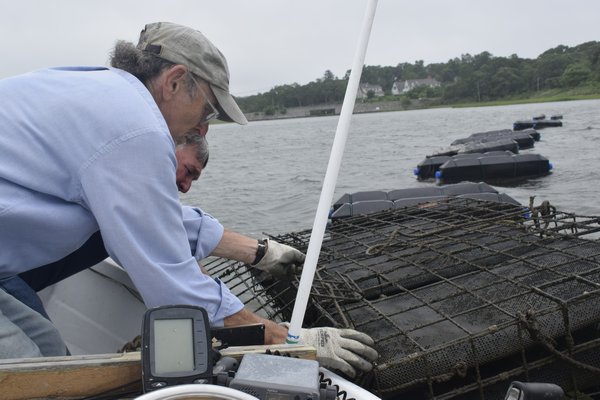
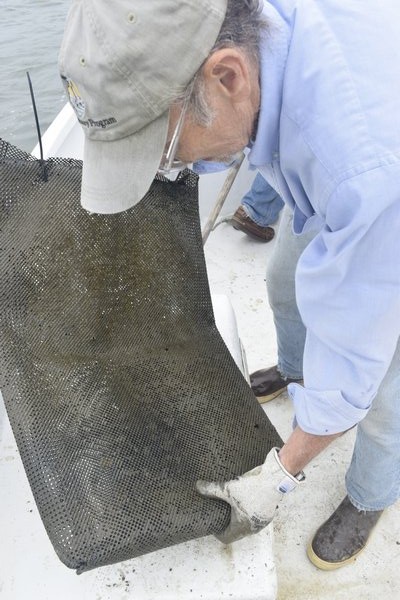
Mr. Reisman and Mr. Matthews recently took a boat ride out to the middle of North Sea Harbor, out to two lines of black buoys, where the hatchery stores 18 cages under the surface. Each cage is filled with six bags containing thousands of maturing oysters.
Their journey starts inside the small shack on the shore, Mr. Matthews said, as donated larvae—each smaller than a grain of sand—are placed in large, storage containers filled with filtered ocean water so they can safely grow before being transferred to a floating upweller system outside. Under a floating raft, algae is propelled upward so juvenile shellfish can grow large enough to be brought out to the cages in the middle of the harbor, growing from a mere speck up to 3 inches in roughly three years.
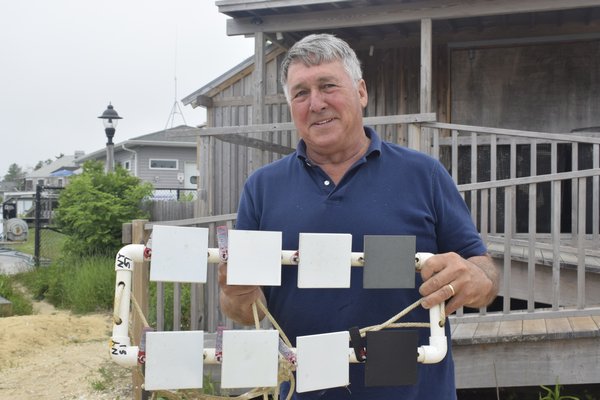
Although they have a small operation, Mr. Reisman and Mr. Matthews, in partnership with Cornell Cooperative Extension, are now busy working on an experiment that uses environmentally friendly paint on the upweller system. They hope the new paint will help reduce algae buildup and help save hours of cleaning time, a concept Mr. Matthews said could eventually help other hatcheries across Long Island.
On top of that experiment, the men noted that with the additional funds received from the town, the nonprofit has ordered 24 more cages and might soon get a donation of 150,000 seeds. Mr. Matthews said the facility recently received new decking courtesy of a local Eagle Scout, Chris Gabrielsen of Troop 58 in Southampton, in order to help with past flooding issues, although now the hatchery still needs sand to level the lot.
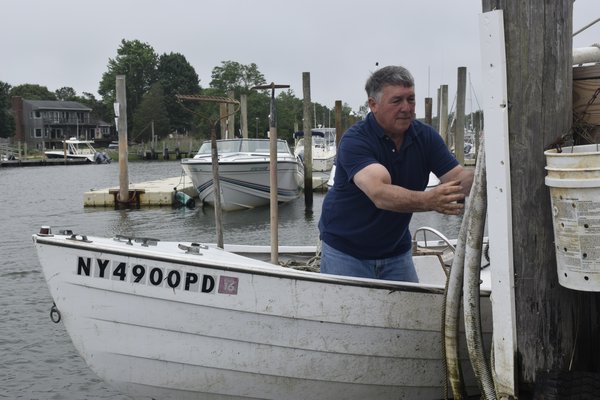
As Mr. Matthews steered the hatchery’s small boat—another donation—back to the dock in North Sea, he observed how all has been made possible through a shared community desire to keep the East End’s bays and watersheds clean.
“We live in an area that’s blessed in abundant water,” he said. “Fifteen years ago, the waters were in serious trouble. We like to think what we’re doing is making a big difference to the future generations to come.”


 on Jun 21, 2017