


 3 Photos
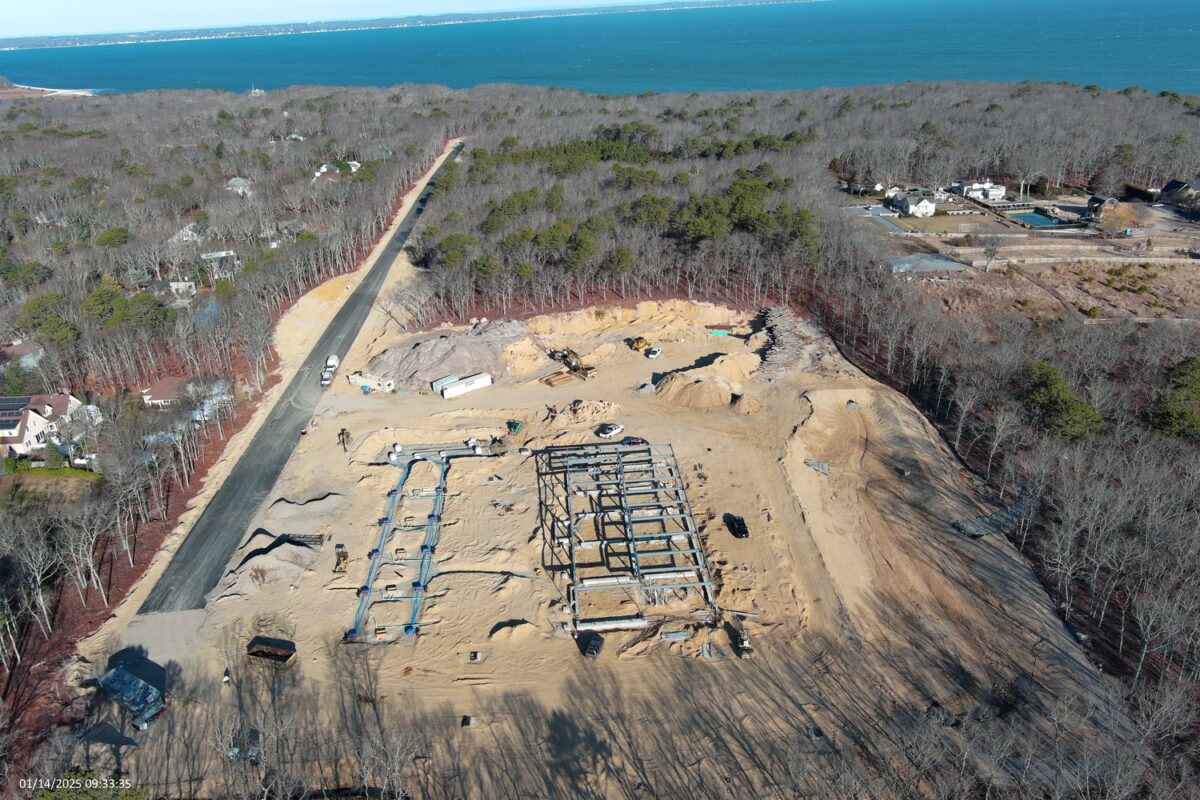
A judge ordered the Shinnecock Nation to immediately cease work on the gas station the tribe is constructing alongside Sunrise Highway in Hampton Bays.
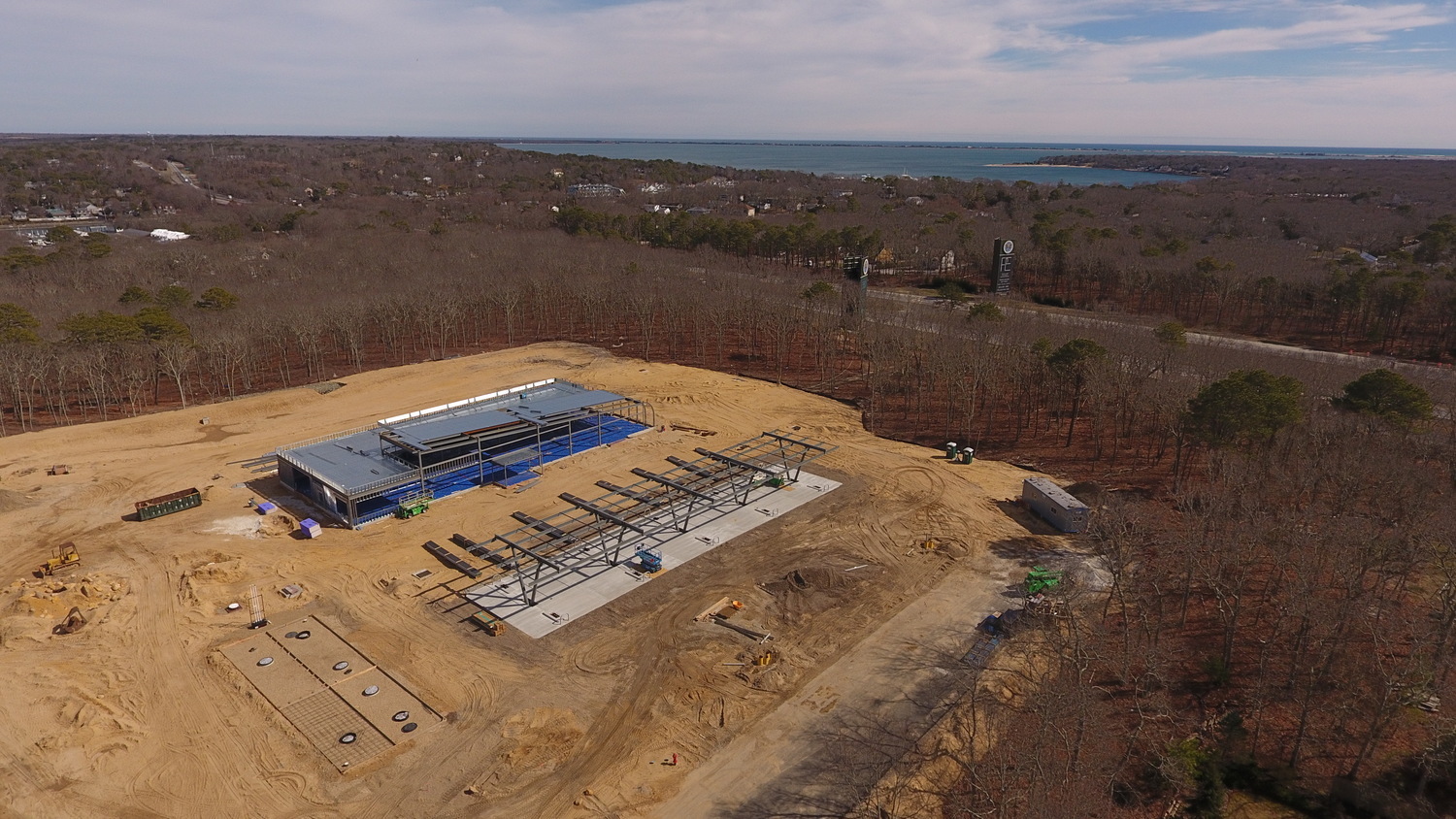
Construction work at the Shinnecock Nation's gas station in Hampton Bays was paused on Tuesday, a day after a state judge issued an injunction ordering the project to be halted immediately. Tribal leaders have said that they do not think state courts have authority over them, as a sovereign nation, but complied with the court order while they explore their legal options.
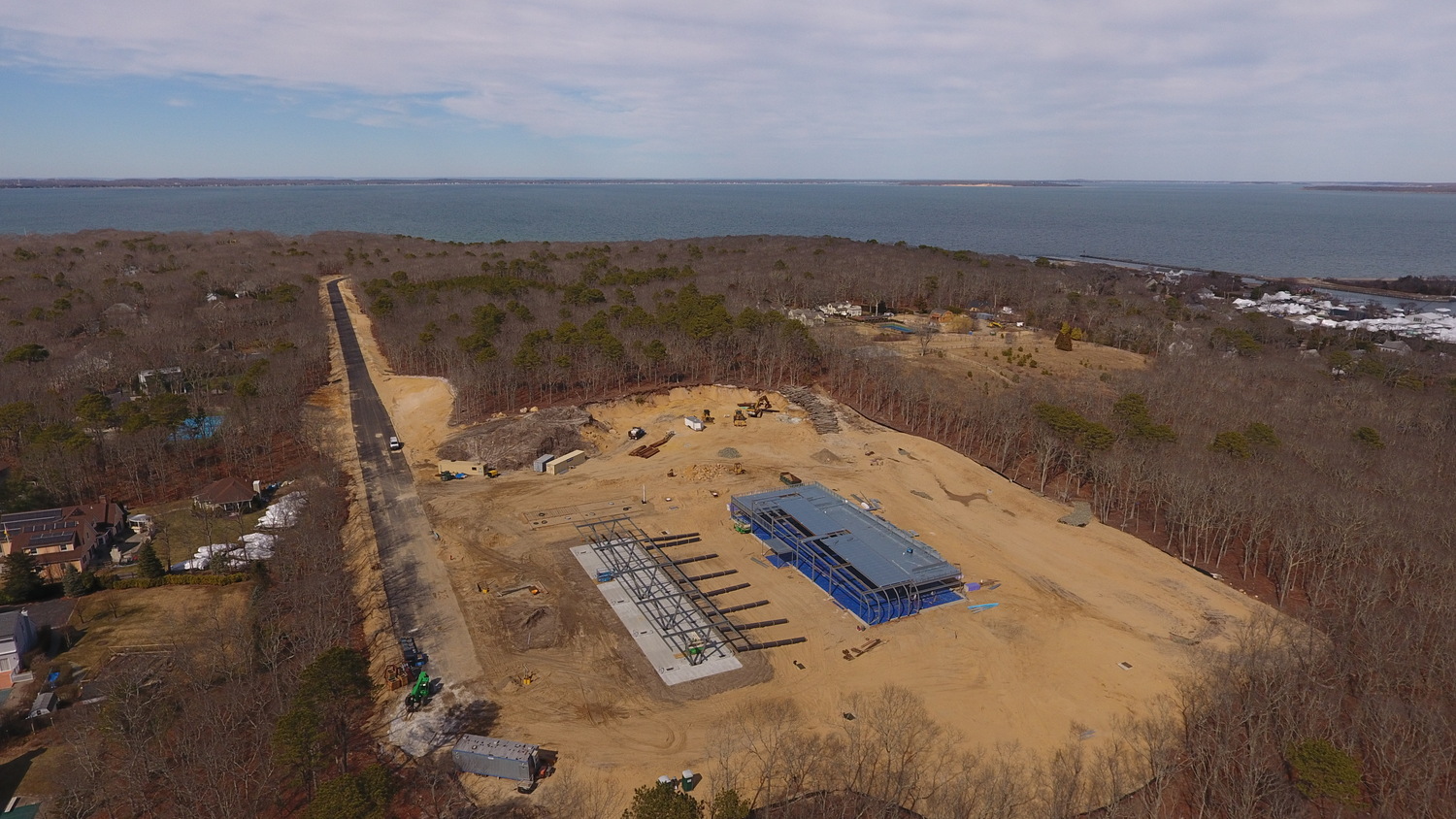
Construction work at the Shinnecock Nation's gas station in Hampton Bays was paused on Tuesday, a day after a state judge issued an injunction ordering the project to be halted immediately. Tribal leaders have said that they do not think state courts have authority over them, as a sovereign nation, but complied with the court order while they explore their legal options.
The Shinnecock Nation halted construction of a gas station on land they own in Hampton Bays on Tuesday, the day after a Suffolk County Supreme Court justice granted a preliminary injunction to the Town of Southampton ordering a work stoppage at the site.
Tribal leaders said the decision would be immediately appealed, but that they had instructed their construction contractor to stop work at the site while the nation explores its legal options — and acknowledged that it may mean the project could be left dormant for weeks or months.
While tribal officials have said repeatedly in recent months that state courts do not have authority over them, as a sovereign Native American nation, they acknowledged that the contractor that has been working developing the 10-acre gas station site since last April could face legal ramifications if it had continued work following Monday’s judicial ruling.
“We told them to stop while we decide what our next moves are,” Lance Gumbs, the vice chairman of the Shinnecock Council of Trustees, said on Tuesday afternoon, referring to the contractor, California-based Moorefield Construction. “If we had our own construction company, we wouldn’t have stopped. But we don’t want to put them in any kind of legal jeopardy.”
Southampton Town Supervisor Maria Moore had said after Monday’s ruling that the town was discussing legal steps it could take to force the project to stop if the nation had not complied with the court order.
Gumbs said that the nation’s attorneys are preparing an appeal and will ask for a stay of the injunction, but that the process could take some time. He said the tribe does not have a forecast from the attorneys for when it expects the appeal to be brought to a court for consideration, and that the tribe is looking at a variety of legal avenues.
The injunction was issued on Monday by Justice Maureen Liccione, who embraced the arguments by attorneys for the town that the Shinnecock’s ownership of the land where the gas station is being built, known as Westwoods, does not exempt it from the town’s zoning rules and other town and state regulation.
In her 27-page decision, Liccione referred to the tribe’s property as a “residential parcel of nonreservation land,” and said that the construction of the gas station and travel plaza violated Southampton Town zoning and New York State law.
She referenced a longstanding legal claim that attorneys for Southampton Town have now made in two lawsuits, that the Westwoods property is not part of the Shinnecock’s aboriginal holdings, like the 800-acre Shinnecock Neck is, even though it was a focal point of the tribe’s territory for millennia before European settlers arrived.
The town has claimed that Westwoods was a part of the large swaths of land sold with the signature of a single Native American individual “on behalf of the Shinnecocks” in the late 1600s to two white settlers, Thomas Topping and John Ogden, and then subsequently absorbed by the Town of Southampton and then returned by the Shinnecock by virtue of “adverse possession,” because they had continued to occupy the land throughout.
But the legal existence of those transfers of ownership scrubbed Westwoods of its “aboriginal title” and, therefore, its status as part of the Shinnecock sovereign holdings, the town has argued in its two lawsuits — the first in 2003 — against the tribe over their development plans at the property.
The tribe has challenged this interpretation of the Odgen and Topping deed transfers, saying that the deeds specified the conveyance of lands “west of Canoe Place” — as the area where the Shinnecock Canal is now was known — and is being interpreted far too narrowly by the town, relative to 1600s thinking, which gave no specific meets and bounds.
To the Shinnecock at the time, tribal scholars have said, the area of Canoe Place would have meant the entire region surrounding the lowlands at the narrow choke point between Shinnecock and Peconic bays, where canoes could be carried from bay to bay. The uplands surrounding the canoe portage was the tribe’s main settlement at the time, so the lands traded away would not have included Westwoods. The current property line of Westwoods is less than 300 yards west of the Shinnecock Canal.
The Shinnecock have said that they have always considered Westwoods to be of the same status as the Southampton land. The matter has been fought over in court several times — with more to come.
The nation’s total land holdings at Westwoods are 104 acres, including the acreage that is covered by Sunrise Highway, which the tribe says the state illegally forced upon them in the 1960s. Since 2001, the Shinnecock have brought forth a variety of development plans for the remaining 79 acres of the property — which is also split by Newtown Road — starting with casino plans that have taken on various forms, and for which clearing was begun in 2003 and then expanded in 2012.
Currently, the nation has said it plans to build a convention center and 200-room hotel on the portion of the land north of Newtown Road and fronting on the bluffs overlooking Peconic Bay, once it is done with the gas station.
In her ruling this week, Liccione specifically referenced a 2007 decision by a federal judge in the town’s previous lawsuit that opponents of the gas station project have pointed to as evidence that the legal battle over the status of Westwoods was fought and settled years ago.
In the 2007 decision, U.S. District Court Judge Joseph Bianco agreed with the town’s argument that the Westwoods land could not be considered sovereign because of the evidence of the Topping and Ogden deeds, and cited other court precedents that ruled Indigenous tribes could not extend their sovereign rights to lands they simply acquired beyond their aboriginal holdings.
But the Bianco ruling was vacated in 2009 by a federal appeals court that said the matter should have been adjudicated in state court, not federal.
Diana Adams, a Hampton Bays resident and neighbor of the Westwoods property who organized a group of residents that accused the town of dragging its feet to challenge the Shinnecock and began raising funding to mount their own legal challenge had the town not ultimately done so, said this week that the Bianco decision should be enforced.
“In 2007 a Federal court determined that local zoning and environmental oversight do apply to Westwoods, but that decision was overturned for administrative reasons,” she said. “Until there is a legal resolution of what is permitted, construction of the gas station on Westwoods should not have commenced. We are glad that both the state court, and the New York Appellate Division in a similar case involving the billboards, have now agreed.
“Neighbors’ concerns are elevated by red flags such as the promised but never delivered environmental study, and the secretiveness of the Environmental Protection Agency and the Department of the Interior,” she added. “Both federal agencies have been actively involved and yet both have ignored our requests for information. Is there something to hide?”
More recently, the State Department of Transportation sued the Shinnecock in 2019 when they began constructing two electronic billboards, which the nation calls “monuments,” on either side of Sunrise Highway, the shoulders of which are part of Westwoods. The state lawsuit hinged around the same issues of the land’s history, the status of the Shinnecock’s ownership of it and what powers to sidestep local regulation a sovereign nations has.
In December, a state appellate court ruled similarly to Bianco that the Shinnecock’s aboriginal title to the Westwoods land had been “extinguished” by the Ogden and Topping deeds and that it could not be brought back into the nation’s sovereign holdings for purposes of unfettered development.
Gumbs said on Tuesday that Liccione’s reference to the Bianco decision was shocking, because even the appellate judges had said that once the Bianco case was overturned on appeal, from a legal standpoint, the ruling carries no legal precedent and the town could not use it to support its case. Liccione, on the other hand, seemed to make it one of the main legs supporting her decision.
“The appellate decision in the monuments case made it clear, you can’t use any part of the Bianco decision — it’s a vacated decision, it’s as though it never existed,” he said. “She is just blowing off the federal government and the appellate court. We are dumbfounded that she would reference that and, really, it’s the crux of her decision.”
In early January, the tribe thought it had scored a decisive blow against the challenges to the status of the Westwoods land, when an assistant secretary of the federal Bureau of Indian Affairs issued a memo that instructed federal staff to designate Westwoods as “restricted fee” land — a status many sovereign “Indian lands” are listed under — because the land is “within the Nation’s aboriginal territory.”
The memo used a number of terms and phrases that appeared to intentionally hark to key components of a parcel of land being sovereign lands and the Shinnecock leadership said they saw the memo as proof at the federal level that the town and state courts had no power to question its status any longer.
But the town quickly pointed to vagaries in the way the memo was worded and demanded the federal agency offer its support for the declaration and in her decision this week Liccione echoed their doubts about whether the BIA memo settled the land’s status, or held any legal weight.
She pointed to evidence submitted by the town that the BIA official had been responding to a tribal request to affirm the land as restricted fee title and that the tribe had been declared by a court to be the owner of the land in 1830 by way of “adverse possession” — the legal precedent that if someone has occupied a place without challenge for a long enough period of time, they have legally come to own it even if they did not have title to it.
Adverse possession, the judge said, would require that the land had, at some point, been owned by someone else and, therefore, was not entitled to the exemptions of land with “aboriginal title.”
But Gumbs said that the very fact that the federal government has supported the gas station project — which is being built with a loan to the nation that was guaranteed by the BIA, specifically for the gas station project — should be proof enough that the federal government has already settled the status of the land.
“The BIA would not have given out a guaranteed loan on lands they did not believe were tribal lands that could be developed,” he said. “The Ogden and Topping stuff has been debunked in numerous courts and the BIA has said the land is restricted fee.
“So we are temporarily pausing work while we investigate our options. But this is not over.”


 Michael Wright on Mar 17, 2025