


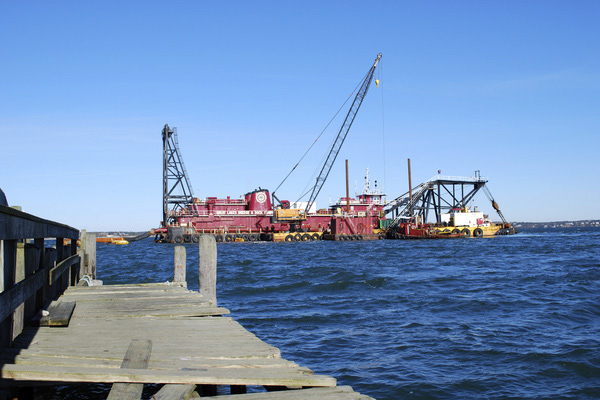
 1 Photo

The U.S. Army Corps of Engineers will dredge the channel of Shinnecock Inlet this coming winter and use the sand to re-nourish the beach just west of the inlet, where severe erosion during Hurricane Irene last summer weakened the protective barrier between the Atlantic Ocean and Dune Road businesses and the commercial fishing port there.
U.S. Representative Tim Bishop’s office announced on Friday that $5.1 million in federal funds has been appropriated for the project, enough to cover the entire cost. Bids will be sought from dredging companies this fall. The project will take approximately two to three weeks to complete once a dredge arrives in the area.
About 128,000 tons of sand will be removed from the navigation channel leading from the inlet fairway through the outer sandbar offshore of the inlet mouth. The sand will be pumped through hydraulic pipes to the beaches west of the inlet jetty, where erosion has scoured away sand and decimated once broad protective dunes.
“This is really fantastic news,” Southampton Town Supervisor Anna Throne-Holst said. “In times like these, when federal monies are so limited, the ability to prevail in securing this level of funding is a testament to the good work of our congressman.”
The stretch of beach west of the inlet has long suffered from a narrow beach, an effect of the inlet jetties interrupting the natural westward flow of sand along the beaches. The Army Corps and Southampton Town have intermittently trucked in sand to bolster the dunes that separate the ocean from the small collection of Dune Road businesses that sits on the bay shore. But erosion during Hurricane Irene heightened the ever-present danger posed by severe storms. The storm caused exaggerated erosion to the dunes immediately west of the inlet, where several restaurants and the town’s main commercial fishing dock are located.
“The beach west of Shinnecock Inlet has become dangerously eroded, and securing this funding for a dredge of the inlet will protect the marine infrastructure and restaurants in the area and the more than 500 jobs they support,” Mr. Bishop said in a statement accompanying the announcement that the funding had been secured. “At the same time, it will ensure continued safe access to New York’s second-busiest fishing port.”
The inlet channel was last dredged in early 2010. The sand from that project was pumped onto Tiana Beach and its neighboring beaches, a mile and a half west of the inlet.


 27east on Jun 2, 2012