


 1 Photo
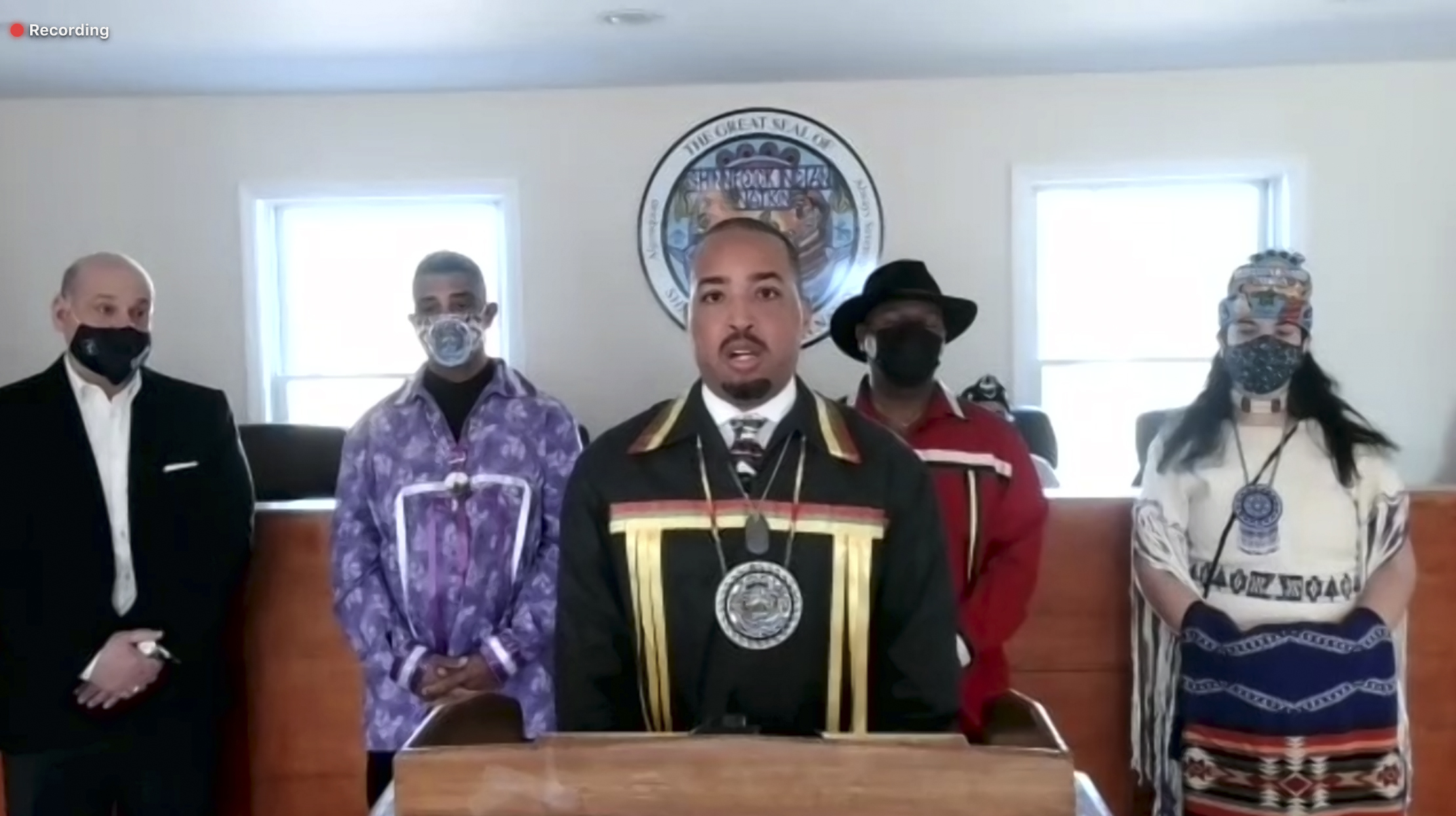
Shinnecock Tribal Chairman Bryan Polite at a virtual press conference announcing the tribe's plans to construct a casino. STEPHEN J. KOTZ
Members of the Shinnecock Indian Nation gathered Wednesday morning, February 17, to formally announce that the tribe would move ahead with plans to build a casino on its home territory just west of Southampton Village.
“Since 1640, the Shinnecock people have guided, sheltered, taught and extended an open hand to the settlers of Southampton,” said Tribal Chairman Bryan Polite. “When the first settlers arrived at Conscience Point 381 years ago, the Shinnecock did not wage war on foreigners entering a territory they knew nothing about, but instead welcomed them to our shores.”
Unfortunately, he continued, the favor has not been returned. “For over 350 years, others have profited from our name while we must fight to develop economic projects on our own sovereign territory,” he said. While Southampton Town prospered, the tribe “endured systemic socio-economic disenfranchisement. The economic disparities between the nation and its neighbors are stark, but the story of the Shinnecock is one of struggle and perseverance.”
It is against that backdrop, he said, that the tribe had decided to forge ahead with plans to build a casino on its Shinnecock territory and would continue exploring other forms of economic development.
“The tribe is looking at many different options, not just with Indian gaming, but also with other opportunities to build out world-class facilities,” he said. “We are not looking anywhere outside the New York region right now” but are instead “laser focused” on the project at hand.
Mr. Polite said he was confident the tribe would be successful. “We have been at this now for over 20 years. We have had multiple obstacles, external pressure,” he said. “But at this point in time we feel confident because we have checked of a lot of boxes we weren’t able to do in the past.”
The aid of the Seminole Indian Nation, a partnership with the development firm Tri State Partners, and approval for a gaming ordinance from the National Indian Gaming Commission were three important steps, he said.
“We feel like we really have all our ducks in the row this time, and we really feel good about getting this over the finish line,” he added.
Asked if the Shinnecock location might be used as leverage to get the state to agree to a more attractive location, Mr. Polite said, “The Nation doesn’t rule out any opportunities to pursue gaming options closer to Manhattan, but we are not currently in talks right now.”
Nor, he said, was the tribe negotiating with New York State for a compact to build a Class III casino, which has high-stakes table games and slot machines. He insisted the tribe had the right to build such a facility on its territory if it chose to go that route.
Mr. Polite said while most members of the tribe supported the idea of building a casino on its home territory, some were concerned about the crowds and traffic it would bring. He added the tribe was cognizant that other town residents would be worried about the impacts of the casino and pledged to take steps to mitigate traffic and environmental concerns.
Mr. Polite said the casino would play an important role in helping fund the nation’s social programs and governmental operations as well as improve the quality of life for all tribe members, including providing better educational opportunities for the nation’s children so they will be prepared to lead fulfilling lives.
Tribal Trustee Germain Smith spoke briefly of the need to close the gap in education between middle-class white America and Native and minority communities and addressed a time when the Nation’s children were denied the opportunity for a good education.
He said his 87-year-old mother had told him that when she was a child attending Southampton schools in the 1930s and ’40s, “We could get in trouble for raising our hands and could be struck for asking a question in class.”
With educational opportunities made possible by casino income, “our Shinnecock children will have the pride and confidence to rise above that generational trauma,” Mr. Smith said. “Our Shinnecock children will know that their lives have value, and we will have the resources that they need to receive the education that they need and deserve.”


 Stephen J. Kotz on Feb 18, 2021