


 8 Photos
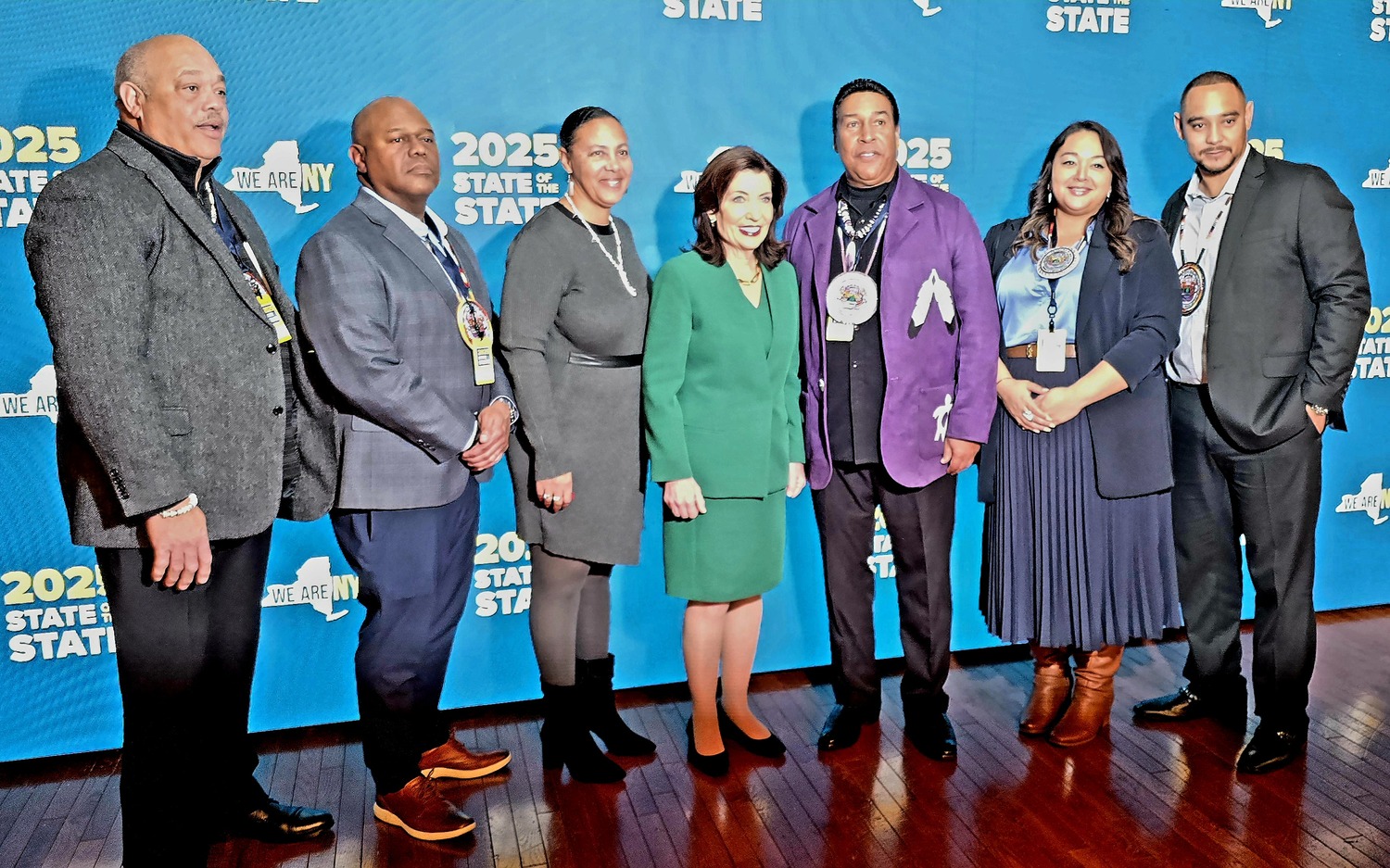
The Shinnecock Nation Council of Trustees attended Governor Kathy Hochul's annual State of the State address in Albany on Tuesday, January 14.
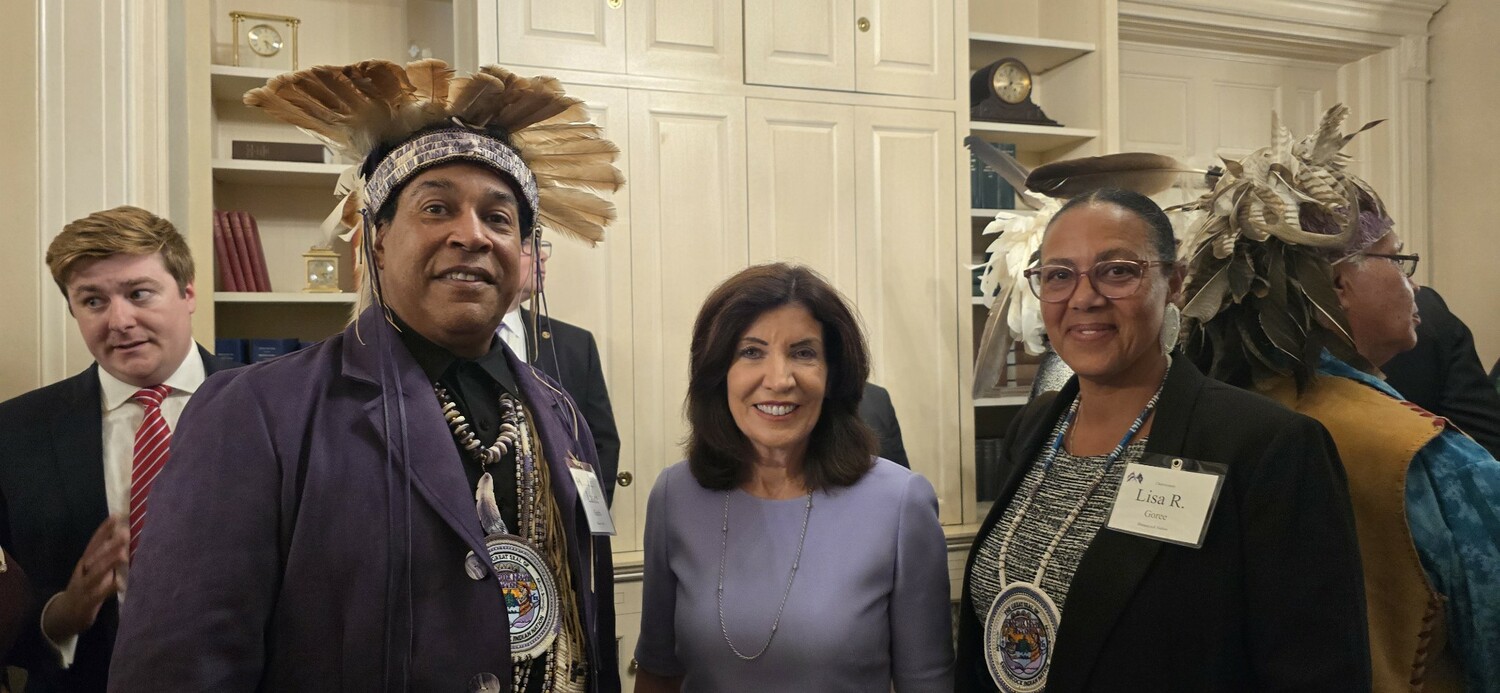
Governor Kathy Hochul has invited Shinnecock Chairwoman Lisa Goree and Vice-Chairman Lance Gumbs and other tribal leaders to state functions on three separate occasions, which the tribe said is a hopeful sign of the state seeking to improve long strained relations with Indigenous nations.
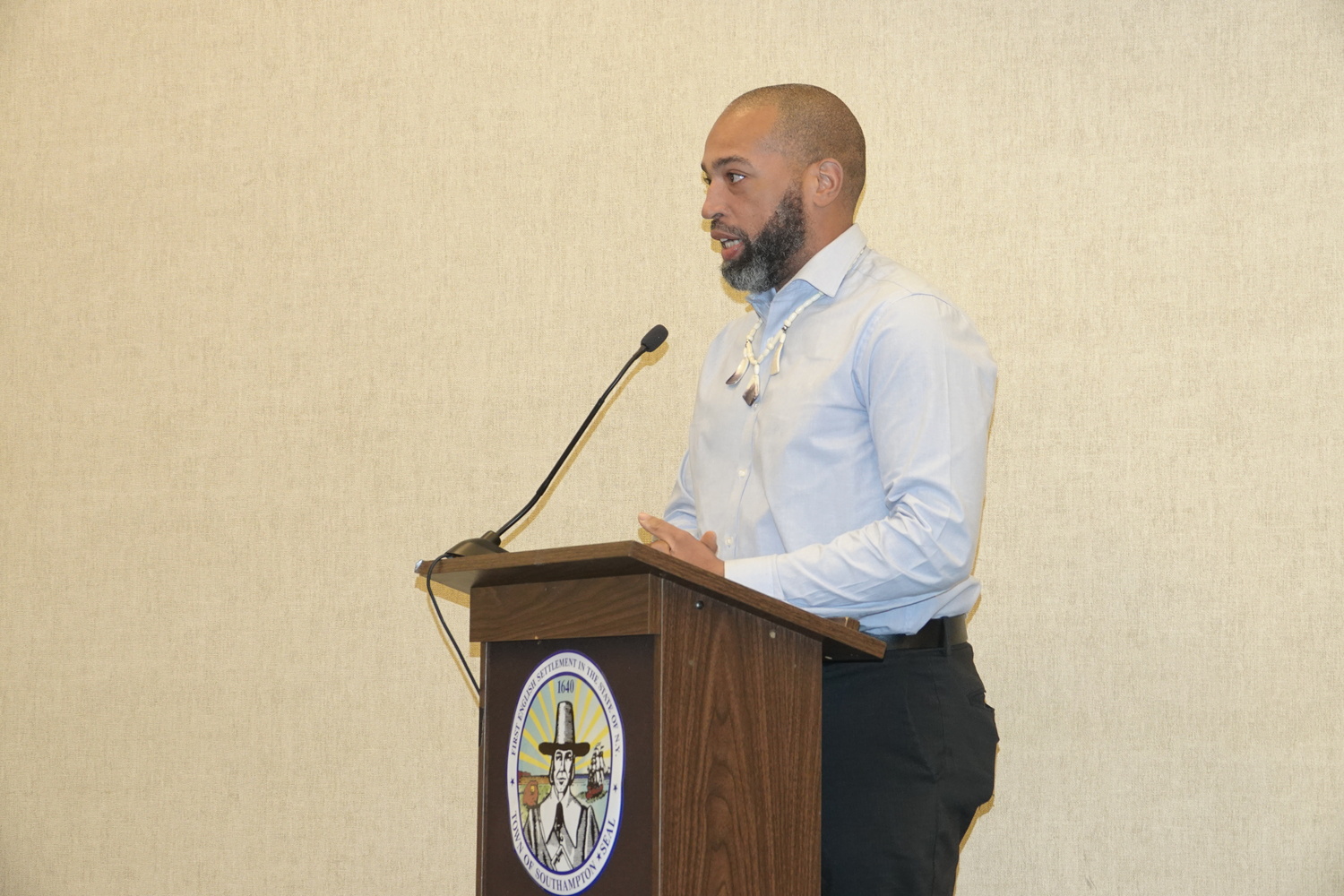
Bryan Polite, who was the chairman of the Shinnecock Nation until last spring, said that the town has created a "generational schism" with the tribe by filling a lawsuit challenging the Shinnecock's right to construct a gas station on tribal land in Hampton Bays. MICHAEL WRIGHT
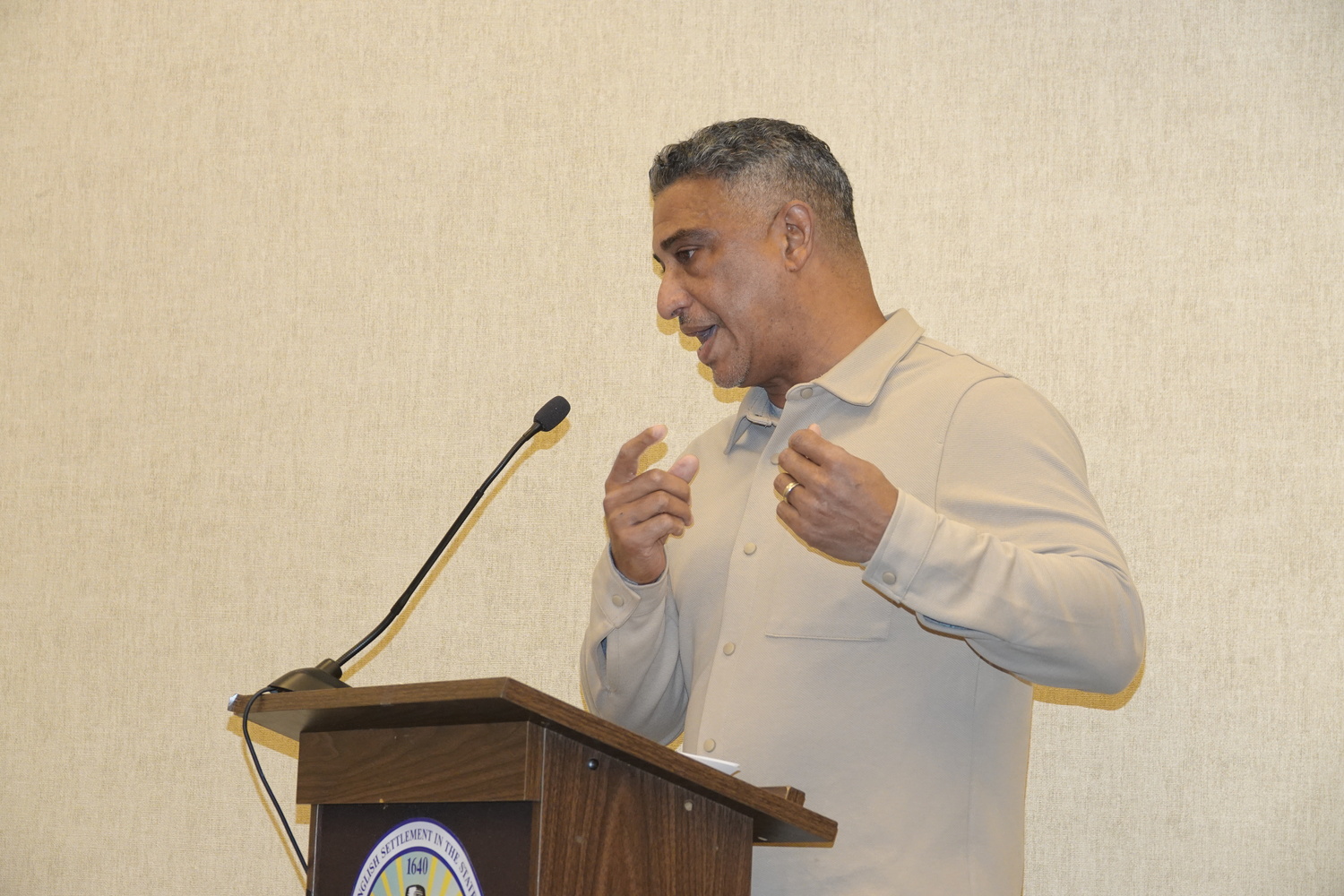
Randy King, a former tribal chairman, said that the town has "weaponized" the court system against the Shinnecock. MICHAEL WRIGHT
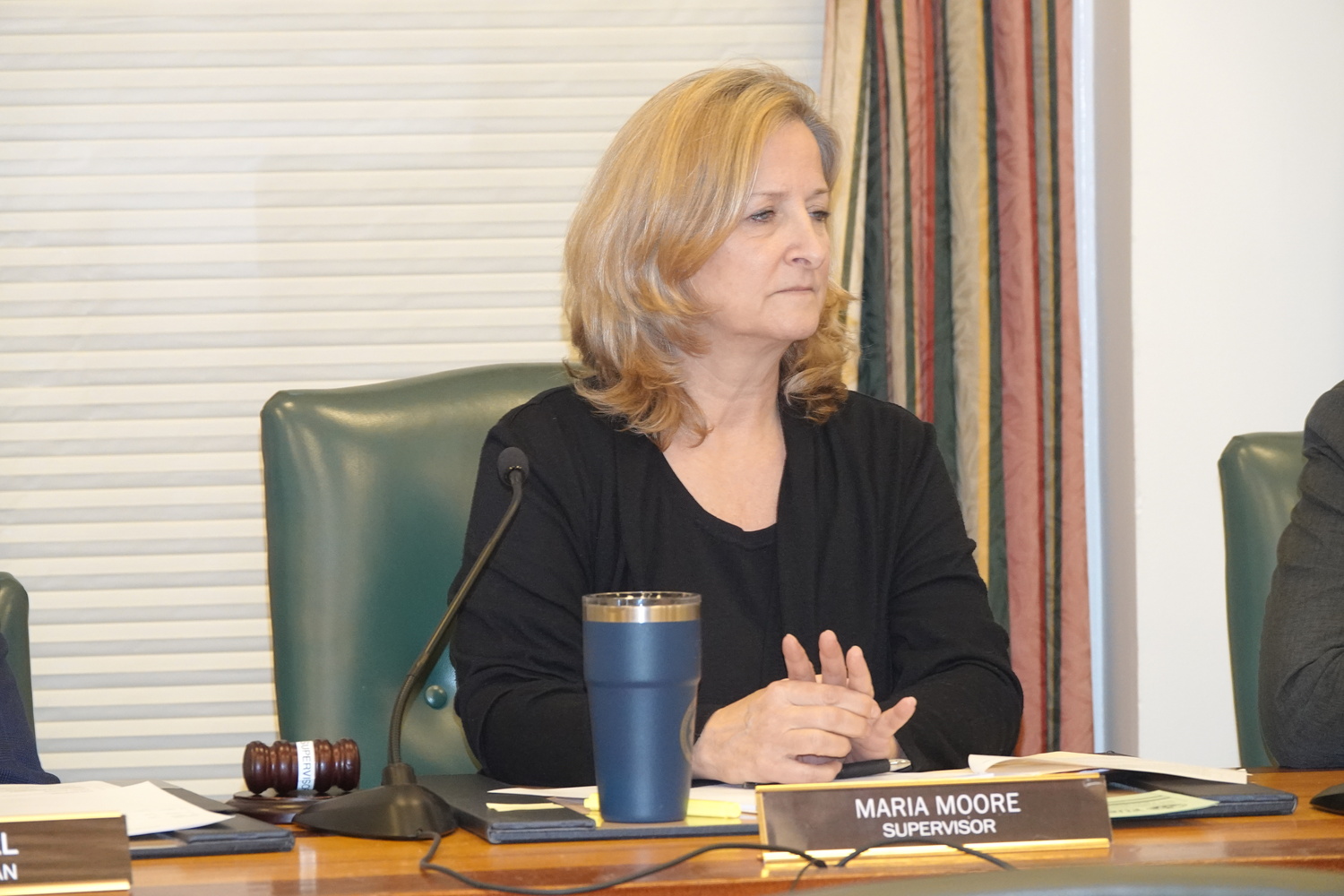
Supervisor Maria Moore said that the town's lawsuit intends only to ensure that there is responsible oversight of the construction of the gas station at Westwoods, and is not a sign of disrespect of the Shinnecock Nation or its ancestral history. MICHAEL WRIGHT
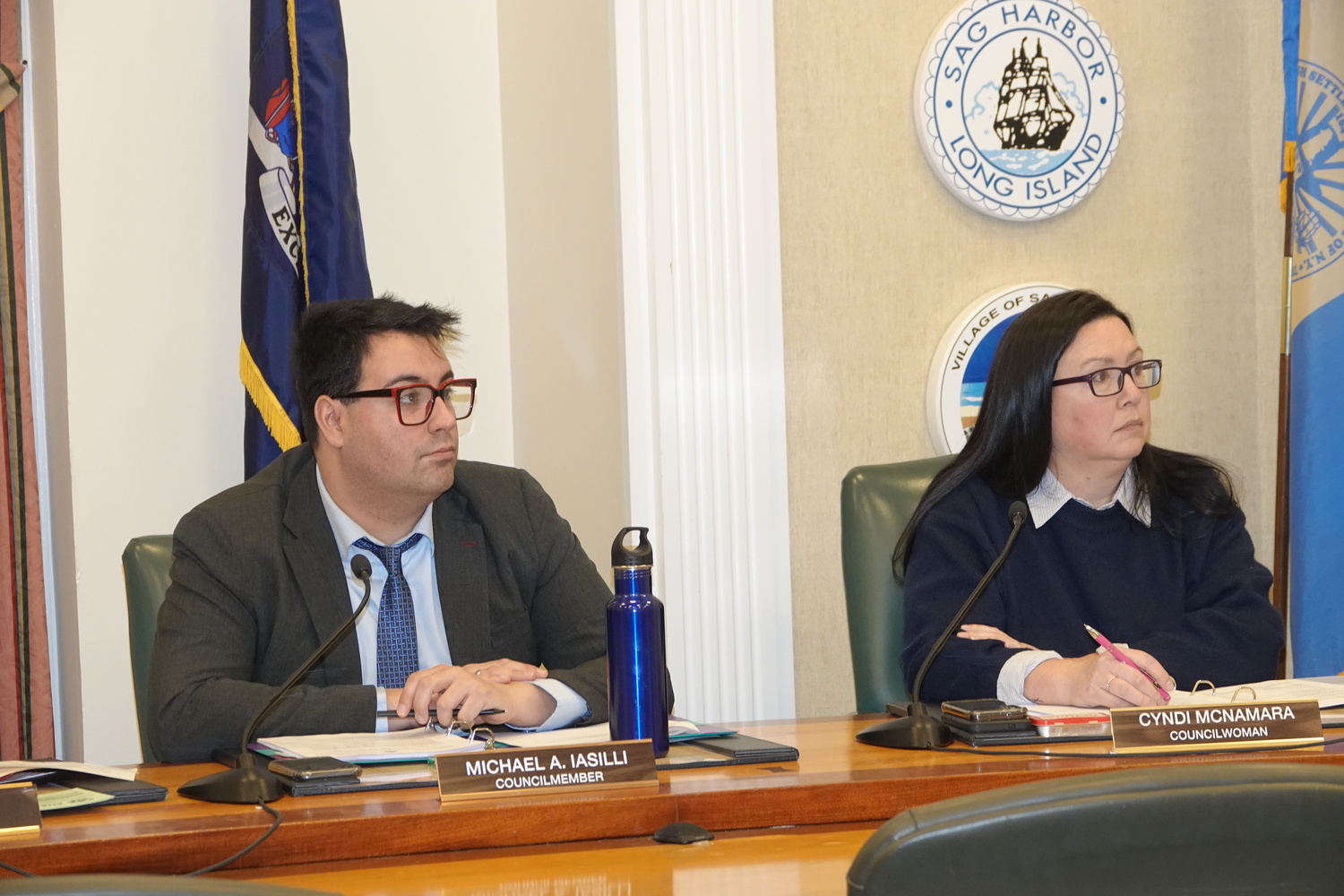
Councilwoman Cyndi McNamara and Councilman Michael Iasilli. MICHAEL WRIGHT
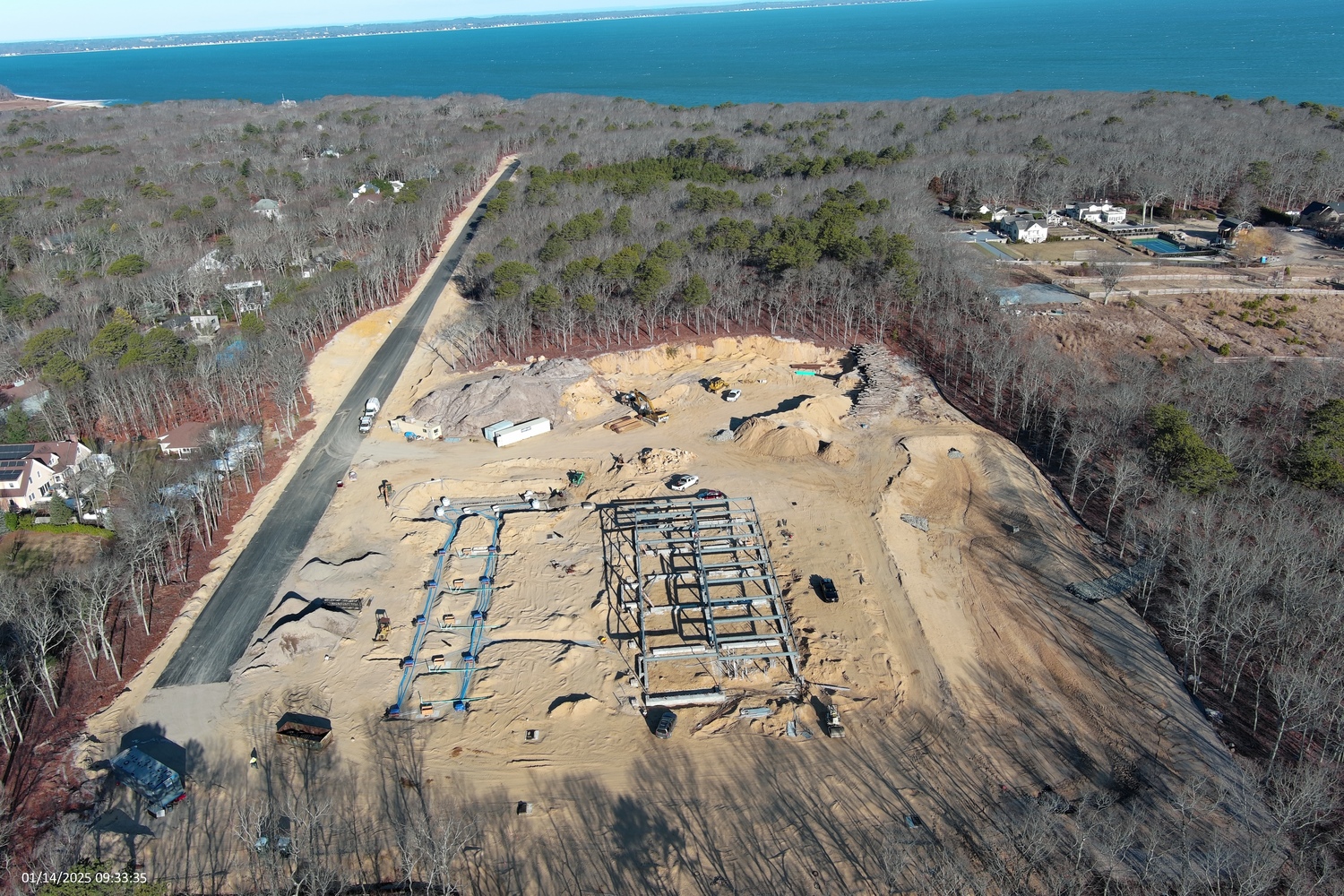
Construction crews began erecting the steel framing of the building at the Shinnecock Nation's gas station and travel plaza in Hampton Bays.
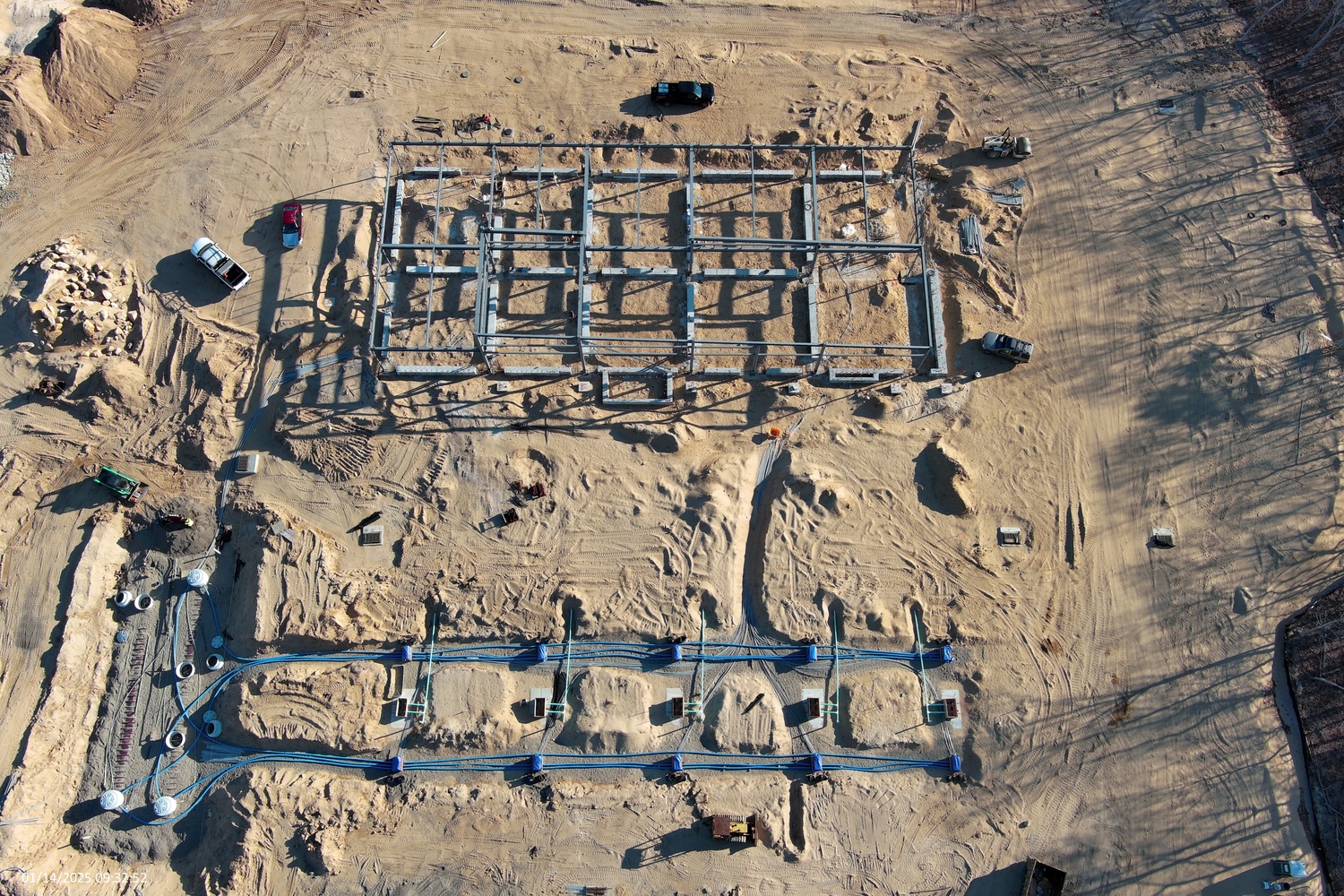
Construction crews began erecting the steel framing of the building at the Shinnecock Nation's gas station and travel plaza in Hampton Bays.
Members of the Shinnecock Nation Council of Trustees were invited to attend Governor Kathy Hochul’s annual State of the State address in Albany this week.
Tribal leaders said they welcomed the invitation as a sign that the governor is serious about building better relationships with the state’s sovereign Indigenous nations.
But at the same time, tribe members continued to lambaste the Southampton Town Board for what it saw as an assault on the Shinnecock people and denial of their history through the town’s filing of a lawsuit to halt the tribe’s construction of a gas station on tribal land in Hampton Bays that the town says should not be seen as sovereign territory.
“It really seems like she is sincere about wanting to foster better relationships between New York State and tribal leaders from every nation in the state,” Council of Trustees Chairwoman Lisa Goree said of Hochul’s overture to the Shinnecock and other Indigenous leaders. “This will be our third time meeting with the governor in the last six months. It’s very encouraging.”
It is the first time that the tribe’s leadership has been invited by a state governor to attend the State of the State address. Six of the seven members of the council attended the speech, Goree said. Other Indigenous nations’ leadership councils also attended.
“This has been in keeping with her recent actions to form better relations with the state’s tribes,” Vice Chairman Lance Gumbs said. “We have been trying to establish this government-to-government working relationship that we’ve often talked about but has never manifested itself in New York. Other states do a much better job of working as equals with their tribal governments.”
Goree and other Shinnecock leaders were invited by the governor last summer to meet the king and queen of the Netherlands on the occasion of the 400th anniversary of the first European settlements, by the Dutch, in what is now the New York metro area.
Hochul then hosted an Indigenous nations summit in September in Albany, to which the leaders of all of the state’s Native American tribes were invited to a daylong roundtable with the governor’s office and the heads of nearly every state department.
Goree said that at that gathering, tribal leaders met with Maria Therese Dominguez, the commissioner of the State Department of Transportation. That meeting has led to a regular line of communication between the tribe and the DOT since, even though the tribe has been embroiled in a five-year lawsuit with the department over the erection of the electronic billboards on Sunrise Highway in 2019.
And last year the Shinnecock asked for the state’s cooperation in creating an exit ramp from the highway into the gas station they began constructing last spring and hope to open for business by this coming summer.
Without a highway access, the 30-pump gas station, which hopes to sell diesel to larger trucks, will only be accessible down narrow and winding Newtown Road — a prospect with economic implications for the tribe and quality-of-life implications for residents of the neighborhoods along the roadway.
“True tribal-state partnerships would benefit the state as well as the tribes — the tribes can bring a lot of benefits to the table,” Gumbs said on Monday. “I’ve said to the governor: ‘We are not the enemy.’ There are examples all over the country where states and tribes are thriving together.”
While the current tribal leadership was in Albany seeking olive branches, some of the tribe’s recent past leadership were at Southampton Town Hall thrusting daggers.
“The town’s position that somehow they have dominion over land that has been in our control [since] prior to this town being formed and prior to settlers coming over from Europe is a slap in the face to the Shinnecock people,” Bryan Polite, the former council chairman, told the Town Board at a board meeting on Tuesday. “Calling us a public nuisance, claiming that we are destroying the forest while we’re surrounded by development, is just plain wrong. I’m here to say how disappointed I am with the majority of this board.”
Polite said that the board’s decision on December 19 to file a lawsuit challenging the tribe’s right to construct the gas station on a portion of the 79-acre property known as Westwoods has sowed disrespect of the tribe and fed a torrent of racist outbursts from members of the Hampton Bays community directed at the tribe in recent weeks that has incorporated some of the same language used in the town’s legal complaint.
“You chose to weaponize the judicial system against us,” another former council chairman, Randy King, added. “That’s what you did.”
The town’s lawsuit claims that while Westwoods is indisputably tribal lands that the town does not attempt to tax, the tribe cannot proceed with development projects without town oversight of building, safety, and fire code requirements like a nontribal developer would. The town’s lawyers’ arguments to a state court claim the tribe had lost “aboriginal title” to the land centuries ago because of two much-disputed 17th century deed transfers — which the tribe say were not only illegal at the outset but are also now being wholly misinterpreted in the narrower modern view of the lands they purported to convey.
Supervisor Maria Moore said that the town’s decision to sue — only three of the five Town Board members voted in favor of pursuing the legal challenge — was focused solely on the use of the Westwoods property and represented no official diminution of the tribe’s status in the community.
“It should not be interpreted as disrespect to the nation,” she said. “We are responding to the fact that there does not seem to be any oversight of the project other than the self-regulation of the nation. The concern is when these very large gas tanks are brought in and installed … in our opinion, somebody should be overseeing it.”
Moore said she does not see the dispute over Westwoods as any impediment to the town’s continuing to work with and to help the nation. She noted that the town is still working on acquisitions of former tribal burying grounds in Shinnecock Hills using the Community Preservation Fund.
Councilwoman Cyndi McNamara, who voted with Moore and Councilman Bill Pell to commence the lawsuit against the tribe, addressed Polite directly and said that the tenor of the relationship between the town and the tribe in discussions of the gas station had been more collaborative before he stepped down as tribal chairman in March.
“Bryan, under your leadership there was more dialogue and more discussion and more of a spirit of collaboration,” McNamara said. ‘When you left, it became: You are no longer here and whatever you had said was no longer on the table.”
Town officials have said that though Goree and Gumbs and other tribal trustees have met with the town since Polite stepped down, the tribal representatives have steadfastly refused to provide the town with any detailed documentation of the construction and environmental or fire safety standards that are being followed in the construction of the gas station. Gumbs has said that when tribal leaders met with town officials they “answered all their questions.” Town officials say none of their questions about the project were answered substantively.
McNamara noted that the town hesitated to go to court, waiting many months while Hampton Bays residents excoriated the board for inaction.
She said that her decision to support the lawsuit was a matter of concern over the role the gas station may play in the Hampton Bays community if it is built and opened without the town having had any understanding of the parameters under which it was built.
“At the end of the day, it’s my friends and family that I have to send up there as first responders, and, God forbid something happens, how do I answer to their families that it’s not our business to make sure that what went in there was safe — or it’s not our business to even see a plan or know what’s happening up there.
“We’re all a community and we have to work together to make sure that everybody prospers and that everybody is safe and that’s all this board wanted from the very beginning.”
Councilman Michael Iasilli, the lone member of the current board who voted against filing the lawsuit, said that he hopes the town and the nation can continue building better and more cooperative relationships independent of the court proceedings.
There has not actually been a court appearance in the case yet and tribal leaders say they have not yet been served with the town’s lawsuit.
“I do hope that we can continue to enhance the relations between the town and the nation,” he said. “After the years of injustice, displacement and distrust, we have to work on it. We have to get better at it.”


 Michael Wright on Jan 15, 2025