


 3 Photos
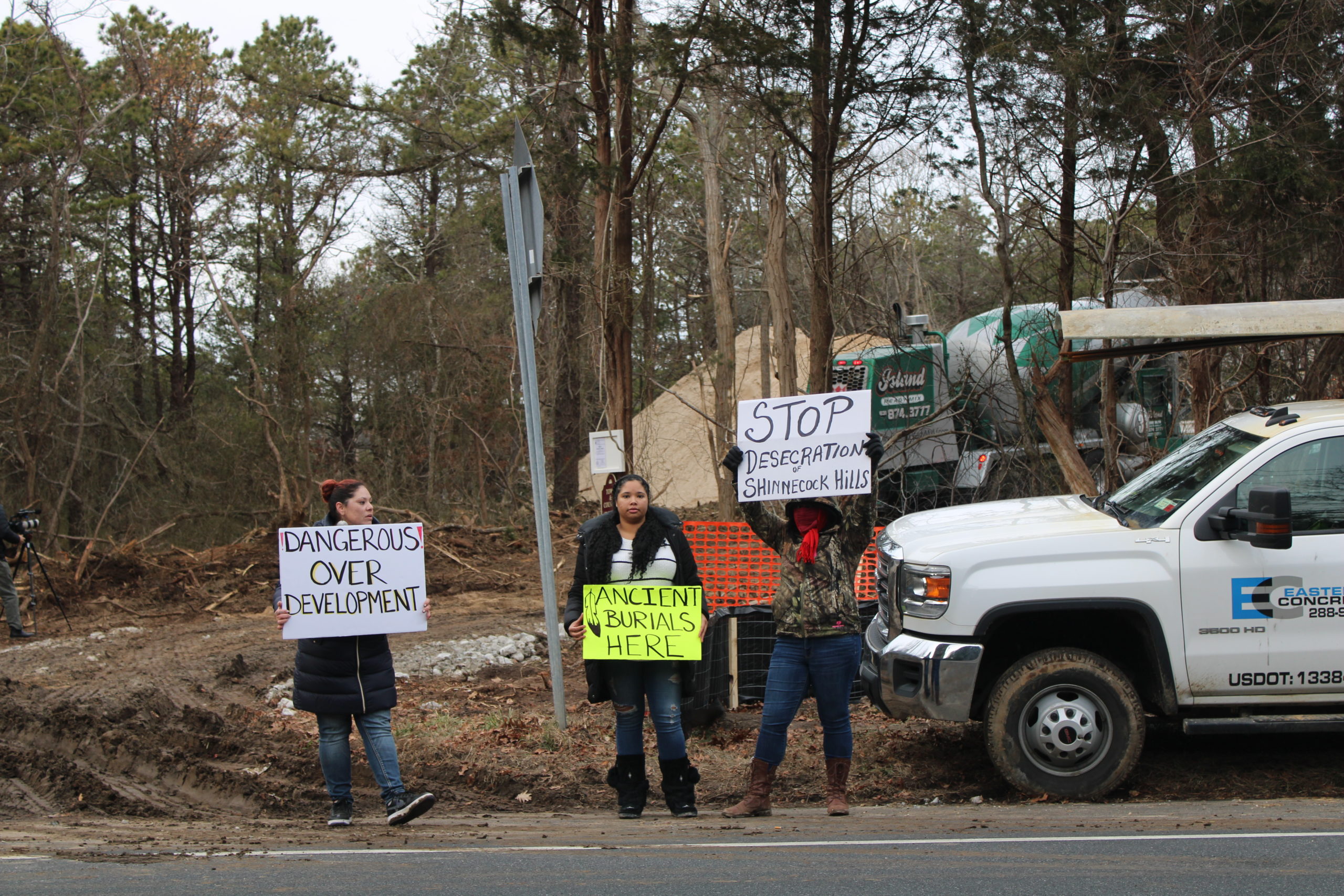
Shinnecock Tribal Members protest in front of a property being built on Montauk Highway in Shinnecock Hills that is said to have ancient human remains.
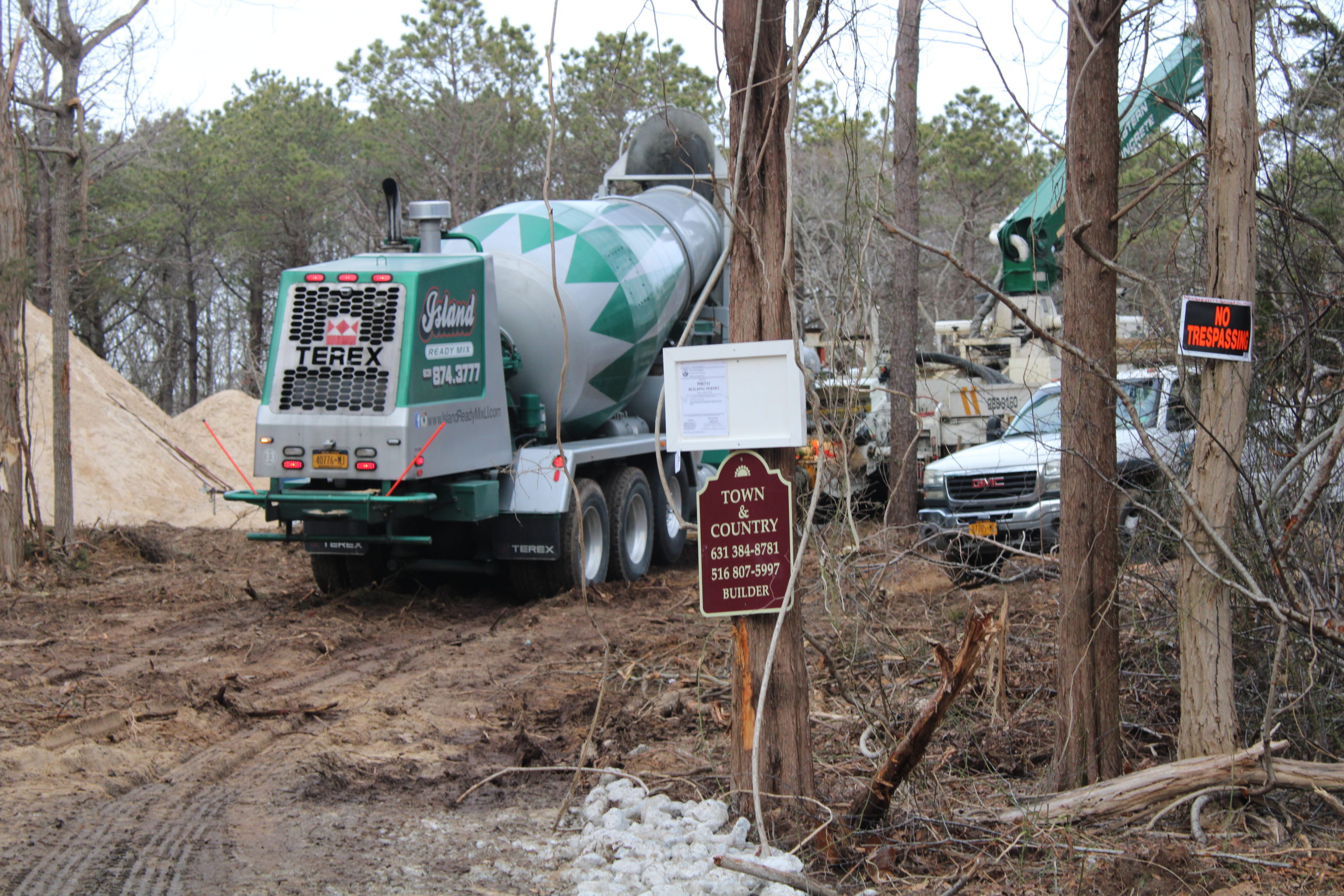
Shinnecock Tribal Members protest in front of a property being built on Montauk Highway in Shinnecock Hills that is said to have ancient human remains. RACHEL VALDESPINO
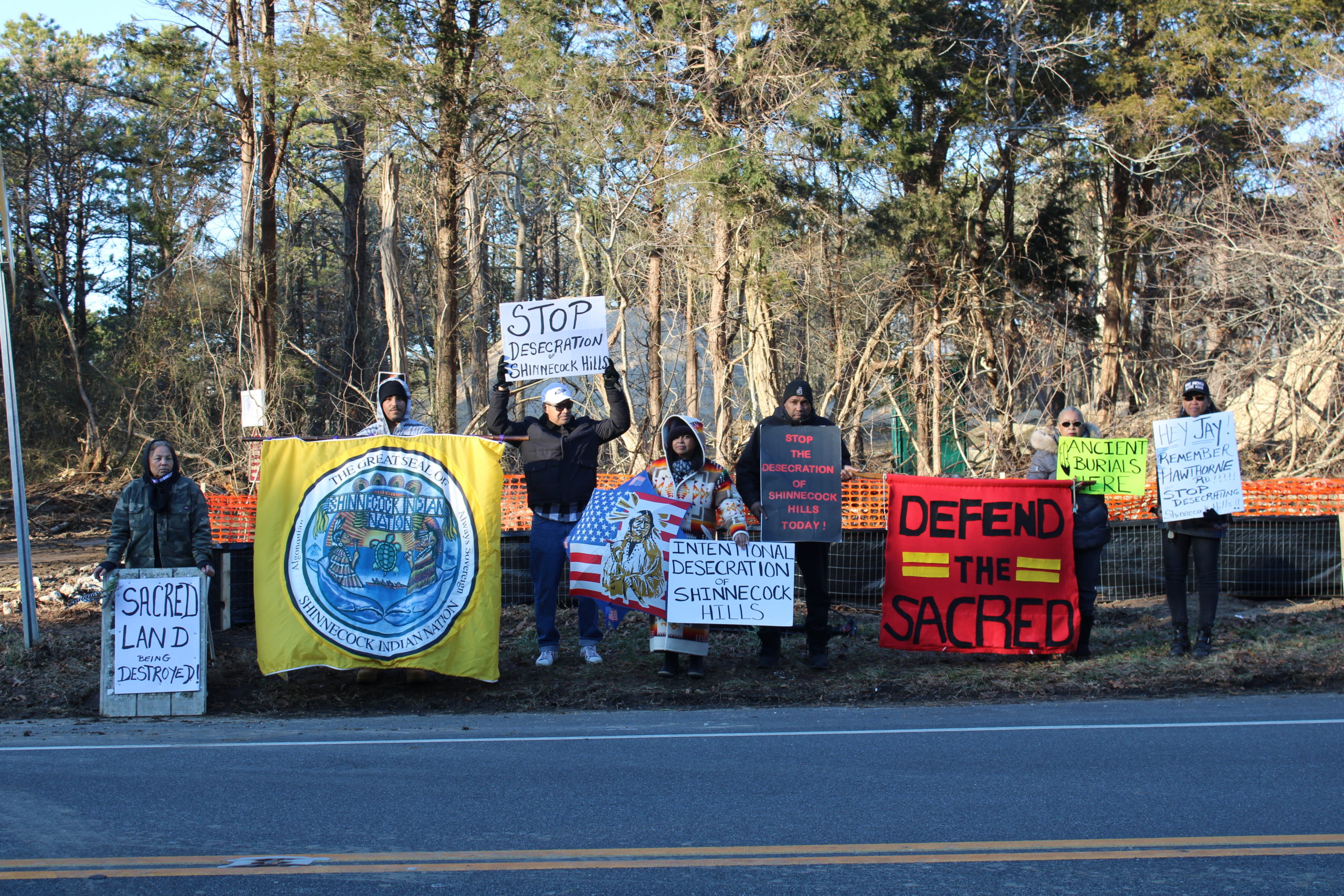
Shinnecock Tribal members gather on Montauk Highway to raise awareness about the home being built on Sugar Loaf. RACHEL VALDESPINO
The Shinnecock Nation has been continuing a fight to preserve what remains of undeveloped land thought to contain ancient Native American burial grounds.
Last week, members of the Nation learned that a parcel of land in Shinnecock Hills known as Sugar Loaf had been sold and approved for the construction of a new home. Previously, they said they had understood that the land was slated to be preserved.
Tribal members said the area was sacred to the tribe, being a well-known burial site for their ancestors, as well as other Native American tribes. However, officials say they were never notified that construction was going to happen.
“With the [Shinnecock] Hills, it’s adding insult to injury — because, obviously, we have our stance that the Hills were taken illegally. Taking the land is one thing — desecrating it is something else,” Shinnecock Tribal Chairman Bryan Polite said. “I would ask the question: What would anybody feel if their ancestors’ bones were being defiled and desecrated?”
Shinnecock tribal members began holding protests at the site on Monday, December 30, after developers broke ground on the proposed construction a day earlier. The protests are in their second week.
In response, town officials said they have engaged the landowner about the possibility of purchasing the parcel using Community Preservation Fund revenues.
“We found out about this by going to the site and seeing the building permit. We saw that the town had authorized a subdivision of the area in February 2019,” said Tribal Attorney Tela Troge. “That land is designated as a critical environmental area by the New York State Department of Environmental Conservation and the town — it’s supposed to trigger a number of archaeological studies and environmental studies.”
“This is a human rights issue — this is why we have graves protection,” said Shinnecock member Chenae Bullock. “These are not just Shinnecock burial grounds. We all know that there has been archaeological research that there is Clovis culture, Orient culture — it’s archaic.”
Ms. Bullock had been present at the gathering in front of Sugar Loaf since it began on December 30. She pointed out that December 30 is the anniversary of the Circassian shipwreck — a tragedy that occurred in 1876 resulting in the loss of 10 Shinnecock members. “It’s the day of remembrance from when we lost Shinnecock men in 1876 — then on the same day, we found out that they were building on our ancestral burial grounds.”
Shane Weeks, co-chairman of the Shinnecock Graves Protection Warriors Society, said that the land in question is also considered a culturally sensitive area.
“This has been an ongoing battle for a couple of decades,” he said. “Part of our issue is that we know that those are burial grounds, and there’s still no laws in place in Southampton to penalize private landowners if they find bones.”
He noted that if someone were to disturb the dunes or remove something from the ocean that is prohibited, there’s a fine, but “there’s no felony charge” for digging up ancient human remains.
“It’s very hurtful for the Nation. It’s more than disappointment and anger — it’s really hurtful that our ancestors can’t rest in peace,” said Mr. Polite.
In response to the construction, several Shinnecock officials, including Mr. Polite and Ms. Troge, met with Southampton Town Attorney James Burke and CPF Manager Lisa Kombrink on Thursday, January 2, at the Southampton Town CPF office.
“They said they’re going to prioritize the parcel in terms of making it eligible for CPF funding, and that they’re going to work with the board to protect the area and make it a priority for preservation using the CPF fund,” said Ms. Troge. “We need notification about Sugar Loaf, because it is so sacred to us.”
Ms. Kombrink said that the group made a plan to respect the broader Shinnecock Hills area to create a list of available vacant properties and review with them and set some priorities. In respect to the property in question, she has asked the Town Board to obtain an appraisal.
“We are going to try to identify all remaining vacant buildable parcels,” Mr. Burke said. “We will then sit down with everyone and review those and begin to prioritize them.”
He estimates it will take a week or so to identify the land and create an accurate map of the area. The town will then check to see if there are any active permits or offers made for those lots.
“The key thing to moving forward is that the Nation has notice of any possible development,” said Mr. Burke. “We want them to always have an input, and we can then decide and talk with them and make sure they have a say. We will send a notice automatically if anything arises.”
Mr. Burke said that there was an archaeological report for the subdivision of Sugar Loaf. He believes that the space where the home is being built is just north of the designated Sugar Loaf area burial ground, but he added that it’s close enough that it should have more review.
The town can’t issue a stop-work order for the site, as the subdivision went through a full review by the Southampton Town Planning Board.
“What they’re basically saying was that it was an oversight, because back when they did the Hawthorne Road acquisition, there was supposed to be a joint committee set up, where if there was development in that area, we would be contacted and consulted — and that didn’t happen,” said Mr. Polite.
“What the conversation was, was to go ahead and pass something so it becomes town law, instead of a promise — it will be legislation. The town did start drafting legislation for graves protections, and they were very receptive to working with the Nation to pass something meaningful.”
Southampton Town Supervisor Jay Schneiderman said that the town has been working on purchasing pieces of land in the area that are culturally sensitive for the Shinnecock Nation. However, land that is labeled as culturally sensitive does not mean it cannot be built upon, he noted.
“The land in question is not protected from development,” he said. “We are in discussion with the owner, and I also worked on legislation establishing procedures if human remains are encountered. I gave that to the Tribal Council to review,” Mr. Schneiderman said.
“We have been buying many lots in this area because of the cultural sensitivity of the area. Shinnecock Hills were used as sacred burial grounds by the Shinnecock. Over time, much of the land has been developed as housing. The town should have a system in place that would require an archaeological review prior to any excavation in that area. The town has 3D imaging equipment for ground penetration. We should know if bones are present prior to disturbance. An archaeologist should be present during excavation and a designated member of the Shinnecock Nation.”


