



 6 Photos
The property in question. DANA SHAW

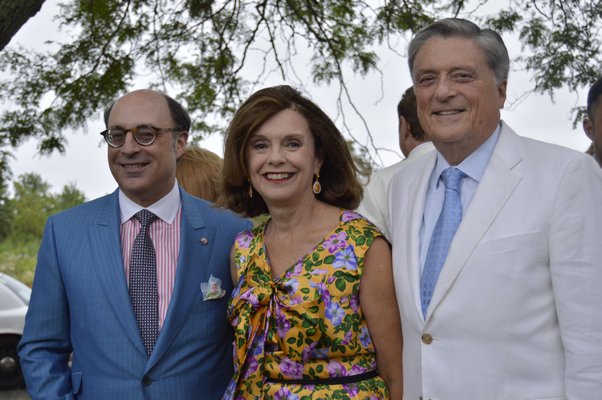
Dick Haile and Jeremy Dennis at the protest on Montauk Highway on Tuesday. DANA SHAW
Members of the Shinnecock Indian Nation protested the continued development of the area of Shinnecock Hills known as Sugar Loaf

which they claim as sacred ancestral territory. DANA SHAW
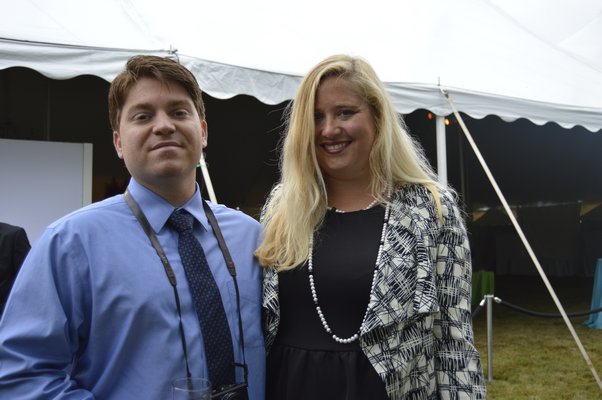
Tela Troge at the protest on Montauk Highway on Tuesday. DANA SHAW
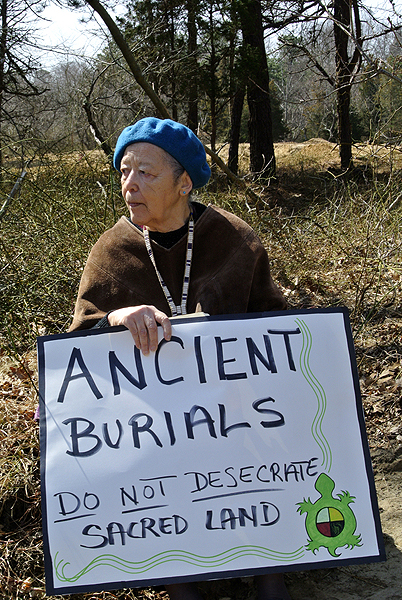
Members of the Shinnecock Indian Nation protested the continued development of the area of Shinnecock Hills known as Sugar Loaf
Members of the Shinnecock Indian Nation mounted a small protest Tuesday morning, objecting to new development in the area of Shinnecock Hills known as Sugar Loaf, which they have long claimed as sacred ancestral territory containing numerous ancient native gravesites.
A cluster of tribe members gathered at the site of a new residential construction project on Tuesday. No work was going on at the site on Tuesday, but a new driveway had been cut into the property and excavation had begun where the house’s foundation will go.
“This land is part of our ancestral history and remains hallowed and sacred to the Shinnecock Indian Nation,” said a statement released by the tribe on Tuesday morning. “Tribal members are protesting more development in this area where many ancient Shinnecock cultural and funereal artifacts have been uncovered.”
A few hours later, before the Town Board, some of the same tribe members who had held signs on Montauk Highway that morning sat solemnly listening to the Town Board members debate legal particulars of state legislation to codify strong protections of Native American grave sites. The board was considering a memorializing resolution—simply an official voicing of support by the board, carrying no legal weight—but one that has been a topic of divergence on the board for months.
The new house that drew the protest on Tuesday is going up in the same area where the development of three lots on land that the Shinnecocks say were their ancestors’ burial grounds centuries before European settlers arrived in what is now Southampton and Hampton Bays drew outrage and protests from the tribe in the late 1990s. That property was near but not within a recognized and protected Native American burial ground known as the Sugar Loaf Hill Shinnecock Indian Burial Grounds.
The tribe has been petitioning the town for formal protection of ancient burial sites, both known and yet to be discovered, since 2005, following a years-long battle over remains found during the clearing of the former Hotel St. James property in Water Mill.
State Assemblymen Fred W. Thiele Jr. and Steve Englebright introduced a bill providing strict protections for remains to the State Legislature that year. It has yet to be brought up for a vote.
In the boardroom on Tuesday, members of the tribe implored the board to take action on their behalf.
“This hole has been dug in the hills for another residence,” tribe member Becky Genia said, proposing that the hole dug for the foundation should instead be used to return the 16 sets of remains of Shinnecock ancestors, which have been uncovered by development over the years, to the hills that bear their name. “You may not desecrate our hills anymore.”
Councilwoman Bridget Fleming again proposed the memorializing resolution she has been pressing for months, throwing the town’s support behind the state legislation. With the tribe members looking on, Ms. Fleming said she planned to insist that the resolution be voted on by the board, even while acknowledging that she did not think it would garner enough votes from other board members to pass.
Other board members raised doubts about the state legislation, noting that since the bills have not yet been brought up for debate, they could still be modified, and the town might not necessarily agree with the final proposal. But the main hang-up, as it has been for seven years, continued to be that a provision in the legislation says any human remains discovered must, in “practicable” cases, be left in the ground where they lay—a wrinkle that attorneys and business interests have said is too vague and could disrupt business, unfairly restrict property owners and violate constitutional rights.
“The very crux of the state law is that the remains have to stay in place, on the site, which is what we haven’t been able to come to consensus on,” Councilwoman Christine Scalera said. “I still think we need a town policy, but I realize we’re at an impasse about the removal from the site.”
Councilman Jim Malone said that the legal hang-ups are unfortunate, because he thinks there is strong support for an official policy regarding native remains. Ms. Fleming was nonplussed and took Mr. Malone and Ms. Scalera to task about their steadfast opposition to the mostly symbolic resolution. “It depends on what you mean by support—whether you favor the protection of remains over property rights,” Ms. Fleming said. “That’s where the rubber meets the road. It’s not real support if you can’t even vote for this.”
The resolution failed, with only Ms. Fleming and Ms. Throne-Holst voting in favor. Ms. Scalera voted no, and Councilman Chris Nuzzi and Mr. Malone both abstained, with Mr. Malone explaining that he could not vote for a resolution expressing support for the state bills when he does not know what they will contain if they are ever adopted.
Ms. Fleming nodded to the respect and reverence given to history just moments earlier by the Town Board, which granted landmark status to two North Sea Road homes, originally built in the 1700s. Yet, she noted, the board could not find a way, after years of appeals from the tribe, to formulate a policy on protecting the remains of the area’s first residents.
“I think there’s a certain cruel irony in today’s meeting. We’re landmarking two structures from the 18th century, a hundred years after the Europeans settled here and thousands of years after Native Americans arrived,” Ms. Fleming said. “It’s frustrating to me that we are unable to come to consensus about protecting Native American burial grounds. We’re talking about the inhabitants of our land. We’re talking about human remains.”


