


 2 Photos
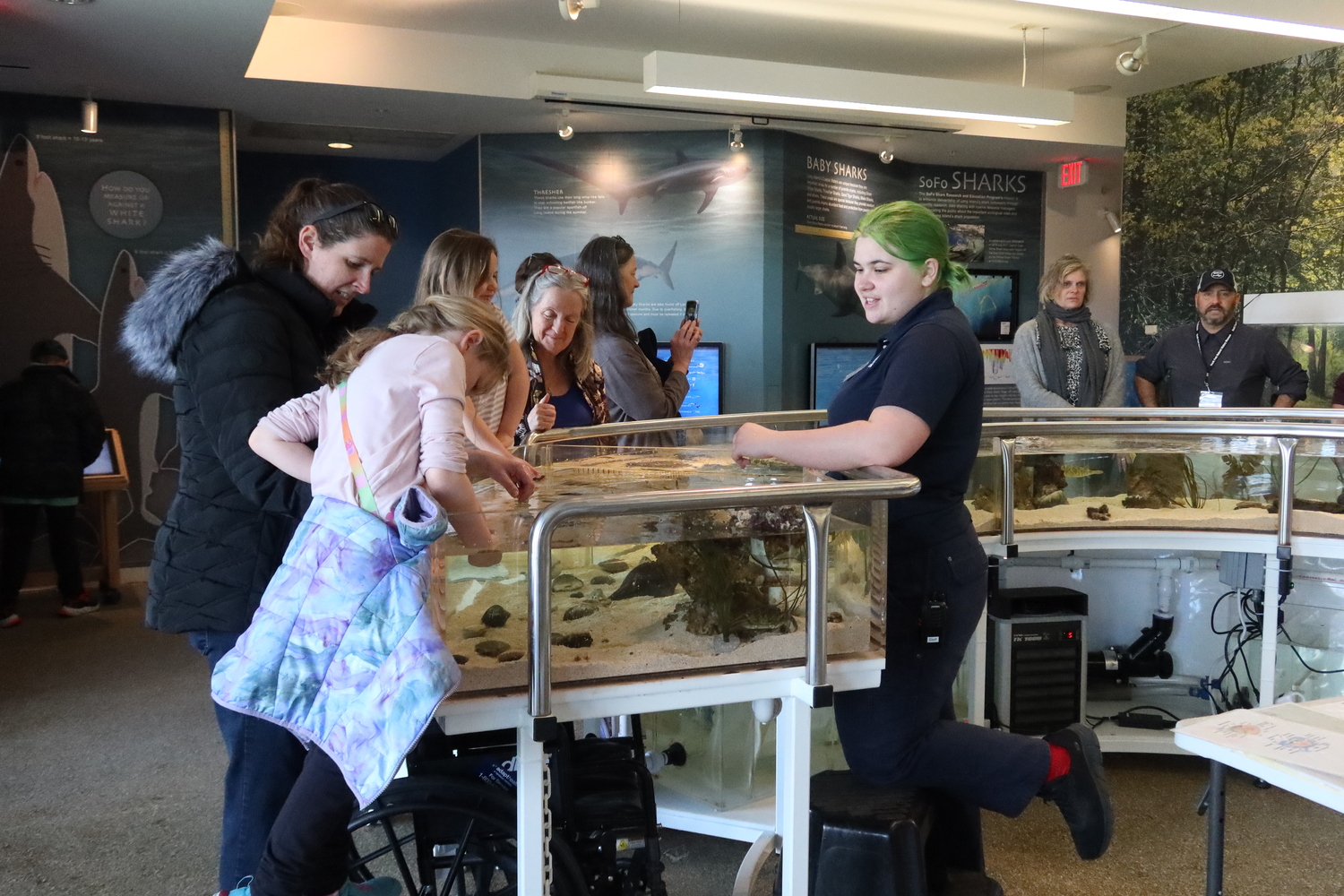
Moe Kennedy, an environmental education with the South Fork Natural History Museum shows visitors the new marine tank display. COURTESY SOFO
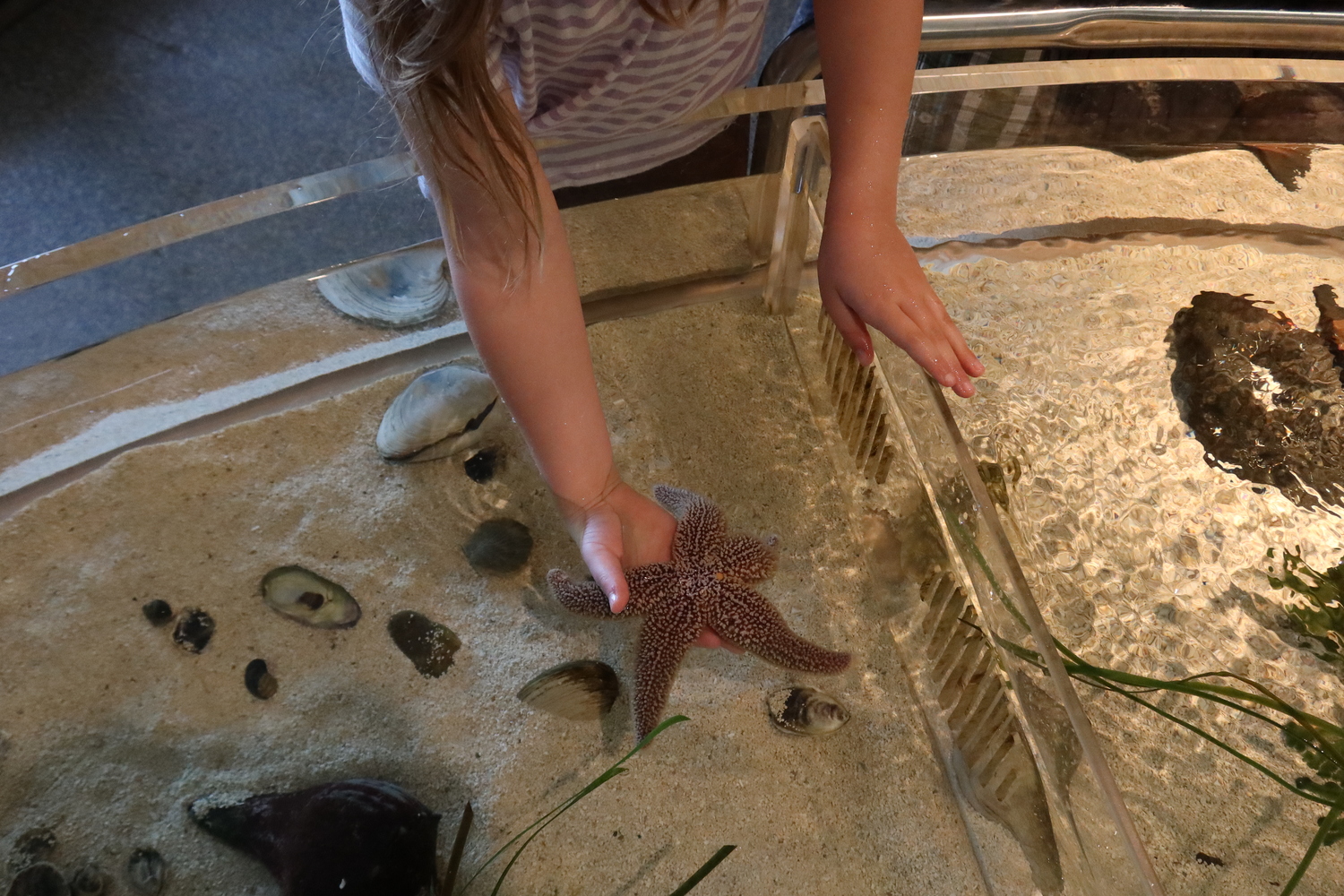
A young visitor to the South Fork Natural History Museum handles a starfish in the museum's marine tank display. COURTESY SOFO
Last month, the South Fork Natural History Museum held an opening ceremony to mark its latest addition, a marine tank exhibit in its main display hall, that it purchased thanks to a pair of grants, one for $30,000 from the Holloman Price Foundation and a second for $20,000 from Suffolk County.
The 200-gallon tank provides habitat for a variety of saltwater species, from clams, crabs, and scallops to pufferfish, blackfish and sea bass.
The exhibit, the most popular in the Bridgehampton museum, gives visitors an up-close-and-personal view of life in Shinnecock Bay, said Frank Quevedo, the museum’s executive director.
The new tank has been paired with the museum’s original touch tank, where museum staff offer schoolchildren the chance to hold a clam, crab or other marine creature. The tank is also wheelchair accessible.
Quevedo, who has been SOFO’s director since 2010, said the museum was state-of-the-art when he took over, but that it has begun to show its age here and there.
“About a year or two before COVID, one of my objectives was to get a new marine tank,” Quevedo said. He thanked the Holloman Price Foundation and the county for their generosity.
When the tank, which was installed in December, was dedicated, Suffolk County Legislator Ann Welker was one of those who attended.
Quevedo said the museum originally planned for the new tank to replace the older touch tank, but Quevedo said since the museum often gets large crowds, especially when schools visit, it made sense to combine the two into a larger display.
The marine tanks are surrounded by other displays with live turtles and elusive salamanders as well as other displays with models of owls, opossums and other inhabitants of the South Fork.
Quevedo said while the museum offers visitors a glimpse of what nature has in store for the curious, he said he liked to encourage people to go outside and get to know the region’s many different habitats, from ocean beaches to salt marshes, vernal ponds, woodlands, and meadows.
“We are lucky to have this in our backyard,” he said. “You can travel all over the world and, still, the East End of Long Island is one of the most beautiful places on Earth.”


 Stephen J. Kotz on Apr 29, 2025