


 1 Photo
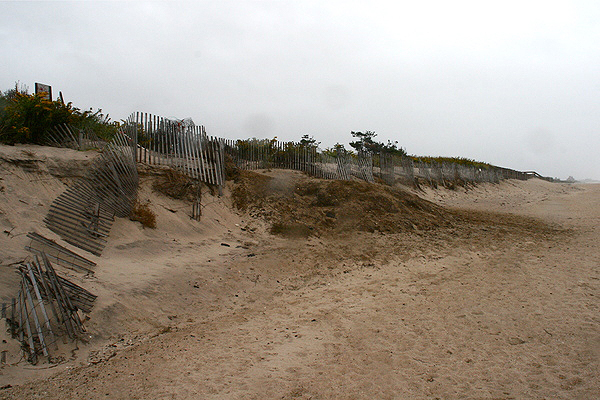
A major beach rebuilding project targeting six miles of oceanfront in Water Mill, Bridgehampton and Sagaponack, which proponents had hoped could be completed as early as this coming winter, will be put off until at least November 2013.
The delay will allow state legislation to exempt certain property owners from the special taxes that will pay for the $24 million project. Southampton Town Supervisor Anna Throne-Holst said this week that legislation is being pushed through the State Legislature by Assemblyman Fred W. Thiele Jr. that would exempt two properties, both of which have conservation easements on them, from the beach rebuilding project’s special taxing schedules. That legislation will not come up for a vote in the legislature until at least January, however.
Because of restrictions on dredging the ocean floor between March and November to protect migratory fish species, the delay would mean that the project would not be able to get under way until late next year.
Even without the delay, getting the massive dredging project rolling this winter would have been a challenge because of the time needed to solicit and review bids for the work from dredging companies, and the time needed to get the proper dredging vessels into local waters. But some of the organizers of the effort had been confident they would have gotten the work done.
“We were ready to go—I think we were going to be able to get it done December through March,” said Sagaponack resident Alan Stillman, one of the homeowners who marshaled the effort to form the special taxing districts and organize the planning of the beach reconstruction. “Sure, we’re a little disappointed. The longer you wait, the more risk you take. I’ve got my fingers and toes crossed that we have a nice, mild winter. If we have a big nor’easter, or a hurricane, that’s a real risk.”
Coastal engineering consultant Aram Terchunian, who helped design the beach reconstruction project, said there were strong hopes that the work could be done this winter. A major beach nourishment project slated for the ocean beaches in Hampton Bays near Shinnecock Inlet this winter could have helped with the logistics of getting a dredge vessel ready for the Water Mill-Sagaponack work, and kept costs down, he said. But a similar project scheduled for the West Hampton Dunes shoreline next winter might provide similar economies of scale and logistic benefits as well.
“It’s conceivable that the equipment being used for West Hampton Dunes is going to be more similar to what we need anyway,” Mr. Terchunian said. “You make plans because without plans you’ll never get anything done, but you have to be flexible, too.”
The proposed project calls for some 2.5 million tons of sand to be dredged from the ocean floor one to two miles offshore and pumped onto a six-mile stretch of beach running from Flying Point in Water Mill to the East Hampton Town line in Sagaponack. The dredging work, which will take three to four months to complete, will raise and widen the ribbon of beach in the project zone as well as create a more gradual slope for hundreds of feet below the surf line to dampen the erosive effects of waves breaking on the shoreline.
The project is to be paid for with bonds taken out by Southampton Town and repaid primarily with funds raised by a special tax levied only on the 141 oceanfront properties along the waterfront within the project zone. The town itself, which owns five public beaches within the project area, would pay about 11 percent of the total cost, a little less than $3 million.
The state legislation is intended to exempt two specific property owners, the family of Sagaponack farmer John C. White and the owners of the Bridgehampton Club, a private beach club and golf course. Both have conservation easements over the large swaths of oceanfront property they own, precluding any future development of the land.
The White family, which owns 24 acres of farmland with more than 1,000 feet of beachfront, was on tap to pay more than $60,000 a year in taxes for the project, an amount the family said it simply could not afford to pay. The beach club, while not claiming it would be unable to pay the tax, argued that it was unfair for it to have to pay to protect land that has been protected from development, particularly if the White family were going to receive an exemption.


