


 10 Photos
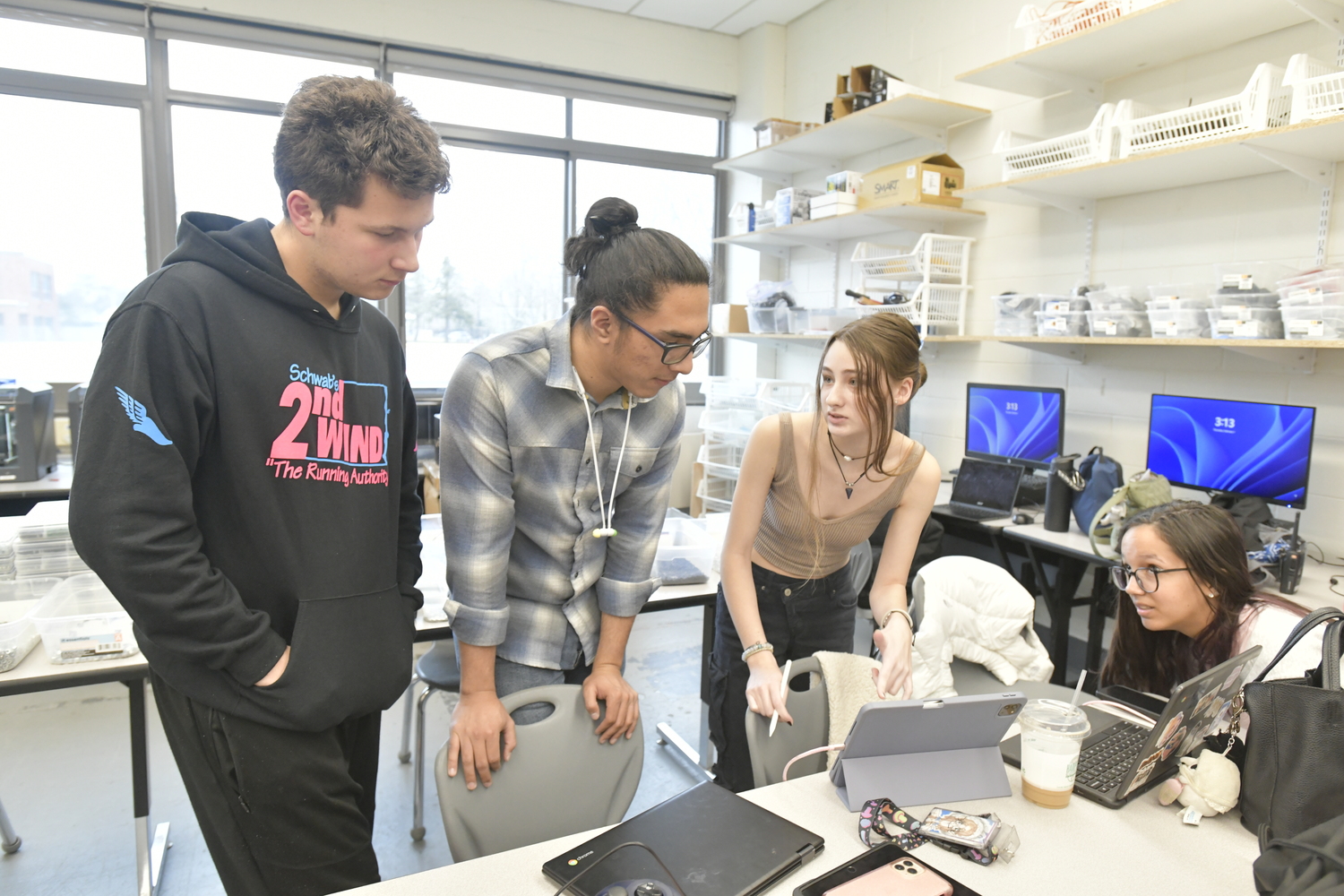
Members of the Southampton High School robotics team ready for their first competition. DANA SHAW
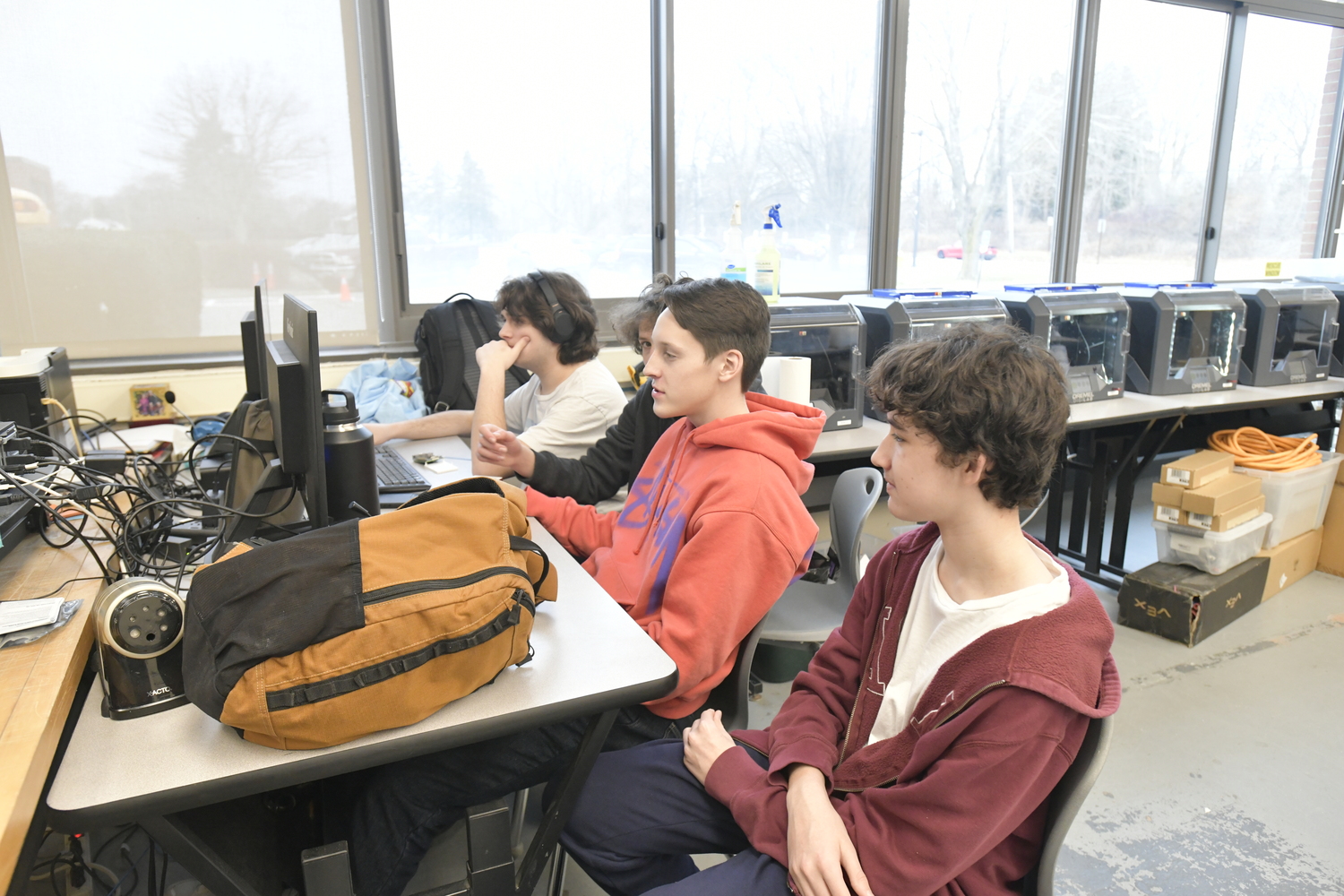
Members of the Southampton High School robotics team ready for their first competition. DANA SHAW
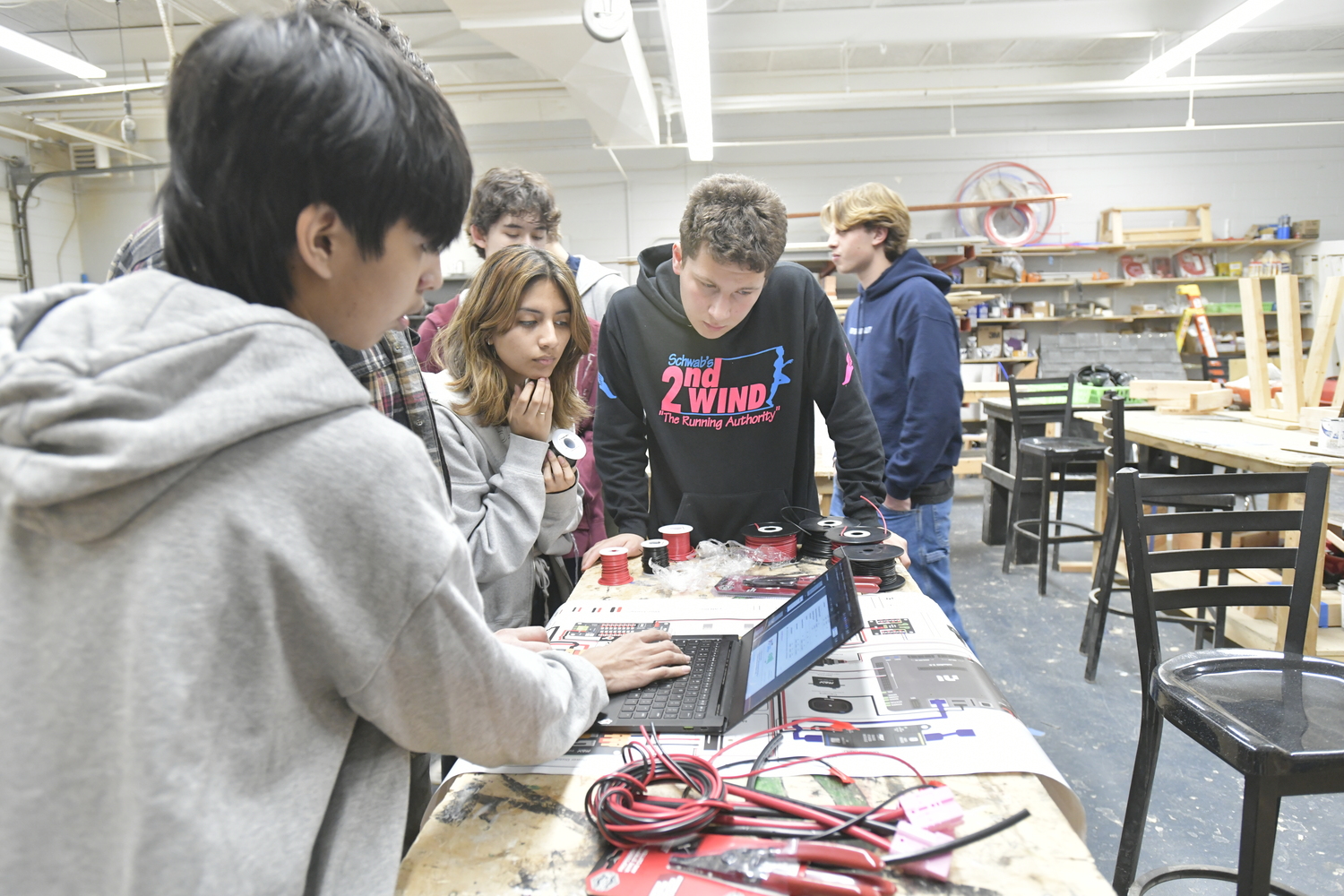
Members of the Southampton High School robotics team ready for their first competition. DANA SHAW
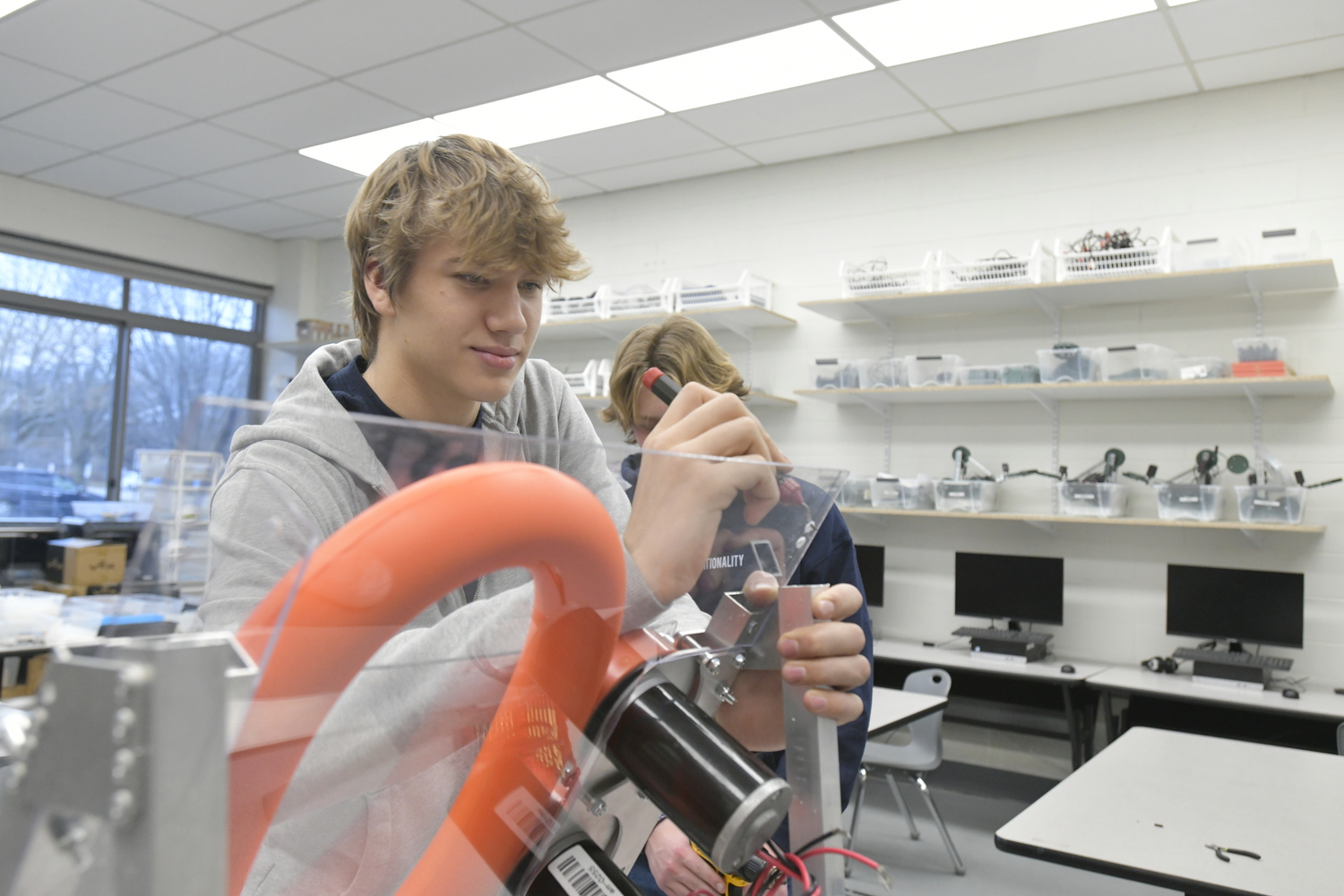
Team member Ralph Carballal works on the body of the robot. DANA SHAW
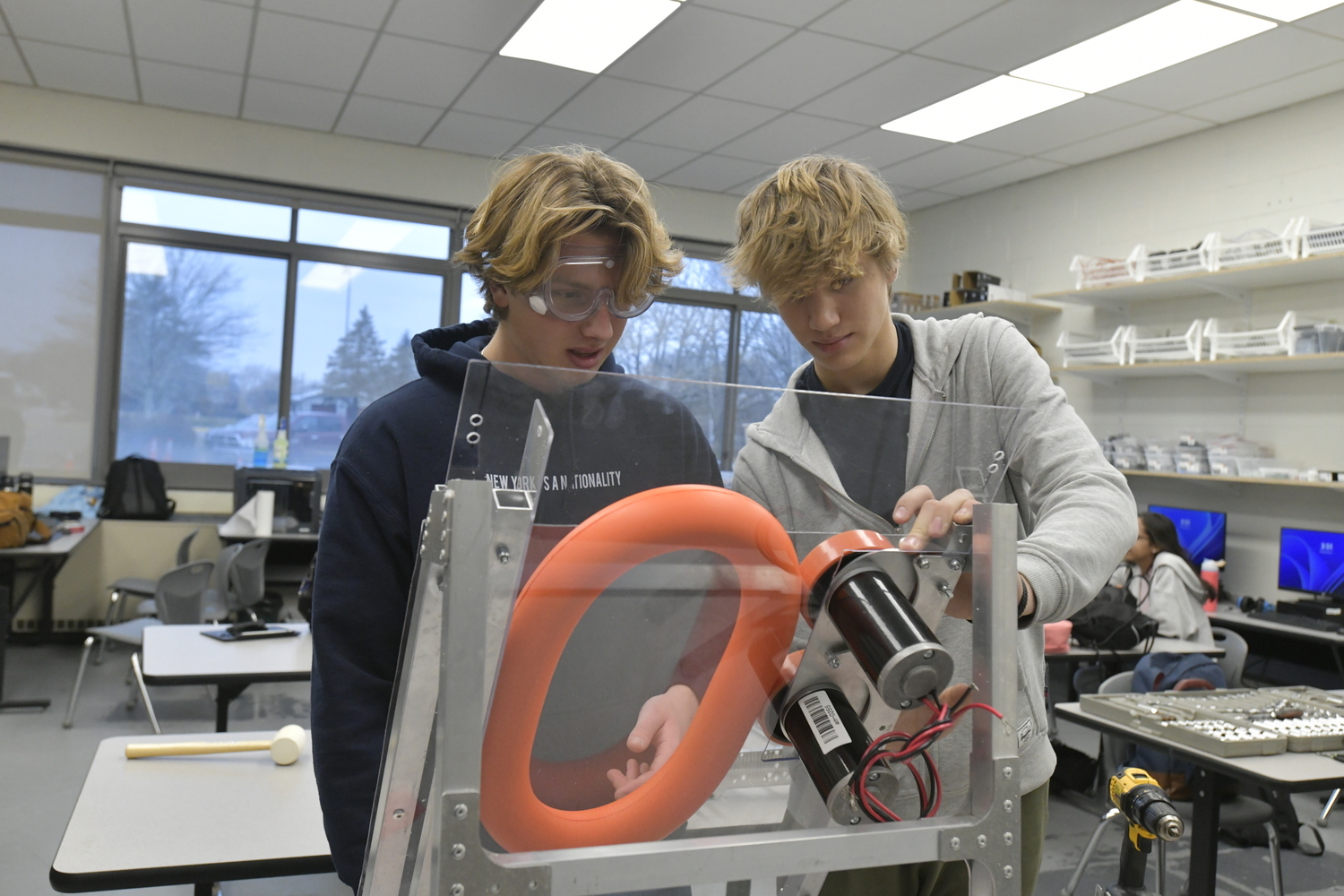
Team members Konstantine Lazarakis and Ralph Carballal works on the body of the robot. DANA SHAW
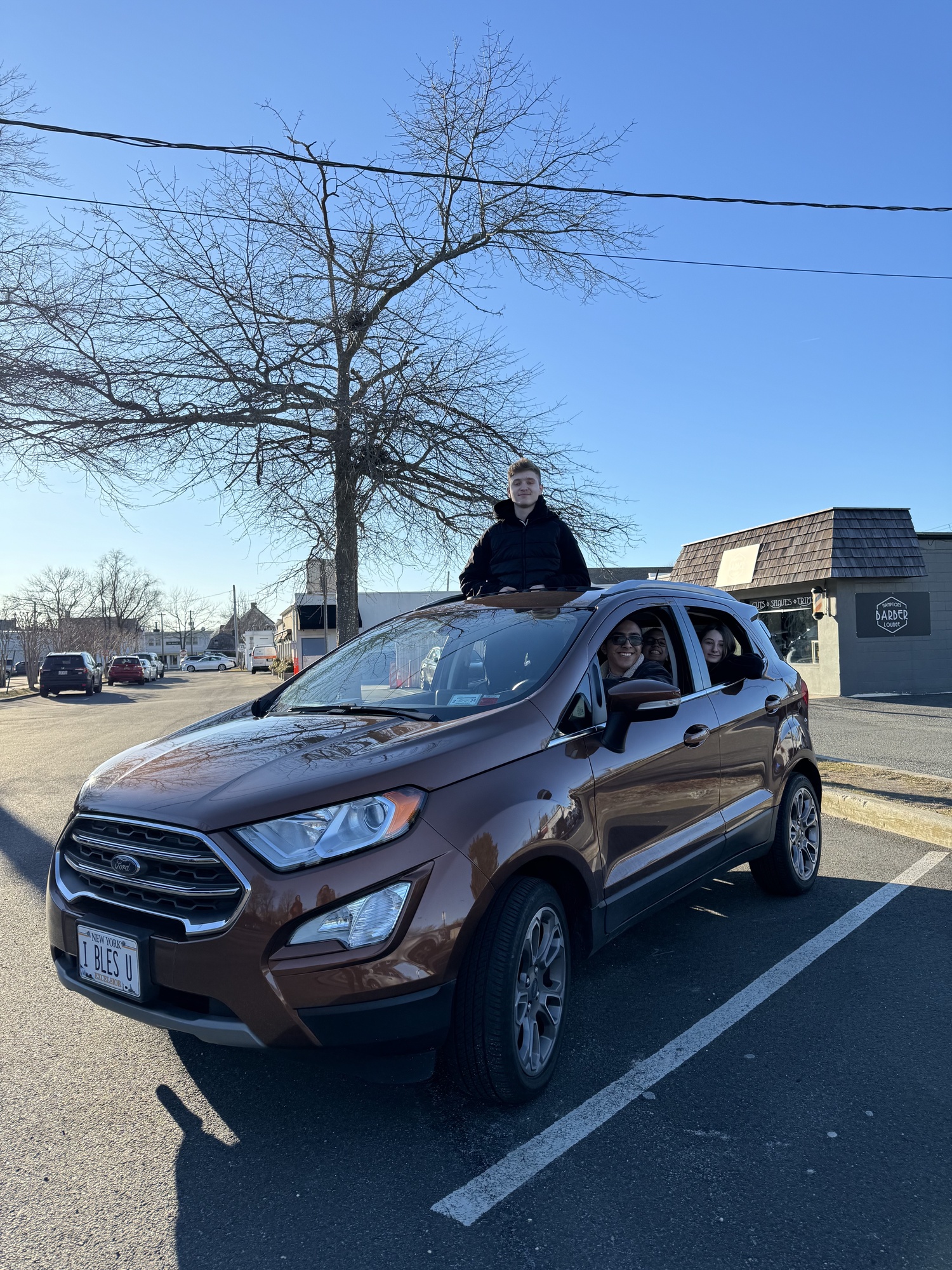
Casey Cartagena, a senior at Southampton High School, shuttles a group of his fellow robotics team members to fundraise in Southampton Village. COURTESY CASEY CARTAGENA
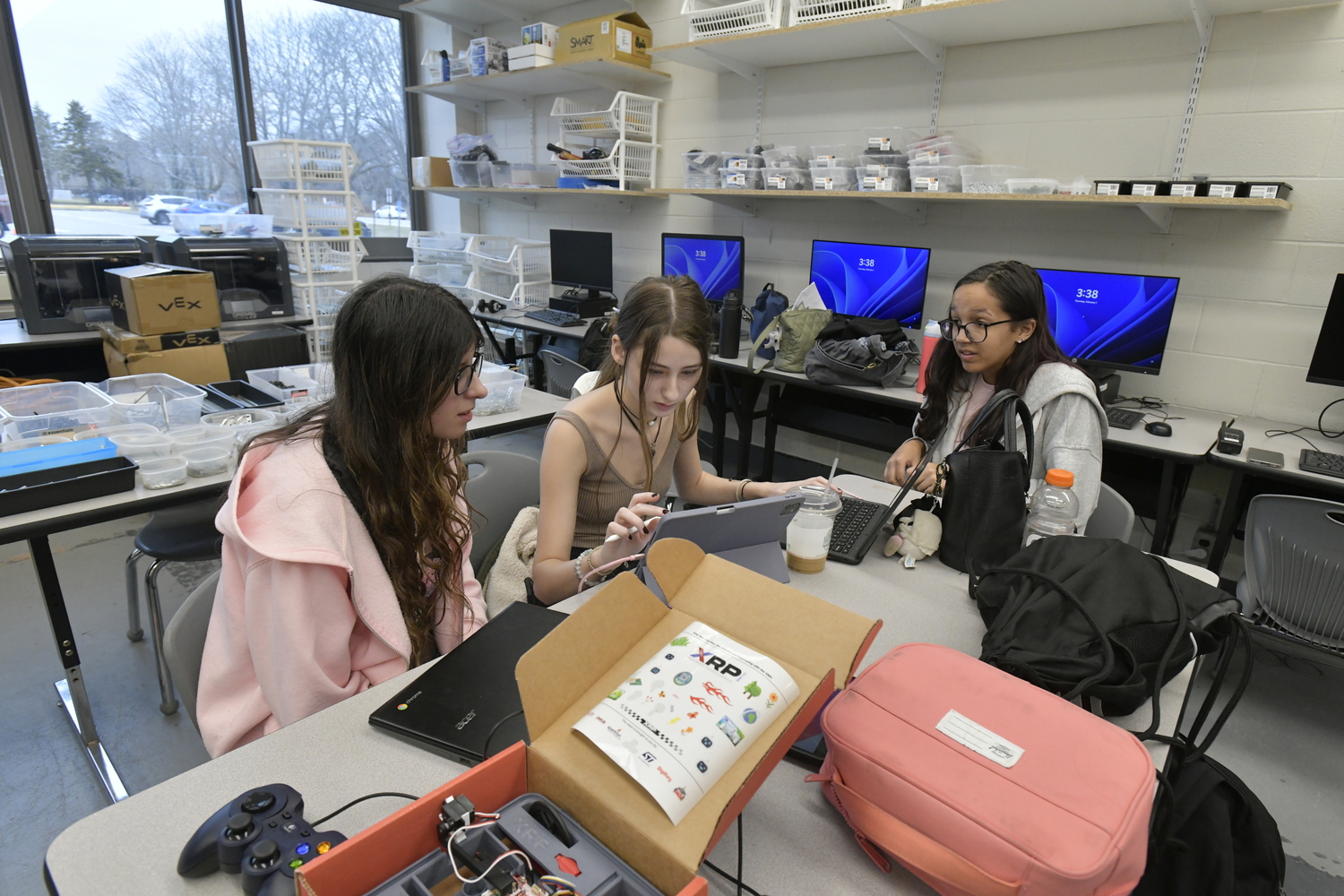
Team members Rosary Krezalek, Aubrey MacDonald and Paige Hopson at work on a project. DANA SHAW
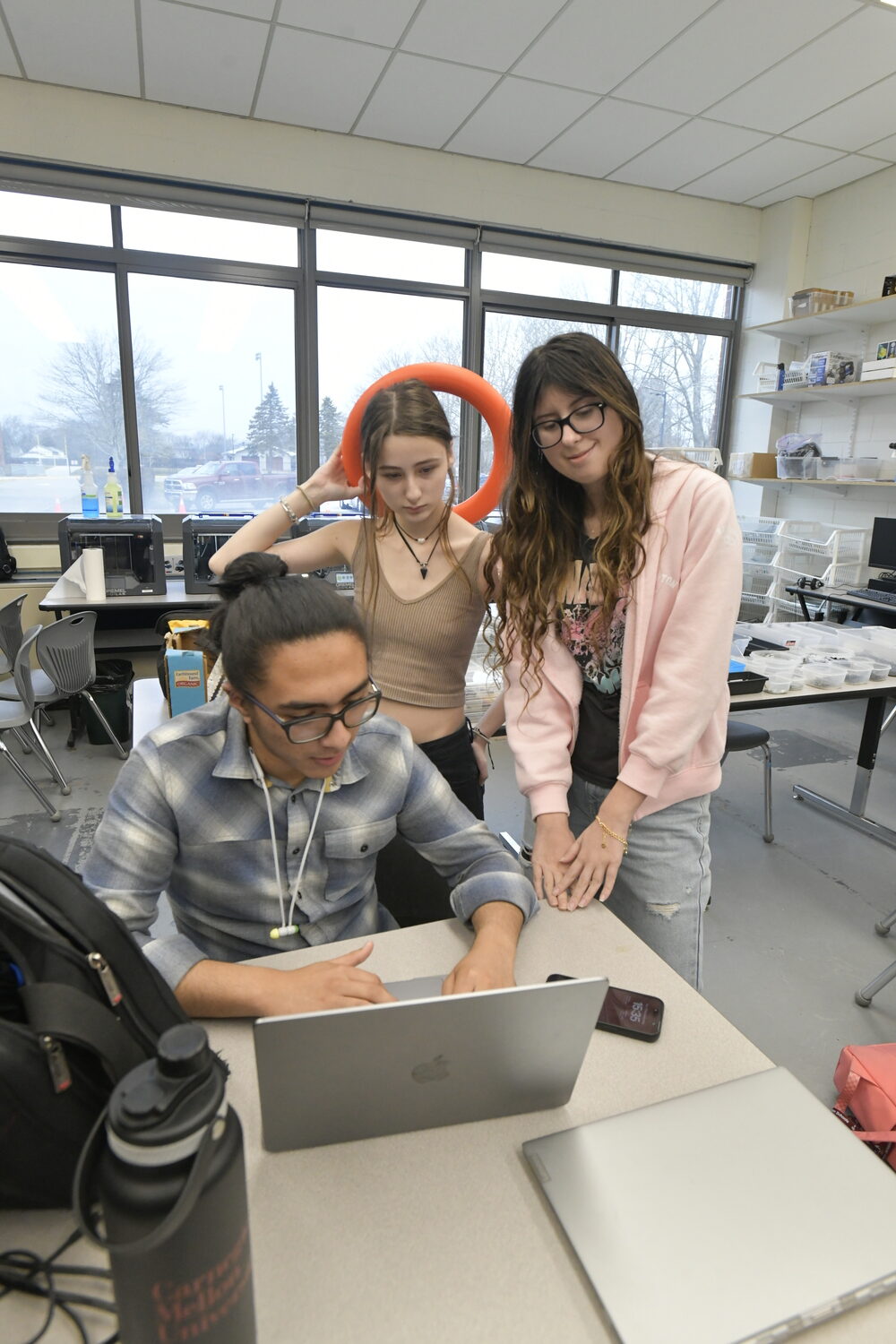
Robotics team members Casey Cartagena, Aubrey MacDonald and Rosary Krezalek at work on a project. DANA SHAW
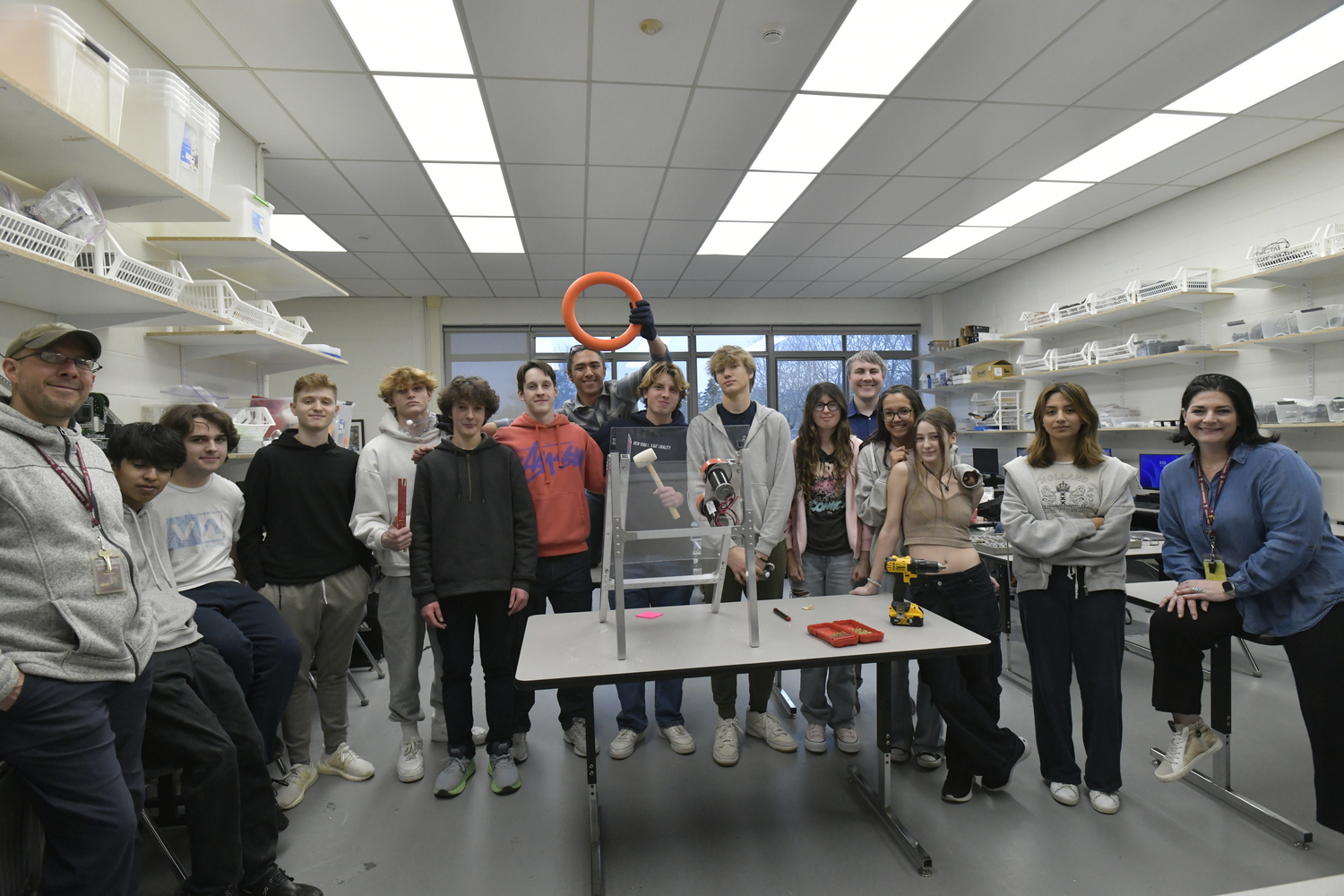
The Southampton robotics team. DANA SHAW
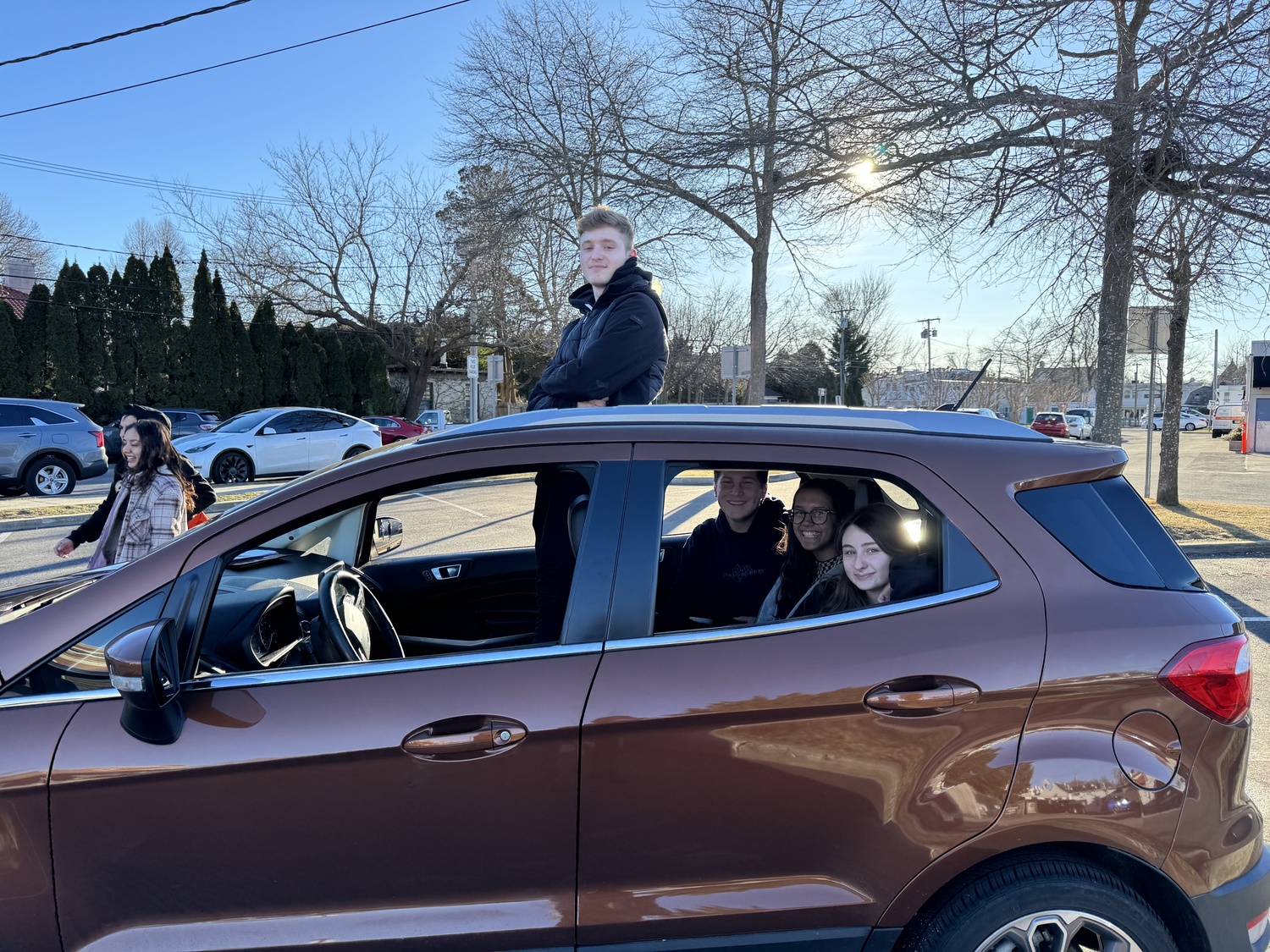
A group of Southampton High School FIRST Robotics Team members fundraise in Southampton Village. COURTESY CASEY CARTAGENA
On Monday afternoon, five students from Southampton High School hopped into an orange Ford EcoSport and hit the road, headed toward Southampton Village.
As he parked, senior Casey Cartagena said, “Good luck, guys,” from behind the wheel, bidding farewell to his friends — Erion Ruhani, Aubrey MacDonald, Paige Hopson and Dylan Glanz — as they dipped in and out of local restaurants and shops, looking for sponsorships.
It became a refrain — a parting well wish from Casey, a few minutes of calm, then a flurry of easy laughter and chatter as his friends piled back into the car, off to their next destination with one goal in mind: to raise as much money as they could for their newly formed FIRST Robotics team.
And, in the end — hopefully — to watch their robot win.
Come March, “The Marinators” will battle it out against 48 other robotics teams — including the Pierson Whalers in Sag Harbor and the BayBots in Hampton Bays — making their debut at the FIRST Long Island Regional competition at Hofstra University in Hempstead and fighting for a place in the FIRST Championship, to be held this April in Houston.
“We have people from different backgrounds, different ethnicities and we all come together and really let ourselves shine as one in robotics,” Erion, the 17-year-old team president and student founder said during a telephone interview, “and it’s a really beautiful experience that mere words cannot describe.”
Their journey began last year, when Erion and Casey — along with two outgoing seniors — joined forces with the Pierson Whalers to learn more about FIRST Robotics and how to start a team of their own in Southampton, according to Melissa Mitchell, an assistant principal at Southampton High School.
“It’s not just a club,” she said. “It’s honestly like a varsity sport.”
Open to grades nine through 12, the FIRST Robotics Competition teams are tasked with designing, programming and building a robot — starting with a standard kit of parts — and then compete with a common set of rules in a themed head-to-head challenge, according to its website.
Each team is assigned a number that correlates to the order it joined the FIRST Robotics Competition. Southampton High School is Team 9646, Erion said, while Sag Harbor is Team 28.
It shows, Casey said, from the moment he saw them in action.
“The very first meeting I had with Pierson was something absolutely transcendent,” he recalled.
When he walked into the room, he immediately noticed the students divided by department, he said. One was working on wiring, another was busy with coding, while another was fussing with the mechanics. Others worked on physics, math, logos, design and aesthetics.
It was electric, he said.
“It’s kind of like the idea of watching some giant behemoth mechanism unfold itself and become something absolutely awe-inspiring,” he said. “It was truly a marvel to watch that and see that, and that’s definitely what I want to recreate and inspire within the people in this club now.”
Erion calls this phenomenon the “robot bug,” and he watches student after student catch it when they walk into the Southampton High School computer lab and join the team.
“It’s almost like an aura of just pure happiness and really being able to enjoy yourself without having to worry about being ridiculed for whatever reason that may be,” he said. “As you know, high school, it gets tough there. There are people who would like to bring others down for almost any little nitpicking detail they can find, but in robotics, I feel that there’s a community where we look past those imperfections and, in fact, just embrace said imperfections.”
Earlier in the school year, the team started with a dozen students, Mitchell said. It has since grown to about 40 — “which is insane,” she said, noting that about 25 regularly participate.
“Interest is growing by leaps and bounds,” she said, adding, “These robots are, like, 200 pounds. They’re not little, tiny robots. They’re machines. They’re giant machines.”
Under the mentorship of Mitchell and two high school staff members — physics teacher Andrew Rapiejko and computer science teacher Eric Pflug — the team has officially entered its “build season,” when it turns its kit bot into a contender in this year’s FIRST Robotics Competition, themed “Crescendo.”
“I really see that we have a lot of ambition,” Erion said. “Even though we’re a rookie team and we’re going in with literally zero experience, I feel that we are willing to go at it with 100 percent of our effort and exert every ounce of what we’re willing to give to the team — and it’s reflected.”
Despite the kit bot arriving late, the team is well underway, Casey said. Leaning into their team name, the robot will be, aptly, cooking themed, he said with a laugh, complete with the competing players donning chef hats and aprons.
“You’re working from a foundation that’s already built and you’re expanding off of that foundation,” the lead coder explained. “Now at this stage, we’re trying to make the robot our own, trying to really make this group our own, and have our own identity.”
These days, the team meets every afternoon after school. Some students work on the robot itself — coding, wiring, mechanics — while others focus on marketing, social media, logo and T-shirt design, fundraising ideas, and more.
Recently, Casey glanced around the room and realized they had recreated the scene from Pierson, the moment he fell in love with robotics.
“It was like the entire room was bustling with all the energy that I remember it having in Pierson when I was there that first time last year,” he said. “That was a day that it felt like, ‘Well yeah, I can’t do everything, but that’s how it’s gonna be every single day.’”
“I have the proclivity for the mentality of the programmer and the coder, and understanding the digital systems of the robot,” he added, “but at the same time, I don’t understand a lot of the things about wiring, but there’s always someone willing to learn that.”
Sophomore Sarah Barros proved to be that someone, she said, which she never expected. When she joined the robotics team, the 15-year-old thought she would focus on coding — until her horizons rapidly expanded when she immersed herself in the mechanics of the robot itself.
“It is intimidating because we’re such a new team — we obviously don’t have the experience of teams like Sag Harbor,” she said. “We’re brand new, but there’s a pro to it: there’s a lot less stress because no one has such high expectations of you. You can only go up from here.”
In November, the Marinators received a FIRST Robotics Competition program growth grant from NASA, Mitchell said, and have drummed up support from local sponsors, as well. The self-funded club is still seeking donors — the team costs about $25,000 to run, she said — and is looking to the community for help.
The fundraising is not just about this inaugural year, Erion said. It’s about securing the team’s future. It’s about providing a welcoming space, he said, for all students looking for a place to belong.
“I think this team’s important because it just goes to show what anybody can do,” he said. “There’s so much flexibility, there’s so many different spotlights in the room. There’s an infinite number of spotlights, all that it takes is the initiative to really grab and latch onto that, and really show yourself and show what you’re capable of.”


 Michelle Trauring on Feb 9, 2024