


 2 Photos
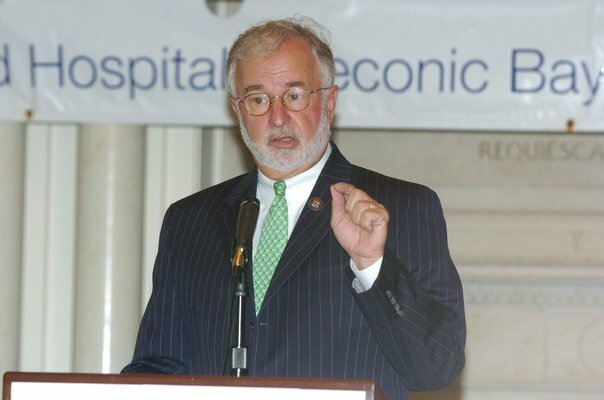
Former U.S. Representative Tim Bishop
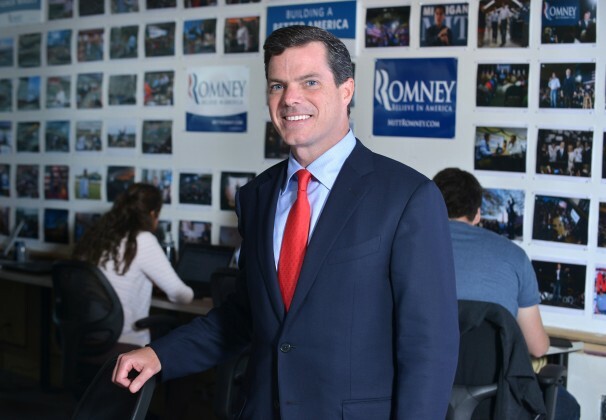
Peter Flaherty
Johan Arias has a reputation among his peers at Southampton High School as being “the political one.” A self-professed “lover of politics,” the 17-year-old senior fervently studies and follows everything happening in Washington, D.C..
So when an angry mob stormed the U.S. Capitol building on January 6, he was, much like the rest of the country, riveted by what was going on. As the shocking events were unfolding, friends and classmates sought Johan out for his take.
“They were calling and texting me, asking, ‘What’s going on? What’s going to happen? Is this a coup?’” Johan said earlier this week.
Even with his standing as a political junkie, Johan knew that his words and opinions would only go so far. So he was happy when, on the following Monday, January 11, he was able to join a Zoom call set up by Southampton’s social studies department that featured former U.S. Representative Tim Bishop, a Democrat, alongside his friend, Peter Flaherty, a Republican who served as deputy chief of staff for Senator Mitt Romney when he was governor of Massachusetts, and also worked as a senior official on both Mr. Romney’s and Jeb Bush’s presidential campaigns.
Mr. Bishop, a native of Southampton, and Mr. Flaherty have co-taught a political science class together at the College of the Holy Cross — their alma mater — in Massachusetts since 2018. They made themselves available for a Q&A with Southampton High School students in a video conference call that was open to all high school students and staff on that Monday.
Virginia McGovern, a curriculum liaison in the school, set up the video conference. After the riots at the Capitol, she reached out to Mr. Bishop, to express her relief that he was not there, and also to ask him if he would be willing to speak to the students and help them make sense of what had happened, while also making himself available for any questions they might have.
“I spoke with Sean Brand, Michael Brocki and Corey Knab, who all teach government or U.S. History, about the possibility of Mr. Bishop speaking to their classes,” she said. “After a conversation with Mike and Corey, it was agreed that it would be a great opportunity, but they also saw value in being able to present a bipartisan take on the election and other events.”
Mr. Bishop said that he was on board right away.
“I enthusiastically embraced the idea,” Mr. Bishop said earlier this week, adding that Mr. Flaherty was on board right away as well. “Even though we have different perspectives on issues, there are other areas where we do think as one.”
Seeing a Democrat and a Republican come together and present a united front, despite the political and philosophical differences they do have, was comforting and necessary, according to Johan.
“What was really impactful was seeing that they were united in the fact that [the attack] was something that was absolutely unacceptable and should never have happened,” Johan said. “It’s really powerful to see a Democrat and a Republican get along so well, especially with the world as polarized as it is.”
For his part, Mr. Bishop had one point he wanted to make abundantly clear, especially for a group of students who likely have little or no memory or consciousness of what the political climate was like before the Trump presidency.
“This is the first presidency you’ve paid careful attention to,” Mr. Bishop said during the meeting, adding that he has been closely observing presidencies since he was 10 years old. “If this is the first president you’d experienced, you should know that this is not normal. No reasonable person should consider this normal. Every other president in my lifetime, whether Democrat or Republican, has made a good faith effort to govern in a fashion that is consistent with what they believe to be in the best interest of America. They have tried to unify the country, and find areas of commonality. This president has done none of that.”
Mr. Bishop also pointed out that, while the riots were upsetting and disturbing and shocking, there was a pronounced silver lining.
“Under enormous stress and pressure, the institutions of our society and government worked,” he said.
Mr. Bishop also urged the students to “reject the big lie,” that the election was stolen from President Trump.
“If we are going to heal, which we must, it’s our job to reject that lie,” he said.
Mr. Flaherty presented a united front with Mr. Bishop in that regard, pointing out to students that the system of government allows for a mechanism to contest election results — the courts — and that President Trump availed himself of that system no less than 60 times, with the courts rejecting his claims all but once.
“He batted one for 60,” Mr. Bishop said. “At some point, you have to embrace reality. That was the point I wanted to make, and the point Peter wanted to make.”
The meeting was a success for students but left a strong impression on teachers and staff as well, Ms. McGovern said, while pointing out that it’s been an unprecedented year in terms of challenges for educators.
“I think it’s been an incredibly difficult time to be a teacher in general. It seems we are constantly being asked to make sense of a number of things that we, as adults and ordinary citizens, have struggled to understand, and then add the layer or responsibility of presenting a calm, confident, reassuring front to the students in our charge. It’s incredibly exhausting.
“Our department is committed to being fair and to instilling curiosity, civility and civic mindedness in our students,” she continued “Our department is full of consummate professionals who present nonpartisan perspectives, but this opportunity was great for the kids to see that you can have unique opinions and disagree —but also maintain civility.”
While the fallout from the riots was a big focus of the meeting, the students also engaged with Mr. Bishop and Mr. Flaherty on a number of other topics, including the election, ballot certification, the Senate race in Georgia, invoking the 25th Amendment, the police response, and the government’s response to the pandemic.
“Their questions were incredibly thoughtful and comprehensive,” Ms. McGovern said of the students.
Mr. Bishop spoke earlier this week about what it was like to watch the attack unfold, in the building where he spent many years working every day.
“I watched it at first with an enormous sense of disbelief, that this couldn’t be happening,” he said, adding it gave him the same kind of feelings he had when he watched the second airplane fly into the twin towers in lower Manhattan on September 11, 2001.
“That photo of the Capitol Police officers with their guns drawn at the main entrance to the house chamber took my breath away,” he said. “I’ve walked through that door hundreds of times. It’s the door the president walks through to deliver the state of the union. It’s just something I thought I’d never see.”
Less than a week removed from that surreal moment, Mr. Bishop was happy he could provide an important service for the high school students and teachers trying to make sense of it all in a school setting.
“One of the things Peter and I have tried to do with our classes, because we do find ourselves in disagreement at times, is to model the kind of civil discourse that the country could really benefit from having,” he said. “Hopefully, it leads to some common understanding about how we go forward.”
Mr. Flaherty echoed similar sentiments. He said he participated in the Q&A because he wanted students to hear from both political parties, and added that, while he does not always agree with Mr. Bishop’s views, “when it comes to our love of this country, we speak with one voice.”
“One thing I wanted the students to take away is that January 6 began with a stark reminder that there is a fragility to freedom if we don’t come together to protect it with the full force of our democratic resolve and constitutional principles,” he said. “I thought it was important for the students to recognize that while our democracy was challenged in the morning, it stood strong before the sun rose the next day.
”I also emphasized the importance of our 1st Amendment rights and the power of peace when exercising those rights,” Mr. Flaherty continued. “Violence, on the other hand, must always be condemned, whether you are talking about storming the Capitol building in D.C. or burning down a police precinct in Minnesota.”
For teens like Johan, whose formative years have been structured around the Trump presidency and the extreme divisiveness that has come to define the political landscape, what they saw on their screens that Monday will leave a lasting impression.
Johan went so far as to describe it as “cathartic.”
“We saw something that we’re not used to seeing, and that’s the beauty of it,” he said. “You had two people you wouldn’t have expected to get along, adding to each other’s points, and maybe saying they disagreed with one thing but agreed with the premise. It’s something that’s really powerful, especially in the moment we’re in.
“There’s a lot of damage and lots of work that needs to be done,” Johan added. “But seeing something like this is really helpful toward trying to feel better.”


 Cailin Riley on Jan 22, 2021