


 15 Photos

A system being installed in Flanders. DANA SHAW

Tom McCormick's workshop in East Quogue. DANA SHAW

Crews work to finish up the new septic system at the Flanders home of Anthony Hobson in September 2017. DANA SHAW


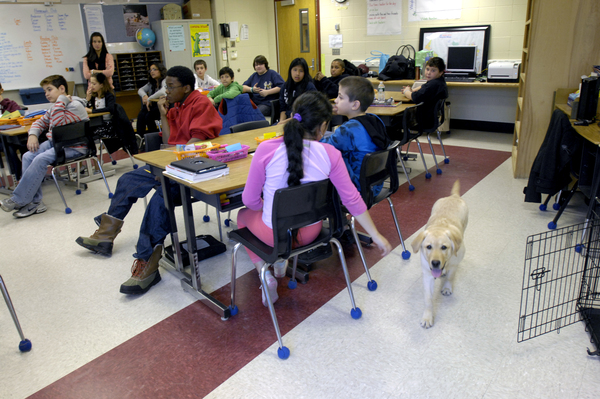
Bea gets a belly rub from a student in Jen Comber and Colleen Ferran’s sixth-grade class at Southampton Intermediate School.

Tom McCormick in his workshop in East Quogue. DANA SHAW

Jen Comber in her classroom with her students and Bea.

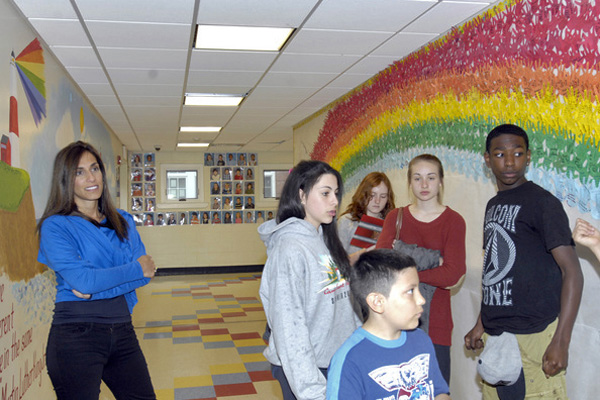
Students in Jen Comber and Colleen Ferran’s sixth-grade class interact with Bea.

Students in Jen Comber and Colleen Ferran’s sixth-grade class interact with Bea.
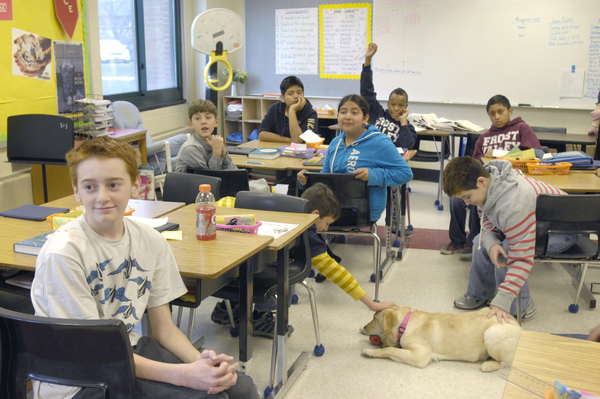
Students in Jen Comber and Colleen Ferran’s sixth-grade class interact with Bea.
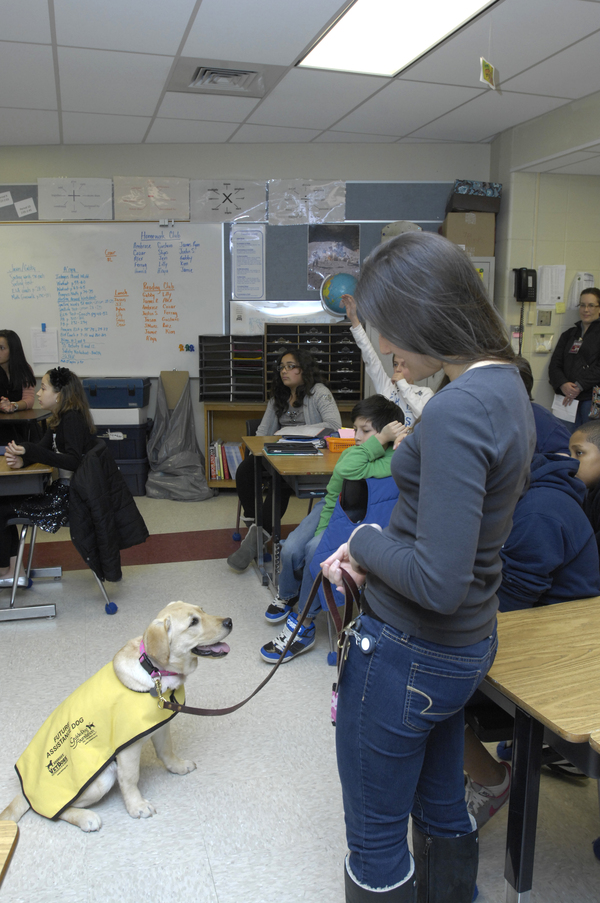
Bea in her work clothes with Jen Comber.
Bea in her work outfit lays quietly in Jen Comber and Colleen Ferran’s sixth-grade class at Southampton Intermediate School.
July 16 -- Fun—animal prints, vintage photos, bold light fixtures, orange for pop and flecks for sparkleis all the rage in luxury vacation home design this year, if the annual Hampton Designer Showhouse is any indication. The showhouse highlights the work of more than 20 local and far-flung interior designers. Set in an large new shingle-style home built by Parmount Homes of the Hamptons at 408 Pauls Lane in Bridgehampton, it opens July 20 and can be seen each day until September 1 for $35, which benefits Southampton Hospital.
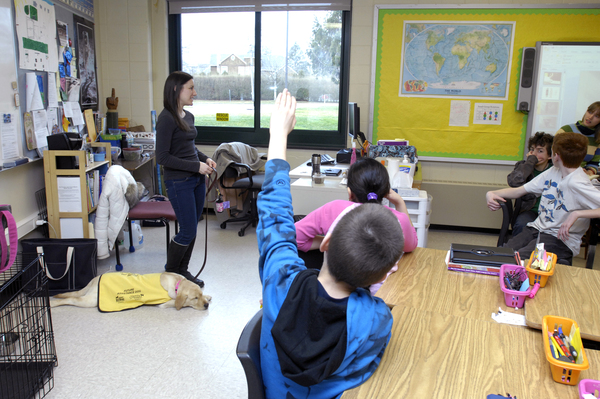
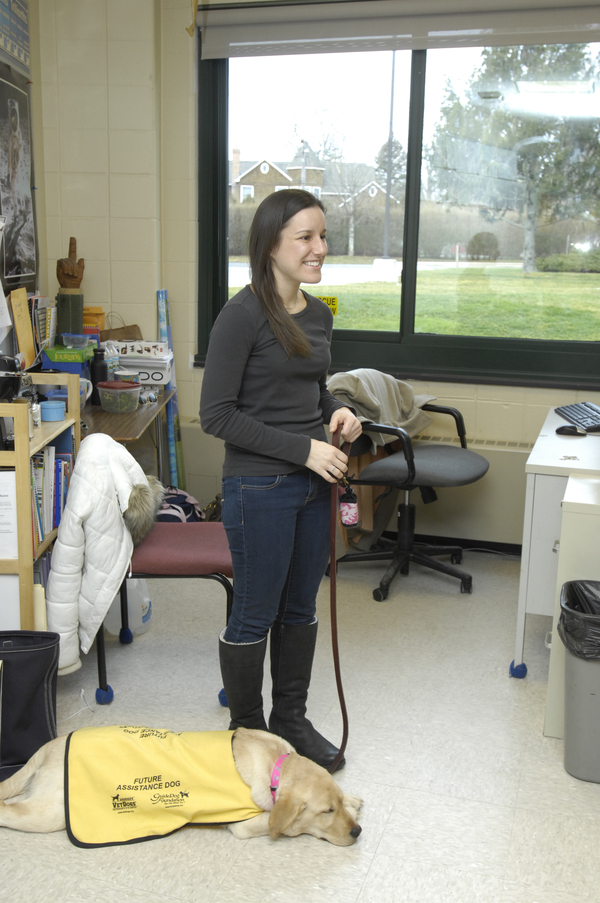
Bea in her work clothes with Jen Comber in Ms. Comber's sixth-grade class at Southampton Intermediate School.
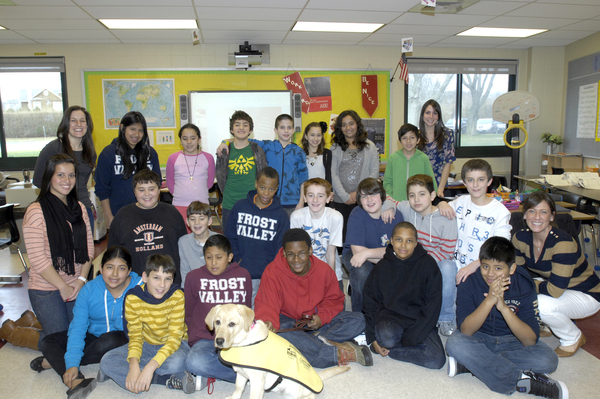
Jen Comber and Colleen Ferran’s sixth-grade class with Bea at Southampton Intermediate School.
Every once in a while in Jen Comber and Colleen Ferran’s sixth-grade class at Southampton Intermediate School, a lesson is peppered by the snores of a snoozing student.
There, in her crate against a wall, her furry blond head lying more often than not in her water bowl, rests the class’s youngest pupil, a baby-faced Labrador retriever puppy named Bea.
The 23 human students in classroom 128 know better than to get distracted.
“A lesson we learned is to stay focused, no matter how funny something is,” explained student James Ryan. “You should know to pay attention.”
Classmate Justin Schreiber added, “You might get a class minus.”
Bea, who turned 5 months old last Thursday, is a guide dog in training. Someday—provided she passes her tests—she will be paired with an owner who is blind or visually impaired or perhaps a veteran who was wounded and needs assistance.
But right now, the cuddly canine is learning basic obedience and social skills, and much of her education is taking place in the classroom alongside the sixth-graders at the Leland Lane school, where she wanders between desks, “cleans” students’ shoes or lounges on
a corner beanbag chair. Once, she even fished a toy believed to be lost from a bookshelf during English language arts.
But Bea isn’t the only one learning her lessons.
“We talk a lot about responsibilities here and about students growing over time academically, socially, emotionally and physically,” said Tim Frazier, the intermediate school principal. “What better example of that than having a guide dog in your classroom growing and learning with the students?”
Among those responsibilities are keeping the floor free of erasers, elastic bands and other clutter that could prove hazardous to the young pup. The children also learn not to bother Bea when she is wearing her yellow service jacket, which indicates that she is a “working dog.” Bea sports the jacket mostly when she goes out in public or if Ms. Comber has to take her over to a meeting at Southampton High School.
The students also practice using certain verbal commands, such as “Leave it,” if Bea has something in her mouth. They can earn “Bea time,” or playtime with the dog, by staying focused on their schoolwork and maintaining their materials. When Ms. Comber asked her class one recent day why guide dogs are trained to stay to their walker’s left side, student Pamela Gebhardt replied that a blind person might trip if a dog were to keep switching sides.
That same day, student James “Jamie” Hallahan spotted a small scrap of notebook paper on the floor, remarked on it and quickly scooped it up. Inches away, Bea was rolling on her back, gnawing on a reporter’s high heel until Ms. Comber distracted her by flinging a ball into the center of the room.
Wearing a hot pink collar dotted with paw prints and bones, Bea brought smiles to the students, who were bursting with hand-raising enthusiasm to share tales about their four-legged friend. Their stories included instances of “accidents” that had to be cleaned up, as well as a few “escapes.”
Bringing a dog into the classroom is an unusual idea for a school to support, Mr. Frazier admitted. When Ms. Comber first broached the idea, all sorts of concerns, from allergies to fears of animals, leapt to mind. But Ms. Comber—the general education teacher in her so-called bridge, or inclusion, class, which also comprises special education students—had already thought those through, he said.
“I’m always asking my teachers to take risks in a way,” the principal said, adding that he believes the benefits to students are many. “It’s just amazing how having that addition has made a difference for those kids.”
Ms. Ferran, the special education teacher in the room, observed that sixth grade is a transition year. “Kids have to do a lot of maturing, and that’s a hard thing to teach,” she said, noting that the responsibility that comes from caring for Bea helps.
Having always wanted a dog, but fearing the inevitable loss when it died, Ms. Comber drew inspiration from a so-called “puppy raiser” in Sag Harbor. She contacted the Guide Dog Foundation for the Blind, a Smithtown-based organization that seeks to provide guide dogs free of charge to blind people who seek enhanced mobility and independence, and became a “puppy raiser” for Bea, who was named by a donor.
The energetic puppy rides to school each day with Ms. Comber and goes home with her when the last bell of the day rings. The teacher walks her during the day, but notes that she is being trained not to “go” on the grass because, she explained, many blind people live in cities where there is little grass. “She still likes the grass though,” she added.
Bea started at the school in late December, the day before the holiday break. Ms. Comber will care for her—housebreaking her, socializing her in different environments and giving her loving attention—until she is somewhere between 12 and 14 months old. At that point, Bea will go back to the foundation and continue specialized training.
Most of the students in Ms. Comber and Ms. Ferran’s class raised their hands when asked if they had a dog at home. None raised a hand when asked if they had a guide dog. Most said they would feel sad when the time came to say goodbye to Bea at the end of the year. Jamie, however, raised his hand and said, “No.”
“You’re going to be proud because you helped her to take care of someone else,” he said.
Ms. Comber praised him for his eloquent answer.


 Colleen Reynolds on Mar 12, 2012