



 18 Photos
A wild trukey roams the grounds of the Morton National Wildlife Refuge. BRANDON B. QUINN PHOTOS
Mile-A-Minute

an invasive plant species growing on the trees seen here

has taken over Morton National Wildlife Refuge of late. The refuge's biologists are trying to introduce a new insect species that feeds exclusively on Mile-A-Minute to control the spread. BRANDON B. QUINN PHOTOS
Scattered feathers
evidence of a freshly killed bird
seen lying just off the trail to the beach. BRANDON B. QUINN PHOTOS
Even on a beautiful day

the beach at the Morton National Wildlife Refuge is underutilized by residents

according to the staff at the refuge. BRANDON B. QUINN PHOTOS

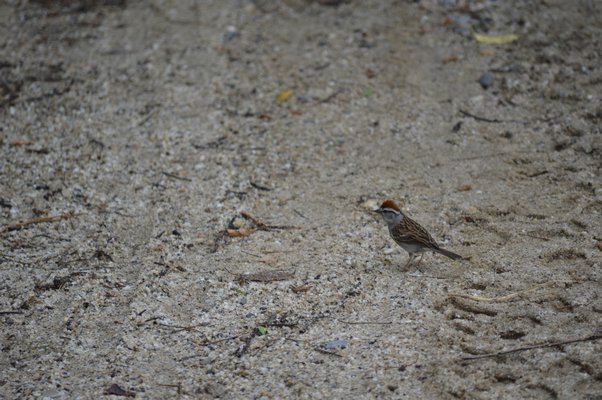
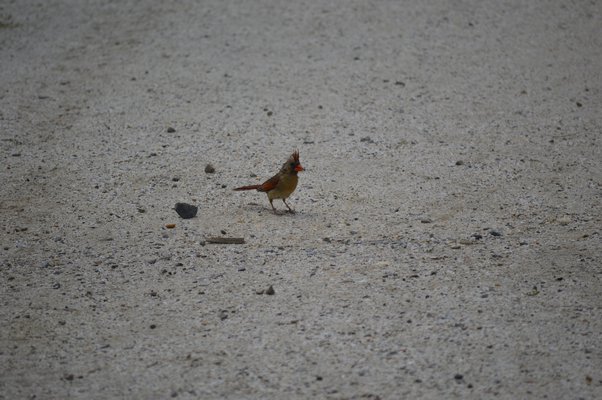
Morton National Wildlife Refuge is home to a variety of bird species

making it a prime location for recreational bird watchers. BRANDON B. QUINN PHOTOS
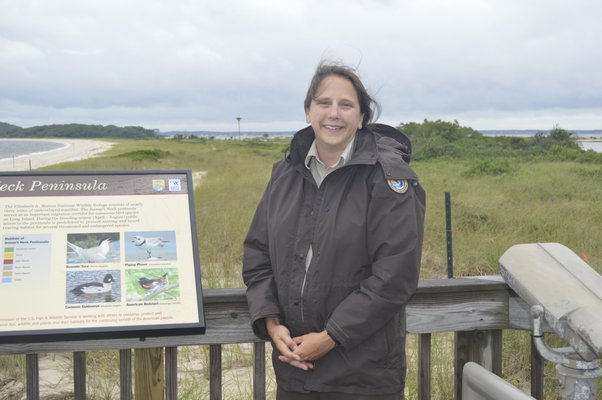
Visitor services manager Jody Demeyere taking in the scene at the beach of the Morton National Wildlife Refuge. BRANDON B. QUINN PHOTOS

Visitor services manager Jody Demeyere taking in the scene at th

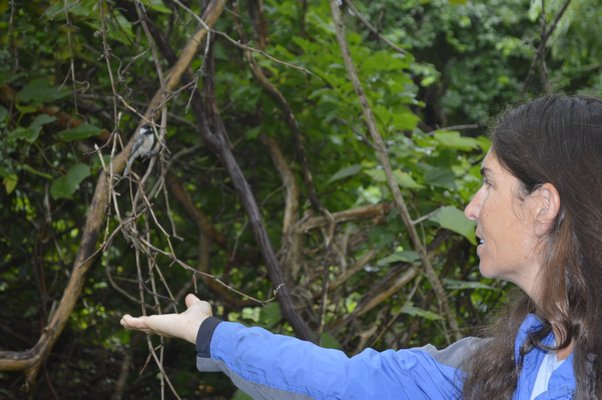
Trailing a group of children who are patiently waiting for chickadees and nuthatches with seed in hand, Jody Demeyere, the visitor services manager at the 187-acre Morton National Wildlife Refuge in Noyac, explains the importance of maintaining a balance between nature and nurturing the interests of visitors.“Our hardest job here is to try and maintain the integrity of the land, of the local wildlife—wildlife first as our mission states—but at the same time we want to share our expertise and our trails and beaches with the public,” Ms. Demeyere said.
“With all this talk of kids constantly being indoors and basically connected themselves to electrical outlets, to actually see kids out here with nothing but bird seed, I mean, that’s nature at its finest,” she continued. “That’s making a connection to other living organisms.”
In an attempt to help spur tourism to the preserve, which costs $4 per visit or $12 for the year, Ms. Demeyere and the rest of the team at Morton, which includes a park ranger, two biologists and a summer intern, have held a litany of summer programs aimed at teaching the children about “the big six.”
“Our mission is to maintain wildlife, but we also have the big six,” she explained. “We adhere to a mission to spread wildlife education, interpretation, observation, photography, as well as hunting and fishing.”
Over the past two months, they have held seminars on the three Rs—Reduce, Reuse and Recycle—and how to protect the endangered piping plover. As part of the latter program, participants learned to build their very own piping plover nest. Another program focused on pelts and skulls, where attendees learned how to identify a carcass.
The team at Morton has also held a sensory hike, which tested and improved the senses, such as sight, sound and touch, of those in attendance, as they made their way through the woods. They also offered a bird watching hike.
The last of the summer seminars is set to take place on Saturday, August 3, from 10 a.m. until 3 p.m., and will focus on how attendees can protect local waterways. Registration is still open.
“It is unheard of to be able to feed and interact with the wildlife at a wildlife refuge,” Ms. Demeyere said. “But because it has been going on for so long here, and because it draws in so many visitors, we do allow it as long as the seed isn’t left on the ground attracting unwanted visitors.
“Basically, we want people to come see the land, use the great beach we have here, check out the animals and see where their tax dollars are going,” she added.


 Brandon B. Quinn on Jul 31, 2013