


 5 Photos
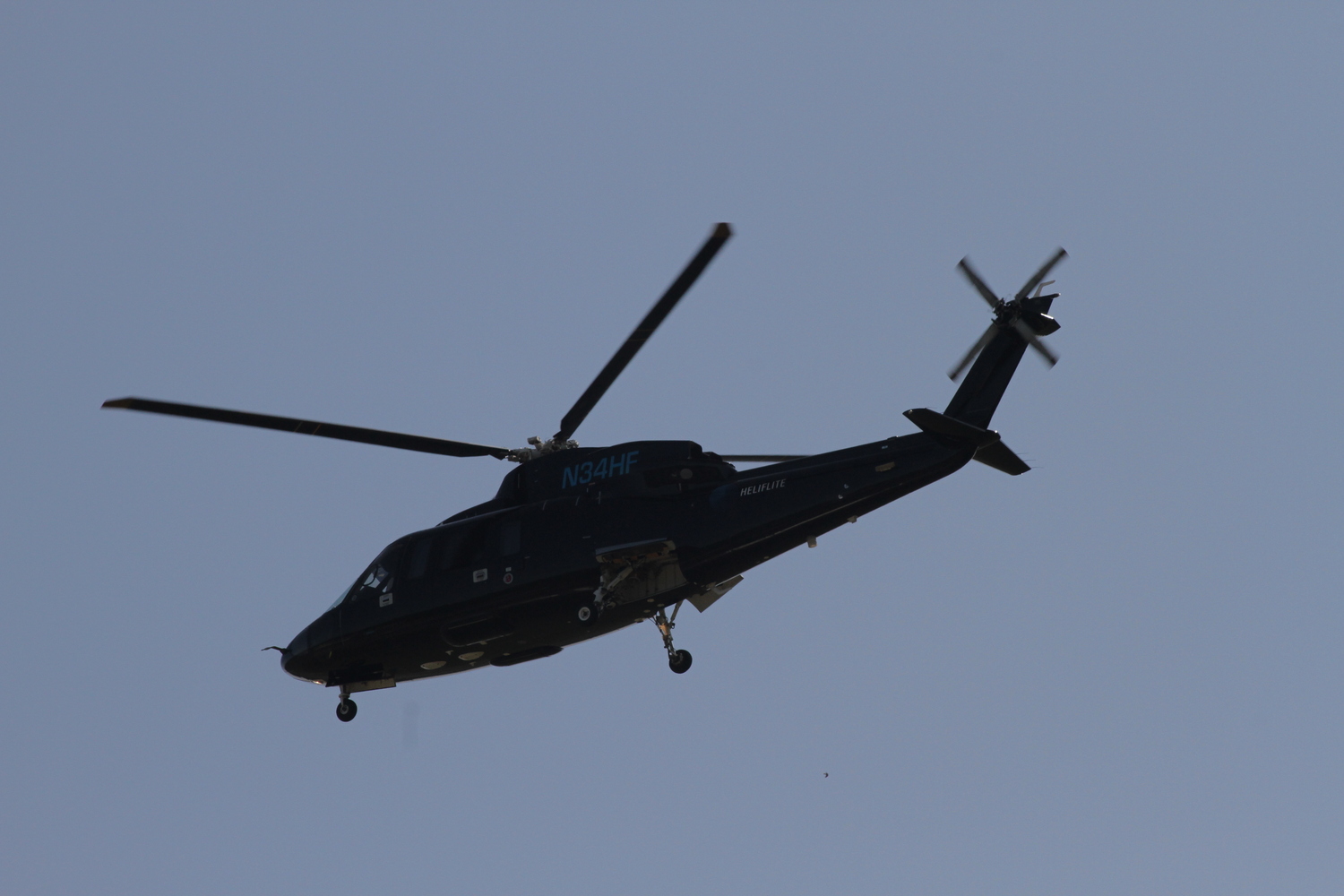
Helicopters flying over Southampton and Southold towns have spurred elected officials in those town to put pressure on East Hampton Town lawmakers to address the matter. MICHAEL WRIGHT
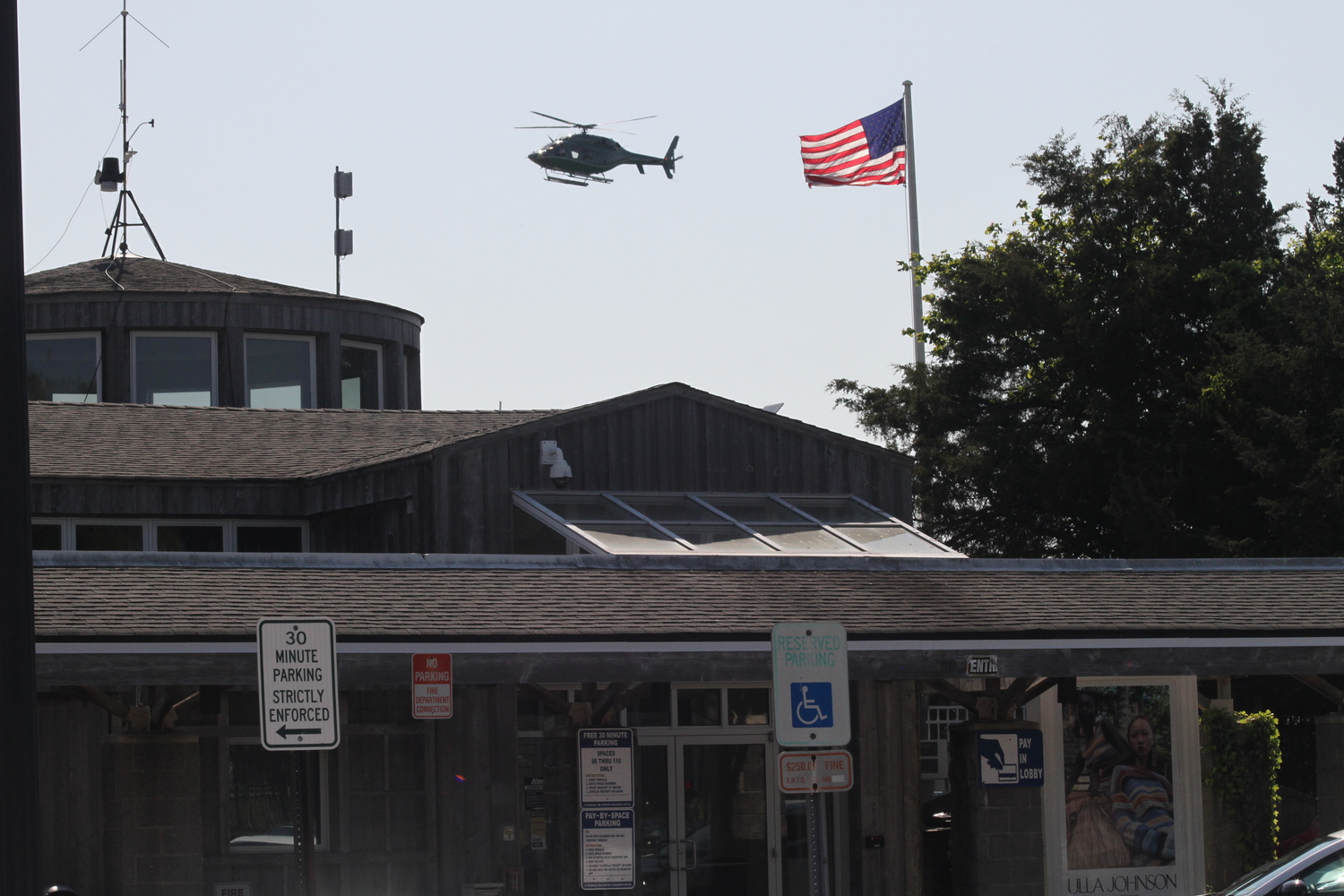
East Hampton officials say that they play no role in selecting which routes helicopters fly on their way into and away from East Hampton Airport and dismissed demands from elected officials in other towns that they "take action" to direct choppers to stop flying over other towns. MICHAEL WRIGHT

John Kirrane, a Noyac resident, has been a vocal critical of East Hampton Town's handling of aircraft traffic that overflies Southampton Town neighborhoods and butted heads with East Hampton Town Board members on Tuesday. KYRIL BROMLEY

Patricia Currie said that East Hampton should keep its "garbage" of aircraft traffic over East Hampton neighborhoods, not those in Southampton Town. KYRIL BROMLEY
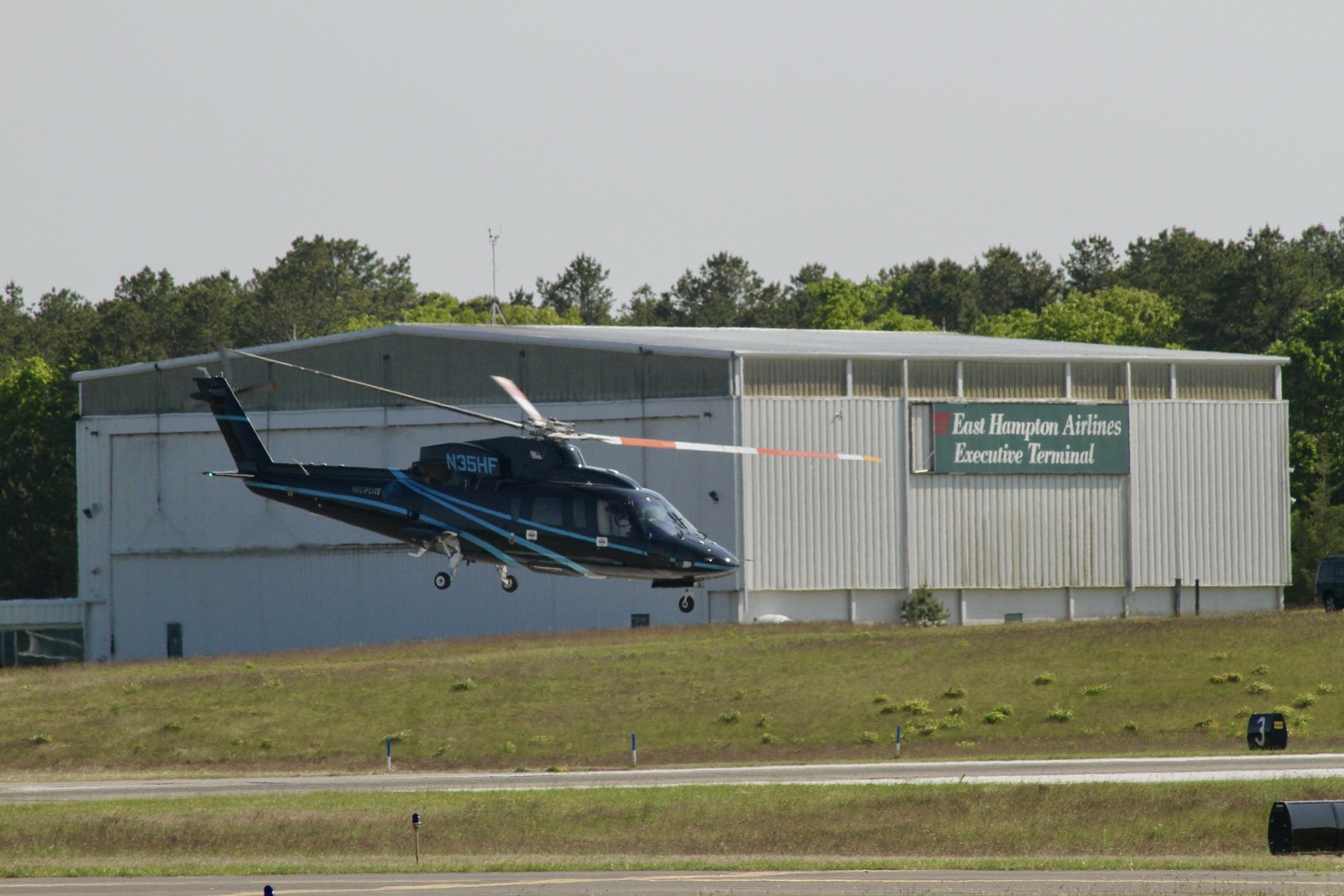
Helicopters flying over Southampton and Southold towns have spurred elected officials in those town to put pressure on East Hampton Town lawmakers to address the matter. MICHAEL WRIGHT
Elected officials from the towns of Southampton and Southold appealed to their colleagues in East Hampton to “take action” to reroute helicopters away from neighborhoods in their towns — something East Hampton lawmakers have said they have no power over.
In letters penned to East Hampton Town Supervisor Peter Van Scoyoc this week, the town boards of the two neighboring towns leveled criticisms at the flight routes followed by helicopters approaching and departing East Hampton Airport that take the thundering aircraft over the homes of their residents.
At particular issue, are two specific routes that helicopters are asked to follow when approaching or departing to the north of the airport — known as November and Echo.
The November route has helicopters flying up the South Shore from New York City bound for East Hampton turn inland over Shinnecock Inlet and the Shinnecock Canal and then fly up the Peconic Bay shoreline, before cutting back south over Noyac and Sag Harbor toward the Wainscott airport.
The Echo route directs helicopters to follow an “all over water” route connecting the airport to Long Island Sound. Helicopters both approaching and departing the airport use the route on their way to and from points north, or New York City along the Long Island Sound coastline. They are supposed to stay over the waters of Gardiners Bay and Plum Gut until they round Orient Point and can fly over the Sound — but the route is often deviated from, with pilots taking shortcuts over the North Fork, particularly Mattituck.
Both routes are devised not by East Hampton Town itself, but by the Eastern Region Helicopter Council, a helicopter pilots organization that has been working in recent years with airport officials to urge pilots to “fly neighborly” and stick to routes devised to take choppers over as few homes as possible. Compliance is entirely voluntary and up to individual pilots until they are within five miles of the airport, when air traffic controllers can dictate flight paths.
But the residents whose homes do lie beneath those routes are often not from East Hampton Town itself and have long decried the town allowing the airport to spread its impacts over other towns.
This week, their own elected officials came to their defense — with pen and paper.
“The decision to favor the November route will divert helicopter traffic squarely over the South Fork, negatively impacting our most populated hamlet of Hampton Bays, and also concentrate noise pollution in Water Mill, North Sea, Noyac, Bridgehampton, and other areas,” a letter from the Southampton Town Board, addressed to Van Scoyoc, reads.
The helicopter council has asked its pilots — the group represents many, but not all, helicopter pilots in the New York City metro region — to use the November route when approaching East Hampton Airport.
“We urge you to take whatever action you can as East Hampton Town supervisor to ban or limit the November route, and to require helicopters to fly routes that are mainly over water or less populated areas, such as the Echo and Sierra routes,” the Southampton officials wrote. “This would reduce the noise on our communities, and greatly improve the quality of life for thousands of East End families, regardless of on which side of Town Line Road they reside.”
The Sierra route, which is the route EHRC asks pilots to use when departing the airport, cuts straight south from the airport to the ocean, primarily over Georgica Pond. The route is the shortest distance between the airport and the ocean coastline and has the fewest number of homes beneath it. It was rarely used by helicopters before last year.
Southold Town Supervisor Scott Russel had a similar message on behalf of his office and his colleagues — with a different flight of helicopters in their sights.
“The Echo route was proposed as the only two-way route for entrance and exit of JPX,” Russell wrote, referring to the airport’s aviation code name. “Echo has been used in the past and caused significant negatives for both our LI Sound and bayfront facing residents/beach goers, as well as our inland residents.
“Southold Town derives no economic benefits from JPX,” he added. “It is only fair that if East Hampton wants the economic benefits from air taxis, then East Hampton must shoulder the majority of the negative externalities … Southold does not see any new routes that would equitably split the misery and does not want to be on the receiving end of any traffic shifts away from East Hampton.”
Russel said that his Town Board colleagues think that the bulk of helicopters heading for East Hampton should be told to fly along the South Shore only and avoid overflying the North Fork.
Much of the outrage from both towns seems to have stemmed from a May 16 discussion at an East Hampton Town Board work session at which EHRC members and East Hampton Airport Manager Jim Brundige outlined the routes that helicopters would be asked to follow during the coming summer.
In 2022 the EHRC and airport staff had expected flight traffic to be much lower than in past years because the town was poised to impose new restrictions on flights. They asked pilots to fly just two routes, dropping the November route entirely, and directing most helicopters to use the short southern, or Sierra, route over Georgica Pond for both approaches and departures to the airport.
But a judge blocked the flight restrictions and aircraft traffic was heavier throughout the summer than had been anticipated — about 6,700 helicopter flights — despite being down considerably from 2021.
Outrage poured from residents of Wainscott.
When devising routes for the summer of 2023, which will also be unfettered by town restrictions, the EHRC returned to asking pilots to use three different approaches, to relieve the “undue burdens” on Wainscott residents of having nearly all traffic fly over their neighborhoods, as one EHRC representative put it.
But the resumption of the use of the November route has once again spiked ire in Noyac over the roar of helicopters transiting the hamlet.
“Noyac has had enough,” said Elena Loreto, a resident of Noyac and the chairwoman of the Noyac Civic Council. “Noyac is not a doormat and it’s about time our town council stood up for us. East Hampton should be told to keep their garbage to themselves.”
Residents who track flights in and out of the airport say that the division of flights among routes is anything but equitable, even with three routes being used, and that Noyac gets bombarded worse than any other hamlet by aircraft noise with the November route in place because it also overlaps the flight path many fixed-wing aircraft use when departing the airport into the prevailing winds.
“East Hampton Town, for the last five decades, has been sending its trash over the town of Southampton and we’re sick of it,” Patricia Currie, a longtime vocal critic of the airport, said. “It’s over the same houses year after year. There is no equitable distribution, it’s 3-to-1, 4-to-1 — Noyac gets almost all of it.”
Van Scoyoc said he had received the letters from his counterparts in Southampton and Southold, but said he doesn’t understand what they want him or his colleagues to do, exactly.
“There seems to be a lot of confusion about the Town Board’s role in the helicopter routes — we do not designate the routes,” he said. “We have no control over the airport, I guess they still don’t understand that. That’s what we’ve been trying to gain.”
The town has spent eight years and tens of millions of dollars on a legal fight for local control of the airport, and the power to impose restrictions on flights. Judges in county, state and federal courts have ruled against them repeatedly — most recently finding the Town Board in contempt of court, and fining it $250,000, related to last year’s failed effort to limit flights.
The East Hampton supervisor bristled at the suggestion that his board should “take action” to dictate the routes helicopters should fly.
“If we did designate routes and any aviation interests didn’t like it, they’d go running to their judge and the judge would hold us in contempt for trying to restrict flights,” he said. “There is a deep misunderstanding of what’s happening here and we’ll have to address that with our neighboring communities.”
He said on Tuesday that designating routes were not the answer to addressing impacts of noise on residents anywhere in the region and that only tamping down the number of flights, especially by helicopters, will ever achieve meaningful reductions in the din.
“I don’t believe, personally, that there is any fair route,” he said. “Helicopter traffic at the volumes we’ve seen is very disruptive to quality of life here in East Hampton and across the eastern end of Long Island. Ultimately, the only solution is the town eventually being able to gain the ability to regulate the airport and manage it in a way that reflects the desires of not just East Hampton but those throughout the region.”


 Michael Wright on Jun 7, 2023