


 8 Photos

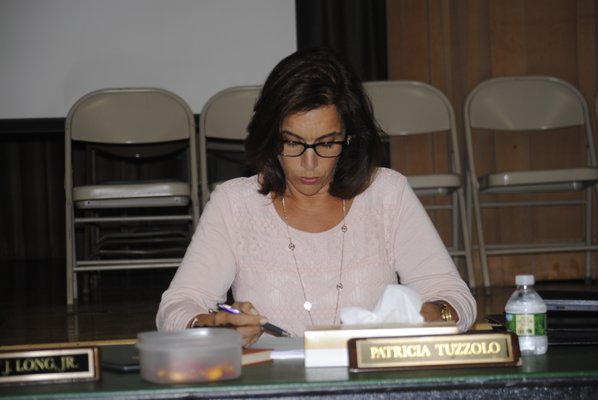
Patricia Tuzzolo, president of the East Quogue Board of Education, during a special meeting on Tuesday afternoon. AMANDA BERNOCCO


Alfredo Merat, a musician living in Springs, will play his guitar at the vigil in Good Ground Park in Hampton Bays on Saturday. AMANDA BERNOCCO

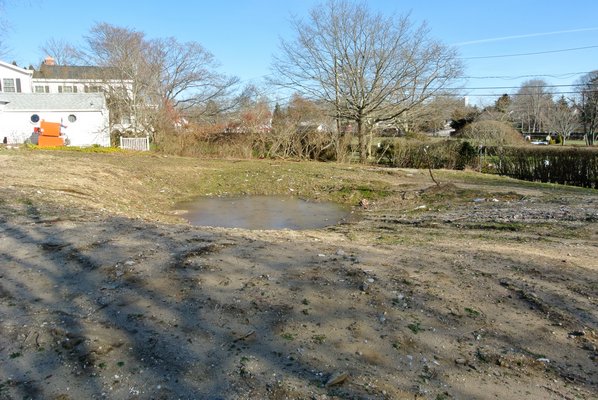
The Southampton Town Board agreed on Tuesday to purchase the former Pyrrhus Concer property in Southampton Village for $4.3 million, using Community Preservation Fund revenues.
Southampton Village plans to reconstruct the house, which was demolished, and turn the site into a museum honoring Mr. Concer and the region’s African-American heritage.
The property owners, David and Silvia Hermer, will gain $1.55 million in the transaction, having purchased the 0.82-acre property at 51 Pond Lane in Southampton Village for $2.75 million in 2013. At the time of their purchase, they said they had planned to build a new single-family, two-story home at the site. After several months of debate, the Southampton Village Architectural Review Board denied the couple’s application to demolish the existing house.
Opponents said the house was an integral part of the village’s history, as it was believed to have been inhabited by Mr. Concer, an African-American who was born an indentured servant in 1814 who was later sold for $25 at the age of 5 to another village resident. Eventually, he was freed and went on several whaling expeditions. Most notably, he was part of a crew that saved stranded Japanese sailors and took them home, becoming one of the first Americans, and perhaps the first black man, to visit then-restricted Japan.
The property owners countered that very few, if any, historic elements remained in most of the house, which they said was built in the 1900s, after Mr. Concer had died.
The couple filed a $10 million notice of claim against the village, charging that their rights as property owners were being denied. Last May, the village and the homeowners reached an agreement, and the municipality was given permission to salvage historic artifacts before the building was ultimately demolished a few months later.
Historian Robert Strada, who had been tasked with preserving as much as possible before the home was knocked down, later told the Village Board that the core frame of the home was clearly a 19th-century building owned by the Concer family and was worthy of landmark status.
The Town Board vote on Tuesday followed a public hearing with speakers showing unanimous support for protecting the site from future development.
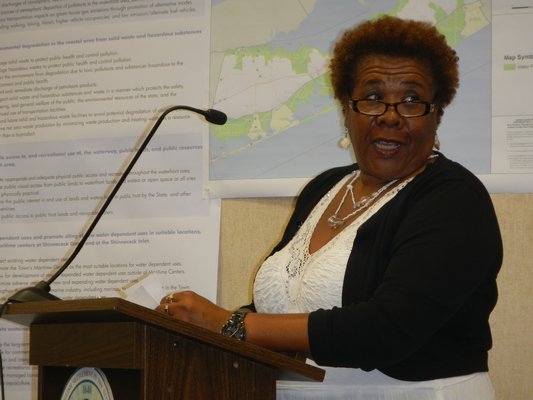
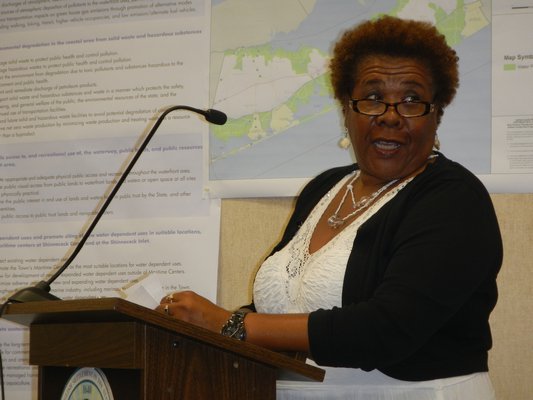
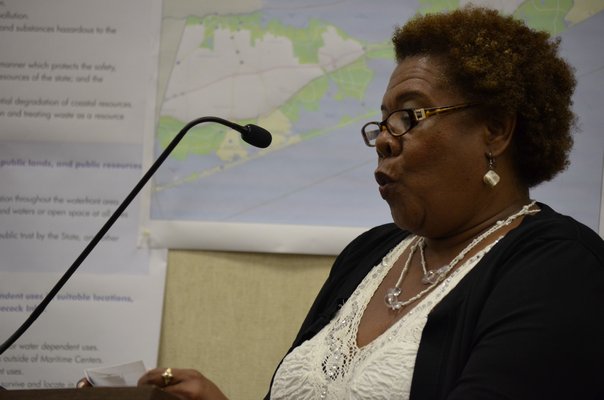
“We’re in a midst of the 375th celebration [for the town], and, to be honest with you, 375 years ago, African-Americans didn’t have much to celebrate,” said Brenda Simmons, assistant to Mayor Mark Epley and chairwoman of the African-American Museum of the East End. “And, over the years, so much of our history has been erased and fictionalized. But Pyrrhus Concer’s contribution to this world is a reality that we can all not ignore and overlook, Despite his servitude status, his name will always be associated as a major contributor of the whaling history, from New England to Japan.”
Tom Edmonds, president of the Southampton Historical Museum, shared ideas for how the site could be transformed to honor the legacy of Mr. Concer, namely turning it into a history center that helps to chronicle the history of slavery in America and in New York. “Southampton has gone through a very painful and public scorching for the disregard of the Pyrrhus Concer house,” he said. “Restoring his house on its original location would greatly rectify our reputation and increase the knowledge of a significant part of Southampton’s history.”
Georgette Grier-Key, executive director of the Eastville Community Historical Society of Sag Harbor, also expressed her support and noted how African-American history is often rife with misinformation. “The history of African-Americans in this country is complex, complicated, painful, difficult and not completely understood,” she said. “The inclusion of early history is unbalanced, has gaps, and is at times inaccurate. So we have the opportunity in terms of righting a wrong … and making sure that our history is inclusive,” she said.
In this case, Mr. Concer’s “life can be examined from birth to death, which is really unusual,” said Ms. Grier-Key. “It’s not often you can see the documentation of a slave’s life,” she said.
Along with the other speakers, Sally Spanburgh, chairwoman of the town’s Landmarks and Historic Districts Board, has been a longtime supporter of preserving the home and site. “By studying the property, Southampton can teach itself and others about how African-American families lived, cooked, farmed and related to their white neighbors,” she told the Town Board. “There’s so much to learn and share about this property and the house,” she said. “The acquisition of 51 Pond Lane will remedy what was almost a tragedy and total loss.”
At the end of the hearing, Town Supervisor Anna Throne-Holst said, “I think this is also a very good moment to reflect a little bit on the Community Preservation Fund and the evolution that it has gone through since its first inception. The name implies just that—that it is for community preservation—and this is community and preserving and celebrating a very important part of history here.”
This measure, she added, is “a happy example of where government can act in a positive manner to do things that are of a positive nature for its constituents.”
The CPF tacks on a 2-percent tax on most real estate transfers on the East End. Monies from the tax are put into a fund in each of the five towns that is set aside for open space purchases, and, in some cases, other community uses, such as historic preservation.


 Carey London on Jul 14, 2015