


 2 Photos
A giant sculpture, "Deer," is headed to Hampton Bays.
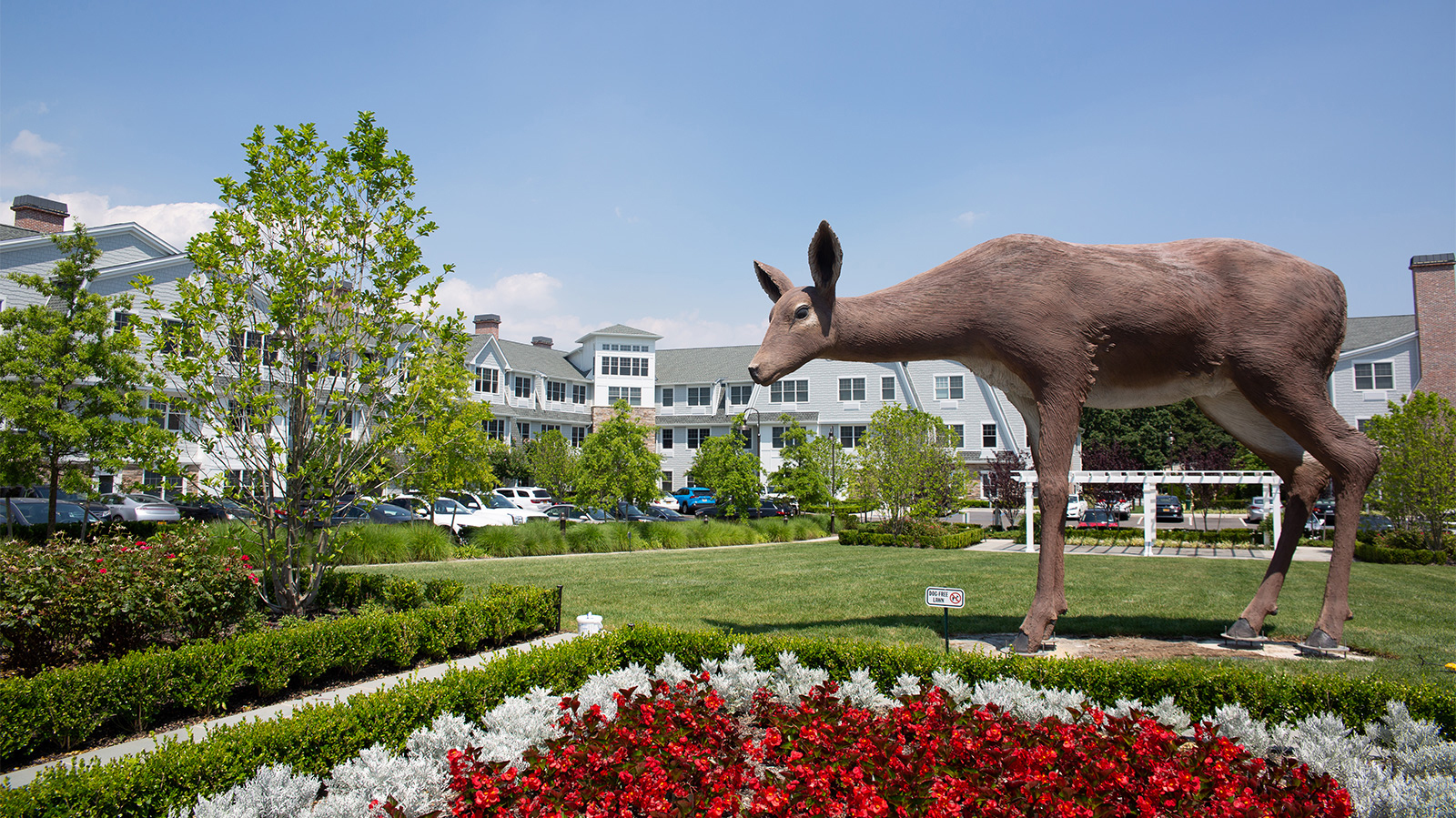
The giant deer sculpture headed to Hampton Bays has been 'grazing' at a luxury apartment complex in Amityville.
Move over, Big Duck: There’s a new huge critter coming to town.
Last week, the Southampton Town Board voted to allow the developers of the Canoe Place Inn & Cottages to install a 16-foot-tall sculpture of a deer on their property in Hampton Bays.
“Oh, deer!” Southampton Town Supervisor Jay Schneiderman exclaimed, revealing a penchant for puns during a June work session discussing the new home for the piece. “We get to be five art critics,” he added.
“Well, you know in advance,” Town Planning and Development Administrator Janice Scherer clarified.
The CPI was developed under the now-defunct Planned Development District zoning tool, which requires the Town Board to sign off on any art installations. The provision, an addition to the PDD law, was prompted by the appearance of the 30-foot aluminum statue, “Walking Figure,” at Francis S. Gabreski Airport in 2014. It had been commissioned by developers Gregg and Mitchell Rechler, whose company Rechler Equity Partners has also undertaken the rehabilitation of the CPI property.
People weren’t expecting a large sculpture to arrive on that property, Scherer related. “It was a surprise.”
The provision allows the property owner to install public art, but it must first be approved by the Town Board. While the PDD was removed as a zoning tool several years ago, it remains in place for applications made before 2016.
“Public art has always been important for myself and Mitchell and my family,” Gregg Rechler told the Town Board during the work session. The Rechlers were responsible for the iconic sculpture “LOVE” that once stood near their Midtown Manhattan property.
“Art shouldn’t just be something in one private home — it should be shared with the public,” he said. Art’s provocative nature appeals to the developer, who noted that whether people love or hate a work, “They’re going to talk about it.”
Beyond the sculpture, the developers are looking to host art programs at the inn. The Rechlers have purchased other pieces by American artists and hope to work with the local art community to mount revolving exhibits. Art is going to be an important component of the inn campus, Rechler said.
The sculptor of “Deer,” Tony Tasset, is an American artist known for creating public pieces people want to engage with, Rechler continued. His work is included in permanent collections at the Carnegie Museum of Art in Pittsburgh, the Baltimore Museum of Art, the Art Institute of Chicago, the Museum of Contemporary Art in Chicago, the Museum of Contemporary Art in Los Angeles, and the San Francisco Museum of Art.
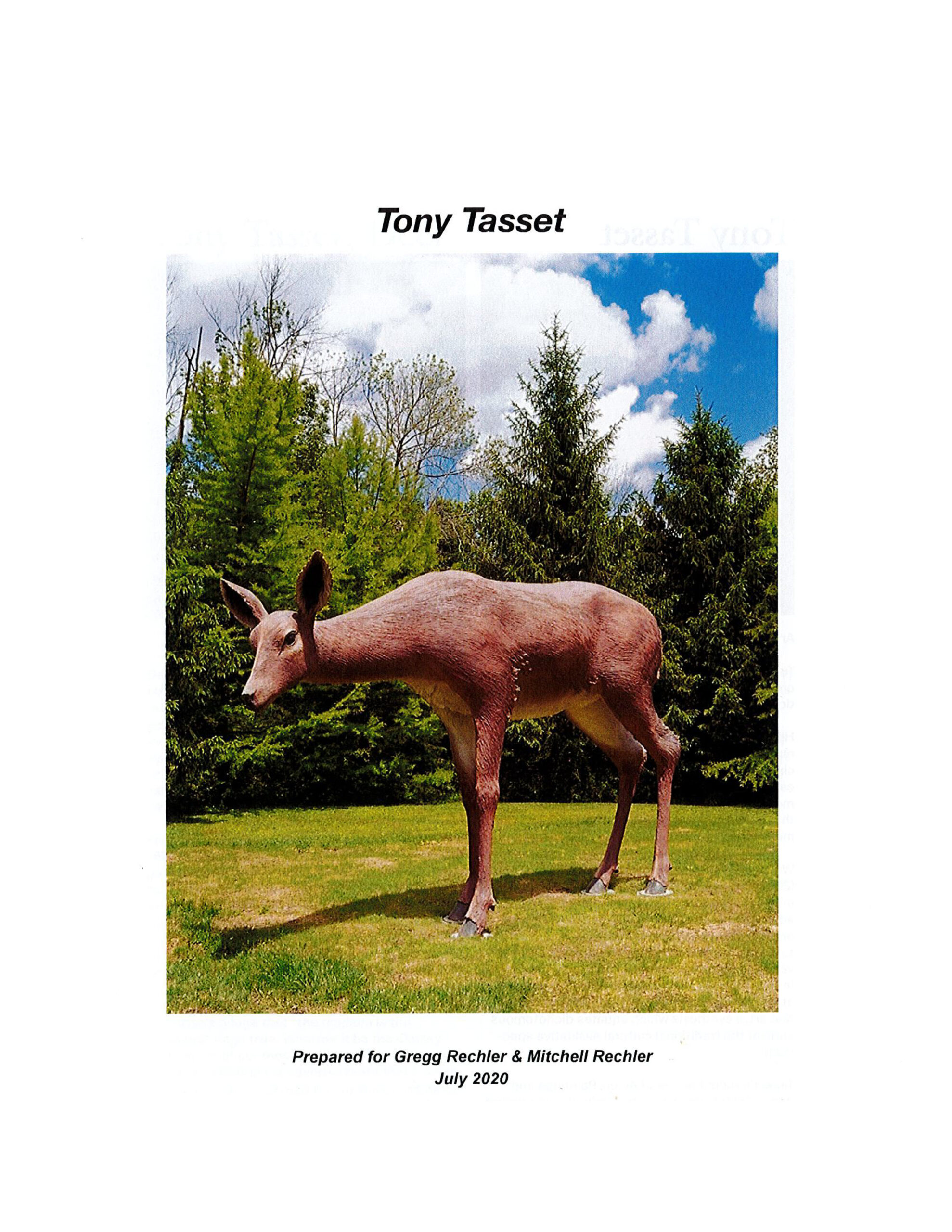
Crafted from fiberglass and steel and debuted in 2015, “Deer” stands some 16 feet tall and has had a large range, exhibited in such places as Riverwalk in Chicago, the Crystal Bridges Museum of American Art in Arkansas, Aldrich Contemporary Art Museum in Connecticut and Laumeier Sculpture Park in St. Louis. Most recently, the grazing figure has graced the lawn at the Greybarn apartment complex in Amityville, another Rechler holding.
The statue will be placed on the western side of the inn property, tucked in near the cottages. “It’s taller than the cottages,” Schneiderman noted. “It’s hard to hide a 16-foot deer.”
“We’re not trying to hide it,” Rechler explained. “It’s peeking through the landscape. It’s eating the foliage, which is what happens with deer in my yard.”
“But not whole trees in a single bite,” Schneiderman added.
Councilwoman Cynthia McNamara asked the developer if he understood the potential of placing “a large deer target” in Hampton Bays, while Councilman Rick Martel wondered if it could be the focal point of senior pranks. Councilman John Bouvier also expressed concern about the potential for vandalism.
The sculpture has been at Greybarn for the last two years and there have been no issues with vandalism or damage, Rechler reported. The board members were assured the site will have adequate security.
But it will be open to the public. The sculpture will be available for people to visit and view, Rechler said, offering that it will be an important asset in making Hampton Bays a destination. Set back from the street, it won’t be visible to eastbound drivers on Montauk Highway; those traveling west may see it through the site.
Rechler said he and his cousin bought the piece with placement at the CPI property in mind. He believes the image is “very local.”
Weighing in on the notion in a Hampton Bays Facebook group, some posters thought another figure, like a lighthouse or giant clam or sea turtle or something nautical would be more representative of the area. Some even said they wanted “Hercules” back, recalling a huge wooden sculpture of the mythological hero that once graced CPI environs.
“I like sculptures, but a 16-foot-tall deer? Well, we like the Big Duck, so I guess a Big Deer may grow on people,” Mike Terry wrote.
Another person to comment offered a pithy: “hideous.”
“Art is supposed to be evocative and spur conversation,” Schneiderman asserted.
The lawmaker expressed discomfort at being asked to offer input on “Deer.” He said he didn’t love being asked to sign off on the installation and would have preferred having the authority to nix something that could be considered offensive.
This isn’t the first oversized sculpture to raise eyebrows. In 2008, “Legs,” a piece by the late Larry Rivers, caused a stir in Sag Harbor when it appeared on Madison Street. Lawsuits ensued and in 2015 a judge ordered it taken down.
Recalling the sculpture, Councilman Tommy John Schiavoni wanted to make sure that “Deer” is structurally sound and conforms to property setbacks. “The question isn’t if it’s art, to me. It’s structural,” he said, wanting to make sure “Deer” can’t fall on someone’s house. He was assured the installation is structurally sound and will be secured in a cement base.
Schneiderman wondered if it will be illuminated. “Are we going to see a glowing deer in Hampton Bays?” he queried. No lights are planned, not even for the holidays, prompting the supervisor to joke, “They could just light the nose.”
According to the biographical information shared with the town, Tasset is renowned for work that satirizes American culture. “Deer” creates tension between the gentle moment of a deer grazing and its monstrous proportions, the description relates, offering, “Tasset’s work asks, what if deer evolved into the size of dinosaurs?”
“It’s a doe, just for reference,” Bouvier said.
“But I’m sure it cost a few bucks, “Schneiderman quipped.
In other CPI news, supply chain issues have delayed the once-hoped-for June opening of the multimillion-dollar restoration. The Rechlers are now shooting for an early August opening.


