


 4 Photos
It's a swan song for proposed boutique hotel at site of decrepit Bel Aire Motel in Hampton Bays. TOM GOGOlA
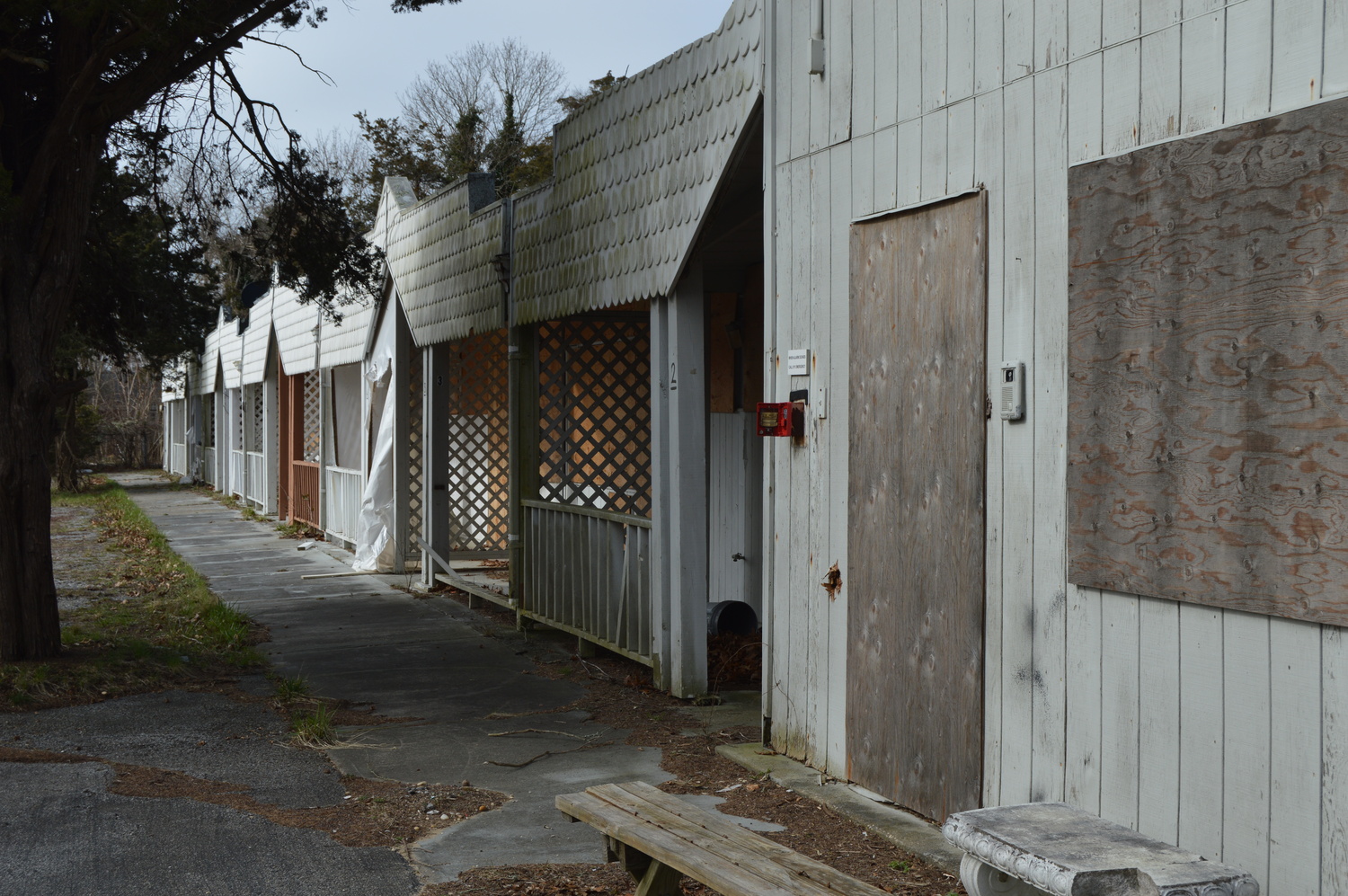
Bel-Aire Motel will likely be demolished to make way for a passive-use park. TOM GOGOLA
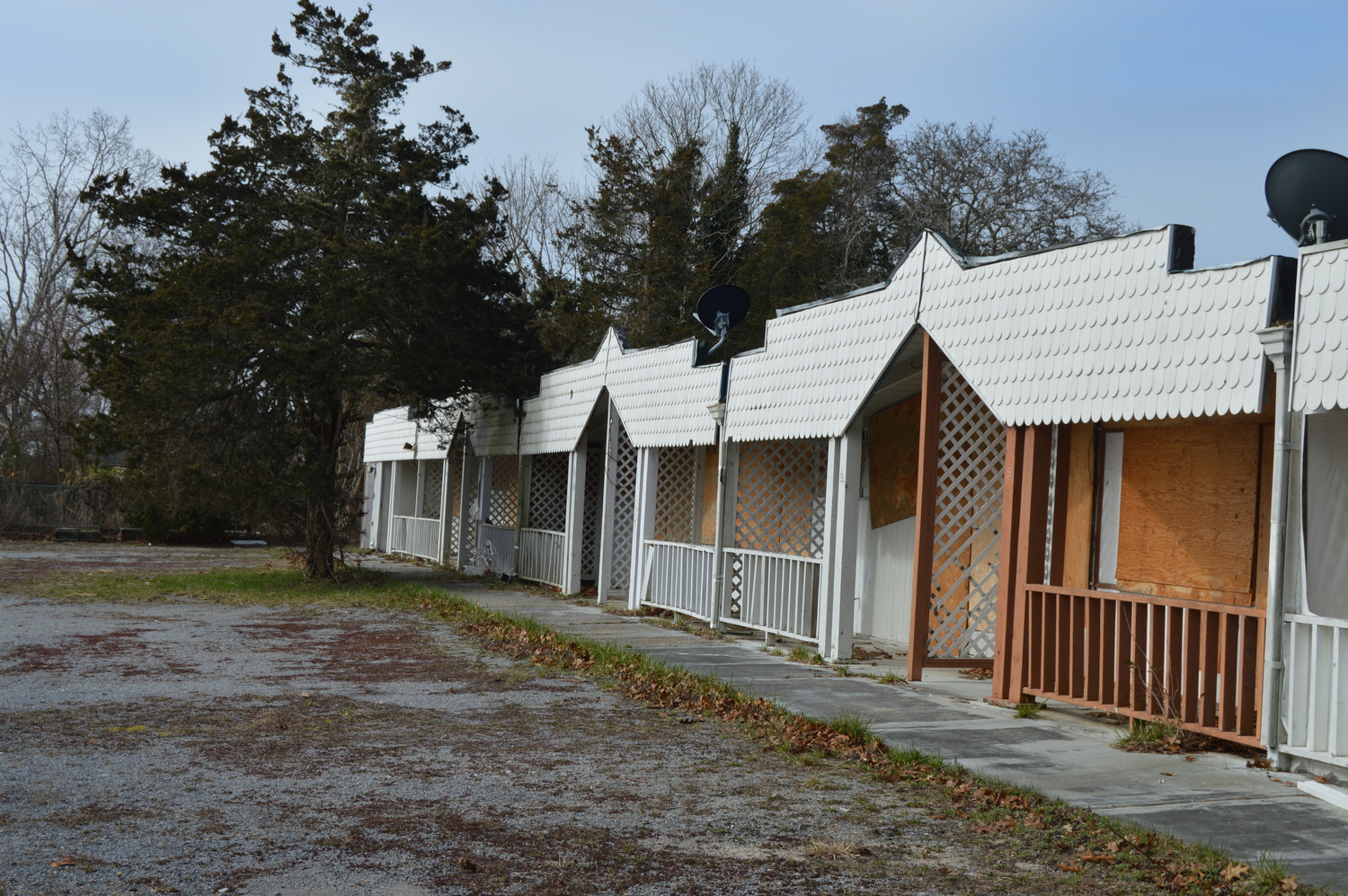
Bel-Aire Motel will likely be demolished to make way for a passive-use park. TOM GOGOLA
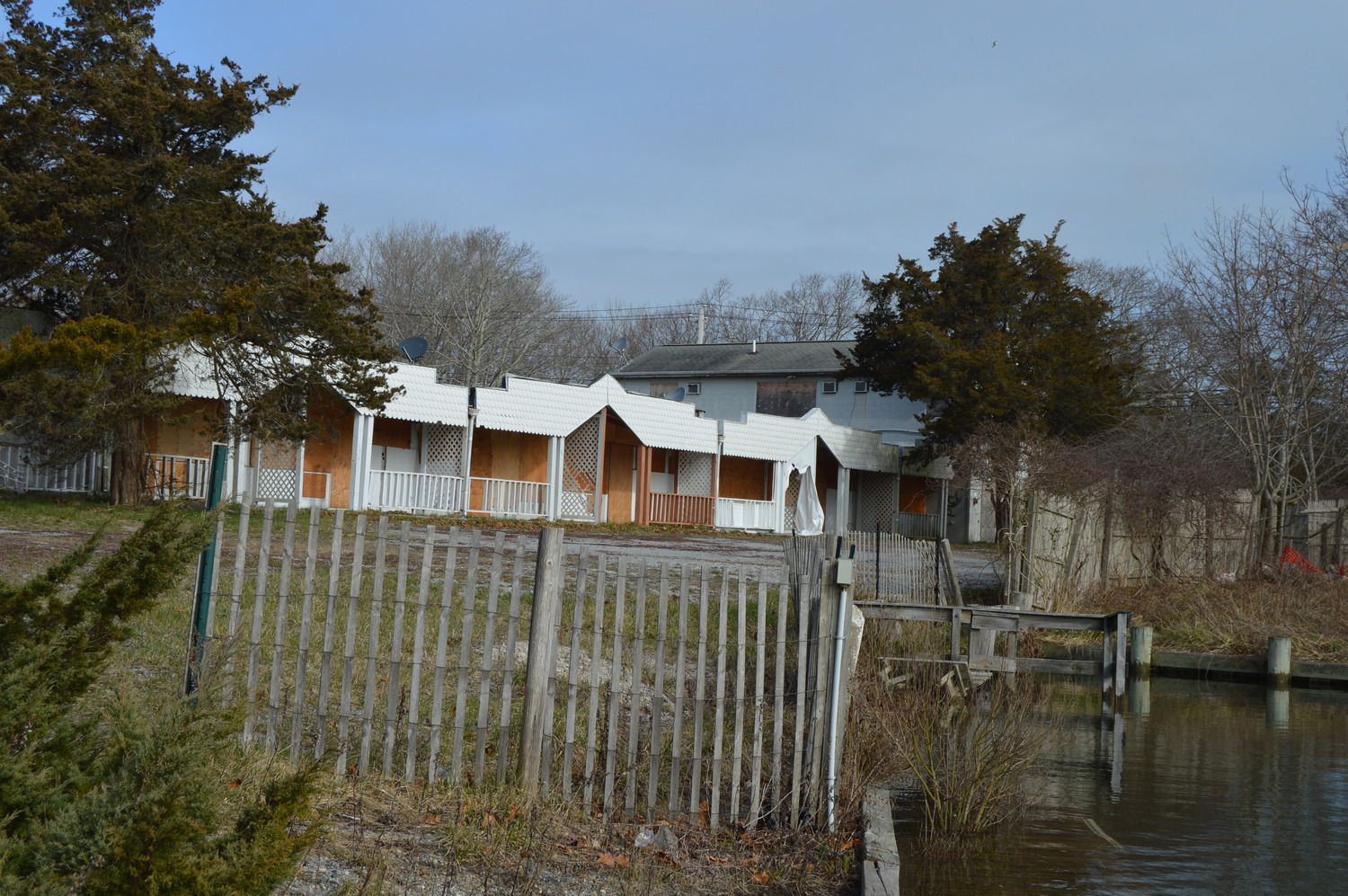
Bel-Aire Motel will likely be demolished to make way for a passive-use park. TOM GOGOLA
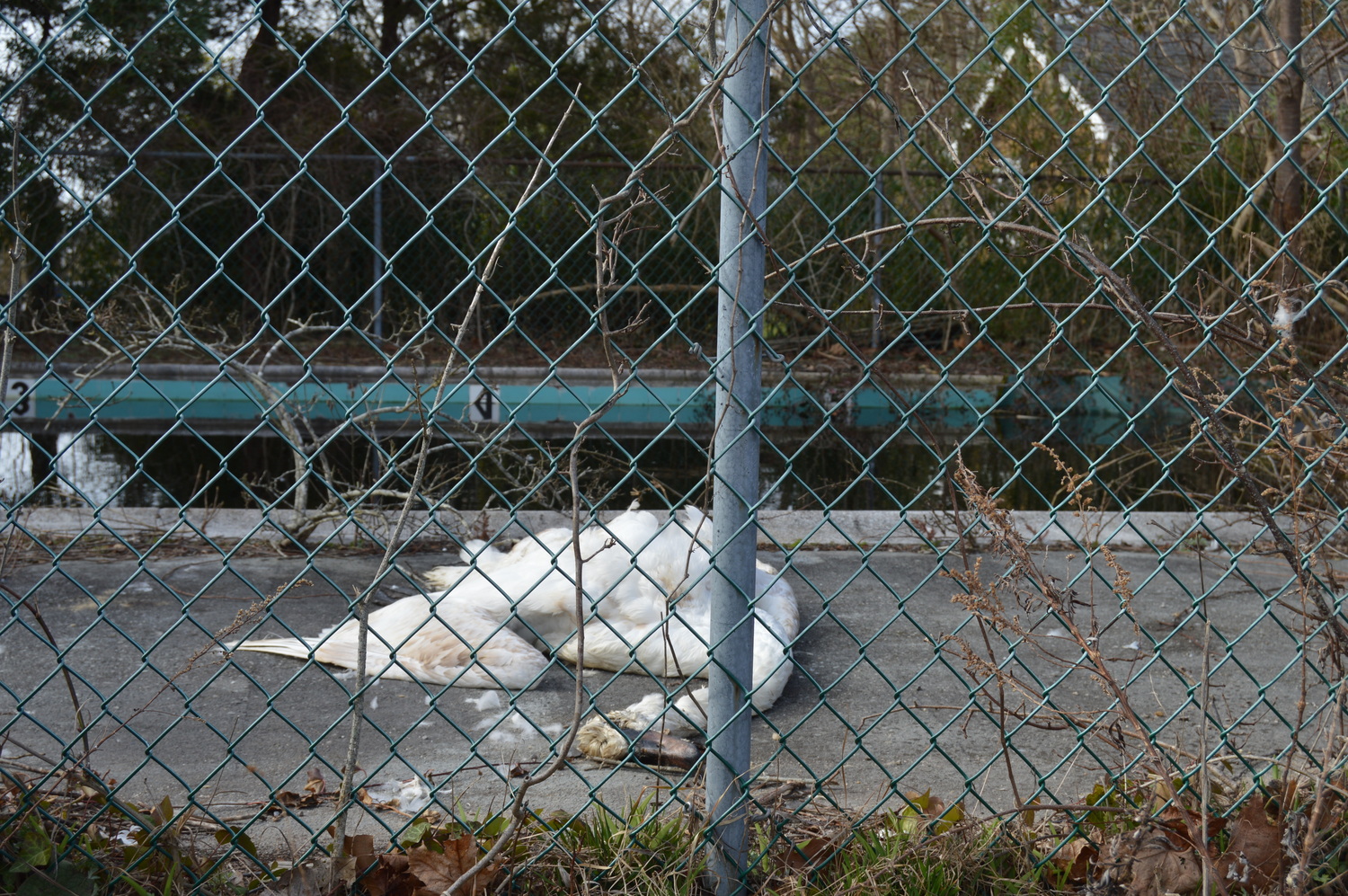
On a recent morning, a large and partially decomposed swan lay sprawled on the pool deck of the former Bel-Aire Cove Motel in Hampton Bays, next to a fenced-in in-ground pool filled with fetid water and a jumble of vegetation sprouting from the deep end.
A weathered wooden chaise lounge on the deck only served to highlight the sense of abandonment at this decrepit old motel that was the subject of a public hearing at Southampton Town Hall on Tuesday night, March 26 — and which signaled that a “swan song” moment had arrived at the property located at 20 Shinnecock Road.
The Town Board heard from several Hampton Bays residents during the meeting, and from Assistant Town Attorney Kelly Doyle, as it moved ahead with a plan to terminate the Hampton Bays Waterfront Revitalization Plan adopted in 2019 pursuant to the state’s Urban Renewal law.
The former motel, popular with transients and those of lesser means in its down-at-the-heels heyday, was to be the springboard project to kick off the revitalization plan, with former Town Supervisor Jay Schneiderman pushing for a plan to build a boutique hotel or senior condominium development on the site after the town bought the parcel in 2019 via a $1.2 million loan from its general fund.
The idea was to turn around and sell the parcel to a developer once the town secured development approvals for the property. But last October, the Town Board pulled the plug on a request for proposals that sought to identify a developer following years of intense community pushback to that plan. Community members have long sought to have the parcel preserved as open space with a recreational element.
Also in October, the board voted to hire a company to do the asbestos removal at the site in anticipation of its eventual demolition.
Now, the Town Board is considering whether to convert the land into a town park or a Community Preservation Fund parcel — or split it up between part CPF and part town park.
A town park wouldn’t come with the use restrictions that are part of any CPF purchase, said Doyle, and the town could, for example, allow for uses such as farmers markets or other gatherings.
That all remains to be seen, said Doyle, and will be subject to a future public hearing.
One tempting option is disallowed under the state law that created the CPF mechanism, which levies a 2 percent tax on real estate transfers with the proceeds going into the CPF pot. Town Supervisor Maria Moore said she tried, and failed, to get retiring State Assemblyman Fred W. Thiele Jr. to go along with a plan where the town would sell the property, recoup the loan, and then re-purchase it through the CPF.
Hampton Bays resident Mary Pazan highlighted what she called the town’s “dereliction of duties to maintain the property” during the hearing, as she and other residents recounted the years of local activism that helped to upend the boutique-motel plan in favor of a passive park.
The town was moving as quickly as it could to demo the building, said Moore, who noted that the prior Town Board had “good intentions” for the site, but that “things changed.”
Ray D’Angelo, also of Hampton Bays, wanted to know why there would be further delay as the town considers its options and pushed out any decision on the parcel for nine months. “What is this new wrinkle?” D’Angelo asked the Town Board. “Why are we fighting this now — why decide whether to divide it or not?”
Town Councilman Bill Pell urged D’Angelo to think of the children and possible future uses of the parcel that would be disallowed under a CPF purchase. Pell raised the specter of food fairs or other activities on the site located on Penny Pond, and also noted that dredge spoils could be dumped there.
“It’s unconscionable to have this delay again, outrageous that it’s going on for nine months,” D’Angelo said.
“If you keep talking, it’s going to be 10 months,” Pell quipped in response.


