


 1 Photo
Pre-k student Jasiu Gredysa works to drill holes in wood at the Southampton Montessori School. BY ERIN MCKINLEY
Southampton Town has pulled the plug on a proposed garbage district in the communities of Flanders, Riverside and Northampton, about three weeks after a majority of potential customers trashed the plan at a public hearing.
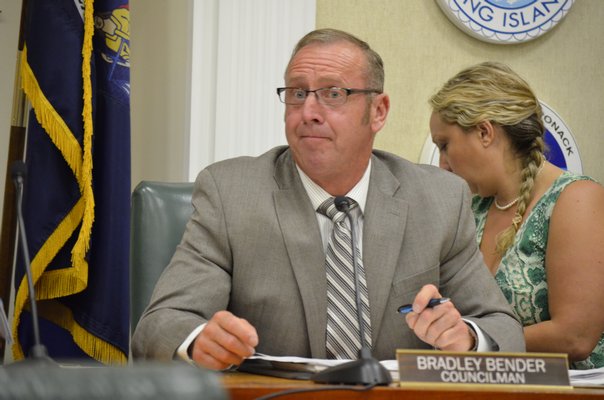
On Tuesday afternoon, Town Councilman Brad Bender explained that the town listened to the criticisms of residents who attended last month’s hearing at the Phillips Avenue Elementary School in Riverside, and ultimately decided not to pursue the initiative for the time being even though he still thinks it is a good idea for the northwest corner of the municipality.
At the same time, Mr. Bender noted that the garbage district proposal—pursued by town officials at the urging of leaders of the Flanders, Riverside and Northampton Community Association—has succeeded in cleaning up parts of the three hamlets that have often been used as dumping grounds. Mr. Bender, who lives in Northampton, explained that residents have organized several community cleanups in recent weeks to prove that a residential garbage district is unnecessary.
“Unfortunately, the public sentiment is against the formation of a garbage district at this time,” Mr. Bender said in a prepared statement. “I still believe that providing this service to the Flanders, Riverside and Northampton areas is a great idea—one that would go a long way to improving both the property values and pride of place.”
According to Mr. Bender, Town Board members met in chambers after last month’s public hearing and decided not to move forward with the proposal, which was officially rejected by them during Tuesday’s board meeting.
The garbage district, had it been approved, would have serviced approximately 2,100 homeowners in the three hamlets. The town had received eight bids—ranging from as low as $24.47 per month for a single-family household to as high as $60 per month—but had not yet made a decision on those offers prior to killing the idea Tuesday. One of the criticisms of the plan raised by opponents was that there was nothing preventing those fees from escalating down the road.
The plan had called for two household trash pickups per week, as well as one recyclable pickup and one bulk trash pickup each week. Additionally, there would be about 10 days per year set aside for yard waste pickup as well. Businesses in Flanders, Riverside and Northampton would not have been part of the district.
The original plan was for the garbage district to be funded through the creation of a separate taxing district. District taxpayers, however, would have had the final say and a public vote was tentatively scheduled for this fall.
The three hamlets were targeted because of a widespread illegal dumping problem that has plagued the area for years.
Ron Fisher of Flanders, who owns multiple properties in the hamlet and has been a vocal critic of the initiative, said Wednesday morning that it is refreshing to see government listen to the demands of the public.
“I was ecstatic,” said Mr. Fisher whose brother, Frank, owns Go-Green Sanitation in Southampton, one of the private carting companies that stood to potentially lose customers if a garbage district was created. “I was appreciative that they listened to all of the residents that had assembled and voiced their opposition to the creation of more taxes. Knowing that two of my properties would see such a significant increase made me want to join the discussion to defeat it.”
Mr. Fisher added that he first became involved in the fight through Facebook, and agreed with Mr. Bender that the proposal—though he remains steadfast against a garbage district—did do some good for the community. Most notably, he said, there is visibly less garbage in the three hamlets and there is a much stronger sense of community.
“It really did unite the hamlets,” Mr. Fisher said. “We used social media to do it and I believe it was the first time to this degree in Flanders. We are definitely a much stronger Flanders moving forward than before the garbage district was proposed.”
Vince Taldone, the president of the Flanders, Riverside and Northampton Community Association, said he was disappointed that the measure cannot move forward to a public referendum, even though most of those who attended last month’s hearing said they opposed its creation.
“I do understand why the town has looked at this and said there isn’t enough public support, but I am disappointed because I look at this from the vantage of how do we save people money and get them better services and I thought this was a wonderful thing,” Mr. Taldone said. “So I am disappointed in the decision.”
While the plan is now dead, Mr. Bender said he remains hopeful that it could eventually be revisited.
“Perhaps it is an idea whose time has not yet come,” he said, “but one which bears revisiting in the future.”


 Erin McKinley on Jun 9, 2015