


 2 Photos
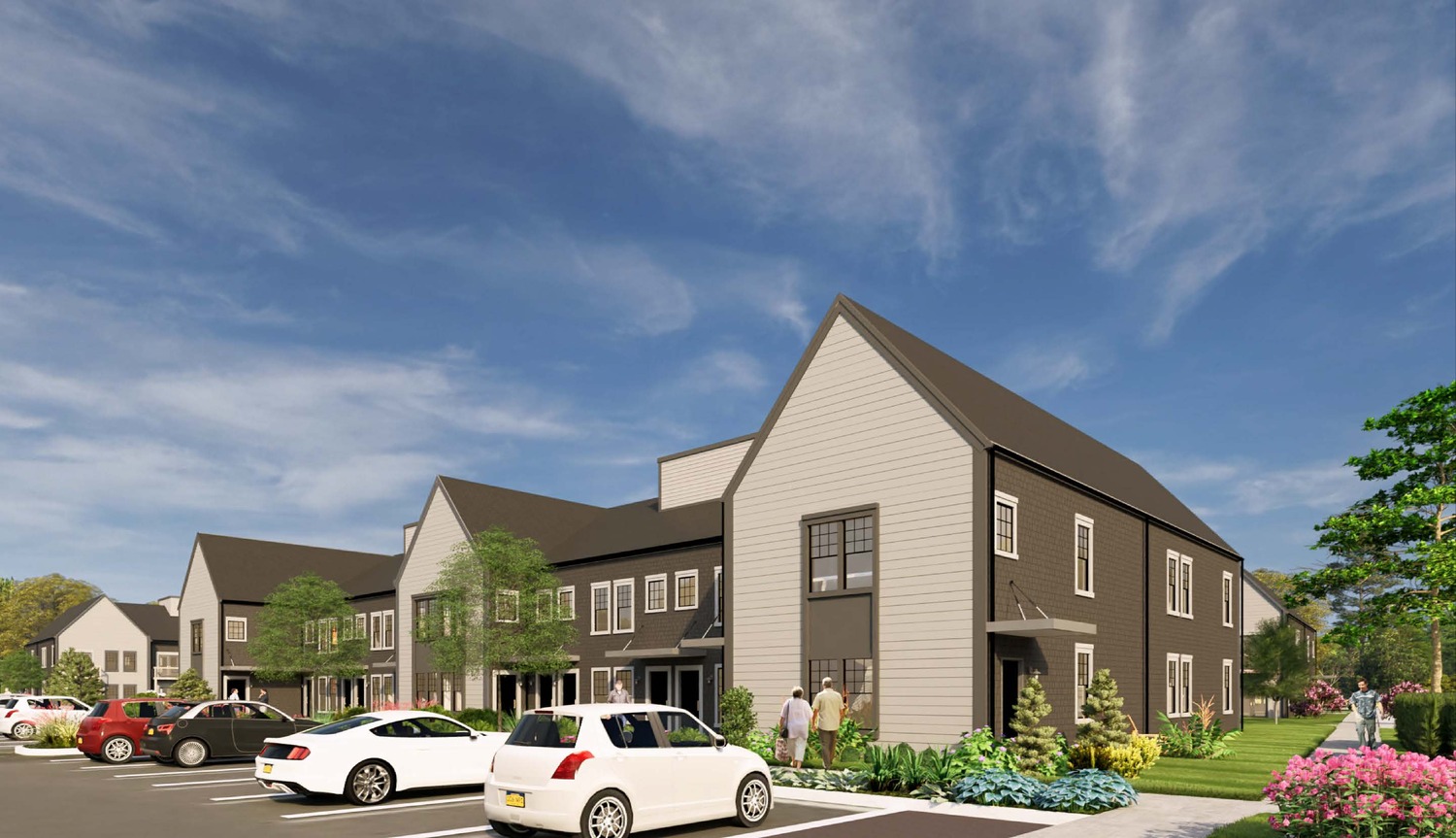
The 78-unit development being planned for Quiogue is expected to cost some $55 million to construct, most of which will come from government grants and federal tax credits. NRP GROUP
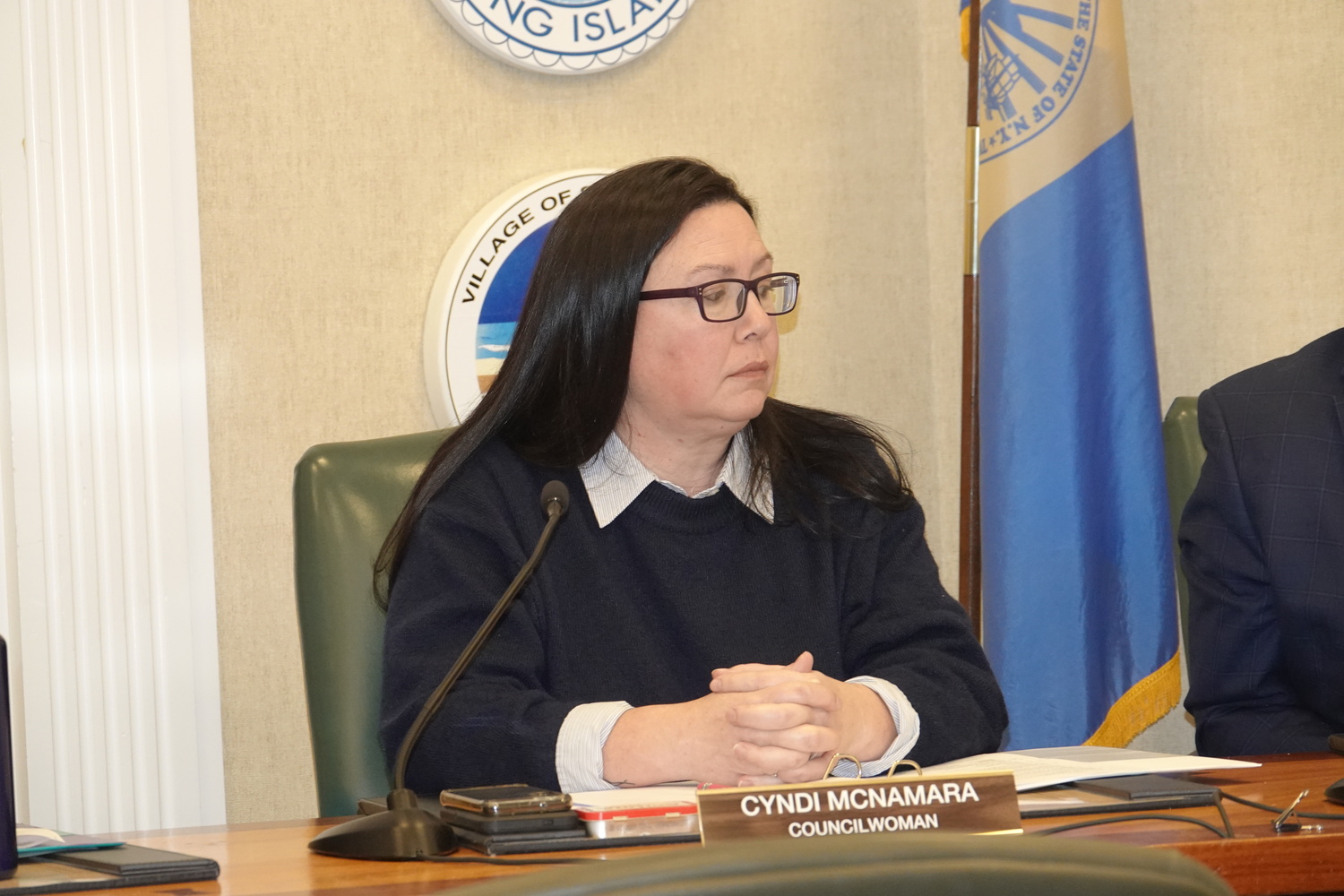
Councilwoman Cyndi McNamara said that the income levels the Quiogue housing project will be available to include many town employees. MICHAEL WRIGHT
Southampton Town lawmakers are weighing whether to allocate $2.7 million from the town’s affordable housing coffers to help fund the 78-unit, $55 million workforce and low-income housing development planned for the land behind Strebel’s Laundromat on Quiogue.
The project would be the largest affordable housing development on the South Fork when completed and is being designed with low- and moderate-income residents, especially those with budding families who are increasingly priced out of the local housing market, in mind.
The project’s developers, the national rental housing company NRP Group, have applied to the town for a grant from the Community Housing Fund, the year-old housing funding program the draws revenues from a half-percent tax on most real estate transfers.
Southampton Town’s fund currently has about $20 million in reserve and is just starting to make its first allocations for housing assistance.
The town’s contribution, if approved by the Town Board, would be matched by Suffolk County. The bulk of the funding, about $44 million worth, will come through the sale of federal tax credits.
The advisory committee the town set up to help guide the Town Board on which grant requests were the most efficient at creating affordable housing offered its support for the application. But most of its members thought that the project’s developers should pledge to keep more of the units as affordable housing in perpetuity, one of the committee’s members, Tom Iovane, told the Town Board during a public hearing on the CHF grant request on Tuesday, January 28.
Just 16 of the total 78 rental units, or 20 percent, will be required to remain at state-mandated affordable housing rents set according to area median income in perpetuity. The other 62 units will be priced according to affordable rates for 50 years but then will be allowed to revert to market rate rents.
Seizing on wording in the CHF’s enabling legislation that said housing created with grants from the program “shall remain affordable,” Iovane said that advisory committee was concerned about setting a precedent of dedicating CHF funds to a project that did not ensure its units would remain priced at affordable rates in perpetuity.
Eight of the 11 members of the committee voted to recommend to the Town Board that it demand at least 30 to 35 units be cemented as affordable in perpetuity, he said, and one member wanted the town to demand that they all remain affordable forever if the town is to pledge CHF funding.
Councilwoman Cyndi McNamara, the only member of the current Town Board that was sitting for the vote that granted NRP permission to build the development, said that the town’s contribution would be a small one in the grand scheme of the project, and that the $2.7 million could be seen as being dedicated only to those 16 units, which, at only about $168,000 each, would still be a fraction of what the town has spent to create new affordable units previously.
“Not to say that $2.7 million is going to sink or swim this project, but we said we want this in our community, and we’re being asked to help get it across the finish line — I wouldn’t want this project to lose another $2.7 [million from the county] because we didn’t give them the matching funding,” she said.
Councilman Michael Iasilli echoed her sentiments and said that the town should be sure to make the permanence of affordable rents a firm requirement in future grants but said he saw the relatively small contribution as a fair one toward a small fraction of the funding for such an impactful project.
The project design would create 31 one-bedroom units, 27 two-bedroom units and 20 three-bedroom units, scattered among six two-story buildings.
The units will be priced so as to be affordable to a mix of income levels. A dozen units will be priced so that someone earning just 30 percent of the area median income — or about $46,000 a year for a family of four — would be able to afford to rent one of the 2-bedroom units and only pay about 30 percent of their income toward rent. Another 12 units will be priced to fit incomes of 50 percent of the area median income, or AMI, 32 units for those earning 60 percent of AMI and 22 for those earning 80 percent of AMI.
The maximum rent for a one-bedroom unit would be $1,563 per month and a maximum of $2,109 for a three-bedroom unit. Several units will also be set aside for tenants with disabilities or made to be adapted to special needs of handicapped persons.
The Town Board granted a zone change for the project in late 2023 that cemented the number of units allowed at the property. The project is still being reviewed by the Town Planning Board to finalize how the property is arranged, and the developers are working on securing the funding for the project, but adjusting the overall scale of the development is not on the table.
Residents of the neighborhoods surrounding the project site nonetheless took the opportunity of Tuesday’s hearing on the CHF funding to take swipes at the project as a whole and derail the funding proposal.
The impact the project will have on school taxes, in particular, has been a sore subject for residents. Jonathan Gertzman, a vice president at NRP, noted that the Westhampton Beach School District has had steadily declining enrollment over the last 10 years.
The district’s superintendent, Dr. Carolyn Probst, said that even with declining enrollment, the district would still struggle to absorb a large influx of new students.
The project developers have forecast that about 25 new students would move into the development in the first years — but neighbors pointed out that another workforce housing project in Speonk had been estimated to generate only three new students and had actually resulted in 12.
“Typically, any of these type of housing developments seriously underestimate the implications on the number of students and on the broader community,” said Jennifer Neumaier, a member of the Westhampton Beach School Board — pointing out that the just over $74,000 the project would pay to the school district in lieu of property taxes barely covers the cost of one student. “So if the school district has to pierce the cap to cover the additional costs, that sits with the Town of Southampton. Why put the additional costs on taxpayers when the NRP Group had annual revenues of $228 million. A profitable private organization like NRP should not rely on community housing funds that are meant to benefit local residents, not bolster private profits.”
Other residents claimed that the project had changed the income breakdown for the residents of the project — tilting them more toward lower income residents.
Gertzman and McNamara said that the income set-asides have not been changed since the Town Board approved the project in 2023 — though what the area median income is and therefore the income levels represented in the forecasts may have changed.
McNamara noted that even some of the lower income levels listed would still include many town Civil Service employees and legislative aids in Town Hall.
“A police officer in the Southampton Town Police Department’s starting salary is just under $69,000, living by themselves they would be eligible for the 60 percent of AMI,” Gertzman told board members. “A nurse at Stony Brook Southampton does a little better, qualifies for 80 percent of AMI for a two bedroom unit. A Westhampton Beach school teacher qualifies for 60 percent of AMI. A waiter working in a restaurant, 40 percent.”
Westhampton resident George Lynch urged the board to award the grant funding and get the project on its way to construction.
“The number of units here constitutes a dramatic increase in the overall number of units that we have in town and we all know what a crying need there is for this,” he said. “Given that fact, we must persist in this, even though real serious concerns have been raised today respective to the length of time units are to be affordable, the affect on our schools and school budgets.
Quoting President John F. Kennedy, he urged the board to embrace the difficult hurdles: “I ask this board not to be discouraged by the fact that this is hard and to stick with it and let’s see if we can’t bring this very important project to fruition.”


 Michael Wright on Jan 29, 2025