



 4 Photos
Methamphetamine is a highly addictive stimulant that can be snorted, smoked, injected or taken orally.
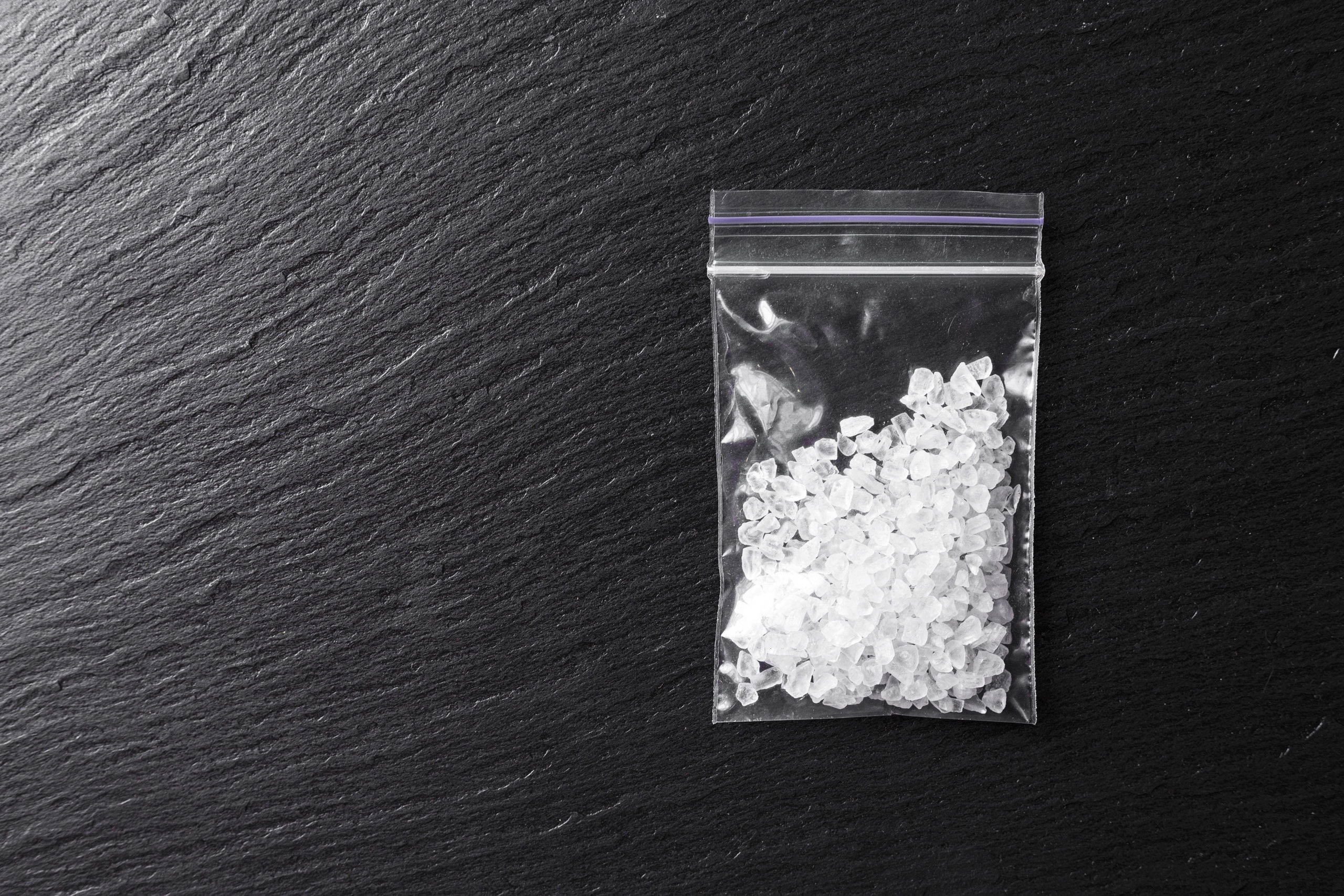
Methamphetamine is a highly addictive stimulant that can be snorted, smoked, injected or taken orally.

Southampton Town Police Chief Steven Skrynecki wants to get out ahead of any potential problem by stepping up local communication and raising awareness about the dangers of methamphetamine. DANA SHAW

Southampton Town Police Chief Steven Skrynecki wants to get out ahead of any potential problem by stepping up local communication and raising awareness about the dangers of methamphetamine. DANA SHAW
South Dakota has come under intense scrutiny for launching an expensive marketing campaign to combat methamphetamine use in the state — using the slogan: “Meth. We’re on it.”
Some joked that the slogan suggests that the entire state is addicted to the drug. But officials there have said that the campaign is serious. It’s meant to be provocative, because South Dakota’s meth crisis is growing.
Meth isn’t a major problem on the East End currently, but officials say it’s increasingly being trafficked into the United States from Mexico — and use has grown in the New England area, too.
Southampton Town Police Chief Steven Skrynecki wants to get out ahead of any potential problem by stepping up local communication and raising awareness about the dangers of the drug, which is responsible for more overdose deaths in the West than fentanyl, a highly addictive synthetic opioid that’s been a bigger issue on the East End.
He first learned of the trend in October at the annual conference for the International Association of Chiefs of Police, or IACP, where he serves on the Narcotics and Dangerous Drugs Committee, and works closely with representatives from the U.S. Drug Enforcement Agency.
“It’s a little concerning to me,” Chief Skrynecki said in a recent telephone interview, noting that travel to and from the New England area, where the drug is prevalent, is easy — ferries run from Orient Point to New London in Connecticut daily and on the hour, for example. “I have some concerns that the youth out here on Long Island might pick this up as an alternative to opioids.
“Knowing what I know, or being informed of what I’ve been informed, what I’ve been told, it’s prudent to try to get ahead of it,” he added.
While the meth user population in New York State hasn’t grown, DEA Special Agent Erin Mulvey of the New York Division, said in a phone interview that seizures of the drug increased by 520 percent between 2014 and 2019. U.S. Customs and Border Protection statistics also show that the amount of meth seized nationwide by the Office of Field Operations has more than tripled over the last five years to nearly 69,000 pounds. Comparably, other drug seizures have risen by much smaller amounts.
“Mexican drug organizations were pushing loads of meth with heroin and cocaine to New York, but no one was really biting on the meth,” Agent Mulvey said, noting that Mexican drug cartels have tried for years to build a market for meth on the East Coast. “It was more or less that nobody had the taste here — which is great. We’ve been lucky in that aspect.”
Agent Mulvey added: “That doesn’t mean it won’t happen.”
Anthony Rizzuto, director of provider relations at Seafield Center in Westhampton Beach, and Carolyn Liot, clinical director at The Dunes East Hampton, both confirmed that there hasn’t been an increase in the number of people seeking treatment for meth addiction at their respective facilities.
Methamphetamine is a highly addictive stimulant that can be snorted, smoked, injected or taken orally. At the IACP conference, Chief Skrynecki said he learned that users may falsely believe that meth is a safer alternative to other drugs. Officials have even heard the population use a dangerous expression: “Looking to get high, not die.”
Those who overdose on meth can be violent or combative, which poses a threat to first responders who try to help. There’s no Narcan equivalent that would help block the dangerous effects of an overdose either. “There is no antidote that brings you right out of it,” Chief Skrynecki said.
While Chief Skrynecki said some of the meth trafficked from Mexico is laced with fentanyl, Agent Mulvey said she isn’t aware of Mexican drug organizations lacing meth with fentanyl themselves. But meth is often found in large loads with other drugs. It’s possible that lower-level dealers on the streets might then “package it to people’s likings,” Agent Mulvey said.
Though seizures of meth have increased in recent years, domestic production of the drug has declined nationally. Chief Skrynecki said there currently are no domestic meth labs operating on the East End. Indeed, the DEA’s 2018 National Drug Threat Assessment notes that domestic production is expected to continue to decline, because the meth produced in Mexico and imported is a cheap, pure and potent alternative.
“The prices of meth continue to decline throughout the U.S. because the Mexican cartels, traffickers, they are the primary producer and supplier of low-cost meth,” said Katherine Pfaff, a DEA spokeswoman. “They are producing large, large quantities, which is then leading to the large supply in the U.S. market.”
Chief Skrynecki has wasted no time since he returned from the IACP conference in Chicago. He’s already raised the potential issue to the town’s Opioid Addiction and Recovery Committee, and will soon aim to get schools involved.
He plans to leverage many of the same avenues used to combat opioid addiction in the area, including speaking to the media — “which I’m doing right now,” he noted — school resource officers and continuing to raise awareness at community meetings.
“I am trying to get a message out to our youth,” he said. “We try to get it out in any way we can and we welcome help.”
He spoke proudly of the progress the East End has made in raising awareness of and combating opioid addiction.
“I do believe we are turning a corner when it comes to use,” he said of opioids. “The messaging has been loud enough and in the right places, where some of the younger people not using who might begin to use are finally getting the word and digesting the word that opioid use is potentially fatal.”
Asked how much he thinks opioid usage has decreased on the East End, he said it’s difficult to quantify.
All officials agreed that education is likely to be the No. 1 way to combat any potential local meth problem. Ms. Liot said it could be judicious to look at the reasons why youth turn to drugs in the first place.
“What are the things that can prevent people from reaching to drugs?” she asked, and answered, “Young people do this with their peers and they create community with their peers.”
Increased public awareness about the importance of community and strong social groups, and encouraging time spent with loved ones, for example, could help prevent more substance abuse. “It’s almost like, what is a way to counteract what causes people to use drugs in the first place?”


 Alisha Steindecker on Nov 25, 2019