



 5 Photos
Town Supervisor Jay Schneiderman is exploring the idea of using the CPF to buy chemical rights from farmers
as long as they are willing to sell them. The idea is to promote organic farming. ALISHA STEINDECKER
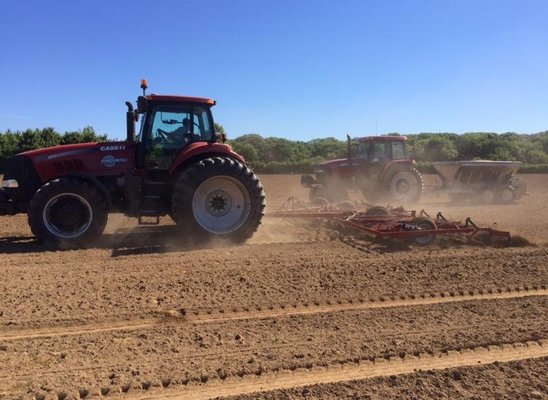
Town Supervisor Jay Schneiderman is exploring the idea of using the CPF to buy chemical rights from farmers
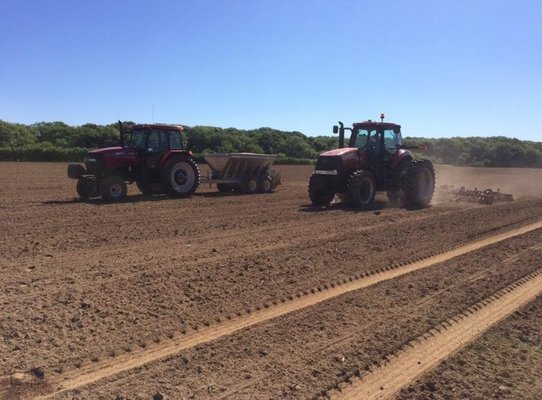
as long as they are willing to sell them. The idea is to promote organic farming. ALISHA STEINDECKER

Town Supervisor Jay Schneiderman is exploring the idea of using the CPF to buy chemical rights from farmers
Southampton Town Supervisor Jay Schneiderman is toying with the idea of using the Community Preservation Fund to buy “chemical rights” from farmers to help keep pesticides out of the air and water.
“What does bother me is the spraying of pesticides, particularly near residential properties,” Mr. Schneiderman said last week. “I should be able to buy a bundle of rights on the property to restrict the use of toxic chemicals.”
The town has already purchased development rights from some landowners that place restrictions on how the land can be used, in some cases not only ruling out residential development, but also—using the purchase of what are called enhanced development rights—requiring that the land be used to actively grow food. Mr. Schneiderman suggested that another enhanced development right could ensure that the land is farmed only organically.
Purchasing chemical rights would be a perfectly legal use of the CPF, as long as there is a willing seller, according to State Assemblyman Fred W. Thiele Jr., one of the original authors of the state legislation that founded the CPF. “Any restrictions that the town may want to buy with regard to land that encourages open space, that encourages agriculture are legitimate public purposes under the Community Preservation Fund,” Mr. Thiele said, adding that the idea had come up a few years ago but never bore fruit.
There would need to be a document “that both the farmer and town would agree to sign and it would be like every other: agreement on price, agreement on what the document would look like,” Mr. Thiele said. He added that the contract would be subject to a public hearing and Town Board approval.
However, he said, the town should explore whether the idea would in fact be good policy. That means reaching out to stakeholders, such as the farming community and the Peconic Land Trust, to see what they think, he said.
“It is a great idea to try to promote organic farming,” Mr. Thiele said. “The primary issue for success is whether or not it is economically viable, given the land values.”
John L. Halsey, an apple farmer in Water Mill who is also on the agricultural advisory board for the town, said chemicals, as long as they are safe for the crop and people, are necessary. “I’ve only been farming for 53 years but I know of no crop that would survive without some type of chemical addition, whether it be from the ground or the grower applying it,” he said, adding that he was speaking only on his own behalf.
“How long would you live if you didn’t have something to eat?” he asked.
Mr. Halsey said that conventional farming using synthetic products often allows the use of a smaller volume of chemicals than organic farming does, and that the State Department of Environmental Conservation holds Suffolk County to a very high standard already when it comes to the use of pesticides, as it is home to Long Island’s sole source aquifer. According to a report from the Suffolk County Agricultural Industry, many pesticides that are used in the rest of the state and across the country are banned on Long Island.
Mr. Halsey also said it would be difficult to appraise the value of a property’s chemical rights. The appraiser would have to figure out the impact that removing the chemical rights would have on the value of the land, just as is done with development rights.
“First of all, I know this farmer wouldn’t even give it a second thought—we would be out of business,” Mr. Halsey said of selling chemical rights to the town.
John v.H. Halsey, the founder and president of the Peconic Land Trust, said that enforcing and monitoring chemical restrictions would also be difficult.
“I think it is hard for the town right now to monitor the restrictions it has that are a whole lot easier to see,” he said. “When someone builds a house, you can physically see that. With this, it is very difficult.”
He added, “The bottom line for a farmer is really that the public purchases what they are producing,” he said. “If they have apples full of worms or corn full of worms, people aren’t going to buy it.”


 Alisha Steindecker on Mar 28, 2016