


 5 Photos

Tuckahoe students made bowls and spoons for an upcoming fundraiser to raise awareness that there are hungry people in the co

Elizabeth Thunder Bird Haile

Members of the Tuckahoe student council traveled to Human Resources of the Hamptons on Friday to donate food and clothes on behalf of the Tuckahoe School. BY ERIN MCKINLEY


Scenes from Bay Street Theater's 23rd annual Summer Gala on Long Wharf on Saturday night. MICHELLE TRAURING
As southern pine beetles continue to devastate forests as they make their way across the East End, Southampton Town officials are moving forward with a plan to increase funding to battle the invasive bugs.
Town Board members agreed at last week’s work session to earmark $499,400 from the municipality’s fund balance surplus, which is estimated to be $30.4 million as of December 2016 and has continued to increase by an annual 5 percent growth rate, according to Town Comptroller Leonard Marchese.
The town’s share is required to meet the legal requirements and receive three separate $75,000 reimbursement grants previously secured from the State Department of Environmental Conservation. Once that funding is secured, the town’s cost to battle the beetles would come down to $274,400.
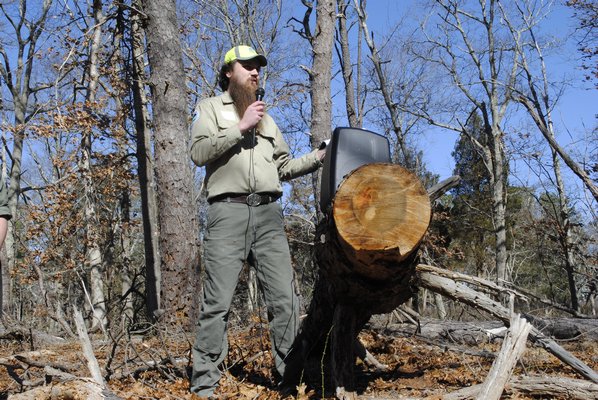
The funding will be used on the continued clearing and removal of infected pine trees; the cutting down of trees infected by the southern pine beetle, and all those trees in the immediate vicinity, is the only proven way to control the spread of the non-native species, according to experts.
Southern pine beetles—tiny insects that burrow tunnels behind the bark of trees, blocking the flow of nutrients and typically killing a tree in two to four months—specifically target the native pitch pine, one of the dominant tree species in Suffolk County, the Pine Barrens and the forests in the town. Officials estimate that approximately 10,000 trees, many of which had been located in Hampton Bays, have already been cut down or removed to control the spread of the insects.
“Once a tree is infested, it’s going to die,” Southampton Town Chief Environmental Analyst Marty Shea said at the recent work session, held last Thursday, March 9.
According to Mr. Shea, in order to properly address the beetle problem, the town intends to match the state grants by reallocating $236,300 from the highway department surplus fund and the remainder from the general surplus, or $110,725 from the parks department fund and $152,375 from the Community Preservation Fund. The money will be allocated over several years, until March 2019, officials said.
Although the board ultimately decided to redirect some of the town’s surplus funds to address the beetles, a situation that it described as a “public safety issue,” Councilwoman Christine Scalera repeated her concerns about how her fellow board members are using the money. Earlier this month, she took issue with the board’s decision to tap the town’s surplus to fund a land purchase, stating that the board needs to establish specific guidelines for when it should spend surplus money.


 on Mar 15, 2017