Sag Harbor Express

Southampton Town Will Embark on New Comprehensive Plan
icon 1 Photo
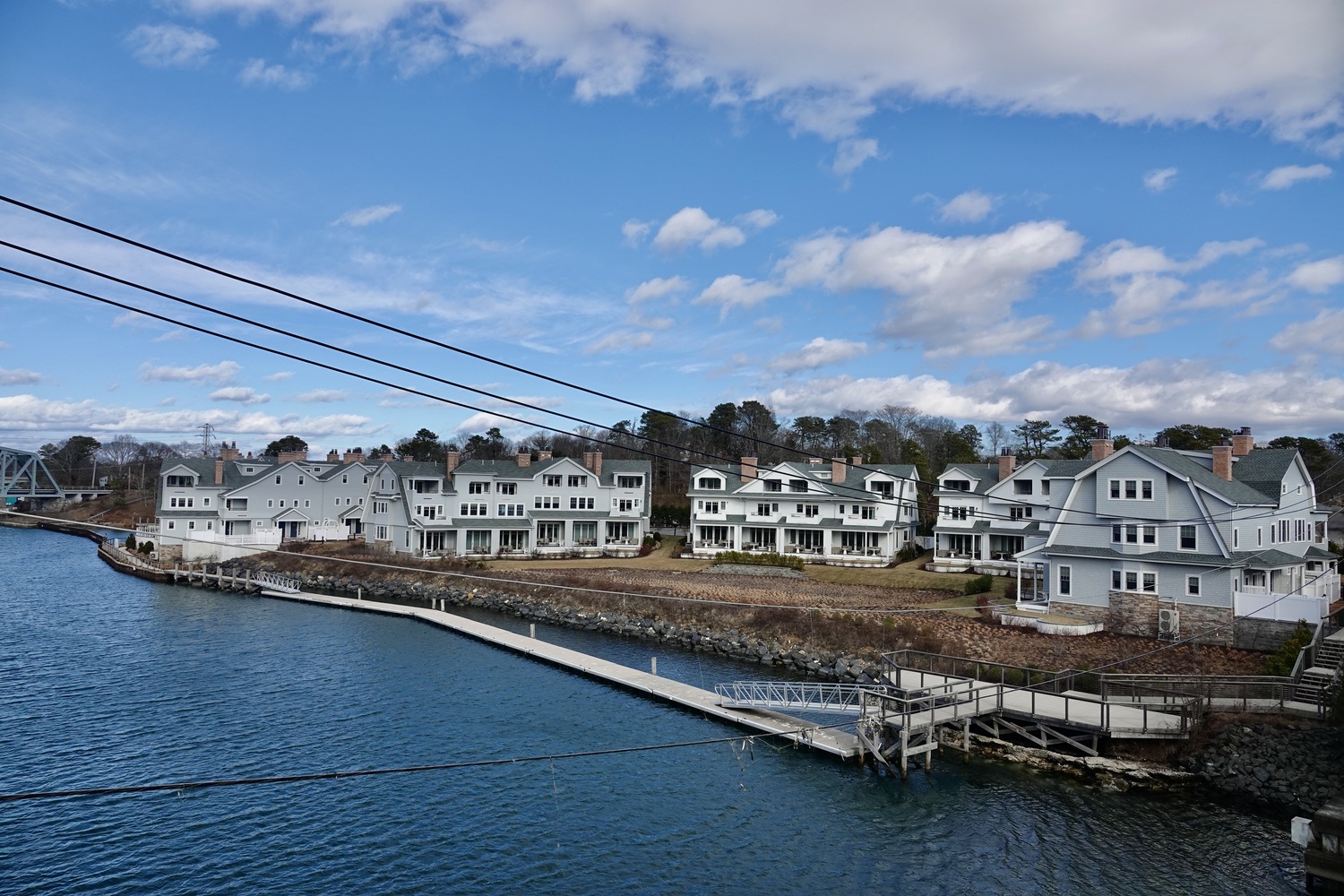
Projects like the Canoe Place Inn and its accompanying town house development were built under the town's PDD incentive zoning before the legislation was deleted from town code in 2017 because of frustration over ambiguous community benefits some saw the projects providing. MICHAEL WRIGHT

Projects like the Canoe Place Inn and its accompanying town house development were built under the town's PDD incentive zoning before the legislation was deleted from town code in 2017 because of frustration over ambiguous community benefits some saw the projects providing. MICHAEL WRIGHT

authorMichael Wright on Feb 5, 2025

The Southampton Town Board and the town’s planning staff are embarking on the likely years-long process of updating the town’s Comprehensive Plan, the master planning document that lays down a roadmap for the evolution of development across the town in the decades to come.

Among the issues that will be at the fore of the process will be transportation issues, sustainability in the face of climate change, and rising sea levels and whether to, or how to, resurrect so-called incentive zoning that the town utilized in the form of the oft-pilloried “planned development districts,” or PDDs, before the provision was deleted entirely from town code in 2017 in the wake of the conflict over The Hills at Southampton development in East Quogue.

The last time the town did a wholesale update to its “Comp Plan,” as it is commonly known, was in 1999 — 29 years after the town’s first state-mandated Comp Plan was adopted and one year before the Community Preservation Fund went into effect, directing hundreds of millions of dollars to land preservation in the town over the ensuing two and a half decades and redirecting development patterns in myriad ways, for better and worse.

“The Comp Plan is a series of documents that show the way the municipality establishes the official land use policy of the community and presents goals and a vision for the future that guides official decision making,” Town Planning Administrator Janice Scherer told members of the Town Board at their January 30 work session, reading from the state mandate that each town adopt and maintain an evolving Comprehensive Plan. “You want to be able to get together and have policies that are in accordance with a thought-out plan, so it’s not ad hoc. This is how we want the future to shape up.”

Scherer noted that the 1970 plan is still an official document just like the 1999 plan will be after the town adopts its update — and keeping an eye on where the town has come from and how the future was seen at the time is useful in helping guide how the board now should look at the future it is trying to shape beyond the horizon.

“I think it’s good to know what the past town folk wanted — you should never discard those things,” the town’s top planner advised. “It’s important to understand where you came from, especially in Southampton with our colonial history. We’re still doing a lot of things along the lines of colonial ways — it’s a good thing.”

The Comp Plan is guidance but it is also the foundation upon which many of the town’s zoning laws stand, and are defended in court against challenges by interests who have a different, typically more narrow, profit-driven vision of the future in mind. When a court looks at a legal dispute over a development project, it looks at Comp Plans to see what rationale a municipality has laid out for its laws, Town Attorney James Burke told the board, so crafting it wisely and carefully is crucial.

The update discussion will proceed ploddingly, Scherer told the board, making plans to have work session discussions of the many components of the existing Comp Plan — which has had numerous separate “master plans” focusing on individual hamlets, areas of development or stand-out issues of concern, like transportation, adopted into it since 1999 — one week at a time. Then the laborious process of bringing in the public to help guide the decision making will begin.

Natural resources, transportation, ecological protection even how small businesses should be encouraged or steered are all components of the 1999 plan that will be parsed and reconsidered anew.

“Farming, fishing, the resort economy, small businesses as the backbone of the economy, it talks about the types of businesses we want to encourage, it talks about the second home economy,” Scherer said. “There was a recommendation for creating a real estate tax and using the proceeds to preserve open space. And look where we are now, that was a huge success.”

The other big acronym of the last 25 years — PDD — had a more mixed success rate. After years of projects that drew outrage from the community and delivered often ambiguous and occasionally greatly undervalued “community benefits” that many came to see as simply giving developers a way to buy their way out of the restrictions of zoning rules, a Town Board led by former Supervisor Jay Schneiderman deleted the PDD from the code.

But Scherer said that the PDD was, in principle, a useful tool that was created with high hopes they would allow carefully planned projects that provided a desirable development to proceed in a specific spot even if the town’s zoning codes wouldn’t normally allow it — with the understanding that community support would be a key component and that the development would provide an additional benefit to the community.

“The idea with PDD was also that they had attached to them a community benefit — so they achieved some community need and also provided a community benefit,” she said. “But it morphed into this idea that it was zoning for dollars.”

Councilwoman Cyndi McNamara said that the problem at the core became that what constituted a worthwhile community benefit was not well defined and ended up being very subjective.

Nonetheless, McNamara said she thought the code should have been tinkered with rather than eliminated.

“I think it’s a tool that should have been fixed, not discarded,” she said. “Without that tool, you are trying to get creative with existing zoning, but that doesn’t always translate and you are not getting the best project you could be getting if had that flexibility.”

Other boards members agreed.

Councilman Michael Iasilli suggested that as part of resurrecting the idea of incentive zoning allowances, each hamlet could get together and draft a list of what it sees as worthy community benefits that could be written into the comp plan so that it was clearer and more focused on specific needs.

“We can strip all of it away, start over, and look at what are the incentives that you are willing to engage with someone on to get what you want,” Scherer offered.

McNamara said that the needs of hamlets have to be brought into the comp plan update at the forefront because, she said, many of the residents in unincorporated areas of the town feel that they are unfairly saddled with necessary, but unsightly or problematic, projects that are needed by all of the town’s residents, but which residents of the incorporated village’s never have to bear the burden of.

“When I was on the CAC in East Quogue, we met with then Supervisor Schneiderman, who said “you guys can’t say no to everything because I have regional issues I have to fix and I can’t touch the villages,” she recalled. “We all looked at each other and were like so what he’s saying is we get all the stuff the villages don’t want. So now I look at BESS and there’s not a single village in the town that has zoned for BESS.”

Scherer said that those kind of issues are going to continue to be a hurdle, because the town can’t foist things on the independent village governments.

“And that’s why we embraced on doing master plans by hamlet — which the 1999 plan said to do,” she said. “The villages are their own place, and we can’t do anything with that. We can only just focus on the hamlets.”

You May Also Like:

Sag Harbor Village Police Reports for the Week of December 11

SAG HARBOR VILLAGE — An officer responded to a call from a Rysam Street address a little after midnight on Saturday. The caller told the officer that a man wearing a black ski mask had walked onto her porch and banged on the front door then ran off. The woman provided the officer with surveillance video from her Ring camera, which visually confirmed what the woman said had happened. Police described the man as white, “approximately 6 feet tall, wearing a black ski mask, black hoodie with a red logo on the back, and wording on the left chest, a ... 12 Dec 2025 by Staff Writer

Harmony for the Holidays

Let’s be real: As jolly as the holidays can be, they can also be overwhelming. ... by Jessie Kenny

A Little Time, a Big Impact: Pierson's Interact Club Brings Joy to Seniors and Revives Blood Drive

Isabella Carmona DeSousa didn’t know much about Pierson’s Interact Club when she joined two years ... 11 Dec 2025 by Cailin Riley

Dear Neighbor

Congratulations on your new windows. They certainly are big. They certainly are see-through. You must be thrilled with the way they removed even more of that wall and replaced it with glass. It must make it easier to see what is going on in your house even when the internet is down. And security is everything. Which explains the windows. Nothing will make you feel more secure than imagining yourself looking over the rear-yard setback from these massive sheets of structural glass. Staring at the wall has well-known deleterious impact, and windows the size of movie screens are the bold ... by Marilee Foster

I Can Dish It Out

Our basement looks like the final scene in “Raiders of the Lost Ark,” where the (found) ark is crated and wheeled into the middle of a government warehouse with stacked crates going on for miles. In other words, we have a lot of stuff. This tracks. Mr. Hockey and I have been married for 36 (according to my calculator) years. We’ve had four (no calculator needed) pucks. We’ve lived in seven (according to my fingers) different homes in three (no calculator or fingers needed) countries. In 2010, we moved back to East Hampton full time. We brought everything we had ... by Tracy Grathwohl

The Urgency of Real

The Hamptons International Film Festival typically takes up a lot of oxygen in the fall on the South Fork, but it’s worth celebrating a slightly smaller but just as vital event in late autumn: the Hamptons Doc Fest. Running this week for its 18th year, the festival of documentaries was founded by Jacqui Lofaro and has become an essential part of the region’s arts scene every year. It’s a 12-month undertaking for Lofaro and her staff, and the result is always a tantalizing buffet of outstanding filmmaking, not to mention unforgettable stories. The arrival of the era of streaming services ... 10 Dec 2025 by Editorial Board

Hitting Pause

East Hampton’s housing shortage is real; the town can’t afford to ignore any potential long-term solutions. But the recent — and now scrapped — plan for a large employer-run complex on Three Mile Harbor Road raises too many questions that haven’t been fully answered. The proposal, put forward by Kirby Marcantonio and an unnamed partner, would have created 79 units of employer-controlled housing, comparable to a project he has pitched on Pantigo Road. To make it happen, the East Hampton Town Board would have had to allow the project to sidestep the town’s 60-unit limit on affordable developments, and rezone ... by Editorial Board

Proceed With Caution

Overlay districts are a common zoning tool used by many municipalities. Southampton Town has used them to varying degrees of success — the aquifer protection overlay district has been a winner; a downtown overlay district in Hampton Bays less so — in various parts of the town. They essentially look at the existing zoning, then allow those rules governing what can be done on properties to be reconsidered if there’s a newer concern to be addressed. In a bid to clean up the process for creating more affordable housing, the Town Board is looking at a new overlay district that ... by Editorial Board

The Whole Picture

When it comes to evaluating a complex development proposal, splitting up the application into separate parts may seem tempting, especially when environmental uncertainties loom. But in the case of Adam Potter’s plan for 7 and 11 Bridge Street, the Sag Harbor Village Planning Board should resist any temptation to segment the project for review. Potter’s attorney has asked the board to consider the gas ball property at 5 Bridge Street — a site that could provide the 93 parking spaces required for Potter’s 48 residential units and commercial spaces nearby — separate from the main development. The reason is understandable: ... by Editorial Board

New Law Requires Owners of Historic Buildings in Sag Harbor To Document Historic Features Before Renovation Work

The stories are almost commonplace: People seeing dumpsters full of old windows, doors and trim outside historic houses in Sag Harbor that are being renovated. On Tuesday, the Village Board adopted a proposal that it hopes will help put an end to that practice. It will require the owner of a historic house to complete a construction protocol and preservation plan before undertaking any major renovation. That document could be a few sentences or several pages long, depending on the type of work being considered. The amendment requires that the plan outlines “with specificity the detailed preservation, rehabilitation, restoration and/or ... by Stephen J. Kotz