


 10 Photos
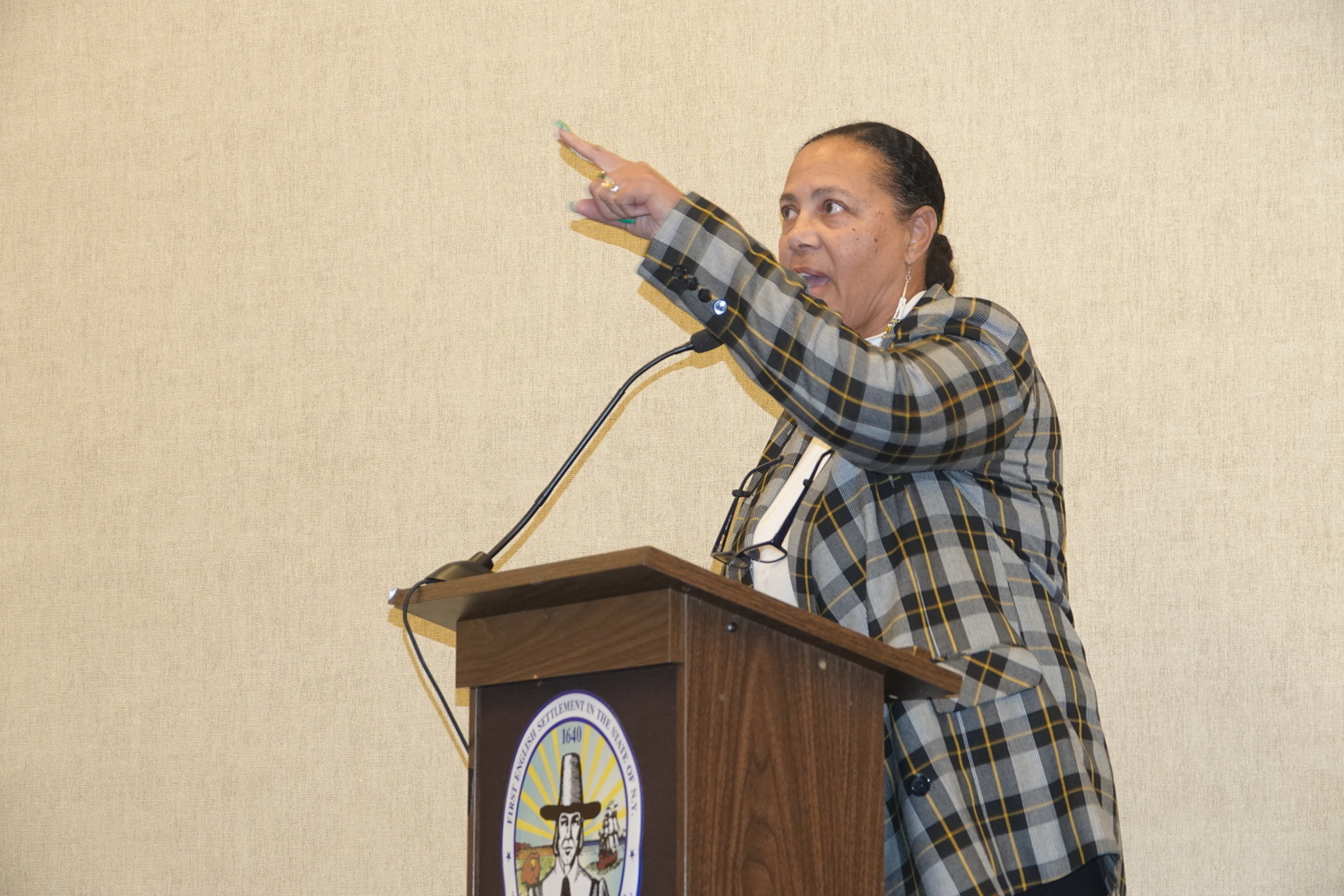
Shinnecock Nation Chairwoman Lisa Goree pointed to the nation's tribal seal on the wall above the heads of Town Board members on Thursday, saying that if the board does not count the tribal members as among its constituents it should remove the seal. A split board voted later to take the Shinnecock to court over the development of a gas station in Hampton Bays that residents of the hamlet have decried as illegal. MICHAEL WRIGHT
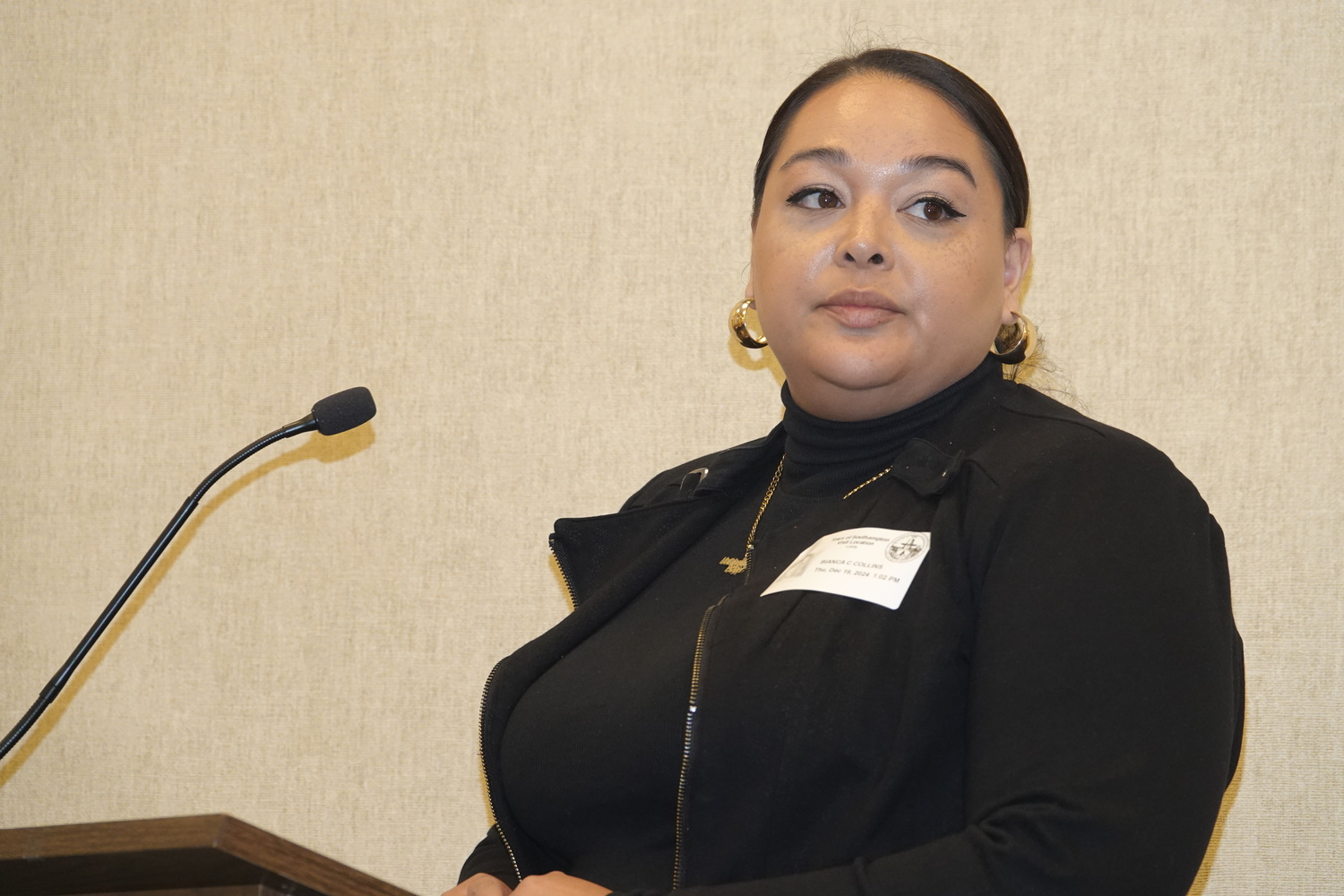
Shinnecock Nation tribal council Trustee Bianca Collins said the tribe has tired of the challenges by the town to its sovereignty. MICHAEL WRIGHT
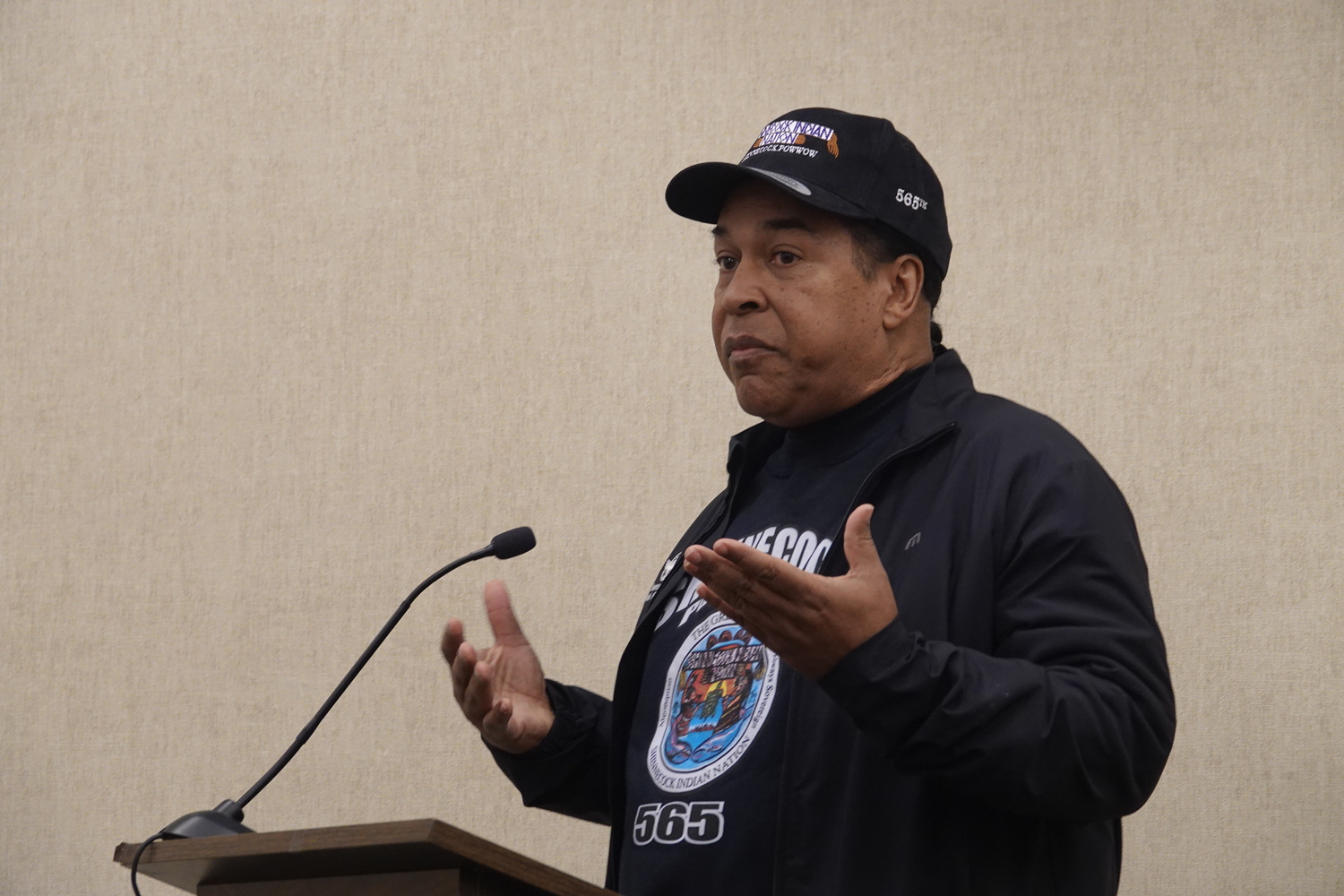
Shinnecock Nation tribal council Vice-Chairman Lance Gumbs said that the tribe will not halt construction of a gas station in Hampton Bays regardless of Southampton Town suing or any rulings by a New York State court, which he said the tribe does not recognize as having authority over the sovereign tribe. MICHAEL WRIGHT
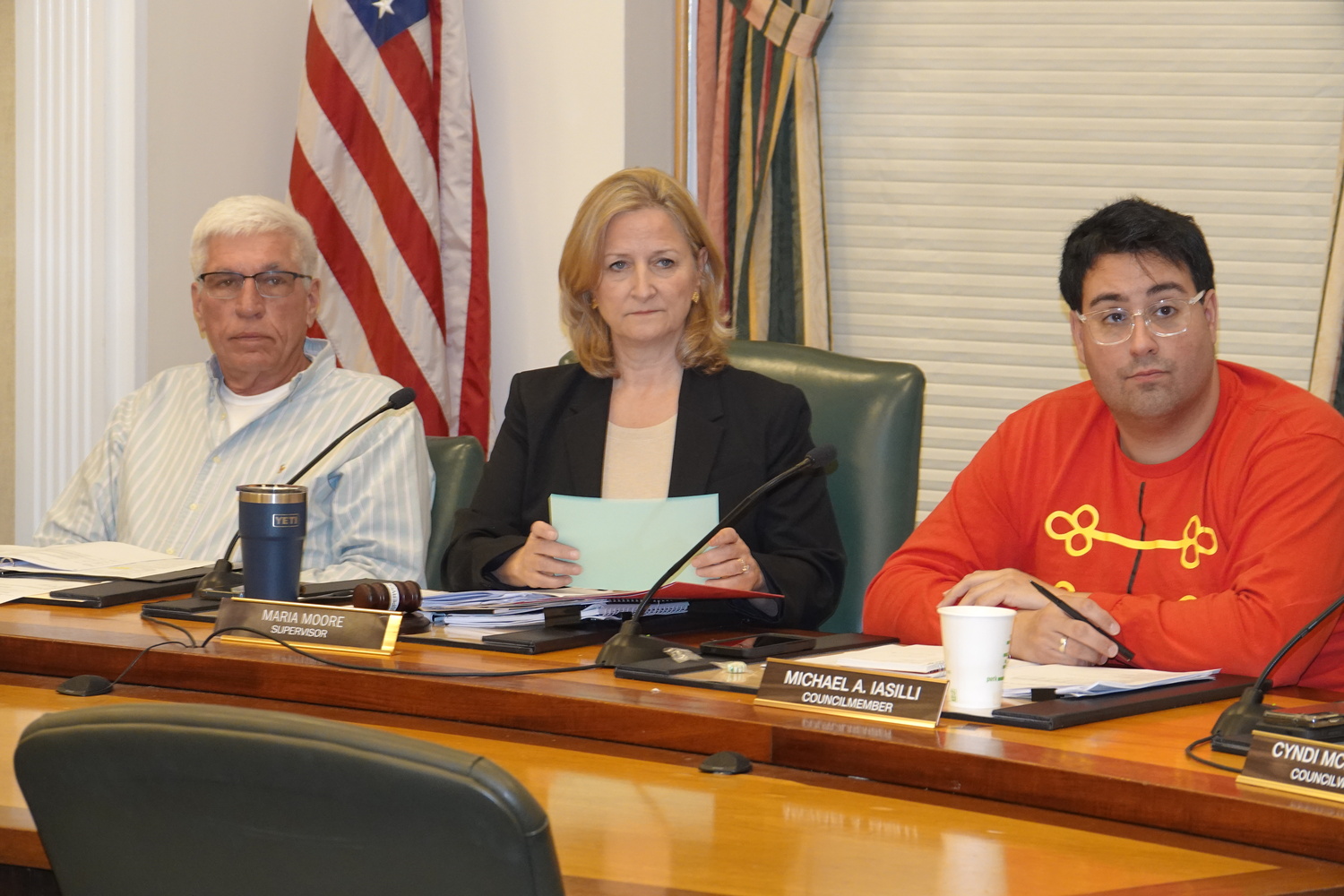
The Southampton Town Board was divided in its support of the decision to sue the Shinnecock Nation over a gas station being built in Hampton Bays. Councilman Michael Iasilli, right, joined Councilman Tommy John Schiavoni in voting against taking legal action. Councilman Bill Pell, left, and Supervisor Maria Moore voted in favor, along with Councilwoman Cyndi McNamara. MICHAEL WRIGHT
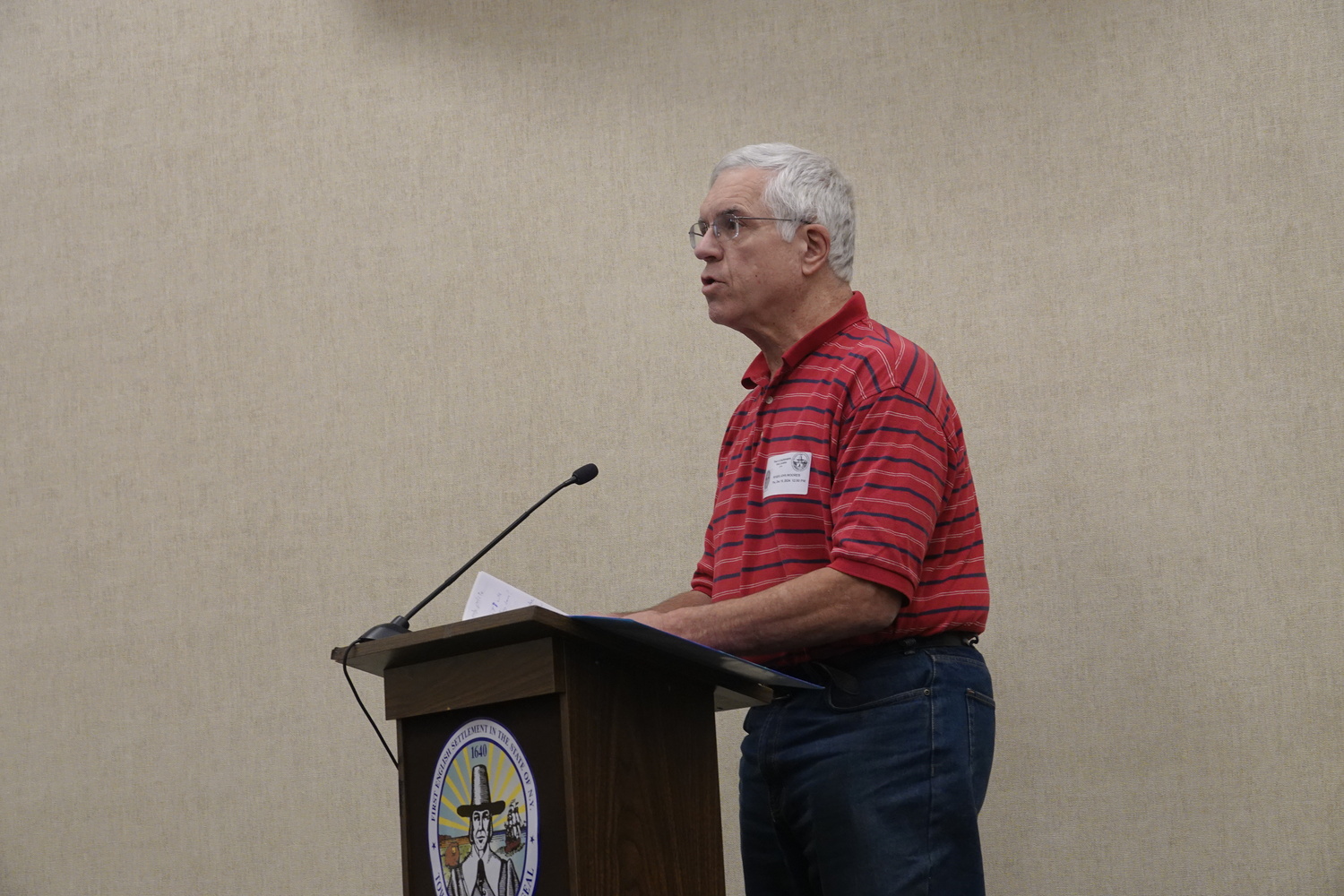
Hampton Bays resident Roger Moores said the town has failed in its duty to its constituents by failing to take legal action to halt the construction of the gas station in Hampton Bays sooner. MICHAEL WRIGHT
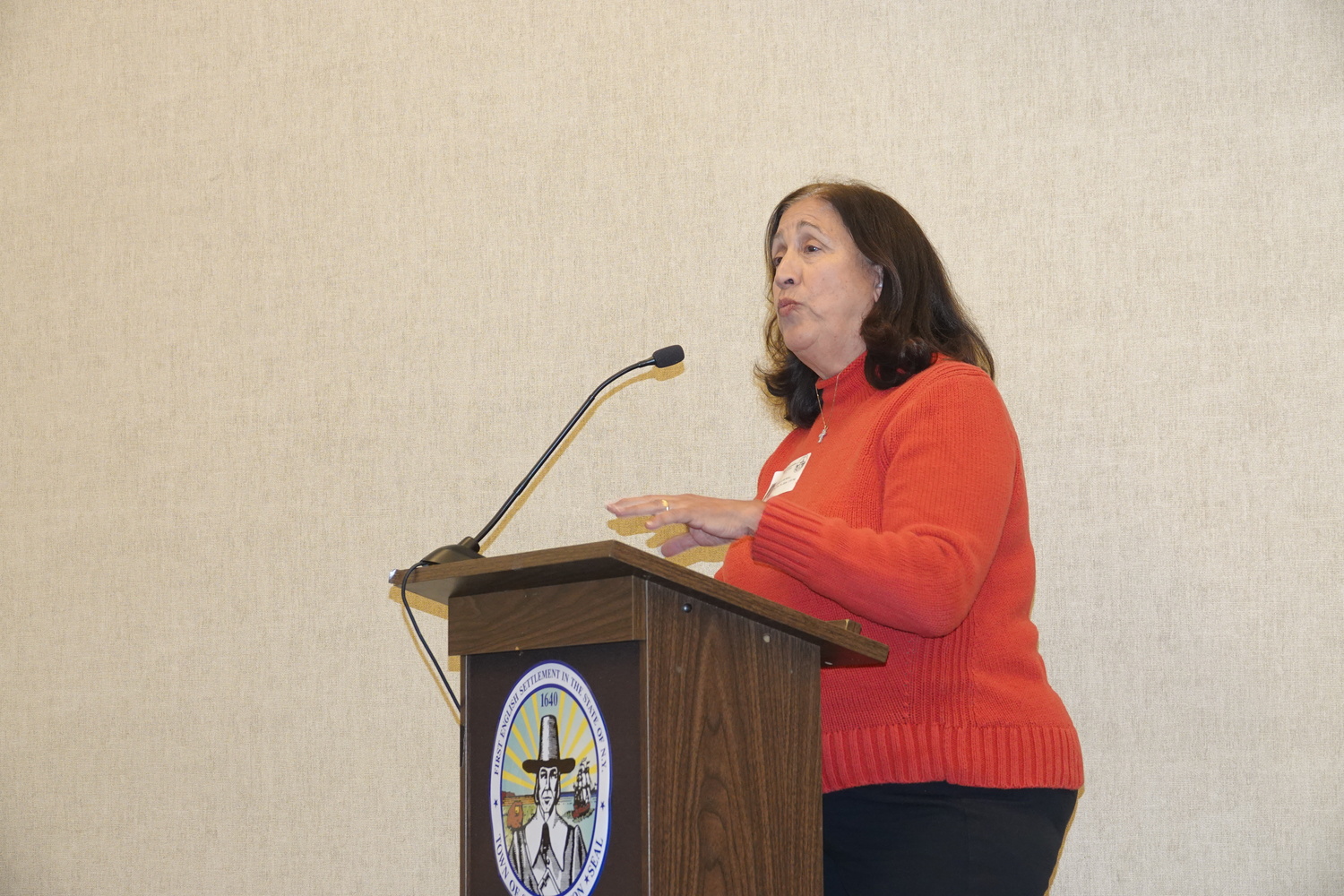
Carol McNeil, whose house sits just yards from the access road to the Shinnecock Nation gas station project, said that her life has been rattled, literally, by the project, and said the town should have taken action to halt the work long ago. MICHAEL WRIGHT
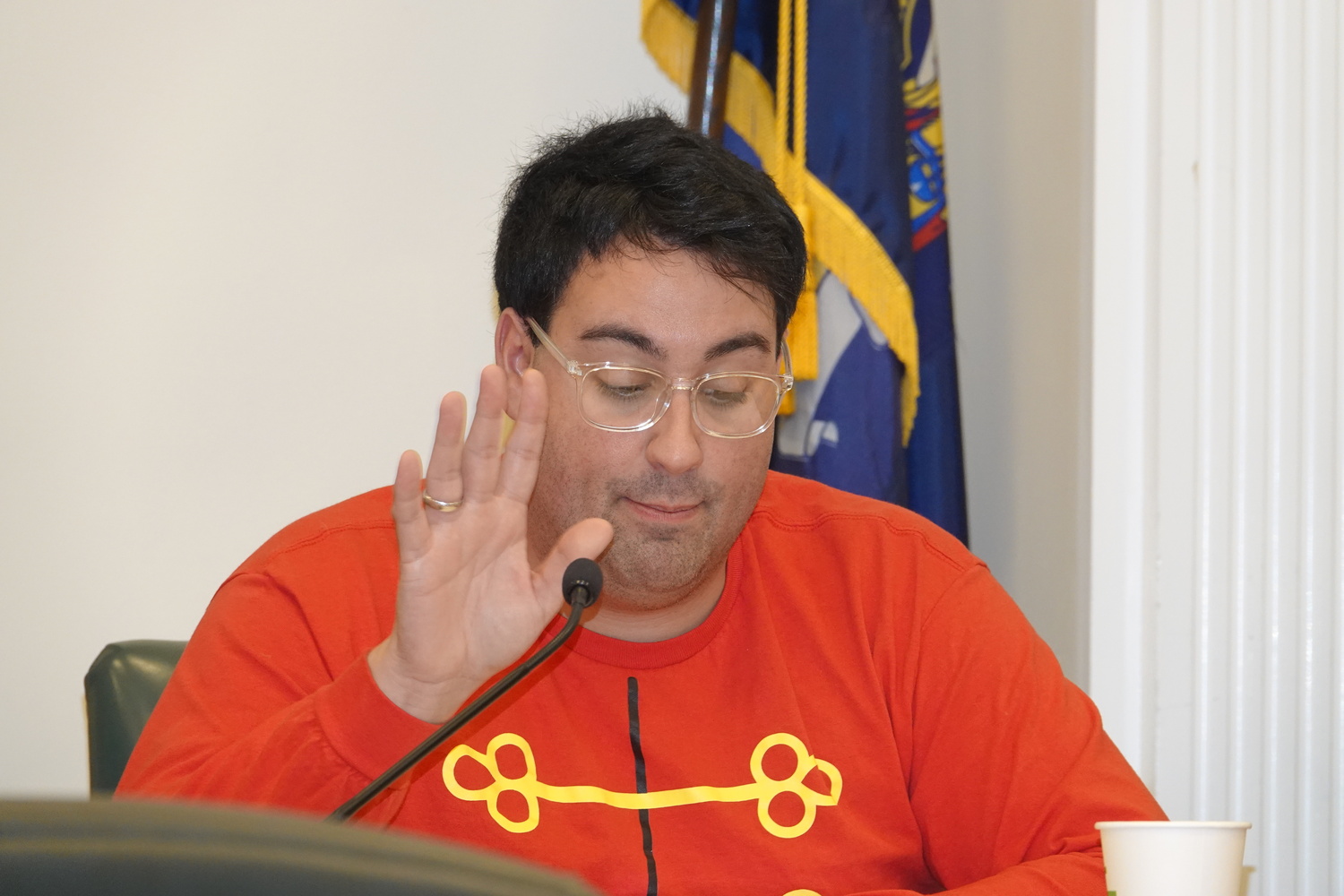
Councilman Michael Iasilli MICHAEL WRIGHT
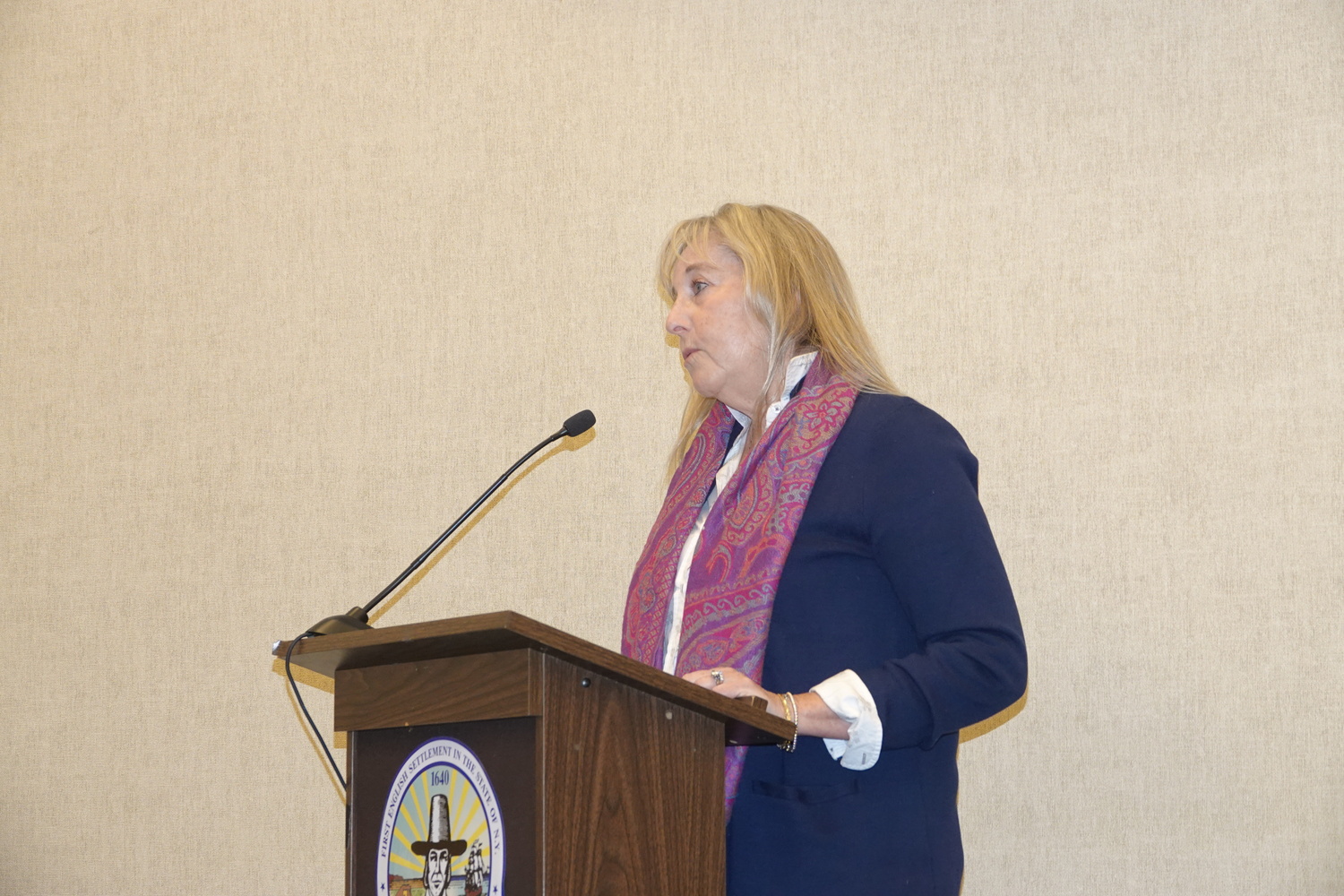
Maria Garber, a Hampton Bays resident, said that town inaction to halt the gas station development has "battered" the trust of residents in the Town Board. MICHAEL WRIGHT
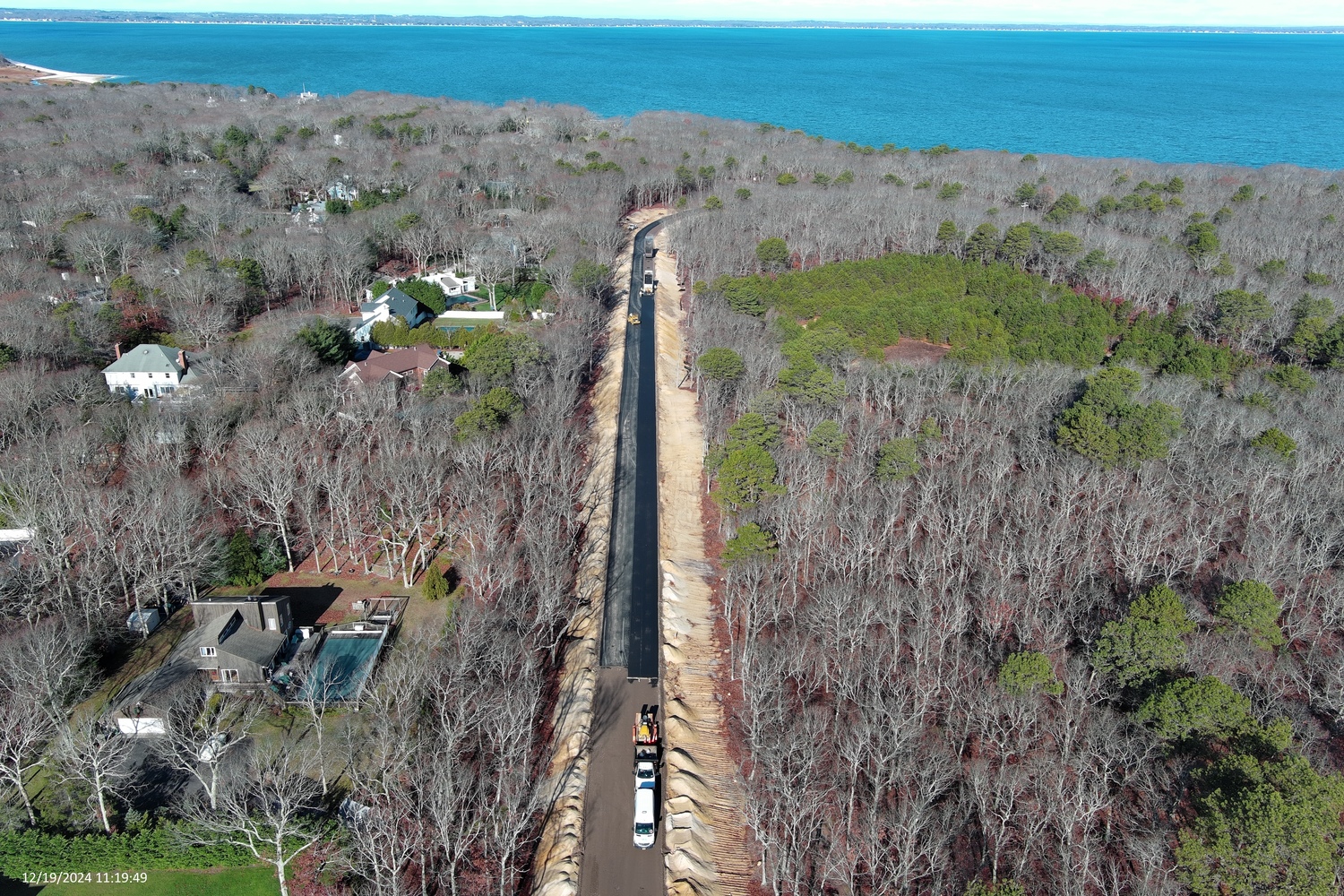
Crews working for the Shinncock Nation began paving the nearly 1,000-foot access driveway to the gas station the tribe is constructing off Newtown Road in Hampton Bays.
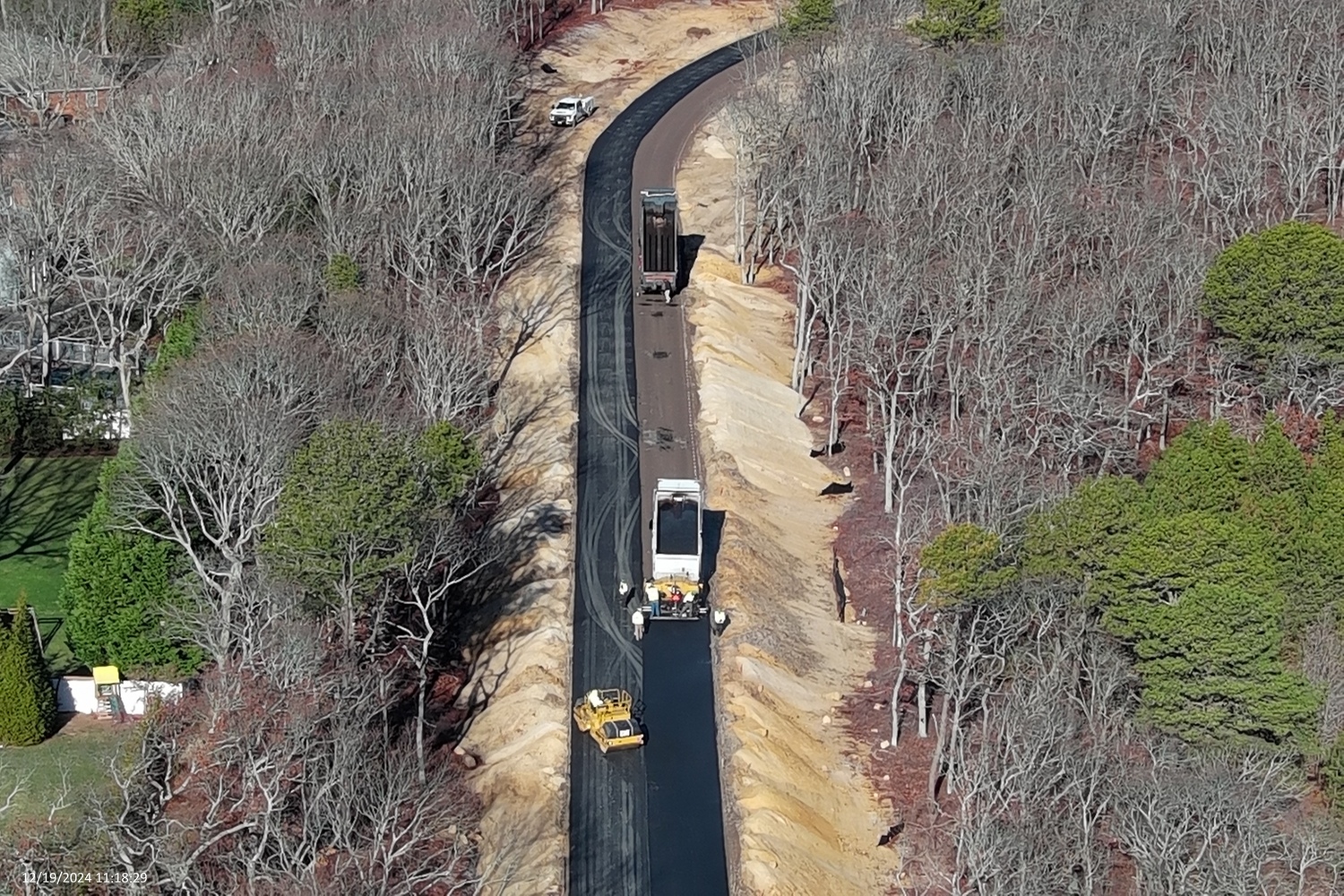
Crews working for the Shinncock Nation on Thursday began paving the nearly 1,000-foot access driveway to the gas station the tribe is constructing off Newtown Road in Hampton Bays.
Southampton Town will sue to halt the Shinnecock Nation’s construction of a gas station on tribal land in Hampton Bays.
With asphalt crews commencing paving of the nearly 1,000-foot entrance road into the gas station from Newtown Road on Thursday, a divided Southampton Town Board authorized its attorneys to take legal action against the tribe over the use of the land, known as Westwoods, for the commercial development.
The board voted, 3-2, in favor of commencing the legal action, which will challenge the tribe’s right to develop the 79-acre Westwoods property without regulatory oversight under town zoning and building codes.
Councilman Michael Iasilli and Councilman Tommy John Schiavoni, in his last meeting on the council before he takes his seat in the New York State Assembly, voted against taking the tribe to court over the gas station project.
Even before town lawmakers voted, Shinnecock Nation members took a defiant stand, facing down the board and residents of Hampton Bays at Town Hall — evoking the centuries of oppression of the tribe by the town’s European founders, and the many underhanded dealings that were used to strip the Shinnecock of thousands of acres of their ancestral lands. They also steadfastly defended the legal standing of their rights to use the Westwoods property as they see fit, free from oversight by the town.
“You want to come against us and attack us with litigation, we’re not going to back down,” Lisa Goree, who chairs the nation’s Council of Trustees, told the board. “We’ve been here for 10,000 years, and we’re going to be here for thousands more. This is just another battle that we’re ready to fight.”
“We are a government — we have our constituents, we are elected by our people to uphold our rights and opportunities for the Shinnecock Nation,” the tribe’s vice chairman, Lance Gumbs, said. “People can think what they want to think. You can do your court cases. That is not going to bode well for relations with the tribe — but you have to do what you have to do. That’s exactly what we’re doing, as the Shinnecock Nation, for the betterment of our people.”
At the start of the meeting on Thursday afternoon, Supervisor Maria Moore added the resolution to sue the tribe to the agenda, though its introduction was clearly anticipated both by the Shinnecock and by residents of Hampton Bays who came armed with rhetoric to hurl at one another.
Despite the watershed decision by the town, residents of the hamlet lambasted the town for its lack of action in the nearly 10 months since the tribe unveiled its plans for the 30-pump gas station and their contractors began clearing the 10-acre section of Westwoods where it is being constructed.
“This board has done too little, too late,” said Tom Garber, a resident of Quail Run, the residential cul-de-sac that immediately abuts the gas station property. “I don’t blame the Shinnecock for taking a gamble on developing Westwoods. I blame the town for falling for it.”
Garber compared the town’s failing to take the tribe to court earlier to actions of the Town Board in 2005, which quickly sought and secured legal intervention when the Shinnecock began clearing land on Westwoods for a gaming hall — leading to a years-long legal fight that, in the end, left the question of the Westwoods legal status still unresolved to many observers.
Moore defended the town’s hesitance to go to court earlier, saying that a 2020 court ruling in a State Department of Transportation lawsuit against the tribe and its rights at Westwoods over the electronic billboards it had erected along Sunrise Highway had presented a formidable legal obstacle to a court challenge halting the gas station project.
But that ruling was overturned earlier this month by a state appeals court, which said the tribe does not have absolute sovereign immunity over Westwoods, imposing an injunction on the operation of the billboards. Moore said the ruling puts the town on more solid legal footing to take action.
“The 2020 decision that denied the preliminary injunction really presented an obstacle to the town getting its own preliminary injunction,” Moore said, referring to what will be the first fight of the town’s new legal campaign. “But now that we have the Appellate Devision reversal of that decision — that changes everything.
“And today we authorize our counsel to commence litigation and seek an injunction to stop the violation of state and town law. That is the reason we didn’t do it before, and that is what we are doing now.”
Some Board Members Opposed
Schiavoni and Iasilli both said that they understand the decision their colleagues were supporting and expressed frustrations with how the Shinnecock have approached the construction of the gas station. But both said they did not think that suing was the right course for the town.
“I do support the sovereignty of the Shinnecock Nation and their goals to increase their economic prosperity for their people,” Schiavoni said. “My position has always been that the Town of Southampton should strive to work government to government with the Shinnecock Nation.
“I believe that undertaking legal action is both costly to the nation and to the Town of Southampton, and I believe that the same goal could be achieved by government-to-government work.”
Iasilli likewise suggested that the Town Board and its attorneys could try to find a negotiating position with the tribe that could avoid a costly legal battle — which he said has been forecast to cost the town between $800,000 and $3 million per year. He conceded that the tribe had not engaged with the town constructively, and noted that a working group the town formed with tribal leaders met only once.
“It was my hope that we’d continue those efforts to get concessions to allow our planning team and engineer to evaluate the full scope of the project,” he said. “The Shinnecock Nation should have provided more deference in our conversations, and they should have engaged in more outreach to their neighbors [in Hampton Bays].”
Town officials have said that they asked the tribe for laundry list of details about the designs of the gas station and received nothing of substance in response. Gumbs said on Thursday that the tribe answered essentially all of the town’s questions.
Iasilli defended both the board as a whole and his own record of standing up against over-development in his time on the board, but said that, ultimately, he saw battling the nation in court over rights on the tribe’s sole land holding outside its federal territory as a fight he could not support.
“I did not take it lightly that the nation was building a massive project in Hampton Bays — I don’t welcome the clear-cutting of trees and the destruction of habitats,” he said. “Hampton Bays has a right to feel left out. But so does the Shinnecock Nation, who are also my constituents. They, too, have been left out historically.
“I understand some may disagree with my vote … I hope there is a resolution so that both the neighbors’ needs are met and that the nation comes to the table,” he added. “And I hope that despite all of this, we must continue to work together.”
Councilwoman Cyndi McNamara said that she sees a lawsuit as the only way to quell the animosity between two sections of the community in the long run.
“I’ve said since this project began that I’d like to see something built [on Westwoods] that is legally able to be built there,” she said. “I believe there is still a question about whether this property is subject to local zoning … until that issue is settled in a court of law.
“And I believe it is time for everybody to have an answer, and maybe that’s not in the town’s favor and maybe it is. Either way, we owe it to all our constituents to finally answer the questions about what is legally permitted on that property.”
Wading Into a Long Fight
Seeking legal clarity through the courts will likely be a long row to hoe.
The public dispute over the gas station, like the court case that will now swirl around it, focuses on the legal status of the Westwoods property and the Shinnecock’s right as a sovereign Native American nation to develop it without regulatory oversight by Southampton Town government.
The Westwoods property is part of the tribe’s ancestral lands, but Southampton Town has claimed in the past that the land does not have the same sovereign standing as the 800-acre Shinnecock Neck territory, which is a federal Native American territory and not subject to local government oversight.
The common refrain from those doubting the tribe’s rights is that the land is owned only “fee simple” by the tribe, which means it is not sovereign territory and is subject to local regulation.
Gumbs said on Thursday that, in fact, the land is held as “restricted fee,” a status unique to New York State’s indigenous tribes and something the state has recognized at Westwoods for centuries. The tribe has never paid town, county or state taxes on the Westwoods property, and county tax maps appear to designate it as “Indian reservation” land.
Schiavoni said it was one of his main hesitations about the town suing now.
“To me, it’s pretty clear that the town has treated this land in a certain way, and I believe we should continue to do so,” he said.
When the Shinnecock began clearing a portion of Westwoods in 2003 with plans to open a small gaming hall as a first step toward a full-fledged casino, the town sued in federal court, challenging the tribe’s right to build without local approval. A federal court injunction, and New York State Troopers, halted the clearing and the casino project just days after it began.
But it took four years for the legal case — which relied on attorneys from both sides mining the historical archives in the basement of Southampton Town Hall and poring over official documents dating back to the precolonial settlement era — to go to trial.
The case cost Southampton Town more than $5 million.
The ruling by federal District Court Judge Joseph Bianco in 2008 held that the land was only owned fee simple and could not be developed outside of local zoning rules.
The tribe’s attorneys appealed, and in 2012, a higher federal court sidestepped the sovereignty issue and ruled that the entire multi-year, multimillion-dollar legal fight should have been argued in New York State courts rather than federal courts — annulling Bianco’s decision.
But that ruling, based on years of research and carefully crafted legal arguments on both sides, still serves as the main evidence held up by opponents that the gas station development is on tenuous legal ground.
Gumbs this week dismissed the views of both neighbors and New York State courts — which he said have no standing over a federally recognized sovereign tribe — as wholly inconsequential to the Shinnecock’s plans.
“I’m not going to get into the weeds of what people believe or don’t believe about the ownership of our tribal lands that we’ve held since time immemorial,” he said. “We’re not going to debate that. We know who owns it, and we know what we’re able to do with it. We are a government — whether the town’s people or the residents of Hampton Bays realize that or understand that is not our concern.”
Gumbs said after the meeting that the tribe will continue constructing the gas station and plans to open it in the spring of 2025 — regardless of what may come from the town’s lawsuit.
“State courts do not have jurisdiction on the tribal lands of the Shinnecock Indian Nation — no matter what the neighbors think, no matter what this town thinks,” he said. “There’s some misconception that we are below the town. That is false.”
“We are on the same equal standing,” Goree added.
Homeowners Say Town Failed Them
Residents of the Hampton Bays, who have been demanding for months that the town take a stronger legal stand than the ineffectual stop-work order it issued, laid blame on several doorsteps.
The tribe, they said, was defiling its own land and the hamlet, the town was standing by letting it happen, and the federal Environmental Protection Agency, the only authority the tribe has recognized on the project, was doing little more than paying lip service to oversight.
“The residents of Hampton Bays have vocalized the need to protect our great waterfront along Peconic Bay from the destruction of Westwoods, yet we haven’t seen any urgency to answer that cry,” said Maria Garber. “Inaction is extinguishing something great.”
“You, Maria Moore, along with much of the Town of Southampton and our town attorney have eroded the trust of your constituents,” she added.
Several residents echoed the sentiment — each acknowledging that McNamara had been the lone board member who seemed to think the town should be taking a more adversarial stance with the tribe once the gas station work had begun, earning her a pass in their eyes.
“Perhaps what is most troubling — even bigger than the fact that asphalt is being laid illegally on Westwoods as we speak — the most troubling aspect concerning this Town Board is how you treat your constituents,” Tom Garber added. “Your affect since day one, excluding Cyndi McNamara, has been placating. You treat us like naive, loudmouth homeowners who don’t know anything about the Shinnecock Nation or Westwoods. But we’ve been dealing with this issue since long before you were elected.”
“I hold you responsible for what’s going on here and opening the door to this development — to the travel plaza, to the casino, to the hotel,” Mark McNeil said, referring to the tribe’s stated plans to use the remaining acres of Westwoods to build a 200-room hotel and convention center, that could also include a casino. “Everything that may happen is on you.”
“By the time this meeting is over, I expect the road to the gas station will be paved,” he added, met immediately by cheers and applause from members of the tribe in the audience.
“My blood pressure has been up to here — every day I wake up and I can see out my bedroom window the trucks and the workers — it’s been unbearable for six months,” Carol McNeil, a Quail Run resident who earlier this summer rented a seismograph to measure the extent of shaking at her house while the gas station property and access road, which runs just a few feet from her back yard, were graded and prepared for the coming development.
“I don’t think the nation wants it to come off this way, but it’s coming across as total destruction and the almighty dollar,” she said. “It’s very sad. …
“I’ve realized, people don’t really care about what you’re going through,” she said — drawing more applause from members of the tribe and a retort: “We’ve felt that way since y’all landed!”
For Shinnecock, the Time Is Now
“Now, move,” a voice from the crowd of Shinnecock members snarled at the Hampton Bays homeowners. “Sell your house and move.”
A parade of tribe members in the audience made clear a singular message: Westwoods is a vestige of the once sprawling territory they saw as home, and that they are entitled to do as they see fit in light of the myriad ways the rest of their former lands has been developed and, often, desecrated.
“And the audacity that we hear about the conditions of the land, when we’ve watched all of this land be destroyed around us,” Gumbs told the crowd in the meeting room, his words nearly drowned out by shouts and applause from other Shinnecock in the audience. “The audacity of those statements is reprehensible. I cannot even begin to relate how that makes us feel.”
Others offered impassioned pleas that the town and residents recognize the tribe’s plight of mistreatment by the residents of Southampton over centuries and their need for economic self-sufficiency.
“This entire island, every inch, is our ancestral territory,” Bianca Collins, a member of the Shinnecock Council of Trustees, said. “I wake up every day showing up for my people … because I recognize the history, the trauma our people have had to endure. And in 2024, almost 2025, we’re still having the same conversations about whose land it is. We’re tired of having those conversations.”
“Our land was taken illegally — you didn’t respect us, you want us to respect you,” Michelle Johnson said. “We took y’all in, showed you how to live off the land and what did you do? Push us into the swamp where you didn’t think we would survive.”
Another Shinnecock member, Fordell Willis, said the tribe was simply seeking a relatively small economic foothold, where it has a unique opportunity to create a lasting source of revenue.
“We’re not trying to do anything wrong,” he said, “we’re just trying to do what’s right by our rights.”
Others scoffed at the criticisms of the clearing and potential environmental threats of the gas station.
“I hear talk about preservation of the land — but I didn’t hear any arguments when these millionaires and billionaires came in and put houses along Dune Road,” Kevin Fleming said. “It’s our time … We’ve been here, we’re staying here. We were the seeds … we’re sprouting. Let us do what we need to do to be self-sustaining.”
Goree, the tribal chairwoman, is also a town employee — the head of the tax assessor’s office, who had earlier in the day sat with the Town Board members as colleagues to discuss taxes on an affordable housing development planned on Quiogue.
She partly defended Supervisor Maria Moore from the accusations by Hampton Bays residents that she and the others on the Town Board had not stood up for the interests of their constituents over the last several months.
“Maria took an oath, to the Town of Southampton’s residents — and that includes the Shinnecock Nation. That seal up there on the wall demonstrates that we belong here,” the Shinnecock’s first female chairwoman said, pointing sternly to the tribe’s seal hanging alongside those of the seven independent villages in the town. “If the Town of Southampton is not going to abide by our rights, please remove that seal.”
Collins said that the tribe has waited and waited to make a stand for its own well being. The waiting, is over, she said.
“I respect our neighbors, but they clearly have no respect for us,” the young trustee said. “If you respected us, you would come and you would understand why we are doing [what we’re doing] at Westwoods.
“Every day, we have to address the needs of our community because of what the United States government has done to our people. We have had enough. We are done as Native American people. We will do what we need to do for our people.”


 Michael Wright on Dec 19, 2024