


 3 Photos
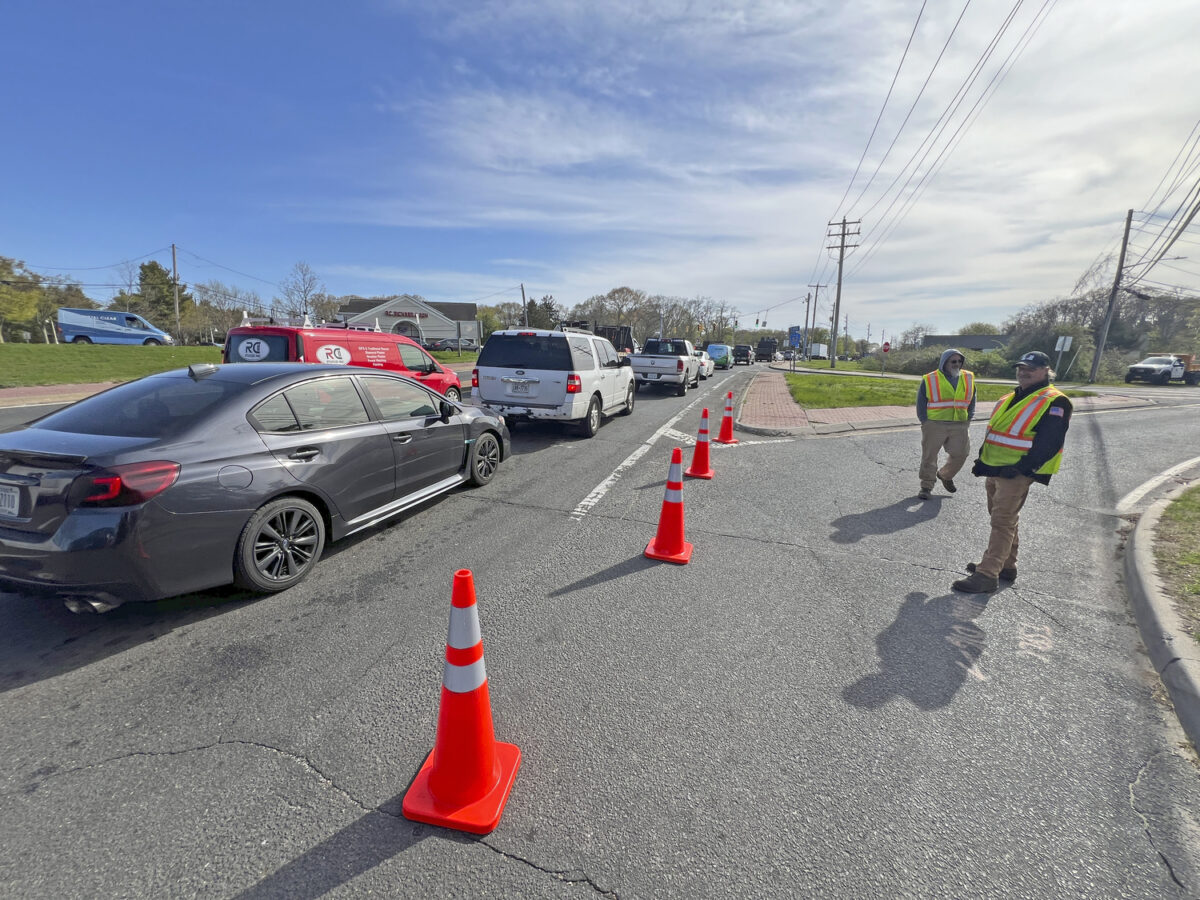
Traffic from Sandy Hollow Road merging onto County Road 39 on Tuesday afternoon. DANA SHAW
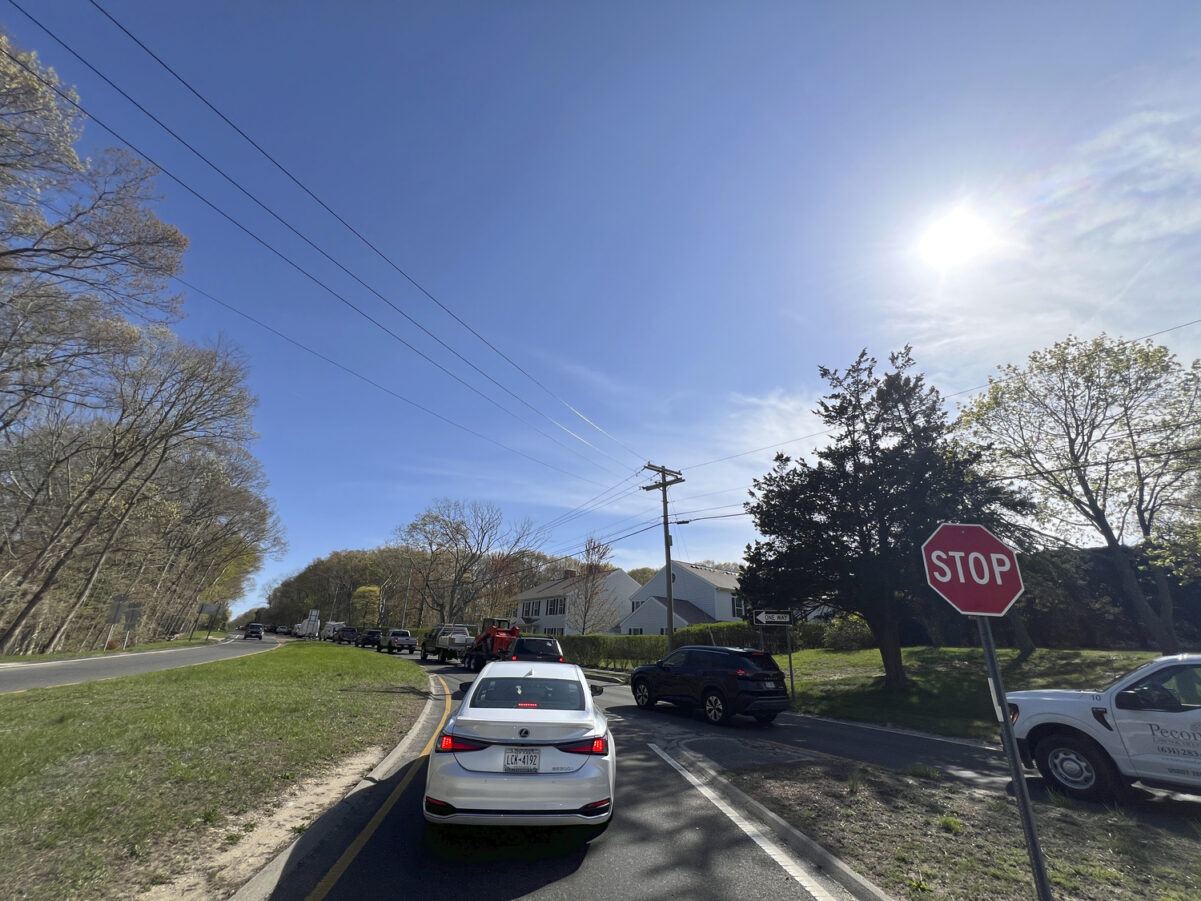
Traffic from Sandy Hollow Road merging onto County Road 39 on Tuesday afternoon. DANA SHAW
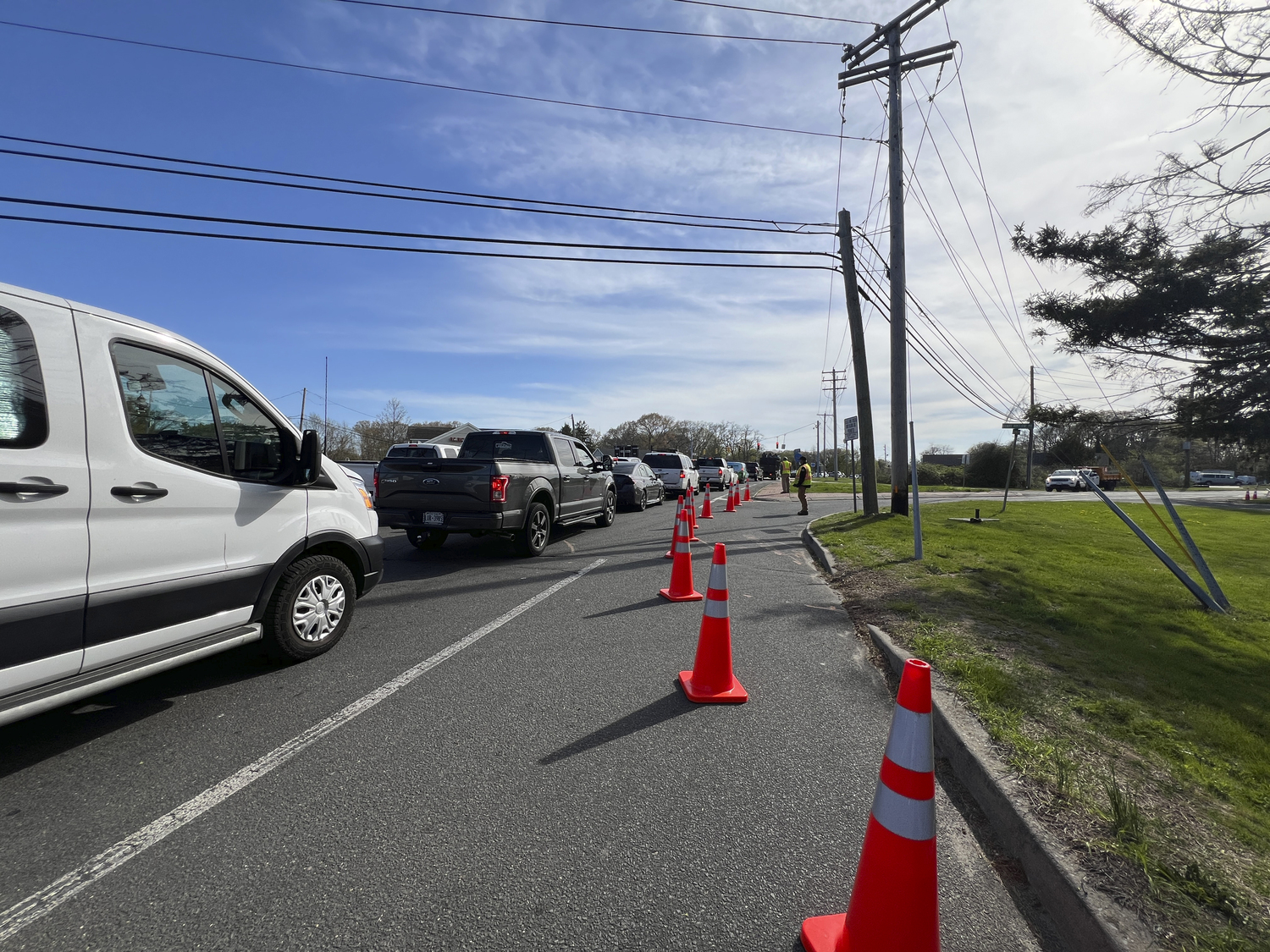
Traffic from Sandy Hollow Road merging onto CR 39 on Tuesday afternoon. DANA SHAW
By the end of the first week of Southampton Town’s experiment in bypassing the traffic signals along County Road 39, Southampton Town Highway Superintendent Charles McArdle said that he felt at least somewhat vindicated: The concept he had conceived helped to lessen delays along the notoriously clogged roadway substantially and moved many more cars per hour through the corridor.
The number of cars that passed through County Road 39 west of North Sea Road had increased by nearly 50 percent per hour by the fourth day of last week’s test run of eliminating the red-green light cycles at the Sandy Hollow Road, Magee Street and Tuckahoe Road traffic signals.
The number of cars that flowed up from Sandy Hollow Road — according to Suffolk County tracking data town officials could access — doubled.
The experiment got off to a somewhat rocky start the first day, but McArdle made adjustments that showed marked improvements on April 22, 23 and 24.
There were complaints that traffic on County Road 39A, as the portion east of North Sea Road is labeled, was more congested than usual, so on Friday, April 25, McArdle returned the second lane east of North Sea Road so that more westbound cars could get through each green light.
The change made an immediate difference in the flow to the east, which remained slow but at least kept moving.
But it caused somewhat longer backups of traffic into Southampton Village among cars coming up North Sea Road toward the County Road 39 intersection. After the first day’s gridlock, traffic through Southampton Village remained light through the later half of the week as more GPS guidance systems told drivers to remain on County Road 39 as the quickest route west.
With the proven efficacy of putting the three traffic lights on County Road 39 to flashing yellow between 4 and 7 p.m., McArdle and his staff turned their attention this week to tinkering with the new traffic patterns in the hope of finding an arrangement that might be implementable in the longterm.
The original strategy employed dozens of highway and police officers to eliminate second lanes from County Road 39 and Sandy Hollow Road, so that the two busy roads could merge seamlessly without the need for the alternating red-green traffic signal — an unsustainable dedication of manpower were the town to decide it wanted to make the pilot program permanent, both logistically and financially.
The Southampton Town approved spending up to $60,000 in funding for salaries and equipment just for the two-week pilot experiment. McArdle said on Wednesday the final bill is going to end up being much less.
On Monday afternoon, April 28, the Highway Department eliminated the single-lane restrictions leading up to and west of North Sea Road and returned the Sandy Hollow Road intersection to its usual red-green cycle — leaving only the traffic signals at Magee Street and Tuckahoe Road on flashing yellow for the afternoon rush, which made the overall operation much less manpower intensive — something that Southampton Town could tackle on a long-term basis if it showed similar efficiency in moving traffic.
“What we’re doing … with the single lanes, you wouldn’t be able to do it going forward [long-term],” McArdle said on Friday. “But if it was just the two lights, they might be able to do that.”
The change kept traffic flowing well on County Road 39 but caused backups on Sandy Hollow and sent more cars speeding down residential back roads — which had been greatly relieved last week, a secondary goal of the experiment — to get around the slowdown.
On Tuesday crews had planned to try extending the green light time for traffic coming out of Sandy Hollow. But a stalled cement truck on County Road 39 derailed the entire day’s traffic before it even began, causing long backups all over the region, on main roads and backroads, that the flashing lights could never get out from under.
“Yesterday we got killed — we can’t use any data from that,” McArdle said on Wednesday.
Wednesday was to be the last day of tinkering, the highway superintendent said. They would try extending the green light at Sandy Hollow to see if it moved traffic coming down from Noyac Road and Water Mill backroads better. If the backups to the north of County Road 39 and heavy backroad traffic persisted, McArdle said they would return to the original single-lane restrictions and flashing all three lights from the first week.
By the end of the first week, McArdle said, the travel time for a commuter from North Sea Road to Sunrise Highway was consistently taking only about seven minutes. From Noyac Road to Sunrise Highway took a reporter only slightly longer than 12 minutes at 5 p.m. on Thursday, April 24.
Those kind of travel times mean that commuters’ GPS units will steer them to remain on the main thoroughfares and off residential backroads or taking cut-throughs in Southampton Village, McArdle said.
Town Board members said they were pleased with the results of the experiment — giving hope that there may be ways to at least alleviate some of the most maddening traffic delays for both commuters and residents trying to move through or out of town.
“All the nights I have done it, it’s been a breeze, the traffic is flowing,” Supervisor Maria Moore, who lives in Westhampton Beach, said.
“You saw a great improvement overall during the course of last week,” said Councilman Michael Iasilli, who led a traffic task force that explored a number of locally implemented changes that could help most traffic through congestion points. “This is actually teaching us something, and helping us understand how we might be able to rearrange things to make it better in the long term.”


 Michael Wright on Apr 27, 2025