


 3 Photos
In the Hampton Bays new office are, Charlotte Dickinson, Shakira Fothergill, Trustees Scott Horowitz, Joseph McLoughlin and Ed Warner Jr., Jessica Feldman and Lisa Koehne. DANA SHAW
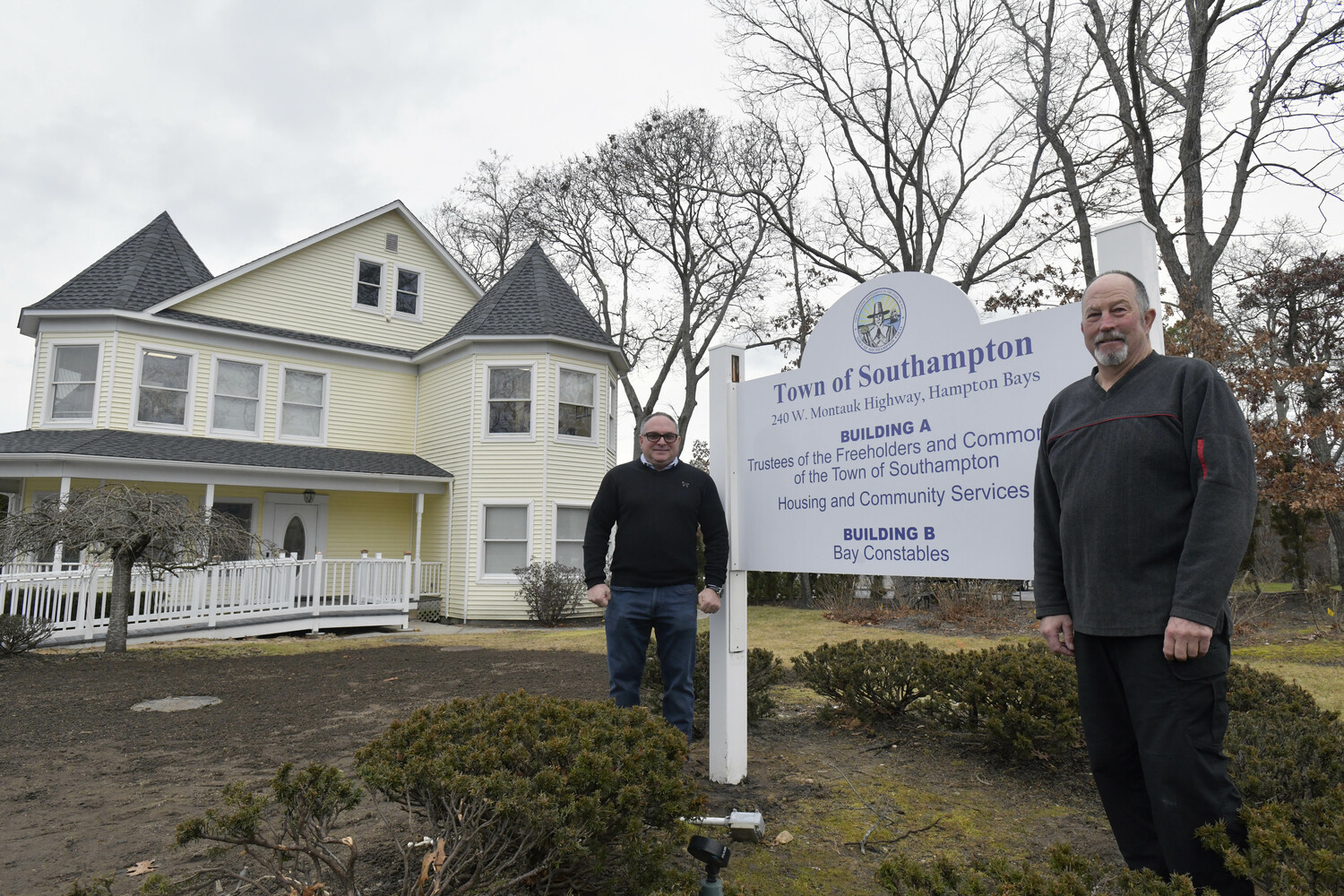
Southampton Town Trustees Scott Horowitz and Ed Warner Jr. at the new office in Hampton Bays. DANA SHAW
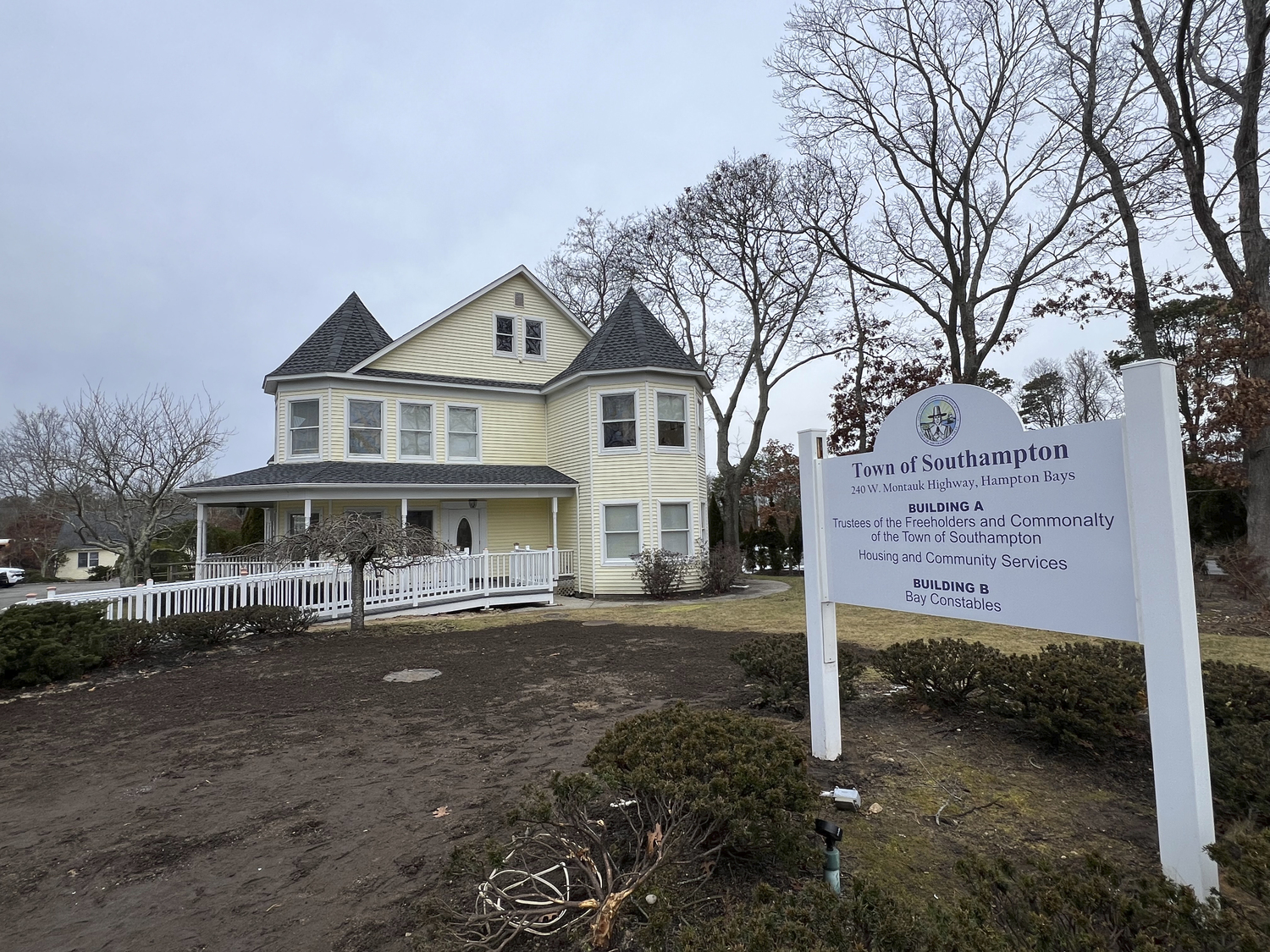
The new Southampton Town Trustees office at 240 West, Montauk Highway in Hampton Bays. DANA SHAW
The oldest elected body in the United States has three new members and a new home as of the new year.
The Southampton Town Trustees moved into their new offices on December 28, in a town-owned building located at 240 West Montauk Highway in Hampton Bays that also houses the town’s Housing Authority.
The board announced the move at its initial 2024 meeting held on January 8 at Southampton Town Hall in Southampton Village, where the board will continue to hold its regular meetings.
Trustees President Scott Horowitz kicked off the meeting with an introduction of the new members — Richard Maran, Joseph McLoughlin and Matt Parsons — and then talked up the move to Hampton Bays, where the Trustees will conduct the nuts-and-bolts of their work, which is to issue licenses and permits for town residents who are, say, seeking to obtain a shell-fishing permit or construct a new bulkhead on bottomlands controlled by the Trustees.
“That’s where you come see us,” said Horowitz, who noted that the new location ought to make for an easier commute for Trustees staffers “coming from east and west.” For added poignancy, Trustee Ed Warner Jr. said the sign at the new building was “being put up” during the Tuesday afternoon meeting. “It’ll be clear where we are.”
It wasn’t a perfect fit, he said in a follow-up interview, but a welcomed move. The space is a little “too tight,” he noted, but it’s workable and more importantly, is a more convenient location “for the public.”
Horowitz then doled out regional areas of responsibility for the board and explained to the new members that they would be the “eyes and ears” of their respective regions. Parsons was, for example, assigned to District 1, which oversees the western reaches of the Town of Southampton, from Eastport to Flanders to Riverside to Westhampton Beach.
Parsons said that his big takeaway from day one on the job was how fortunate the Trustees were to have the staff support necessary to make the transition from Town Hall to the new Hampton Bays offices, which occurred while he and his fellow newcomers were trying to get up to speed on their new roles. “They kept us prepared with all the materials we need,” said Parsons, who noted that as a self-employed worker for years, this was a new experience for him.
And he stressed the institutional knowledge brought to bear by Horowitz and Warner, who have some 30 years of board experience between them. “There’s a lot of things in motion but they are already being handled by people who are very competent and very capable,” Parsons said. “As a new member, I’m completely green to all this stuff, but this gives me time to come up to speed — there’s space for me to become an effective trustee.”
With housekeeping matters out of the way, the board moved on to the meat of the meeting, which included a resolution authorizing up to $10,000 to attorney Joseph Friedman to sort out legacy issues relating to some roads in the Town of Southampton whose maintenance is currently provided by the Trustees but maybe shouldn’t be, said Horowitz.
Friedman will undertake an examination of title records associated with Trustee-controlled roads to determine whether the Trustees should continue to maintain the roads or give them back to whomever actually owns them or is responsible for their upkeep.
It’s a long process going back some 200 years to determine where the roads came from and how the Trustees came to own them.
Some, said Horowitz, are roads in areas that had very limited occupancy “back in the day,” but are developed now and getting lots of wear and tear from vehicle traffic, which creates a burden for the Trustees, who are supposed to maintain them.
And, the Southampton Town Board, he said, hadn’t stepped up with funding for the Trustees to assist with road maintenance. He’s hoping for greater buy-in from a new Town Board that was also recently sworn-in and that includes Bill Pell, a former Trustee.
“These old roads — some lead to water, some just connect to two roads,” Horowitz said. “People are paying big money for taxes, but we’re not getting the money,” he said, which is why they hired a lawyer to sort it out: “Do we really own this road? Is it really our responsibility, or is the town’s, or is it someone else’s?”


